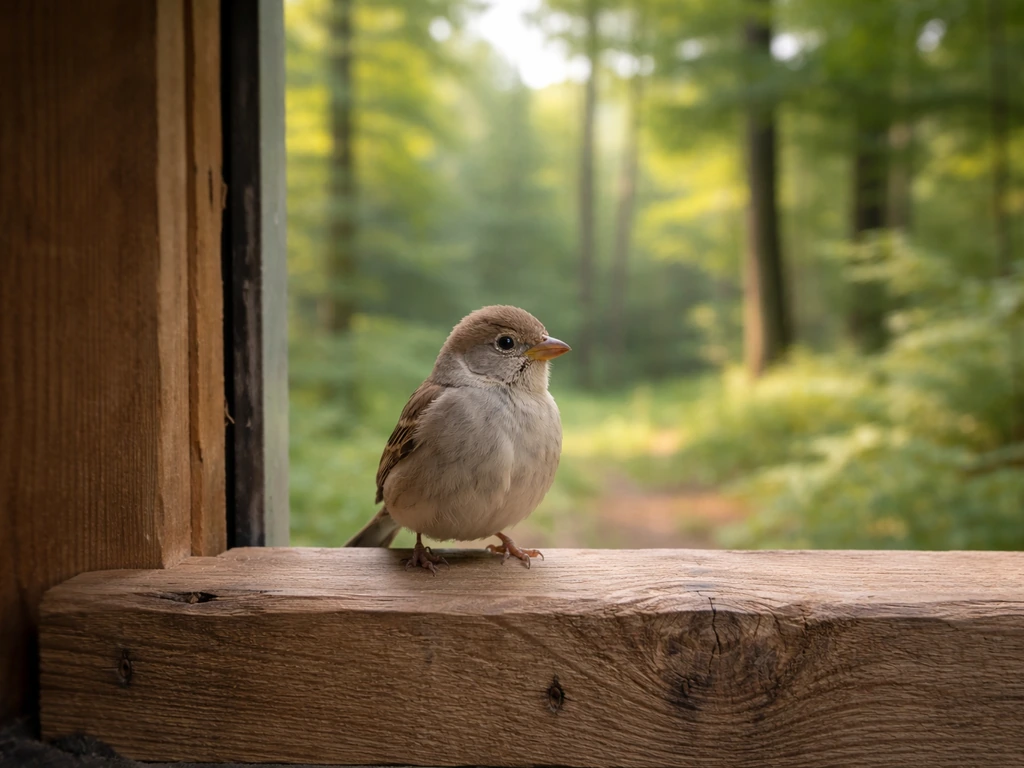
If you find what looks like an abandoned bird egg, the single most important thing you can do right now is slow down and resist the urge to act. Most eggs that appear abandoned are not. The parent may be off the nest finding food, watching from a branch nearby, or waiting for you to leave. The best outcome in most cases starts with doing less, not more.
What to Do With Abandoned Bird Eggs: Humane Steps Today
Marcus Holloway
6 Apr 2026
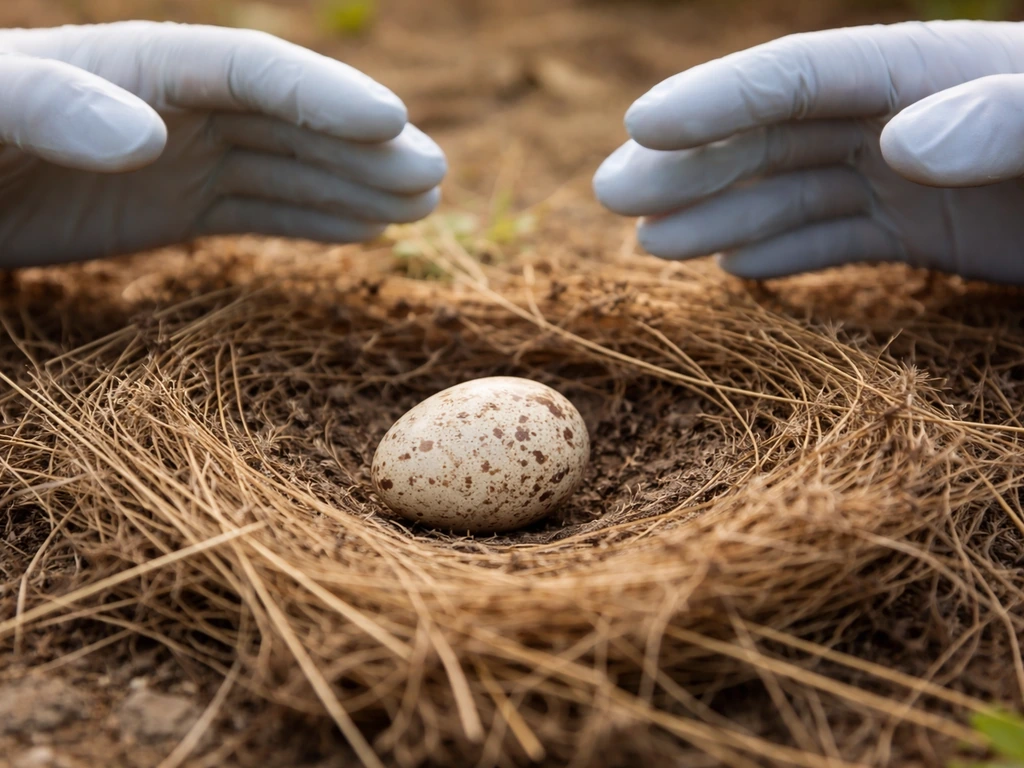
First quick steps after finding an abandoned egg
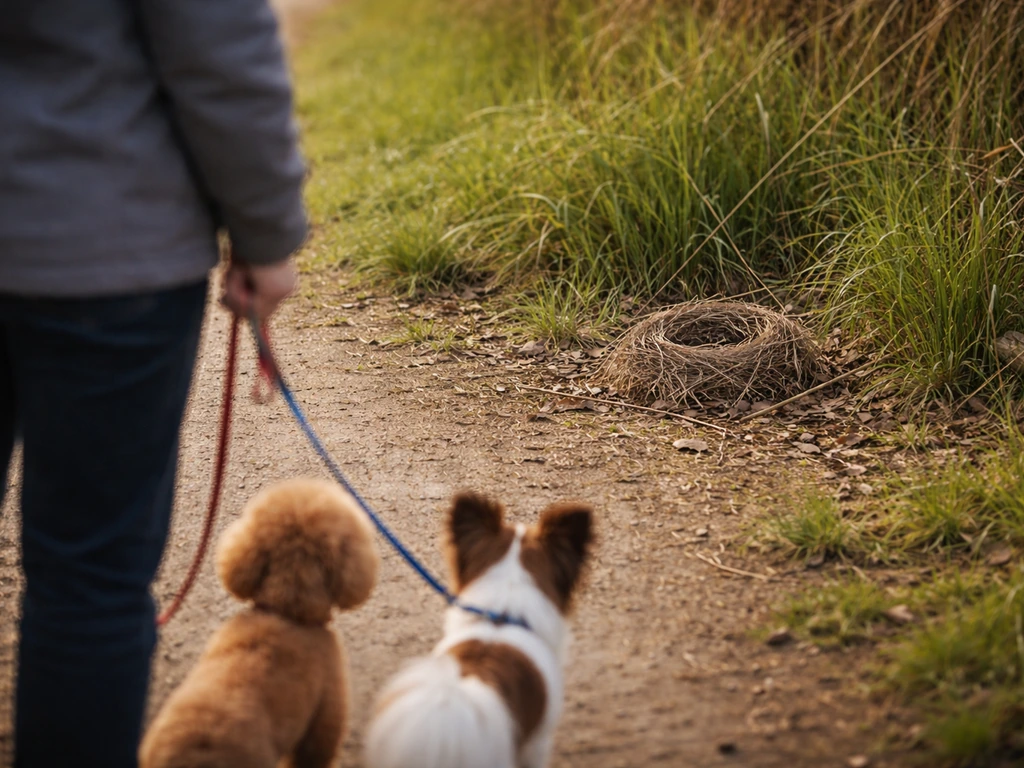
Your very first move should be to step back, at least 10 to 15 feet from the nest or egg, and just observe quietly for 30 to 60 minutes. Keep kids and pets away from the area. Don't handle the egg yet, don't move it, and don't try to warm it in your hands. Note the time you first spotted it. You want to watch without being a presence that keeps the parent away.
While you're waiting and watching, take a mental or written inventory: Where exactly is the egg? Is it in a nest, on the ground, or wedged in a bush? Is the nest intact or damaged? Are there other eggs or chicks present? This information matters a lot when you talk to a wildlife rehabilitator later.
What you should never do in those first moments: don't try to hatch or incubate the egg yourself, don't bring it inside the house immediately, don't submerge it in warm water to test viability, and don't attempt to feed it anything. These are well-meaning instincts that can cause real harm.
How to tell if the egg is truly abandoned
This is where a lot of people get it wrong. An egg being alone for an hour doesn't mean it's abandoned. Most songbirds leave the nest regularly and may stay away for stretches of time, especially if a predator or a person has been nearby. Wildlife experts routinely point out that people misread normal bird behavior as abandonment, and that finding an egg or young animal alone does not automatically mean it's orphaned.
A few signs that an egg may genuinely be abandoned or compromised:
- The nest was clearly destroyed (storm damage, predator attack, tree trimmed) and no adult has returned after several hours of observation from a distance
- You found a dead parent bird nearby
- The egg is cracked, leaking, or has a very strong foul odor (a sign of bacterial decay inside)
- The egg has been on the ground in cold temperatures for more than an hour with no nest in sight
- The egg feels ice cold and has been that way for several hours in cold weather
If none of those conditions apply, the parent is almost certainly coming back. Give it time. If you watched the nest for an hour or two and genuinely saw zero adult activity, that's when you move to the next stage.
Assessments you should (and shouldn't) do at the nest
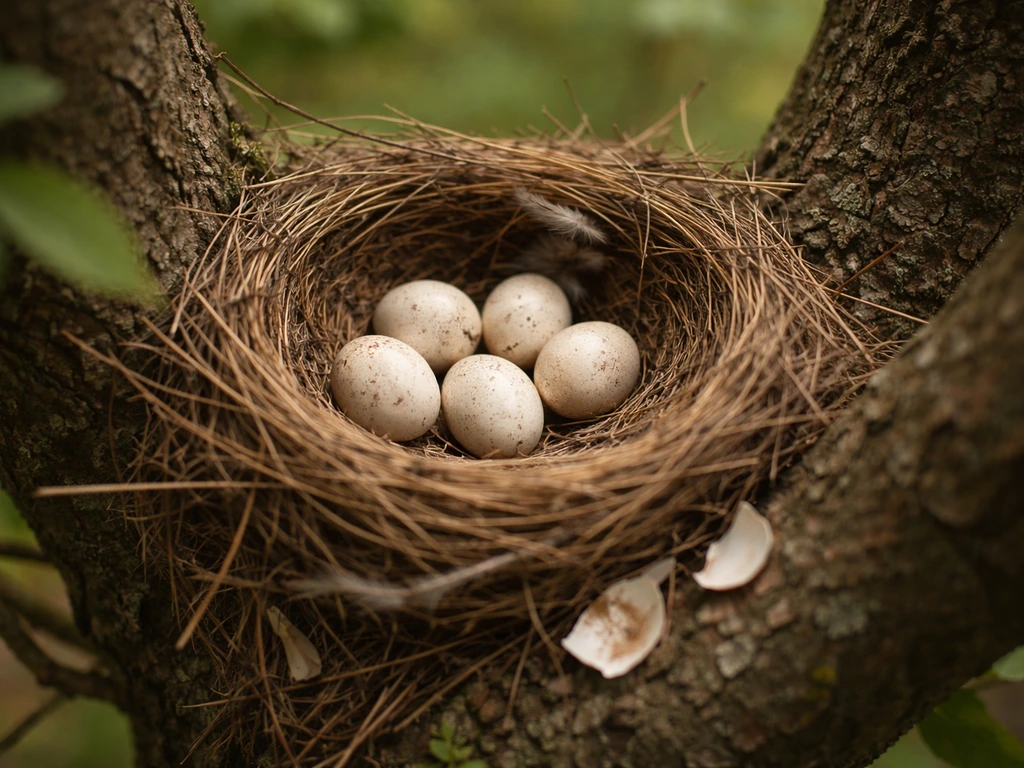
You can do a visual assessment without touching anything. Look at the nest structure, the number of eggs, whether the eggs look whole and clean, and whether there are signs of predator activity (broken shells, feathers, claw marks). You don't need to touch anything to gather useful information.
What you should not do: don't repeatedly visit the nest, don't shine a flashlight into it at night, and don't attempt to candling (holding the egg up to a light source) unless a rehabilitator has specifically instructed you to. Disturbing the nest repeatedly causes stress and can cause a parent to abandon eggs that were perfectly fine before you arrived.
It's also worth knowing the legal side of this. Under the Migratory Bird Treaty Act, it is illegal to possess, move, or destroy the eggs or nests of migratory birds without a federal permit. That covers the vast majority of wild bird species you'll encounter in North America. This isn't meant to scare you, but it is a real reason to call a licensed professional rather than take matters into your own hands. The U.S. Fish and Wildlife Service is clear that if you find an active unattended nest with eggs, the guidance is simply to leave it alone.
When to contact a wildlife rehabilitator or vet
Call a licensed wildlife rehabilitator or an avian-capable vet as soon as you have reason to believe the egg is genuinely abandoned or in danger. You don't need to wait until you're certain, and you don't need to have the egg in your hands first. Most rehabilitators are happy to talk through what you're seeing and help you decide the right next step.
Call immediately if any of these apply:
- The parent bird is confirmed dead
- The nest was destroyed or fell from the tree and cannot be safely replaced
- The egg is cracked, bleeding, or smells foul
- Temperatures are dangerously low and the egg has been cold for over an hour
- You've observed the nest for two or more hours with zero adult bird activity
To find a licensed rehabilitator, your state fish and wildlife agency is the fastest starting point. Many states, like Florida's Fish and Wildlife Conservation Commission, maintain searchable lists of permitted wildlife rehabilitators by county and by species type. The National Wildlife Rehabilitators Association and the Wildlife Rehabilitator Directory are also useful tools. When you call, describe the species if you can, the egg's condition, where it was found, and how long it has been unattended.
A note on permits: wildlife rehabilitation in most U.S. states legally requires a permit. This means that caring for a wild bird egg beyond basic immediate transport is something only a licensed rehabilitator is legally authorized to do. Keeping a wild bird egg at home without that permit can result in legal consequences, regardless of your intentions.
Whether (and when) to raise the eggs yourself
The honest answer is: almost never, and only if a licensed rehabilitator or avian vet specifically tells you to. Home incubation of wild bird eggs is extremely difficult, legally restricted for most species, and results in poor outcomes without proper equipment and expertise. It's not a project to take on because you feel like you should do something.
The very limited situations where home care may be temporarily appropriate are when you are physically unable to reach a rehabilitator for several hours, the egg is in immediate danger (severe cold, flooding, predator exposure), and you have explicit phone guidance from a wildlife professional who is walking you through what to do. Even then, you're buying time for professional handoff, not setting up a nursery.
If you're dealing with a domestic or pet bird egg (like a pigeon, chicken, or parakeet), the rules are different and more flexible. But for wild bird eggs, the bar for DIY raising is very high, and for good reason: even well-intentioned home care can result in the egg dying or, if it hatches, a bird that is imprinted on humans and unable to survive in the wild. That's not a good outcome for the bird.
If you're trying to understand the full range of scenarios for different types of found eggs, the guidance on what to do with bird eggs covers a broader set of situations including eggs from different nest environments.
Safe temporary care while you wait (warmth, humidity, placement)
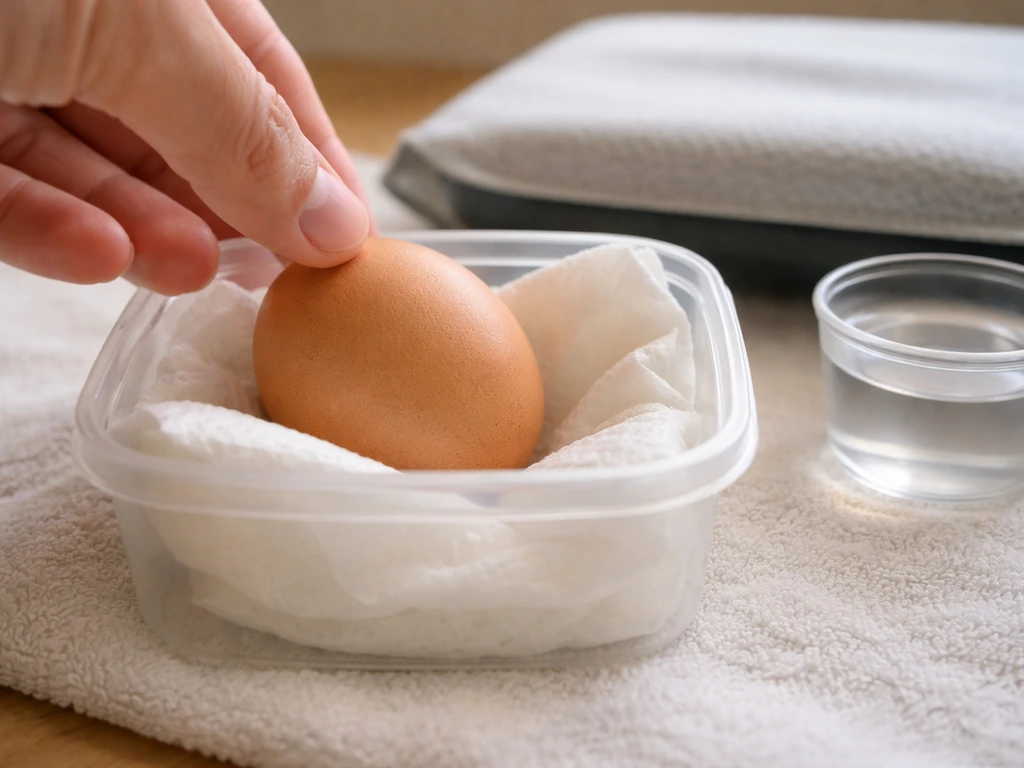
If you've confirmed the egg is in genuine danger and you're waiting on a callback from a rehabilitator, here's how to keep the egg stable in the short term. The goal is not to incubate it yourself, it's to prevent it from deteriorating while you get professional help on the line.
- Place the egg gently in a small container lined with a dry, soft material like a folded paper towel or clean cloth. Don't use anything fluffy or fibrous that the egg can roll into.
- Keep the container in a warm room, ideally around 65 to 75°F (18 to 24°C). Do not place the egg directly on a heating pad or radiator. If you need gentle warmth, put a heating pad on its lowest setting under half the container so the egg can shift away from heat if needed.
- Do not cover the egg tightly or seal the container. Eggs need airflow.
- Do not add water to the container or mist the egg without specific instructions from a rehabilitator.
- Do not rotate or turn the egg unless a professional has told you to and explained how.
- Keep the container away from direct sunlight, drafts, air conditioning vents, and loud noise.
If the egg was found on the ground, check whether the nest is nearby and accessible. If you can safely return the egg to its original nest without disturbing other eggs or the nest structure, do that first. The parent will not reject the egg because you touched it. That's a myth.
Raising protocols overview: incubation and feeding basics
This section is here because a lot of people searching for what to do with abandoned bird eggs are also wondering whether they can raise them. The short version: it's a serious undertaking that trained rehabilitators spend years learning. But understanding what's involved helps you appreciate why professional care gives the egg the best chance.
Incubation conditions by bird type
| Bird Type | Incubation Temp (°F) | Humidity | Turning Frequency | Average Incubation Period |
|---|---|---|---|---|
| Songbirds (e.g., robin, sparrow) | 99 to 100°F | 50 to 60% | 3 to 5 times per day | 11 to 14 days |
| Waterfowl (e.g., duck, goose) | 99 to 100°F | 55 to 75% | 3 to 5 times per day | 21 to 35 days |
| Raptors (e.g., hawk, owl) | 99°F | 50 to 60% | 3 to 4 times per day | 28 to 35+ days |
| Pigeons/Doves | 99 to 100°F | 50 to 60% | 3 to 5 times per day | 17 to 19 days |
These numbers come from wildlife rehabilitator training resources and give you a sense of the precision required. Even a few degrees off, or the wrong humidity for more than a day, can cause the egg to fail. This is why a proper incubator, a calibrated hygrometer, and experienced oversight are not optional.
What happens after hatching
If an egg does hatch, the challenge gets significantly harder. Hatchlings need species-appropriate food, fed at intervals ranging from every 15 to 30 minutes for some songbirds in their first days. They cannot eat bread, crackers, worms from the ground without preparation, or anything you'd typically have at home. They need a specific diet matched to their species, temperature-controlled brooding, and careful hygiene to prevent bacterial infections. When bird eggs hatch, the care shifts dramatically and the need for professional support becomes even more urgent.
This is also the stage where imprinting becomes a real risk. A bird that bonds with a human during its first weeks of life may not be able to survive when released. Rehabilitators use specific techniques to prevent this, including limiting human contact and using puppets or recorded calls in some species. It's not something you can replicate at home without training.
Aftercare and release planning
If you've handed the egg off to a licensed rehabilitator, your main job is to stay available as a contact, provide any information you have about where and when the egg was found, and let the professional do their work. Don't ask to take the bird back once it's in care, and don't plan on keeping it as a pet. The goal is always release to the wild.
Release isn't the moment the bird hatches, or even the moment it's fully feathered. Rehabilitators work toward a point where the bird can fly, forage independently, and recognize appropriate fear of predators and humans. That process can take weeks to months depending on the species. Songbirds may be released in four to six weeks post-hatch; raptors can take several months.
If you're transporting the egg to a rehabilitator yourself, keep it in the padded container described earlier, at a stable warm temperature, secured so it can't roll or jostle. Don't leave it in a hot car. Keep the drive short if possible. Call ahead so the facility is ready to receive it.
For anyone trying to understand the bigger picture of what happens across the full lifecycle of a found egg, from discovery through to care decisions, the step-by-step guide on what to do if you find a bird egg is a solid companion to what's covered here. And if you're specifically dealing with eggs that have passed their expected hatch date, the resource on unhatched bird eggs addresses that specific situation in more depth.
The bottom line is this: if you find a bird egg that seems abandoned, watch first, call second, and handle only if absolutely necessary. blank" rel="noopener noreferrer">If parents do not return after two hours, Greenwood Wildlife Rehabilitation Center recommends calling the center to discuss what you observed and what to do with a rehabilitator. The egg's best chance is with a trained rehabilitator, and getting there quickly matters more than anything you can do at home. If you're not sure what you're looking at or whether the egg is viable, knowing how to identify a bird egg can help you describe it accurately to the professional you call.
FAQ
What should I do if I can see the parent on a nearby branch but the egg still seems unattended?
Keep observing from a distance, ideally 30 to 60 minutes, and note any adult behavior like repeated trips to the area. A parent may not sit on the egg continuously, especially during feeding visits, so the key is whether you eventually see returns. If you never see any adult activity after a couple of hours, that is when you escalate to a licensed rehabilitator.
How long should I watch before I call a wildlife rehabilitator?
If the egg is not in immediate danger, a reasonable threshold is 1 to 2 hours of quiet observation with no adult activity. If you notice damage, broken shell edges, predator signs, or the egg is exposed to extreme cold or heat, call sooner. You do not need to confirm 100 percent to make the call.
Is it okay to pick up an egg to keep it from rolling, if it is on the ground near the nest?
Only consider repositioning if the original nest is nearby and you can place it back without disturbing the nest structure or other eggs. Otherwise, avoid handling and call a rehabilitator for guidance. Repeated handling, rough movement, or removing it from the immediate area can reduce survival odds.
What if the egg is in a place where pets or kids can reach it immediately?
Create distance without touching the egg, for example block access with a temporary barrier or move people away. If the egg is in active danger and you cannot secure the area while you call, contact a rehabilitator or avian vet immediately for instructions. The goal is to prevent predation or trampling without incubating at home.
Should I place the egg in a warm spot to prevent it from getting cold?
Do not try to “warm it” in your hands or use household heat sources like microwaves, warm water, or heating pads. If you need temporary stabilization while waiting for professional advice, follow the rehabilitator’s specific directions, since the safe temperature and handling differ by species and situation.
Can I candle the egg to see if it is alive?
Avoid candling unless a wildlife professional specifically instructs you to. Shining light at the wrong time or for too long can stress or damage the egg, and it does not reliably replace a trained assessment. Calling with your observations is the safer first step.
What if the egg has been out too long already, can I still save it?
Sometimes eggs still have a chance, but timing matters and depends heavily on temperature exposure and species. Provide the best estimate of when you first noticed it, how long it was exposed to sun or cold, and whether there are predator signs. Your rehabilitator can decide whether it is worth trying.
Does it matter if I touched the egg with my hands?
If you must handle it, brief contact is usually less damaging than repeated disturbance, but minimize handling and avoid washing or adding substances. For wild bird eggs, prioritize replacing it only if instructed or if you can return it to the original nest without disruption. If you cannot do that, stop and call.
How should I transport a wild bird egg to a rehabilitator?
Use a padded, ventilated container so it cannot roll or jostle, keep it at a stable temperature, and do not leave it in a hot car. Drive directly and call ahead so the facility is ready. If you are unsure about temperature management, ask the facility on the phone before you move it.
What if the egg is from a bird that seems domesticated, like a pet parakeet or a backyard chicken?
Domestic bird eggs are not covered by the same strict wildlife protections, and care options differ. For domestic hens and many caged breeding situations, you typically follow the owner or veterinarian guidance for incubation and chick care. If there is any chance the egg is wild (for example found in the yard from a native species), treat it as wild and call for clarification.
Is it legal to keep an abandoned wild bird egg until I can drop it off?
In the U.S., it is generally illegal to possess or move wild migratory bird eggs without the appropriate federal permit. Even short-term “keeping” can create a legal issue, which is why the safest approach is to avoid possession and contact a licensed rehabilitator or avian vet right away for instructions.
What signs mean the egg is likely compromised right now?
Look for broken or leaking shell, visible predator damage like claw marks or missing shell sections, wet or severely soiled contents, and environmental exposure such as flooding or intense heat/cold. Also note if there are other chicks or eggs in the nest and whether the nest is damaged. These details help the rehabilitator decide urgency.
If it hatches before I can get help, what is the correct next step?
Do not try to feed or “brood” it with household methods. Contact a rehabilitator immediately and keep the hatchling warm and contained only as directed by the professional. Feeding mistakes and incorrect temperature can quickly become life-threatening.
Will the parent reject the egg if I put it back?
In many cases, parents do not reject eggs based on human scent alone. The bigger risks are disturbance, handling time, and repeatedly visiting the nest. If you return it, do so quickly and gently, and then step back and leave the area.
Next Article
How to Release a Hand-Reared Bird Safely and Humanely
Step-by-step humane release for hand-reared wild birds: species checks, anti-imprinting care, soft vs hard release, afte