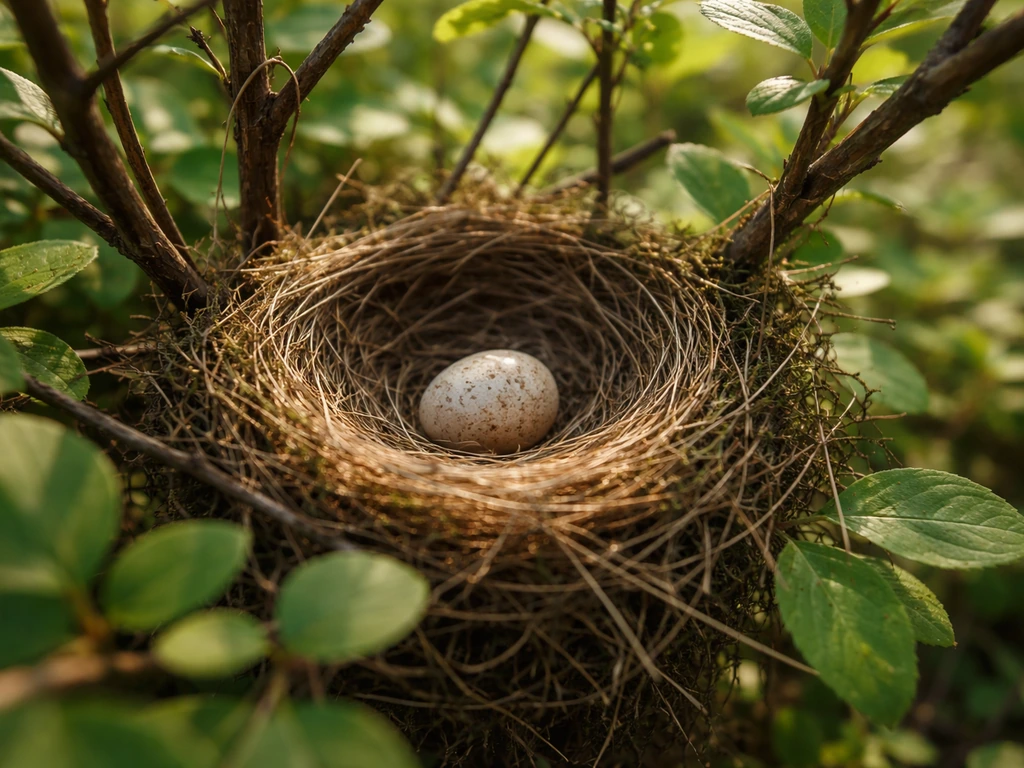
If you find unhatched bird eggs, the right move in most cases is to leave them alone, protect the nest from disturbance, and wait longer than feels comfortable before doing anything else. Most people intervene too soon. Wild bird eggs, especially those of migratory songbirds, are protected by federal law in the United States, and removing or handling them without a permit is illegal. That said, there are real situations where you do need to act, and this guide walks you through each one.
What to Do With Unhatched Bird Eggs: Step-by-Step Guide
Marcus Holloway
27 Apr 2026
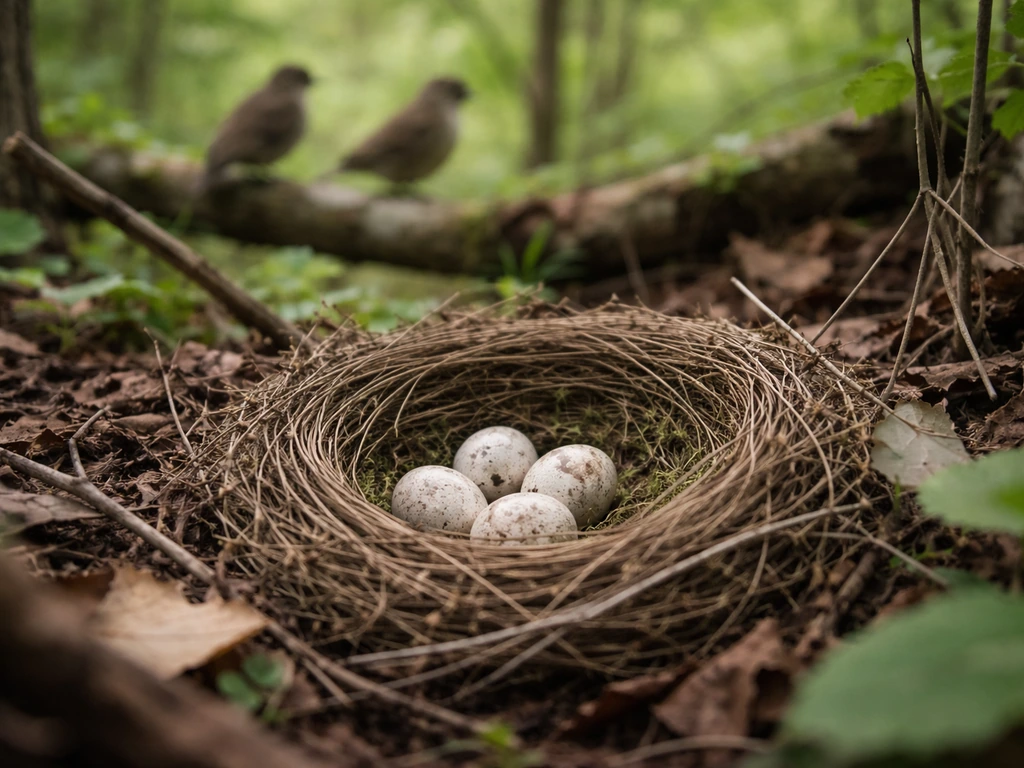
Assess the situation before you touch anything
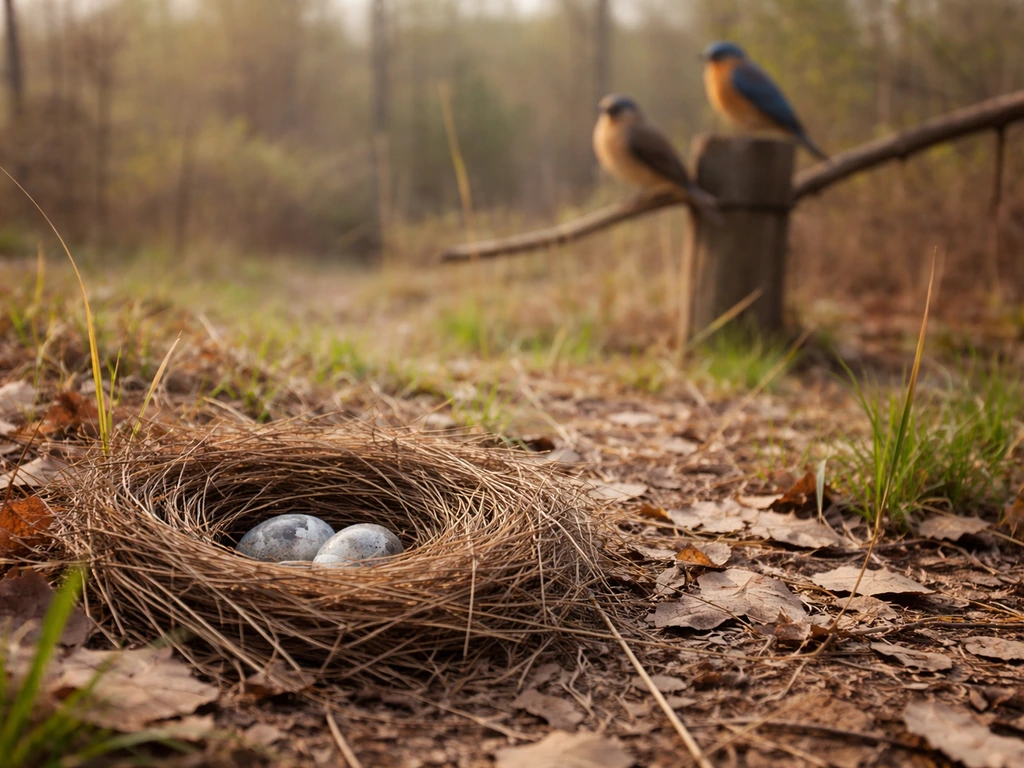
Before you do anything with an unhatched egg, stop and observe. Is the nest intact? Are the adult birds anywhere nearby, watching from a branch or fence? Are there other eggs or chicks in the nest? Many people assume a nest is abandoned the moment they stop seeing a parent sitting on it, but adult birds leave regularly to forage, drink, and stretch. A nest that looks empty for an hour is almost never abandoned.
Your first job is to protect the nest from further disturbance, not to intervene. Keep children and pets well away. If the nest is low and accessible, consider setting up a temporary barrier, like a ring of garden stakes or a chair nearby, to discourage curious animals while still letting the parents return. Do not move the nest unless it is in immediate physical danger, like falling from a branch.
Also protect yourself. Always wear disposable gloves when handling eggs or nest materials. Wild bird nests can carry bacteria, parasites, and in rare cases, pathogens like salmonella. Wash your hands thoroughly with soap and water after any contact, even if you wore gloves. This is basic hygiene, not cause for panic.
How long to wait after the expected hatch date
This is where most people get it wrong. They see eggs sitting in a nest for what feels like a long time and assume nothing is going to happen. But NestWatch, the nest-monitoring program run by the Cornell Lab of Ornithology, recommends waiting at least four weeks past the expected hatch date before concluding a clutch will not hatch. If you are not sure of the hatch date, wait four weeks from the last time you observed an adult bird at the nest.
Incubation periods vary widely by species. Small songbirds may incubate for only 11 to 14 days, while larger birds like owls and raptors can take 28 to 35 days or more. If you do not know the species, you genuinely cannot know how long is too long. What looks like a stalled nest may simply be mid-incubation. There are documented cases of owl females sitting on eggs well past the typical hatching window before finally abandoning them. The four-week buffer accounts for this uncertainty.
The short version: if you are not sure whether the hatch date has passed, wait four weeks before concluding anything. Mark the date in your phone when you first noticed the eggs, and check back at a distance every few days.
Check the egg safely: candling basics and what you can learn
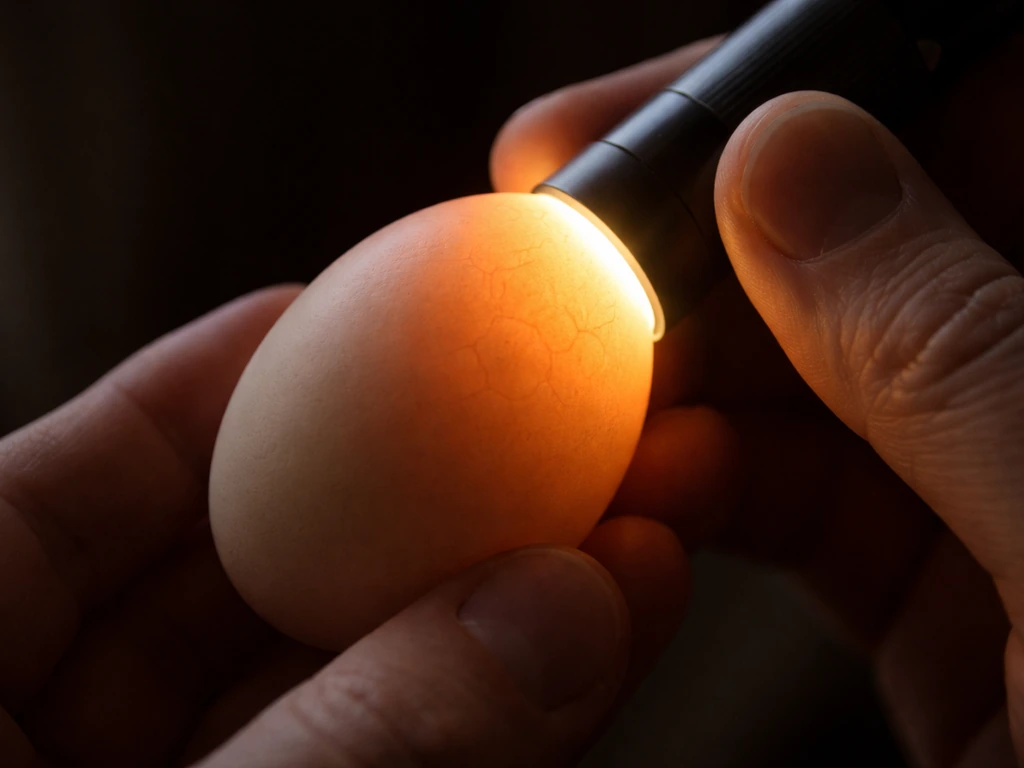
Candling is a technique where you hold a bright light source, like a small flashlight or a purpose-made candler, directly against the large end of an egg in a dark room. The light passes through the shell and lets you see inside. It is a legitimate tool used by wildlife professionals and researchers to assess egg development without cracking the shell open.
Here is what you can learn from candling a wild bird egg: a living, developing embryo will show visible blood vessels spreading through the interior, and as development progresses, you will see a dark mass (the embryo) moving or shifting. In case you are wondering how to find a bird egg, start by observing the nest from a distance and looking for signs of active nesting before you consider any handling wild bird egg.
A freshly laid, unincubated egg looks mostly clear or pale orange-yellow. A dead or non-viable egg will appear dark, murky, or may have a ring of blood but no spreading vessels. An egg that has been sitting long enough may develop a dark, opaque interior that smells foul when cracked, which means it has decomposed.
A few important limits to know: candling works best on eggs with thinner or lighter-colored shells. Dark, thick shells like those of many ducks or some raptors are much harder to see through. Also, handling the egg carries real risk. Turning or jostling a developing egg can disrupt the embryo, and repeated handling increases that risk. If you candle, do it once, briefly, and as gently as possible. Hold the egg at the same angle it rested in the nest. Do not shake it.
What candling cannot tell you: it cannot confirm a specific species, determine how far along development is with precision, or tell you whether an egg will definitely hatch. It is a rough assessment tool, not a diagnostic one.
If the parents or nest are absent: reunite, secure, and protect
If you have watched the nest for several hours over multiple days and have not seen any adult birds return, start by asking whether the nest itself is in good shape. Is it still securely attached? Has it been disturbed by a storm, a predator, or a branch fall? Sometimes the problem is not abandonment but a structural issue that a quick fix can resolve.
If the nest has been knocked down but is intact, you can gently replace it in the same tree or shrub it came from, as close to the original location as possible. Secure it with a small piece of string or a zip tie. The parents are often watching nearby and will return once the disturbance is gone. The common belief that birds will abandon a nest because a human touched it is largely a myth. Most birds have a limited sense of smell and will not reject eggs because of human scent.
Once the nest is back in place, step away and watch from a distance for at least a few hours. Stay quiet and out of sight if you can. If the parents return, your job is done. Keep the area calm, limit foot traffic, and check again periodically without getting close.
Do not attempt to warm the eggs artificially unless a licensed wildlife rehabilitator has specifically told you to do so as a short-term bridge while you transport the eggs. Do not place them on a heating pad, in a bowl of warm water, or in a makeshift incubator. Improper temperature and humidity can kill an embryo faster than the cold will.
When DIY help is not appropriate and when to call a wildlife rehabilitator
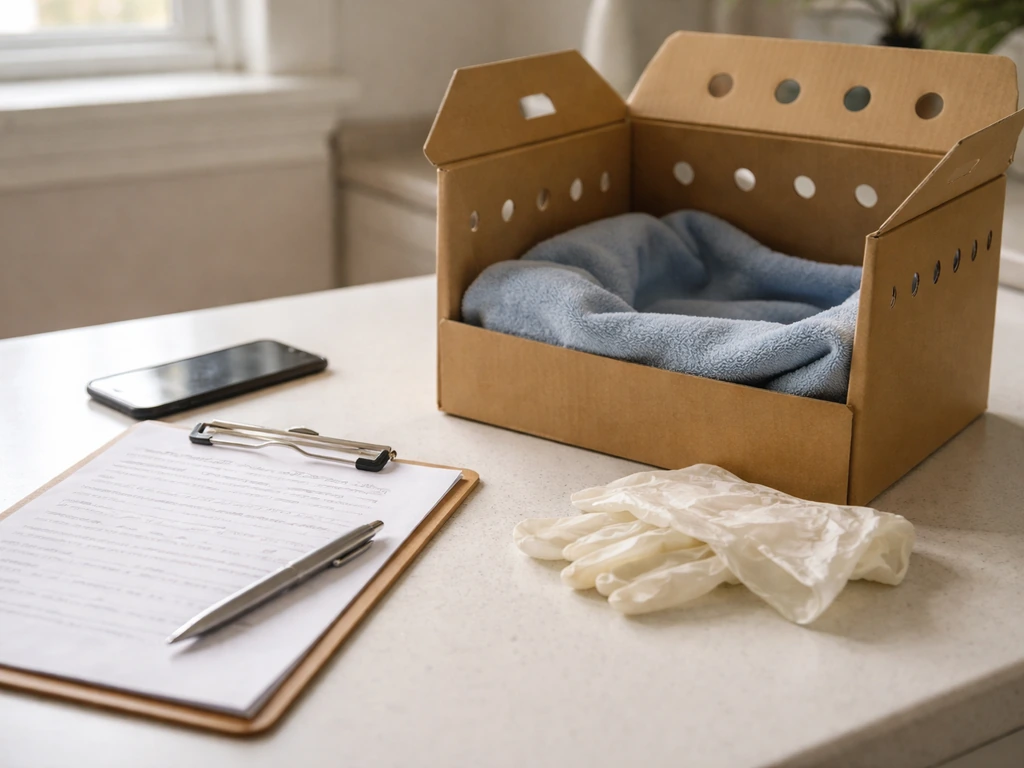
There is a hard limit to what any non-professional should be doing with wild bird eggs, and that limit is reached pretty quickly. Incubating abandoned eggs at home is not a viable option for most people. It requires precise temperature control (typically around 99 to 100 degrees Fahrenheit with the right humidity), regular egg turning, and knowledge of the species-specific requirements. Done incorrectly, it causes suffering rather than preventing it.
Beyond the practical issues, keeping wild bird eggs or attempting to hatch them without a permit is illegal in the United States under the Migratory Bird Treaty Act, which protects the nests and eggs of most native songbirds, raptors, shorebirds, and waterfowl. The same broad protections exist in Canada, the UK, and many other countries. This is not a technicality. It is a meaningful legal restriction that exists because well-meaning interference often does more harm than good.
Call a licensed wildlife rehabilitator when any of the following apply:
- You have confirmed through observation (multiple days, multiple hours each day) that no adult birds are returning to the nest
- The eggs appear to be developing but the parents are gone and the eggs are getting cold
- You find a dead adult bird near the nest, suggesting the parent may have been killed
- There are chicks in the nest alongside unhatched eggs and the chicks appear cold, injured, or in distress
- You suspect the eggs belong to a threatened or endangered species
- There are signs of unusual die-off in the area (multiple dead birds nearby), which could signal disease
It is worth knowing that not all wildlife rehab centers can take abandoned eggs. Cornell Lab's All About Birds notes that many centers lack the equipment or capacity to incubate eggs, and that hatching success for abandoned eggs brought in for care is often very low. Some centers, like Flint Creek Wildlife Rehabilitation, do have incubators and will assess viable eggs. When you call, be honest about what you have observed and let the professionals decide. They will tell you whether to bring the eggs in or leave them in place.
What to do with non-viable unhatched eggs
Once you have waited the appropriate amount of time and have good reason to believe the eggs are no longer viable, the practical question becomes what to do with them. If you are trying to figure out what to do with abandoned bird eggs after you have waited and confirmed they are no longer viable, the steps differ depending on where they are located. If you are trying to figure out what to do with abandoned bird eggs, read the specific steps for each location and situation. The right approach depends on whether the eggs are in a nest box you manage, in a wild nest on your property, or somewhere public.
For nest boxes you manage: after the waiting period has passed and you are confident the clutch failed, you can remove and dispose of the eggs. Double-bag them in plastic and place them in the garbage. Do not compost decomposing eggs. If an egg has cracked or smells strongly, wear gloves and a mask, avoid breathing in any dust or particles, and wash your hands thoroughly afterward. The CDC emphasizes good hygiene after handling any wild bird materials, including eggs.
For nests in trees or shrubs on private property: in the US, you are generally allowed to remove a nest that is no longer active (no eggs developing, no adults returning) after the nesting season or after the waiting period. In Great Britain, the RSPB notes that unhatched eggs can only be removed legally during a defined seasonal window. Check your local regulations if you are outside the US.
After removal, clean the nest box or area with a dilute bleach solution (one part bleach to nine parts water), rinse well, and let it dry completely before the next nesting season. This helps reduce disease risk and parasites.
Common mistakes to avoid with unhatched bird eggs
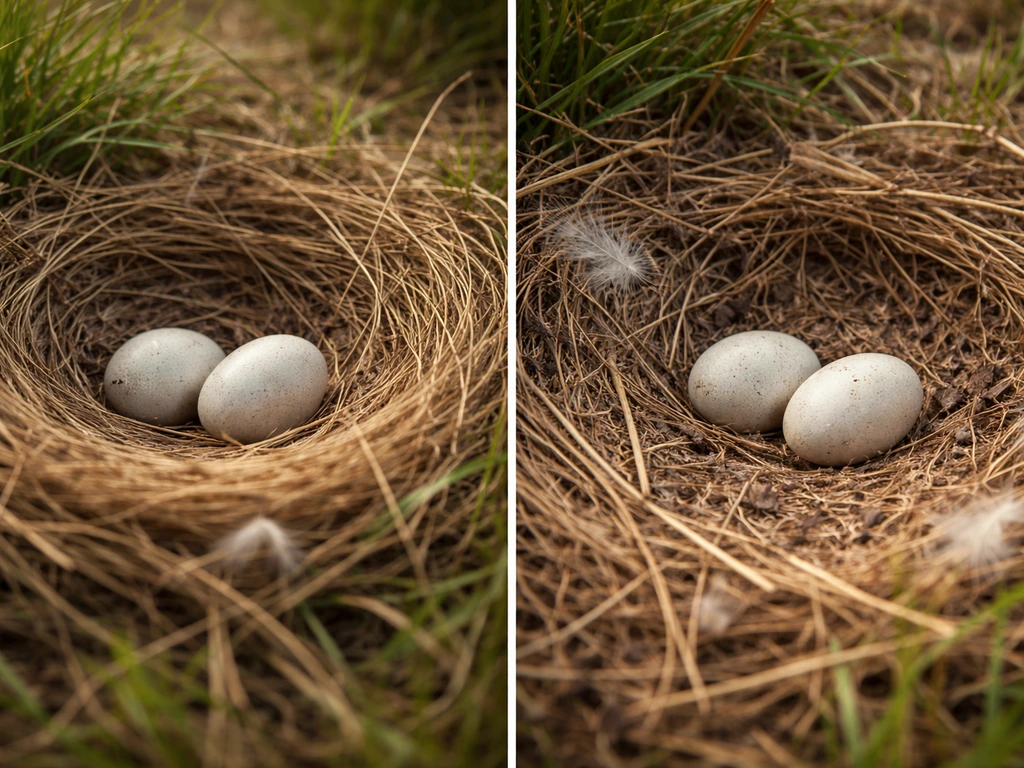
- Assuming abandonment too quickly: parents are often off the nest and will return. Four weeks is the recommended waiting period after the expected hatch date.
- Attempting home incubation: without precise temperature, humidity, and turning schedules, DIY incubation almost always fails and is illegal for wild birds without a permit.
- Opening the egg to check: cracking a developing egg kills the embryo. Always use candling if you need to assess viability.
- Overheating the eggs: placing eggs on a heating pad or in direct sunlight can kill a developing embryo within minutes. Room temperature in a sheltered spot is safer than improvised heat.
- Moving the nest to a 'better' location: parents orient to the original nest location. Moving a nest even a few feet away can cause the adults to abandon it.
- Trying to feed an embryo or newly hatched chick without guidance: newly hatched chicks have specific dietary needs by species. Feeding the wrong thing can be fatal.
- Waiting too long to call for help: if there are clear signs of parent death or severe nest damage, call a rehabilitator sooner rather than waiting the full four weeks.
Finding local help and what to tell the rehab or vet
The fastest way to find a licensed wildlife rehabilitator near you is to search the National Wildlife Rehabilitators Association (NWRA) or Wildlife Rehabilitators directory online, or call your state or provincial wildlife agency directly. If you are unsure what to do with the egg, contact a licensed wildlife rehabilitator for guidance. Many permitted wildlife rehabilitators cannot provide pick-up services and instead function like hospitals with patients in care blank" rel="noopener noreferrer">find a licensed wildlife rehabilitator near you. Many state agencies, like South Carolina DNR, publish PDF directories of licensed rehabilitators by county. Your state's fish and wildlife service website is also a reliable starting point.
When you call, be ready to share specific information. The more detail you give, the faster they can advise you.
- Describe the location of the nest: how high off the ground, what kind of tree or structure it is in, whether it is sheltered or exposed
- Describe the eggs: how many, approximate size and color, any visible cracks or smell
- Describe the adults: what the bird looks like, when you last saw a parent at the nest, and whether you found any dead birds nearby
- Describe what you have done so far: have you touched or moved anything, how close you have gotten, have you candled the eggs
- Give your location (city and zip code) so they can advise on local regulations and direct you to the closest facility that can help
The rehabilitator will likely ask you to leave the eggs in place while they assess the situation over the phone, or they may ask you to bring the eggs in for evaluation. Follow their instructions. They are the experts, and the goal is the same as yours: giving these eggs the best realistic chance.
If you are also dealing with a situation where an adult bird is injured near the nest, or if you found the egg on the ground away from any nest, those scenarios have their own specific steps worth knowing. If you found the egg on the ground, the next decision is different from handling a suspected nest and parents nearby, so use this as a starting point for what to do with a bird egg on the ground. The same applies if you are trying to figure out whether eggs you found are even wild bird eggs to begin with. The broader picture of what to do when you encounter bird eggs in different contexts connects closely to these questions.
FAQ
What if I’m pretty sure the eggs are abandoned, can I just relocate the nest to a safer spot?
Relocating is only appropriate if the nest itself is knocked over or dislodged but still intact. If the nest is active or you are still within the four-week buffer, keep it undisturbed. If the nest is in a place where it will be destroyed soon (for example, mowing a lawn), contact a wildlife rehabilitator or local wildlife agency for guidance before moving anything.
How far should I keep my distance while waiting and checking the nest?
Watch from far enough away that you do not cause the adults to stop returning. In practice, that often means using a window, deck, or a spot across the yard, not standing close to the nest. If adults fully stop for extended periods after you approach, increase the distance and reduce frequency of checks.
Is it okay to take photos or video of the eggs for identification?
Yes, passive observation is generally safer than handling. Use a zoom lens if possible, avoid leaning in, and do not shine bright lights directly into the nest repeatedly. If you need to move closer for clarity, stop and return to a farther vantage point.
Should I mark the nest or the egg with string or tape so I can find it later?
You should avoid putting anything on or directly around the nest that could draw animals or require you to disturb the eggs later. Instead, mark the location indirectly, like making a note in your phone GPS coordinates or using a distant reference point (tree line, path).
Can I touch the eggs if I wear gloves to reduce contamination risk?
Gloves reduce your risk of bacteria exposure but they do not eliminate the risk to the egg. Handling can cool or mechanically disrupt embryos, and repeated contact increases the chance of breaking the eggs or stressing adults. If you must act, do only what a licensed professional instructs, and otherwise keep hands off.
What if the nest is in a spot that will be disturbed soon, like an active construction area?
Do not wait until the nest is destroyed. Call a licensed wildlife rehabilitator or your local wildlife agency as soon as you notice the eggs, and be ready to follow their plan for exclusion zones or temporary protection.
Do I have to wait four weeks even if the eggs look clearly dead?
If you have enough certainty to conclude they are no longer viable, you may not need to wait beyond that determination, but visual cues from afar can be misleading. The four-week buffer exists because incubation length varies a lot across species, and apparent “failure” can actually be normal timing. When in doubt, wait the full buffer or consult a professional.
What does “no longer active” mean for removal decisions?
Typically, it means there are no signs of adults returning and there are no developing signs (no incubation behavior, no fresh egg movement, no chicks). A nest that looks abandoned for an hour is not the same as a nest that has been inactive over multiple days. Also consider whether the structure is damaged, because sometimes failure is due to a nest disruption rather than natural abandonment.
If I find an unhatched egg on the ground, how is that situation different from a nest egg?
Ground eggs may be fallen from a nest, left behind by a predator, or from a different nest entirely. You should treat it as a separate scenario and avoid assuming it is safe to handle or dispose of immediately. The safest next step is to check whether adults are still visiting nearby and contact a wildlife rehabilitator if you are unsure.
Can I clean and reuse a nest box right away after removing eggs?
Wait until the eggs are confirmed not viable and the waiting period has passed when applicable. After removal, clean and disinfect, then rinse and allow it to fully dry before putting it back into service. If the box contains heavy contamination (multiple failed clutches, strong odor, visible debris), consider getting professional advice before reusing it.
What should I do if I suspect the egg is from a protected species, like a raptor or migratory songbird?
Treat all wild bird eggs cautiously and assume legal protections apply. Do not incubate at home, do not sell or transport, and do not remove without following local rules. If you cannot confirm species from distance, rely on the waiting period and contact a wildlife rehabilitator for species-appropriate guidance.
How should I dispose of eggs if there is a strong odor or an egg has cracked?
Handle with gloves, and if there is dust or potential splatter, use a mask to reduce inhalation. Double-bag securely, avoid rinsing the contents into drains, and wash hands thoroughly afterward. Do not compost and keep pets away from the disposal area until cleanup is complete.
Next Article
How to Find a Bird Egg: Safe Steps and Rescue Options
Find a wild bird egg safely: signs, ethical search steps, what to do if you see nestlings, and when to call rescue.