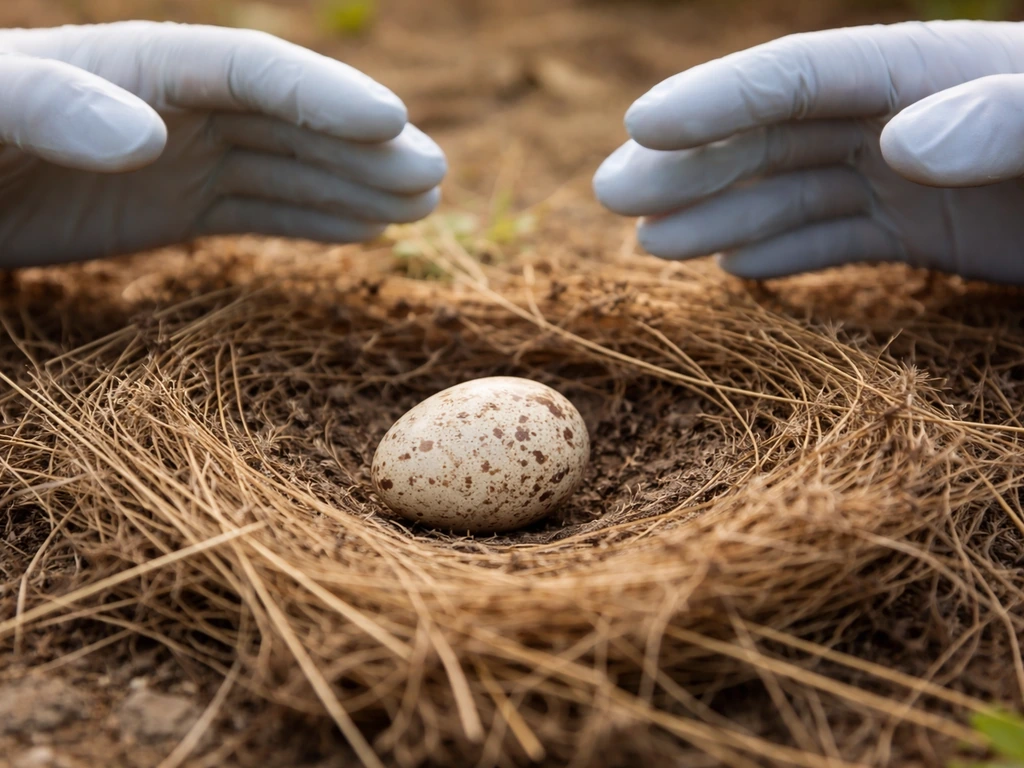
If you just found a bird egg and you're not sure what to do, here's the short answer: don't pick it up yet, don't try to incubate it yourself, and don't assume it's abandoned. Most eggs you find are either still being tended by a parent or in a situation where your best move is to do as little as possible. This guide will walk you through exactly how to assess what's happening, what actions are safe, and when to call in a professional.
What to Do If You Find a Bird Egg: Today Steps
Marcus Holloway
7 Apr 2026
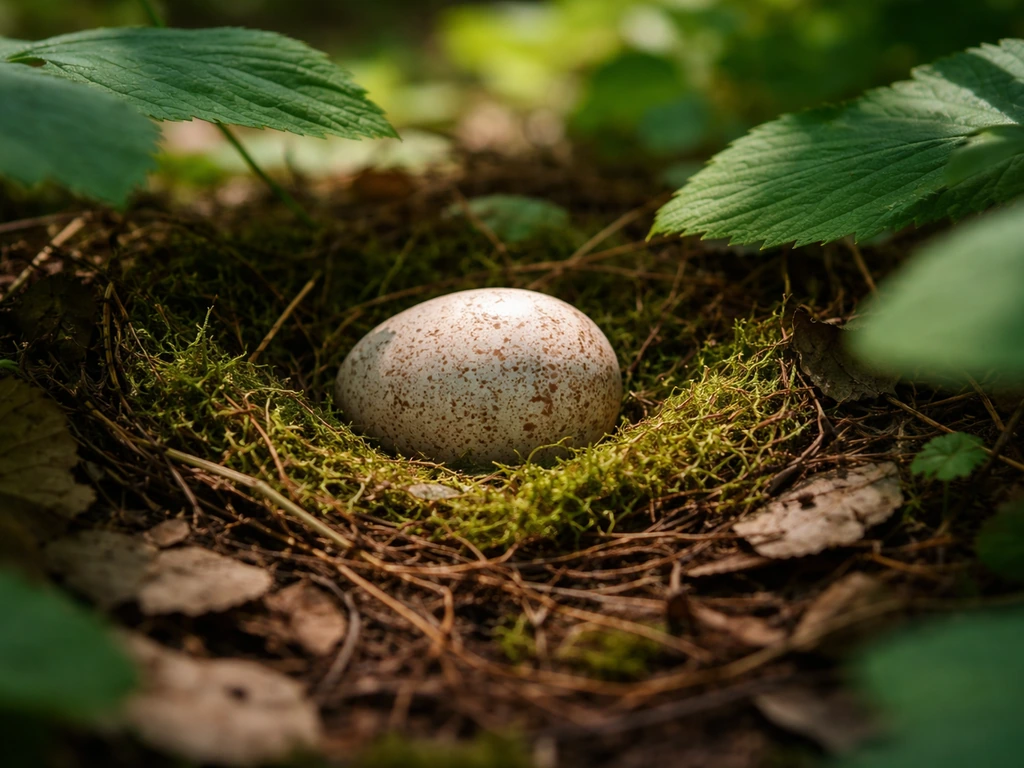
Stay safe and protect the egg from harm
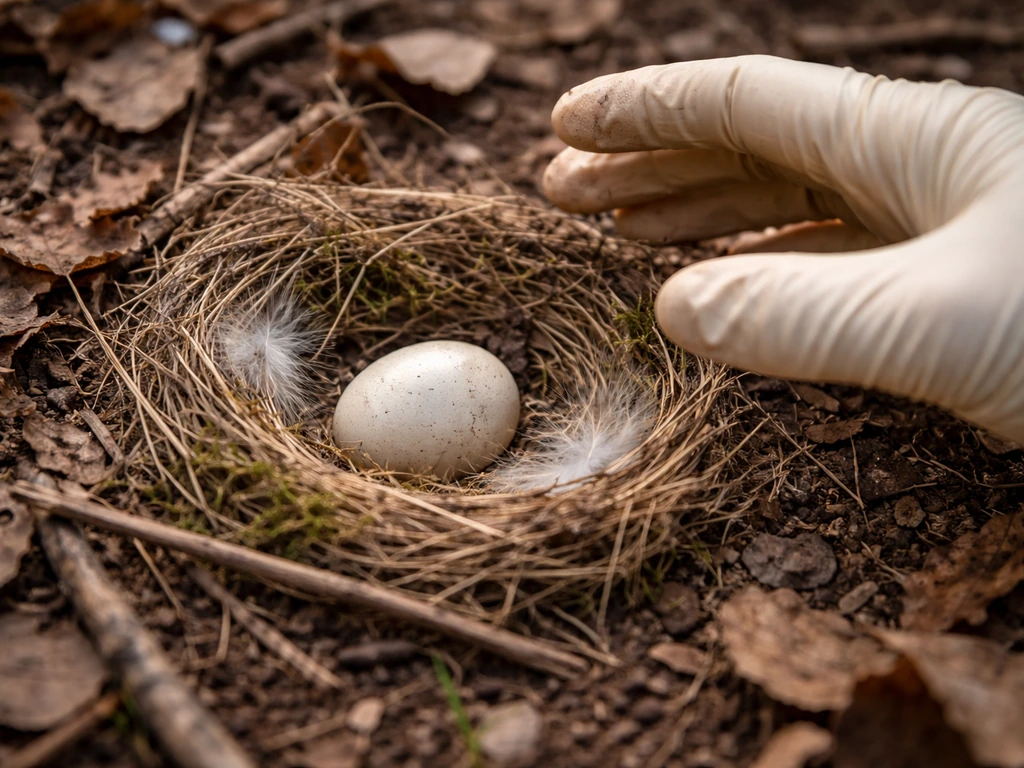
Before you do anything else, protect yourself. Wild bird eggs, nests, and surrounding materials can carry bacteria, parasites, and in rare cases avian influenza. Don't handle the egg with bare hands. If you absolutely need to touch it, use gloves or wrap your hands in a cloth or paper towel. After any contact with wild bird materials, wash your hands thoroughly for at least 15 seconds with soap and water. If the egg touched clothing or a surface, clean that too.
Also think about the egg's immediate environment. Is it sitting in direct sun on a hot surface? Near a busy path where people or pets might step on it? Is there a cat, dog, or crow circling nearby? If there's an active threat, you may need to move the egg minimally to a safer spot close by, but hold off on that decision until you've done a quick situational check.
Quick checks: is the egg abandoned or still being cared for?
This is the most important question, and the honest answer is: you probably can't tell just by looking at it for two minutes. A parent bird may have flown off when you approached. It may be foraging nearby. It may be watching you from a branch right now, waiting for you to leave. The best way to find out is to back away from the egg by at least 10 to 15 meters and watch quietly for one to two hours. Yes, that's a real commitment, but it's the most useful thing you can do.
Parents are often scared off by human presence. Once you leave or step back, they frequently return within 20 to 30 minutes. If you watch from a distance for a couple of hours and no adult bird appears at all, that's a stronger signal that something may be wrong. Keep notes on what you see, including the time, whether any birds came close, and any sounds in the area.
A few signs that an egg may genuinely be abandoned: it's cold to the touch and has been exposed for many hours, the nest is completely destroyed with no structure remaining, you can see that both parent birds have been injured or killed nearby, or the egg has been sitting in the same spot for days without any adult activity. Even then, calling a wildlife rehabilitator before acting is the right call.
What to do right now (and what NOT to do)
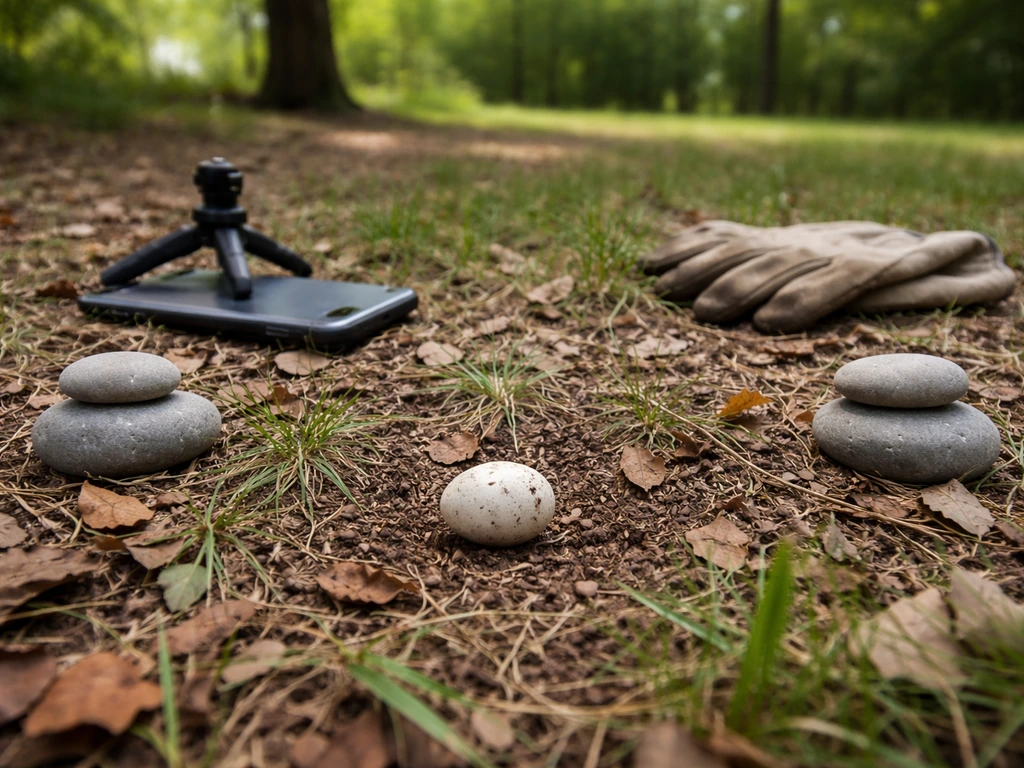
Here's a practical checklist of immediate steps to take and traps to avoid.
- Step back from the egg and watch from a distance for at least one to two hours before drawing any conclusions.
- Take photos of the egg, its position, the surrounding area, and any nest structure nearby. These will be useful if you end up calling a wildlife rehabber.
- Note the location (GPS coordinates if you can), the time you found it, and the current weather conditions.
- If the egg is in immediate danger from a predator or direct hazard, move it only the minimum distance needed to get it out of harm's way, ideally to shade or cover nearby.
- Do not put the egg in water, in a sealed container without air, or next to a heat lamp or vent. These well-meaning actions can damage or kill an embryo.
The single biggest mistake people make is attempting DIY incubation too quickly. Incubating a wild bird egg requires very specific temperature, humidity, and turning schedules that vary by species. Getting it wrong kills the embryo. Unless you are a licensed wildlife rehabilitator or avian vet, the odds that home incubation will succeed are extremely low. It also puts you in a legally complicated position (more on that below).
If you're dealing with an egg you found directly on the ground and you're weighing your options, what to do with a bird egg on the ground covers the specific ground-find scenario in more detail, including how to assess whether it fell from a nearby nest.
If the egg is cold, uncovered, or the nest was disturbed
A cold egg doesn't automatically mean a dead embryo. Eggs can tolerate short periods of cooling, especially early in incubation. But a cold egg does signal that something disrupted the normal incubation process and that you should act a bit more quickly.
If the nest was knocked down by wind, a tree branch, or a predator, the best immediate action is to try to restore it to its original position. If the nest itself is still intact but has just been displaced, you can gently place it back where it came from, or as close as possible. The goal is returning the egg to exactly where it was found, not relocating it to a new spot you think is better. Birds navigate back to a location, not to a spot you've chosen for them.
If the nest structure is destroyed beyond repair, you can fashion a simple substitute using a small open container (like a berry basket or shallow bowl) lined with dry grass or leaves, place the egg inside, and secure it in the tree or bush as close as possible to the original location. Then back away and watch to see if parents return. This is a minimal intervention, and it's far better than bringing the egg indoors.
For more detailed guidance specific to this scenario, the article on what to do with abandoned bird eggs walks through how to assess whether an egg has truly been deserted and what realistic options exist.
If an egg is broken or there are chicks or other signs nearby

A broken egg with a visible but undeveloped embryo cannot be saved. The hard truth is that once the shell is compromised and the embryo is exposed, there's nothing a non-professional can do. The most humane thing is to place the broken egg in a natural area away from foot traffic and let it decompose. Don't try to repair the shell with tape or glue.
If you see other unhatched eggs nearby alongside a broken one, those remaining eggs may still be viable. Focus your attention on them, document everything, and call a wildlife rehabilitator. Also look around carefully for any signs of hatched chicks on the ground. Newly hatched chicks are fragile but may still have parents nearby. A situation where you find both unhatched eggs and live chicks in distress is a genuine emergency that warrants an immediate call to a professional.
If you suspect some eggs in a clutch haven't hatched after the rest of the brood has fledged, the guide on what to do with unhatched bird eggs is specifically useful for that scenario.
Humane options and DIY limits
It's worth being direct about this: DIY incubation of wild bird eggs almost never works well, and attempting it without the right equipment and knowledge is more likely to kill the embryo than save it. A standard chicken egg incubator doesn't replicate the conditions most wild songbirds need. Temperature tolerances, humidity levels, and turning frequency are all species-specific, and getting those wrong in the first 48 hours can be fatal to the embryo.
That said, there are minimal things you can do to stabilize an egg while you arrange professional help. Keeping the egg at room temperature (around 65 to 70°F, not warm) in a small open container lined with soft dry material is safe for a short period. Don't seal it in plastic. Don't place it on a heating pad or under a lamp. The goal at this stage is to avoid making things worse while you get the egg to someone qualified.
Relocation, meaning moving the egg to a different nesting site or giving it to a different bird's nest, is almost never appropriate and is legally restricted for protected species. Leave creative solutions like cross-fostering to licensed professionals who understand the biology involved.
If you're trying to understand the full range of options available to you, the broader overview at what to do with bird eggs is a good companion read covering different scenarios in one place.
When to call wildlife rehab or an avian vet, and what to tell them
Call a wildlife rehabilitator or avian vet if any of the following are true: the egg has been cold and unattended for more than a few hours, the nest was destroyed and you can't restore it, you've watched for two hours and no adult bird has returned, the egg is cracked but potentially still intact, you see signs of an injured or dead parent bird nearby, or you simply aren't sure what to do and feel uncomfortable acting alone. For Washington-specific guidance on leaving an animal alone versus contacting a licensed wildlife rehabilitator for injured or orphaned wildlife, see the Washington Department of Fish & Wildlife you see signs of an injured or dead parent bird nearby.
To find a licensed wildlife rehabilitator in the U.S., the USFWS website has a directory, and most state fish and wildlife agencies maintain their own lists as well. You can also search the blank" rel="noopener noreferrer">International Wildlife Rehabilitation Council's resources for North America. Many rehabilitators will advise you over the phone without requiring you to bring the egg in immediately.
When you call, have this information ready. It will save time and help the professional give you better advice.
- Exact location where you found the egg (address, GPS, or a description with landmarks)
- Date and time you found it
- Current and recent weather conditions (rain, heat, cold)
- Description of the egg: size, color, markings, condition (intact, cracked, cold, warm)
- Whether a nest was present and its condition
- Any adult bird activity you observed, or lack of it
- Photos if you have them
- Whether you touched or moved the egg, and if so, how
Be honest about what you've already done. Rehabilitators aren't there to judge you. They need accurate information to help the animal.
Legal and ethical limits on handling bird nests and eggs
In the United States, most wild bird species, including the vast majority of songbirds and migratory birds, are protected under the Migratory Bird Treaty Act (MBTA). This federal law makes it unlawful to pursue, take, capture, kill, possess, or transport any migratory bird, including its nest or eggs, without a federal permit. That's not a technicality. It applies to well-meaning people who pick up an egg to 'save' it.
Moving or disturbing a nest, even to relocate it a few feet, can also be a violation without authorization. If you're dealing with a nest on your property or in a location that creates a conflict, the right move is to contact your state fish and wildlife agency or a USFWS permit office before doing anything. They can advise on what's allowed and whether any exemptions apply.
A few species are not protected under the MBTA. House sparrows, European starlings, and rock pigeons (common feral pigeons) are non-native invasive species and do not have federal protection in the U.S. But if you're not certain of the species, it's always safer to treat an egg as protected. Identification from an egg alone is difficult, and misidentification won't hold up as a legal defense.
Ethically, the goal is to minimize your footprint. Even if an action is technically legal, repeated handling, excessive monitoring visits, and unnecessary disturbance around a nest site can stress parent birds and increase the risk of nest abandonment. If you're curious about how to identify what type of bird may have laid a particular egg, the guide on how to find a bird egg covers identification basics that can help you figure out what you're dealing with.
Once an egg does hatch, the situation shifts considerably. What to do when bird eggs hatch covers how to handle that transition, including what newly hatched chicks need and when parental care is still in play.
The bottom line: treat every bird egg you find as protected until proven otherwise, do as little as possible unless there's a clear and immediate threat to the egg, watch from a distance before assuming abandonment, and pick up the phone to call a wildlife professional sooner rather than later. That combination gives the egg the best possible chance.
FAQ
What should I do if the egg is in a place where people or pets will definitely step on it?
If the egg is on a lawn, sidewalk, or other high-traffic spot, first decide whether you can wait. Back away and watch from a distance for one to two hours if it is safe to do so. If immediate hazards are clear (for example, pets actively approaching or frequent foot traffic), move the egg only minimally to the nearest safer place that keeps it as close as possible to the original spot, then keep watching to confirm parents return.
If the egg feels cold, does that always mean it is abandoned or the embryo is dead?
Not necessarily. Many eggs feel cold if the parent has been away briefly, especially early in incubation. The more important pattern is whether adults return. Treat it as not abandoned until you complete a distance watch and you either see no adult activity for two hours or you have other strong indicators like a destroyed nest or injured parent birds nearby.
How can I monitor the egg without making the situation worse?
You can reduce risk without doing anything dramatic. Avoid repeatedly checking, use binoculars if you have them, and take notes from the same general location. If you must reposition yourself for sight, do it slowly and maintain distance, because frequent close returns can cause parents to stop coming back even when the egg is still viable.
Should I clean or rinse a found bird egg to make it safer?
Don’t rinse the egg or wipe it. Cleaning can remove protective coatings and may introduce contaminants. If you previously touched the egg or nest material, focus on hygiene (wash your hands and change gloves/clothing if you used them), then stop further handling and observe from a distance.
What if I can’t tell from a distance whether the parents are coming back?
If you cannot see whether the parents are returning, treat the situation as uncertain and contact a wildlife rehabilitator. Also consider that some species are more cryptic and may approach quietly. Having a professional confirm next steps is especially important when the nest appears intact but you are not sure whether incubation is continuing.
What should I do if I find an egg that is cracked but not fully broken?
If the egg is cracked but still mostly intact, do not try to glue it or move it repeatedly. Document what you observed, contact a wildlife rehabilitator, and only stabilize it as needed for a short period by keeping it unsealed in a small open container at room temperature (not warm) until help advises next steps.
When is it urgent enough to call immediately instead of watching for a couple of hours?
Yes, the outcome can change fast. If chicks or another life stage are present, or the parents appear injured, treat it as urgent. Similarly, if the egg has been unattended longer than a few hours, or the nest cannot be restored, call a wildlife rehabilitator promptly rather than waiting through the same timeline you would use for a low-risk ground find.
If I suspect it might be a house sparrow or starlings egg, do I still need to treat it as protected?
Even if the egg might be from a non-native species, you may not be able to identify the species with confidence from the egg alone. The safer approach is to assume protected status until you have been advised otherwise by a professional, particularly before moving, transporting, or attempting any incubation.
Can I move the egg to another nest or give it to a different pair of birds?
Moving an egg to a different nest site is typically not appropriate. Even if it feels like it would help, cross-fostering and placement require species-specific biological knowledge and often legal authorization. The minimal-intervention approach is to restore the egg to the original position when possible, otherwise provide only a simple substitute in the original area (when the nest is lost), and then monitor for parent return.
What if the egg is inside my home or attached to a building (not in a tree)?
If you find an egg inside a structure (garage, shed, porch) it is still safest to avoid removal. Keep people and pets away, watch from a distance, and contact a local wildlife rehabilitator or state agency for guidance on how to protect the egg without causing prolonged disturbance or breaking nesting laws.
Next Article
What to Do With Abandoned Bird Eggs: Humane Steps Today
Humane steps for abandoned bird eggs: assess nest vs abandonment, what not to do, safe care, and when to contact experts