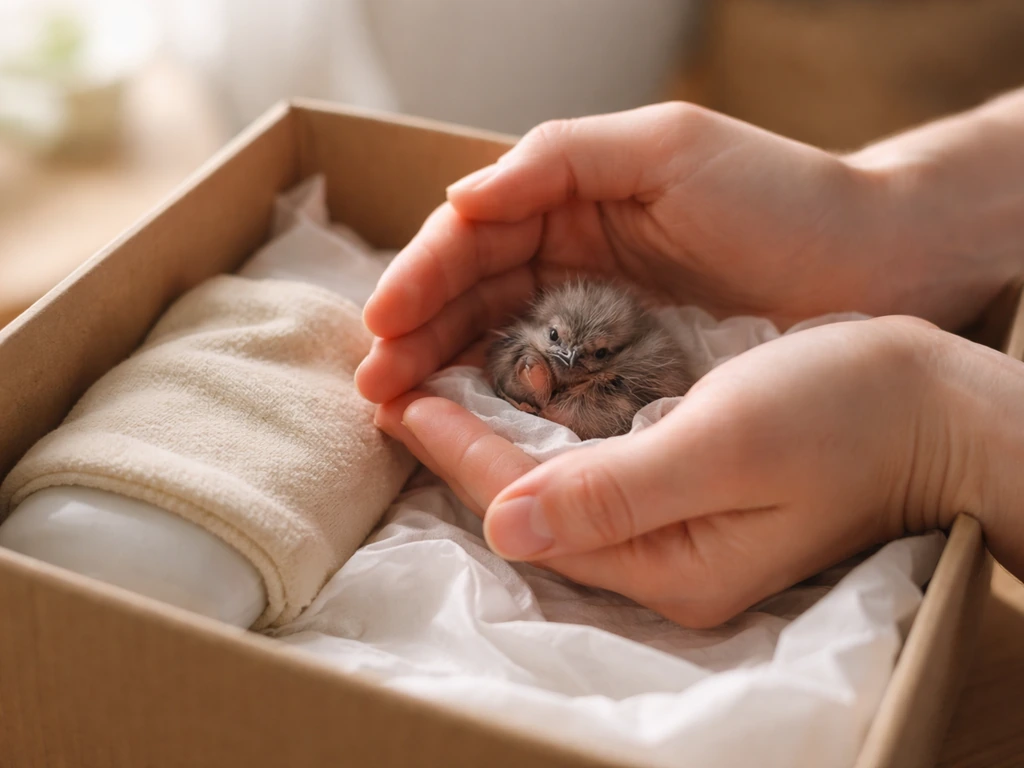
If you find a bird that's cold, stiff, or barely moving, the most important thing you can do right now is get it into a warm, dark, quiet container and let it thaw out gradually. Don't force water into its mouth, don't put it directly on a heating pad, and don't hover over it constantly. Most chilled birds need gentle warmth and minimal stress above all else.
How to Revive a Frozen Bird: Step-by-Step First Aid
Marcus Holloway
13 May 2026
First: a quick safety check before you do anything else
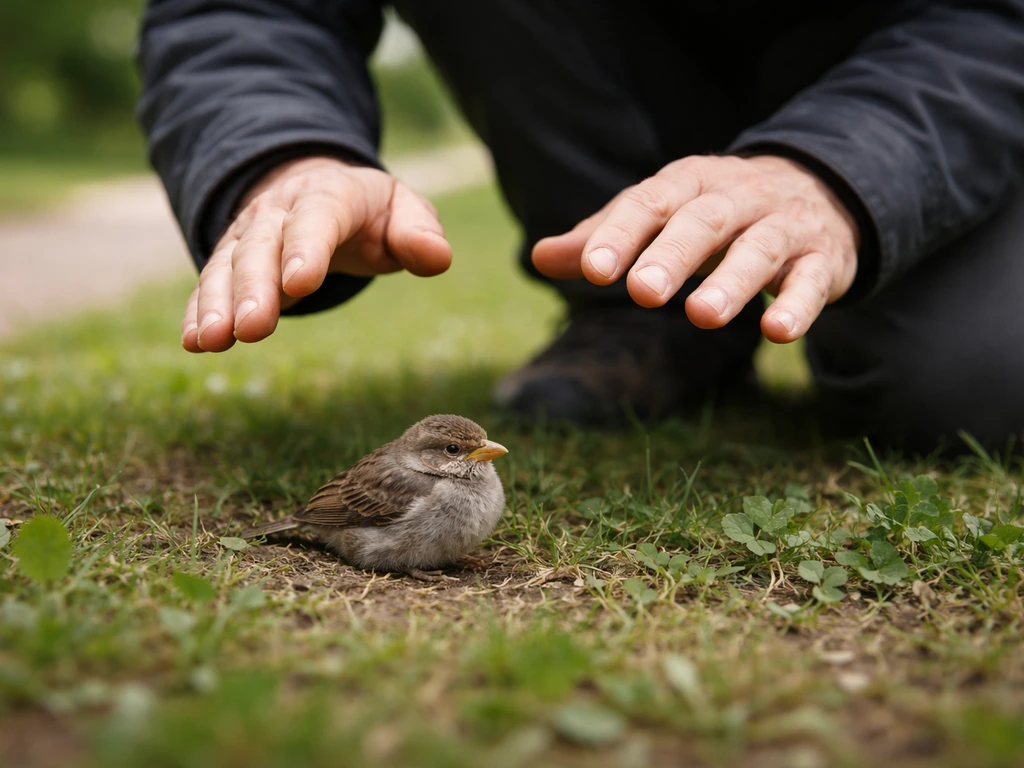
Before you move the bird, take thirty seconds to look it over without picking it up. You want to quickly figure out whether you're dealing with a bird that's simply cold and needs warming, or one that has additional injuries that change what you should do next.
Look for these signs while the bird is still on the ground:
- Visible bleeding or open wounds
- A wing or leg bent at an unnatural angle (possible fracture)
- The bird is on its back and can't right itself
- Head tilting to one side or obvious swelling
- Eyes that are closed or sunken
If you see any of these, the bird still needs warming as a first step, but it also has injuries that a wildlife rehabilitator needs to assess. Make a mental note (or take a quick photo) and plan to contact a professional as soon as the bird is contained and safe. If the bird just looks cold, still, and unresponsive but has no visible wounds, you're likely working with hypothermia alone, and the warming steps below apply directly.
One more practical point: protect yourself. Larger birds like raptors and herons can scratch or bite hard even when they appear weak. Use a thick towel or gloves when you pick the bird up, and approach from behind so it can't see you coming and panic.
How to warm a frozen or chilled bird safely
The goal is slow, even warmth. A bird that's been severely chilled can go into shock if it warms too fast, so you're aiming for gradual and controlled, not quick.
Set up the right container
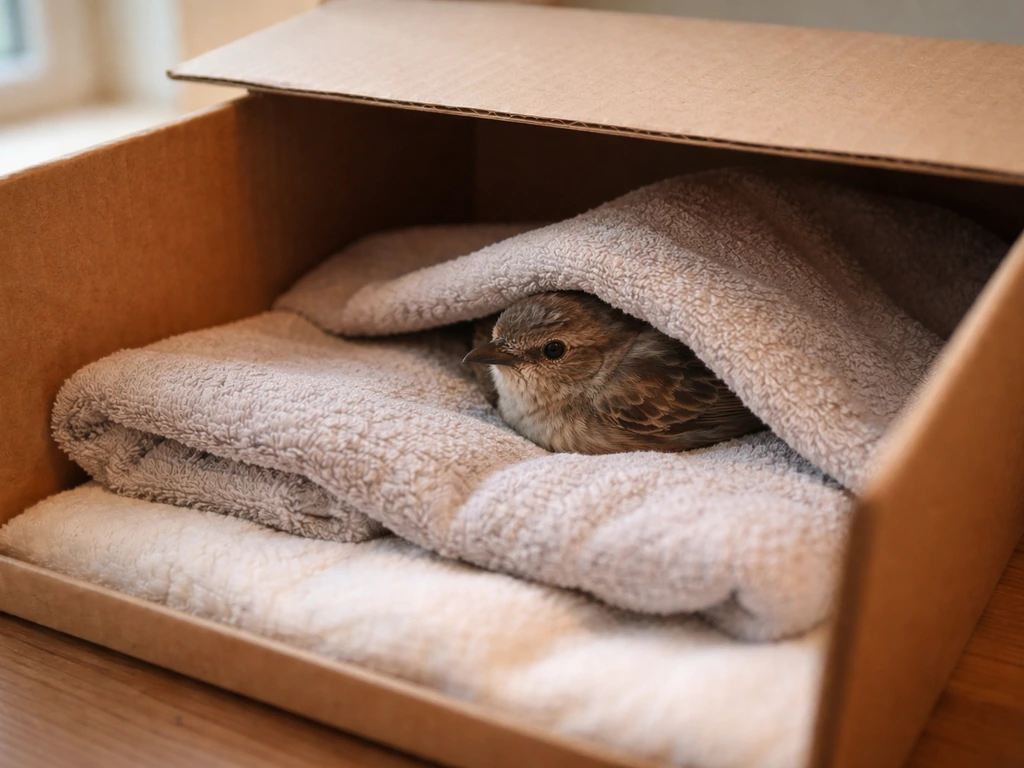
A shoebox or small cardboard box works perfectly. If the bird is cold, Tufts Wildlife Clinic recommends warming it without overheating by placing one end of a shoebox on a towel over a heating pad set on low, or by using a warm water bottle wrapped in a towel shoebox or small cardboard box works perfectly. Line the bottom with a soft towel or folded paper towels. Poke a few small air holes in the sides if the box has a lid, then place the lid on loosely. The darkness calms the bird and reduces stress, which is genuinely important for recovery.
Apply gentle heat
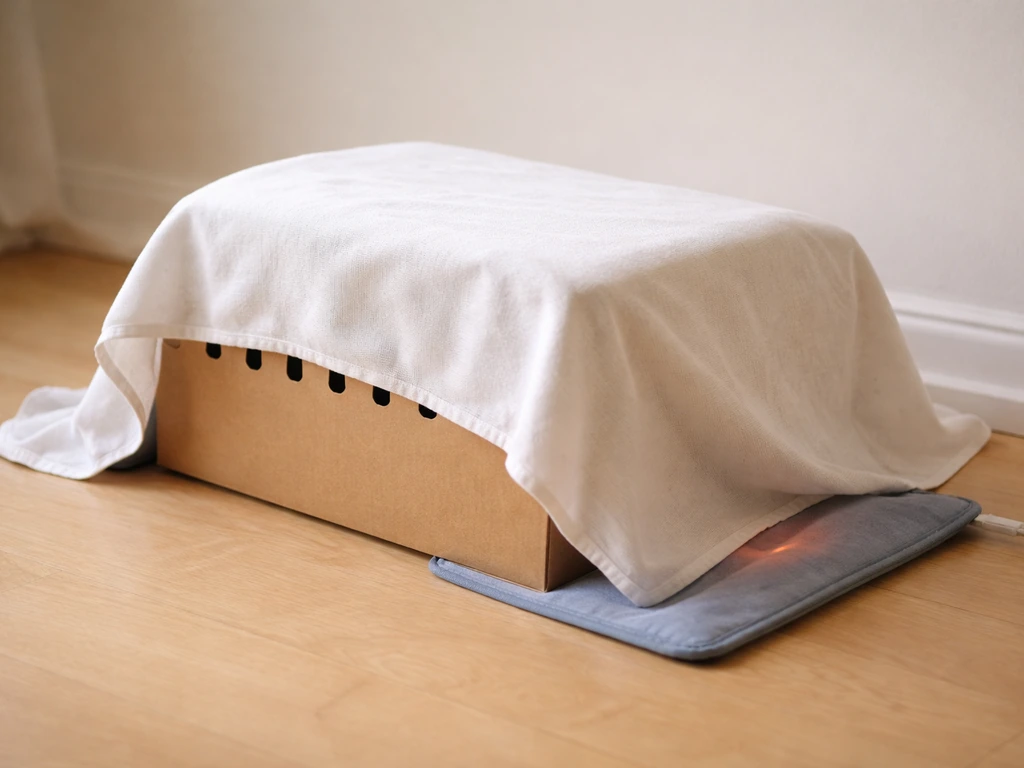
There are two reliable methods depending on what you have on hand:
- Heating pad method: Set a heating pad on its lowest setting and place the box so that only one end sits on the pad. This lets the bird move away from the heat if it gets too warm. Never put the bird directly on the heating pad.
- Hot water bottle method: Fill a bottle or a jar with a tight-fitting lid with warm (not boiling) water, wrap it in a towel so it's not hot to the touch, and place it inside the box next to the bird. The bird can lean against it or move away as needed.
In both cases, cover the box with a light sheet or towel and put it somewhere warm, dark, and quiet, well away from pets, children, and noise. Keep the room temperature comfortable but not hot.
Give it time
A chilled bird can take anywhere from one to several hours to recover. The RSPCA notes that cold birds can take up to four to six hours to come out of shock. Resist the urge to keep opening the box to check. Every time you lift the lid, you add stress and let warmth escape. Set a timer and check every 30 to 60 minutes instead.
Things you should not do
This is where well-meaning people can accidentally make things much worse. The following are the most common mistakes, and they matter enough to list clearly:
- Do not give the bird food or water. This is the single most repeated rule from every wildlife clinic and rehabilitator I've come across, including Tufts Wildlife Clinic, the U.S. Fish and Wildlife Service, and the Wisconsin Humane Society. A bird in shock or a chilled state can aspirate liquid into its lungs if you try to drip water into its mouth, and that can kill it. Wait until it's alert, upright, and responsive before even thinking about food or water.
- Do not put the bird directly on a heating pad. Even on low, direct contact can burn a bird's skin quickly, especially if it's too weak to move away.
- Do not use a hair dryer, heat lamp at close range, or any radiant heat source pointed directly at the bird.
- Do not handle the bird more than necessary. Every interaction is stressful. Once it's in the box, leave it alone.
- Do not compress the bird's chest when you're holding or restraining it. Birds breathe using their chest muscles, and squeezing the body even slightly can restrict breathing. Hold it gently with a towel, supporting the body.
- Do not place the bird near a television, stereo, barking dog, or any source of loud noise.
- Do not offer food and water based on what you think the bird 'needs.' Even if it looks hungry, forcing food before it's stable does more harm than good.
Shelter, hydration, and food after warming
Once the bird starts showing signs of recovery (see the monitoring section below), you might wonder whether to offer food or water. The honest answer is: in most cases, still wait. Unless you've confirmed the bird is fully alert, upright, and actively moving around the box, hold off. A bird that's still wobbly or glassy-eyed is not ready to eat or drink safely.
If the bird seems alert and you're waiting more than a couple of hours before reaching a rehabilitator, Golden Gate Bird Alliance suggests giving it an hour of quiet recovery before even considering next steps. Most wildlife clinics recommend against attempting to feed or hydrate the bird yourself and instead focus on getting it to a professional as quickly as you can.
Keep the box in the warm, dark, quiet spot throughout. Don't move it to different rooms, don't let people take turns peeking at it, and don't try to make a 'better' setup midway through. Stability matters more than anything fancy right now.
Watching for shock and monitoring the bird's response
When you do your check-ins, you're looking for two things: signs that the bird is improving, and warning signs that it's in trouble.
Signs the bird is recovering
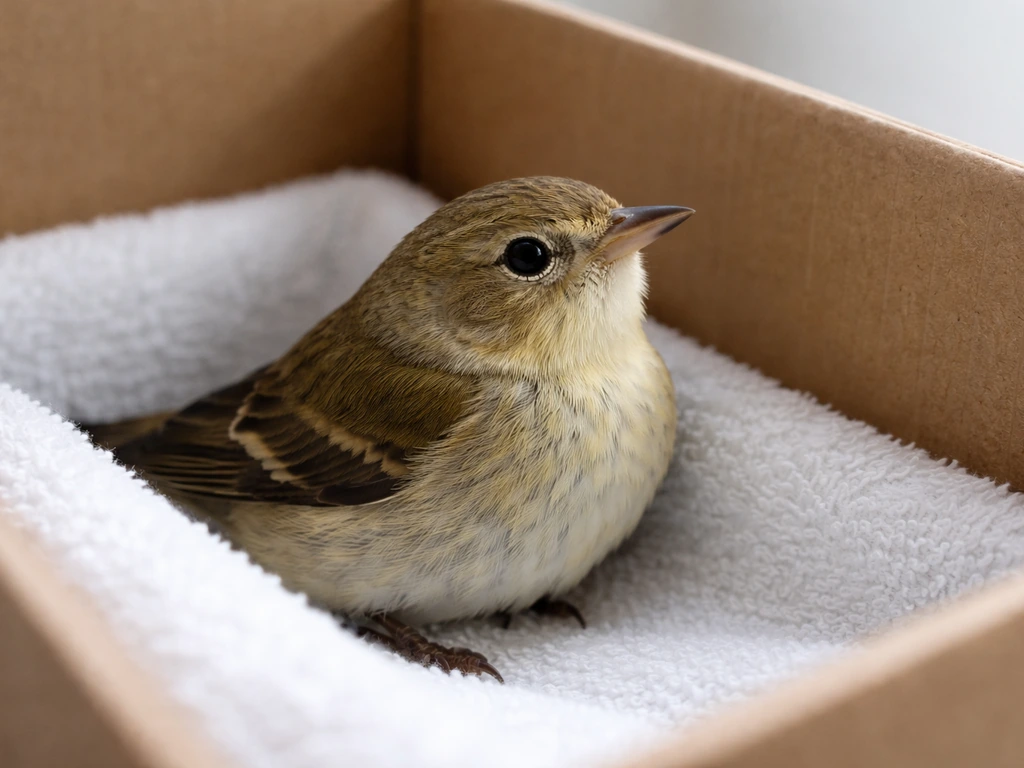
- It has righted itself and is sitting upright
- Its eyes are open and tracking movement
- It reacts when you open the box (tries to move away or shows alertness)
- Breathing looks calm and regular, beak closed
Warning signs to watch for
- Tail bobbing with every breath: this is a red flag for respiratory distress and needs professional attention
- Open-mouthed breathing or labored breathing that looks like effort
- Drooping wings that stay down even as the bird tries to sit up
- Head tilt or loss of balance when it tries to stand
- No improvement after two hours of steady warmth
- The bird becomes more limp or unresponsive over time instead of improving
If you notice tail bobbing or open-mouthed breathing especially, don't wait. Those signs point to a respiratory problem that goes beyond simple chilling, and the bird needs a vet or rehabilitator quickly.
Also be aware that a bird on its back has genuine difficulty breathing due to the way avian lungs work. If you find the bird on its back, gently position it upright in the box and give it a few minutes to settle before drawing any conclusions about its condition.
When to stop DIY care and call a professional
Warming a chilled bird at home is always meant to be a bridge, not a solution. The goal is to stabilize the bird long enough to get it into the hands of someone qualified to assess and treat it. Here's when to make that call:
- The bird has visible injuries (bleeding, broken limb, eye injury, wound)
- You're seeing any of the respiratory warning signs listed above
- There's no improvement after two hours of appropriate warming
- The bird is a raptor (hawk, owl, falcon, eagle) or a larger waterbird: these species can be dangerous to handle and have specific care needs
- You found a baby bird alongside a dead parent
- You're not sure what species it is and whether your interim care is appropriate
- The bird seems to improve, then declines again
Even a bird that looks like it's fully recovered after warming can have underlying issues, including internal injuries, illness, or the original reason it got so cold in the first place. A wildlife rehabilitator can do a proper assessment that you simply can't do at home.
How to find help and what to do next
In the US, your best first call is to a licensed wildlife rehabilitator. If you are wondering where you can rescue a bird, start with a licensed wildlife rehabilitator in your area and ask how to drop off or transport the bird safely. If you are trying to rescue a newborn bird, that same handoff to a licensed rehabilitator is the safest next step after initial warming licensed wildlife rehabilitator.
You can search the National Wildlife Rehabilitators Association directory, call your state's fish and wildlife agency, or contact a local Audubon chapter. Both Audubon and Massachusetts Audubon recommend contacting a licensed rehabilitator for an informed judgment on next steps. Your local veterinarian is also a reasonable call, especially for after-hours emergencies when rehabilitators may not be immediately reachable.
When you transport the bird to a professional, keep the box in the car with you rather than in the trunk, turn the radio off, drive smoothly, and avoid talking loudly in the car. The transport environment should be as quiet and dark as the box itself. Bring any notes you have: where you found the bird, what condition it was in, how long you've had it, and what warming steps you used. That information helps the rehabilitator significantly.
If this is a wild bird you rescued, the process from here overlaps with broader bird rescue steps that cover what happens after you've stabilized the animal and are ready to hand it off for professional care. If you’re wondering what to do when you rescue a bird, use those broader rescue steps alongside the warming and monitoring guidance here bird rescue steps. The warming and containment you've done already is exactly the right foundation for that handoff. If you need a starting point on setting up a plan, look up how to start a bird rescue and what permits and partnerships you’ll need.
FAQ
Can I give a frozen bird water or food while it’s thawing?
If a bird is still cold and stiff, treat it as hypothermia, keep it dark and warm, and do not offer food or water yet. Start with gradual warming in the container, then reassess for alertness (upright posture, steady movement, normal breathing) before considering any next steps.
What should I do if the bird is soaked in meltwater or appears wet?
Do not place the bird directly under running water or submerge it. Sudden temperature change can push a chilled bird into shock and adds stress, instead use indirect warmth, a dark quiet box, and gradual thawing at a steady room temperature that is warm but not hot.
Is it safe to thaw a frozen bird with a heating pad or hot water bottle?
No. A heating pad can create hot spots and burns, and it may warm only one side. Use ambient warmth and the warmed container approach, then monitor breathing and posture rather than trying to “accelerate” thawing with direct heat.
How long should I wait before calling for help if it doesn’t seem to improve?
If the bird is conscious enough to react to warmth and no severe breathing distress is present, you can keep it contained and continue gradual warming. If it is making repeated open-mouth gasping, tail bobbing, or you suspect major injury, contact a rehabilitator or vet immediately rather than trying more at-home warming time.
Why might the bird look worse after I start warming it?
Yes. During recovery, a bird can look worse briefly as it warms. Look for stable improvement overall, not a momentary change, and keep the environment quiet and undisturbed. If breathing looks labored or it cannot right itself, treat it as urgent rather than “normal thawing.”
How do I safely hold a frozen bird without getting hurt?
If you must pick it up, use thick gloves or a towel, approach from behind or from the side you can control, and hold it securely but gently. Avoid squeezing the chest, and keep handling time short because stress itself can interfere with recovery.
How can I tell if a frozen bird is actually dead?
Do not assume the bird is dead just because it is stiff. Some birds become responsive after slow warming. Instead, watch breathing patterns and give gradual time in a quiet box, but be prepared to seek help if there is no improvement after several hours or if breathing is abnormal.
What kind of container setup works best for warming?
Use the smallest safe container that fits the bird, line it with a soft towel, and keep air holes if the lid is on loosely. Do not add food, water dishes, or perch items during thawing, and avoid rearranging or changing boxes midstream.
How often should I peek to see whether it’s recovering?
Check every 30 to 60 minutes, not continuously. Use the “minimum disturbance” rule: open the lid only as long as needed to observe posture and breathing, then close it promptly to prevent heat loss and stress.
What if the bird is found lying on its back?
If it is on its back, gently rotate it upright in the box and give a few minutes to settle before evaluating. Avian breathing mechanics can make “on the back” look like respiratory failure, but if breathing is still labored or there are warning signs, treat it as urgent.
Where should I keep the bird while it’s warming up at home?
Avoid pet, child, and loud activity around the box, and keep it in a warm, dark, quiet space you control. A calm environment helps the bird conserve energy and reduces stress hormones that can worsen recovery.
Do I need different steps for raptors or larger birds?
Yes, if it is a raptor, heron, or other powerful species, extra caution is needed even when it looks weak. Use a towel or gloves, limit movement, and keep the container stable, and call a rehabilitator promptly because these species can have a higher risk of injury and specialized care needs.
How should I transport the bird to a wildlife rehabilitator?
At handoff time, keep the box in the car with you so temperature stays more stable and you maintain a quiet environment. Turn off the radio, drive smoothly, avoid sudden stops, and bring notes about when you found the bird, visible injuries, and the warming timeline.
What should I do if the bird is a nestling or newborn?
If you find a newborn or very young bird, warm it gradually in the same dark container approach, but prioritize rapid contact with a licensed rehabilitator. Do not feed formula or offer water at home unless the professional specifically instructs you, because age and species determine what is safe.
Next Article
How to Rescue a Newborn Bird: Step-by-Step First Aid
Step-by-step rescue first aid for a newborn bird: warmth, hydration, feeding, triage, and when to call rehab