If you've just found a bird and you're not sure what to do, here's the short answer: keep it warm, keep it dark, keep it quiet, and call a wildlife rehabilitator as fast as you can. Don't feed it, don't give it water, and don't try to treat injuries yourself. The next 10 to 30 minutes are mostly about containing the situation safely and getting the bird to someone who can actually help it. Everything below walks you through exactly how to do that. If you want a broader, step-by-step plan for setting up your role after you stabilize a bird, see how to start a bird rescue as a related option.
What to Do When You Rescue a Bird: First Steps Guide
Marcus Holloway
21 Apr 2026
First steps at the scene
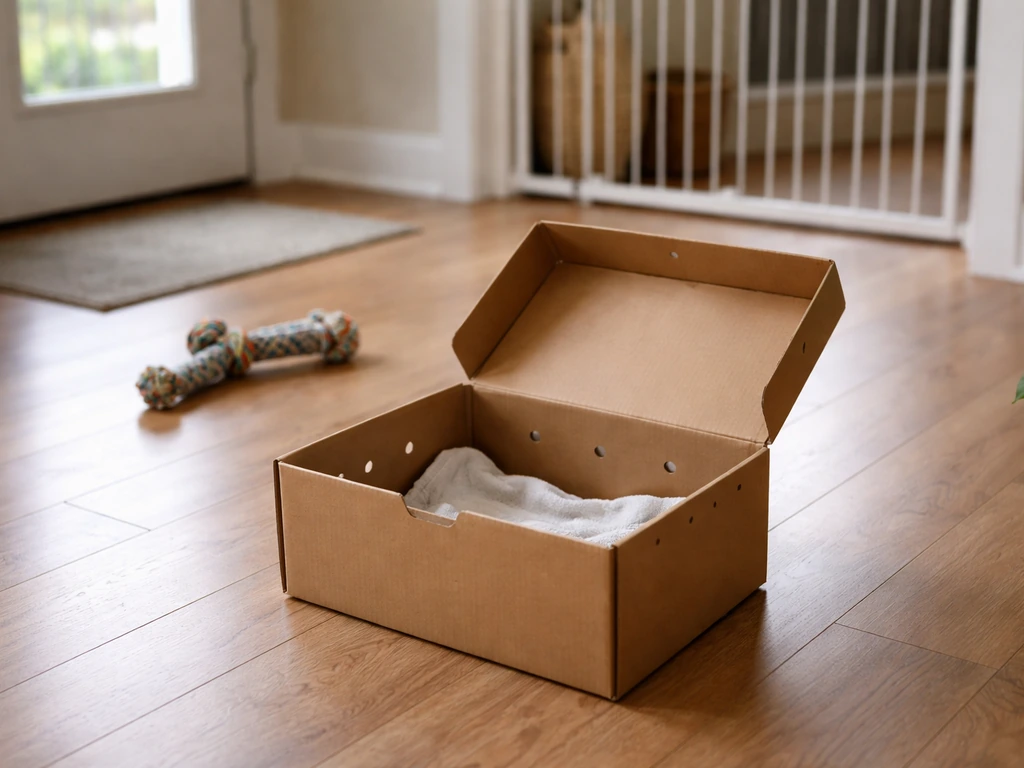
Before you even touch the bird, take 30 seconds to make the area safer. Remove any dogs, cats, or other pets from the immediate vicinity. A cat's instinct to stalk or paw at the bird can happen faster than you can react, and even a brief bite or scratch from a cat introduces bacteria that can be fatal to birds. Once pets are clear, give yourself a moment to observe the bird without approaching it.
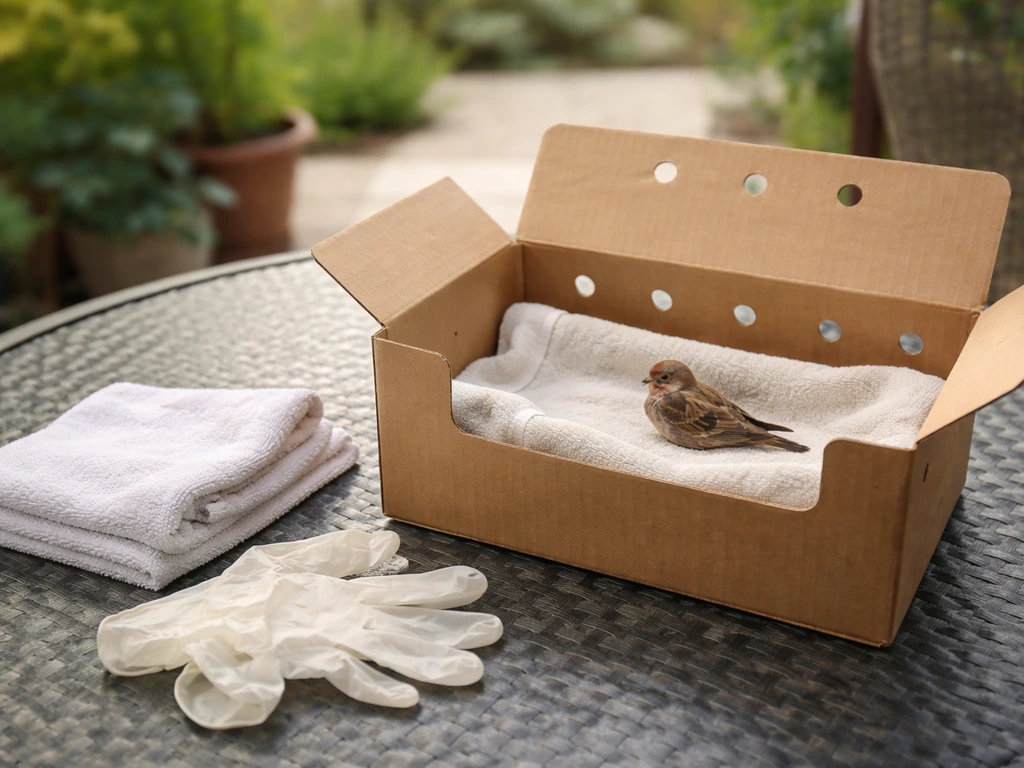
If the bird needs to be contained, grab a cardboard box with a lid, or any box you can close securely. Poke a handful of small ventilation holes in the sides (about the diameter of a pencil). Line the bottom with a soft cloth or paper towels. The goal is a box that's dark, ventilated, and escape-proof. Do not use an open wire cat carrier or a mesh cage: a panicked bird will damage its flight feathers and exhaust itself trying to escape through openings.
For warmth, place one end of the box on top of a folded towel that's resting on a heating pad set to its lowest setting. This lets the bird move away from the heat if it gets too warm. Birds have a normal body temperature between roughly 103 and 106 degrees Fahrenheit, and a cold or injured bird loses heat fast. A warm, dark space lowers stress and helps stabilize the bird while you make calls. Do not place the box in full sunlight, near a vent, or anywhere with loud noise.
Is it actually injured? Quick triage before you do anything else
One of the most common mistakes people make is rescuing a bird that doesn't need rescuing. Before you box it up, try to figure out what you're actually dealing with. There are four main categories, and they call for different responses.
Fledgling (most common find, usually fine)
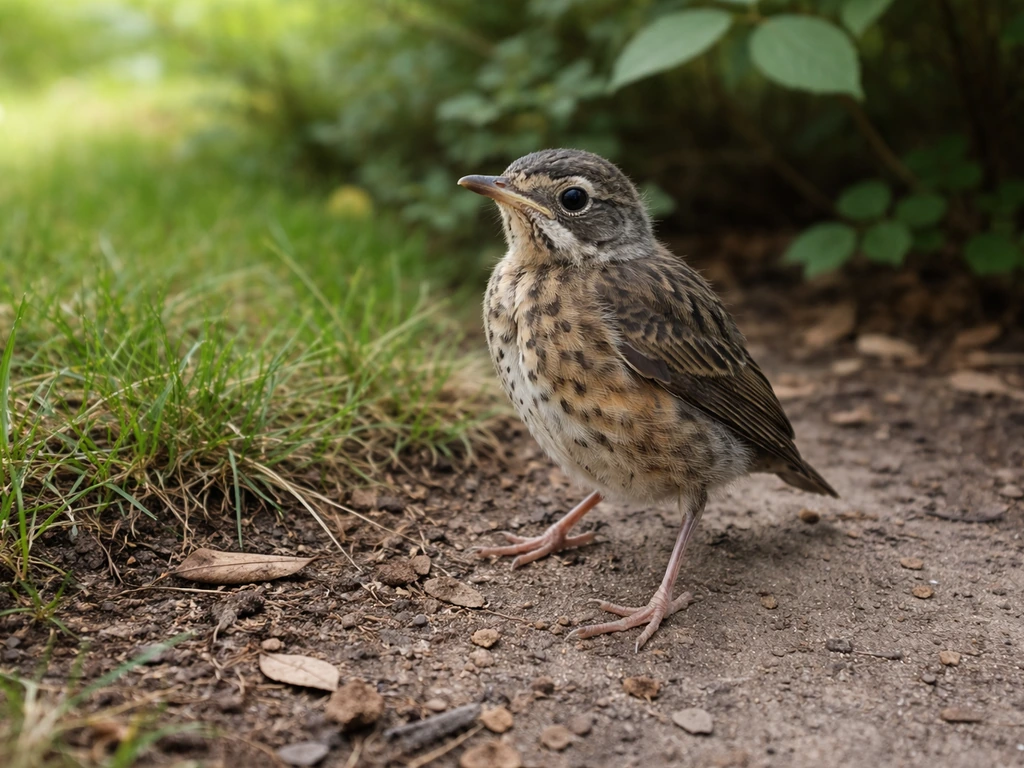
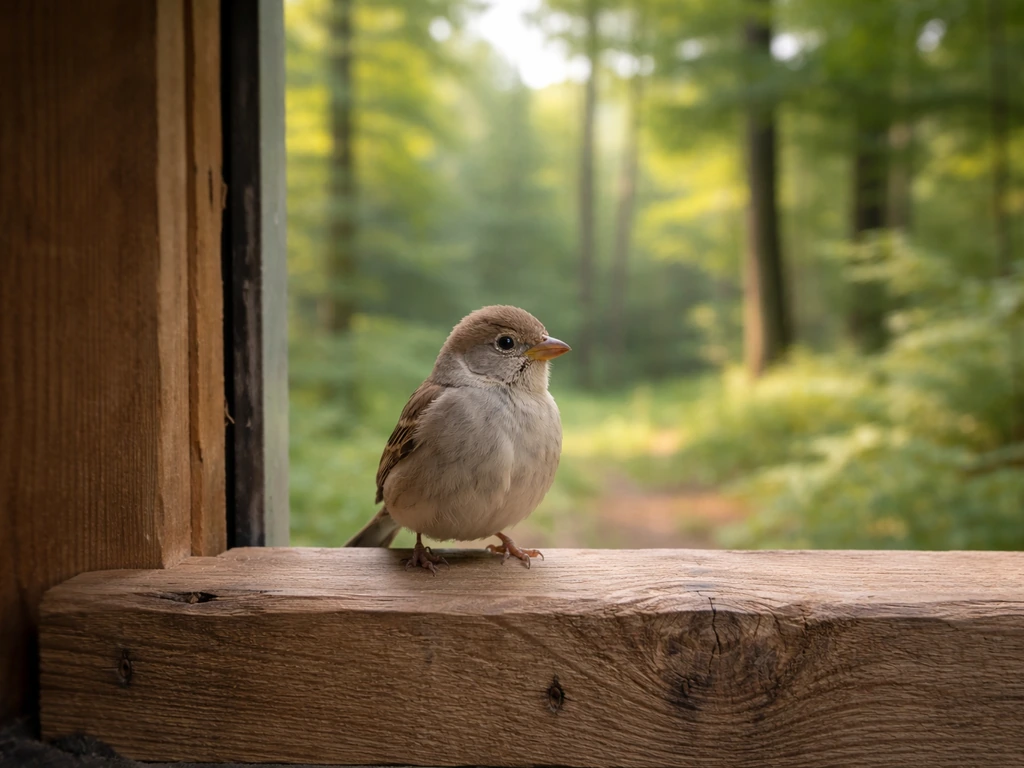
A fledgling is a young bird that has most or all of its feathers, can perch and grasp with its feet, and may hop or flutter short distances. Finding one on the ground is normal. This is a natural stage of development where the bird leaves the nest but isn't fully flying yet. Parents are typically nearby and still feeding it. Unless a fledgling is in immediate danger from traffic or a predator, the right move is to leave it alone or move it just a few feet to a safer spot, like a nearby shrub. You don't need to intervene further.
Nestling (needs more attention)
A nestling is featherless or has only sparse pin feathers, and its eyes may be closed. It belongs in a nest, not on the ground. If you can see the original nest and safely reach it, place the bird back in it. The myth that a parent will reject a nestling you've touched is not true. If the nest is destroyed or unreachable, contact a wildlife rehabilitator right away: a featherless nestling on the ground needs professional care quickly.
Injured bird
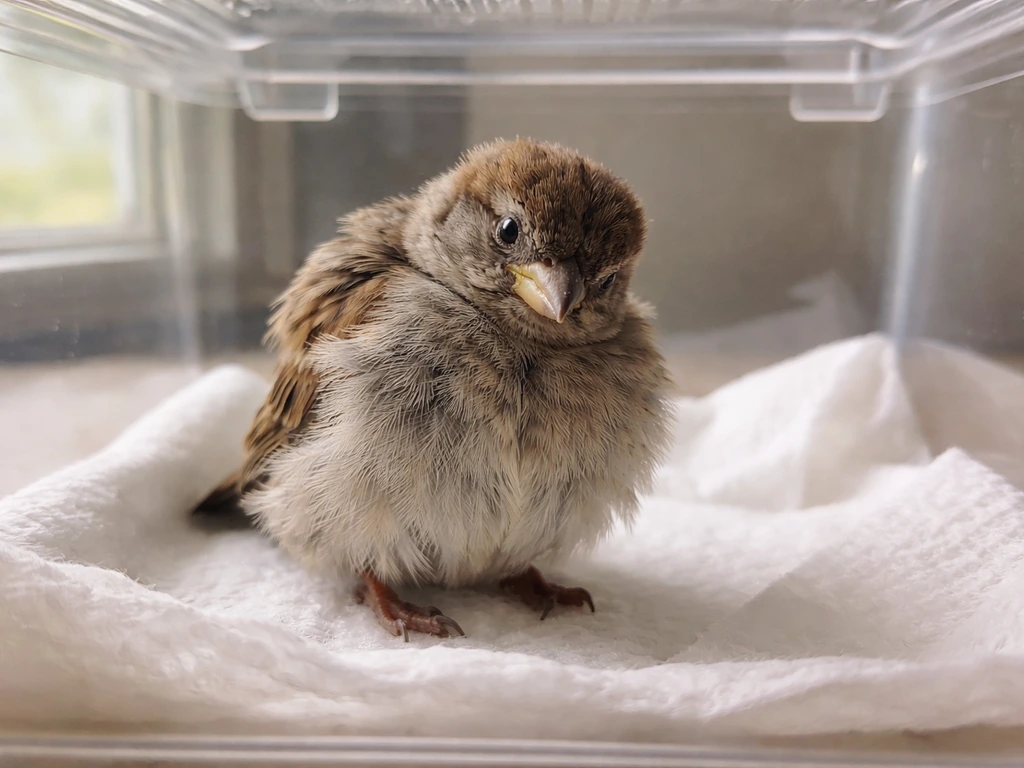
Signs of injury include visible wounds or blood, a drooping or clearly asymmetrical wing, inability to stand, labored breathing, or a bird that would normally fly away but isn't moving. An adult bird that lets you walk up and pick it up is almost always in distress. This bird needs professional help urgently. Contain it and make calls immediately. Audubon also advises that if a bird has obvious injuries, you should contact a wildlife rehabilitation agency.
Sick bird
Signs of illness include a bird that's sitting puffed up on the ground, tilting its head persistently, circling, or showing any neurological symptoms like seizures or disorientation. These signs can indicate disease, poisoning, or internal injury. Treat it the same as an injured bird: box it carefully and contact a rehabilitator or avian vet. The Washington Department of Fish & Wildlife advises that if a wild animal is injured or orphaned you should contact a licensed wildlife rehabilitator, and for immediate safety concerns call 911 or state enforcement contact a rehabilitator or avian vet.
How to handle and transport a bird safely
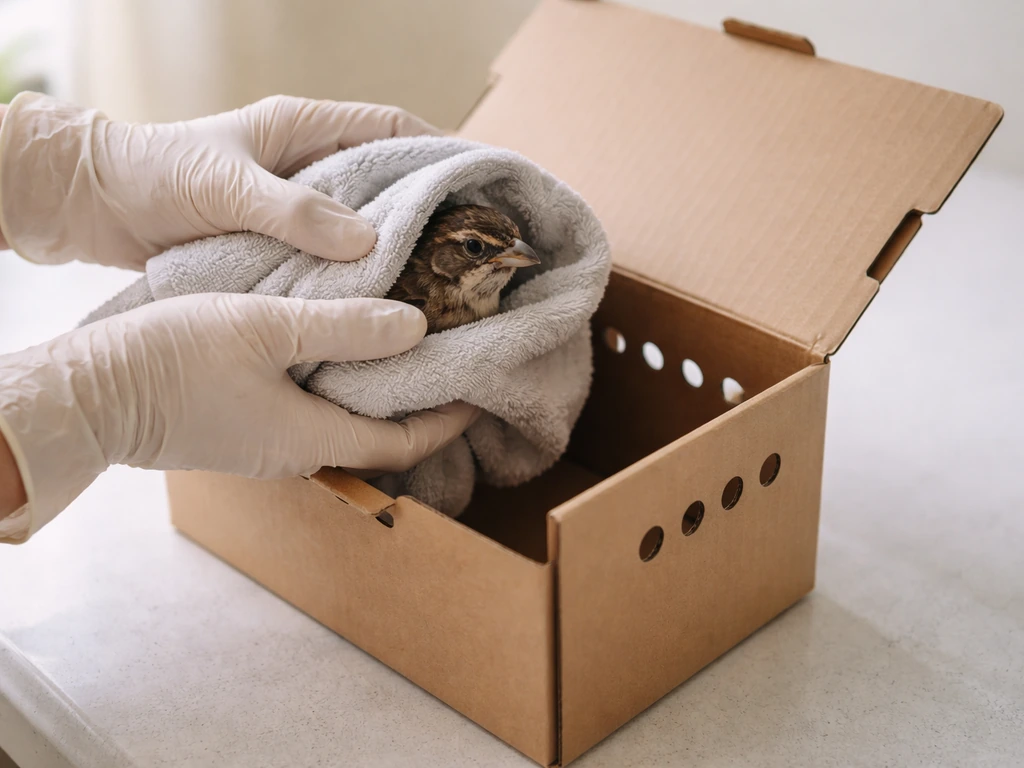
If you do need to pick up the bird, use gloves if you have them, or wrap the bird loosely in a light towel. This protects you from disease and protects the bird from your body heat and grip pressure. Cup the bird gently with both hands, keeping the wings folded naturally against its body. Don't squeeze. Don't hold it upside down or on its back.
Once the bird is in the box, close it and keep it somewhere quiet. Resist the urge to check on it repeatedly. Every time you open the box, you're stressing the bird further. Darkness is calming for birds and reduces panic.
During transport to a rehabilitator or vet, keep the box on a flat surface in the car, not on a seat where it can slide. Keep the car quiet and the radio off. If it's cold outside, run the heat moderately but don't direct vents at the box.
- Do use a closed cardboard box with ventilation holes
- Do line the box with a soft cloth or paper towels
- Do wear gloves or use a towel when picking the bird up
- Do keep the box warm, dark, and quiet
- Don't use an open wire cage or mesh carrier
- Don't hold the bird longer than necessary
- Don't keep peeking inside the box
- Don't let children or pets near the box
Basic first aid for common bird emergencies
It's worth being clear here: you are not expected to treat a wild bird. The goal of these steps is to stabilize the bird and reduce further harm while you get it to someone qualified. Don't attempt surgery, splinting, or medication on your own.
Bleeding
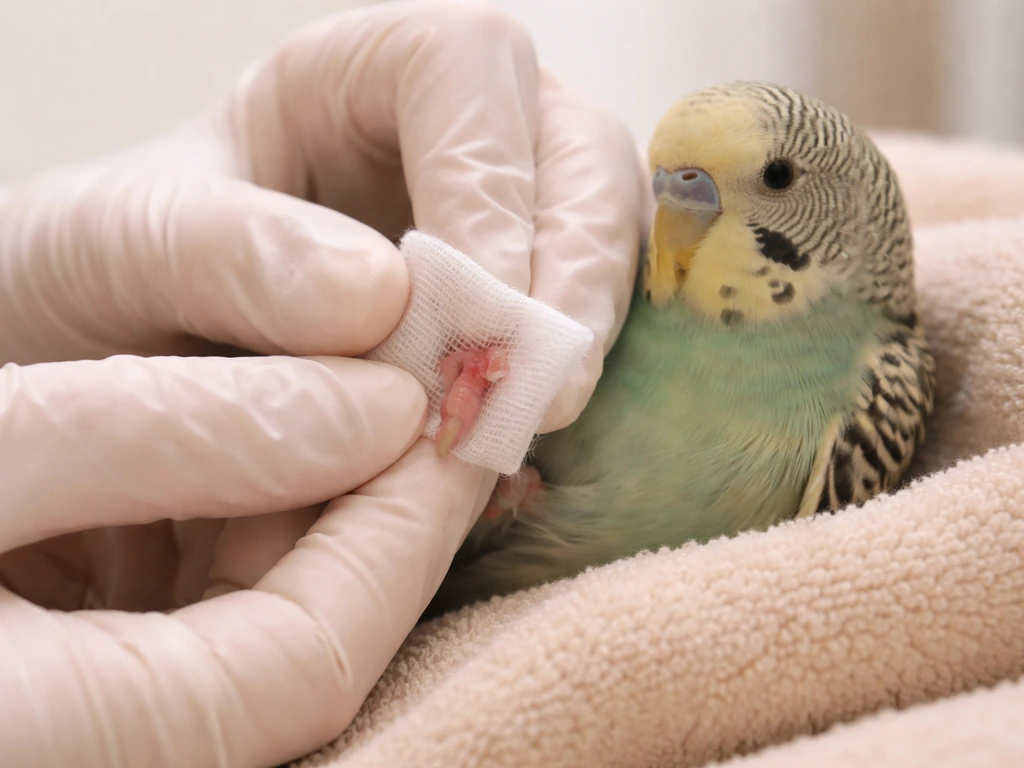
If there's active bleeding, apply very gentle pressure with a clean cloth or gauze for a few minutes. Don't press hard enough to restrict breathing or cause pain. Once bleeding slows, place the bird in the box and call for help immediately. Active bleeding is an urgent sign.
Cold stress or shock
A bird that's cold to the touch, lethargic, or sitting still with fluffed feathers may be in cold stress or shock. Warmth is the most important thing you can provide. To revive a frozen bird, focus on gentle, controlled warmth first and avoid any harsh or direct heat sources Warmth is the most important thing you can provide.. Use the heating pad method described earlier, making sure the bird can move away from the heat source. Do not use a hair dryer, hot water directly against the bird, or a microwave-heated pad, which can have hot spots.
Breathing trouble
If the bird is breathing with its mouth open, making clicking or gurgling sounds, or its tail is bobbing with every breath, those are signs of respiratory distress. Don't try to clear the airway yourself. Keep the bird upright (not on its back), in a warm and quiet box, and get it to professional care as fast as possible.
Wing or leg injuries
A drooping wing or an oddly angled leg is painful for the bird and distressing to see, but don't try to splint or bandage it yourself unless you've been trained. Improper splinting can make fractures worse and cause circulation problems. Keep the bird calm and contained, and let a rehabilitator or avian vet handle the rest.
Window strike
Birds that hit windows are often stunned rather than dead. Place the bird gently in a dark, ventilated box and give it a quiet space to recover for one to two hours. Many recover on their own and can be released. If it doesn't improve within two hours, or if it shows signs of injury, contact a rehabilitator.
Feeding and water: what's safe, what's not, and why it matters
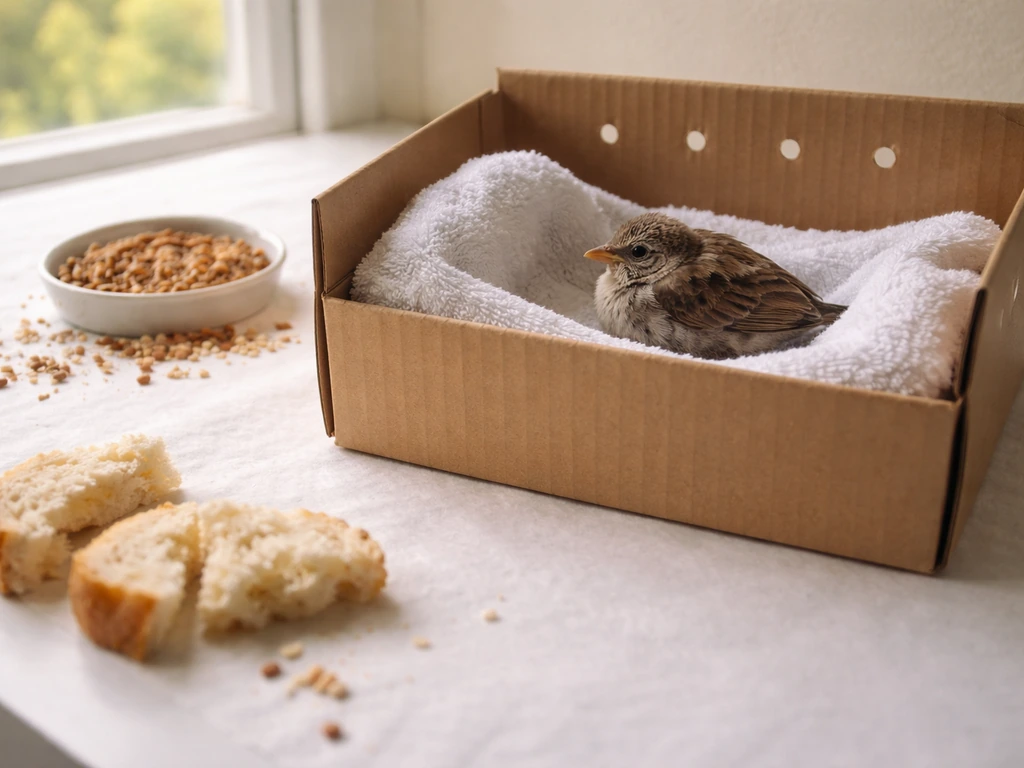
This is probably the most important practical rule in this entire guide: do not feed or give water to a wild bird you've just rescued. Not bread, not birdseed, not worms, not fruit, and absolutely not milk. And do not squirt or drip water into its beak or mouth. The risk is aspiration, where liquid or food enters the airway instead of the stomach, causing pneumonia or drowning the bird. Baby birds are especially vulnerable to this because their anatomy makes it easy for fluids to go down the wrong way.
Even if the bird is begging or gaping its mouth open, don't feed it. Baby birds beg by instinct regardless of whether food is safe or appropriate. Feeding the wrong thing can cause injury or death just as surely as the original trauma did. Every major wildlife organization recommends the same thing: no food, no water, until a professional tells you otherwise.
| Action | Safe? | Why |
|---|---|---|
| Offer water from a dish to an alert adult bird | Use caution | Only if stable and able to drink on its own; never force it |
| Squirt or drip water into beak | No | High aspiration risk, can cause pneumonia |
| Offer bread, crackers, or human food | No | Wrong nutrition, can cause serious harm |
| Offer milk | No | Birds are lactose intolerant |
| Offer worms or insects to a nestling | No | Risk of aspiration, wrong feeding technique without training |
| Feed any food without professional guidance | No | Incorrect diet can injure or kill the bird |
| Leave food and water out near the box | Not needed | Bird should be with a rehabber before needing food |
When to call a wildlife rehabilitator or vet (and what to tell them)
You should contact a licensed wildlife rehabilitator or an avian-experienced vet any time you have a bird that you believe is injured, sick, or a very young nestling without a reachable nest. In most places, it's also a legal requirement: keeping or treating wild birds yourself is regulated, and a licensed rehabilitator has the training and permits to do it properly.
These are the signs that mean you should make the call right now, not later:
- Active or recent bleeding that isn't stopping
- Labored, open-mouthed, or audibly abnormal breathing
- Loss of consciousness or extreme limpness
- Seizures, tremors, or circling behavior
- A featherless or eyes-closed nestling found on the ground
- Obvious bone fracture or wound
- A bird that has been in a cat's or dog's mouth (even with no visible wound, saliva bacteria are dangerous)
- No improvement after two hours following a window strike
- Any bird that appears weak, puffed up, or unable to stand
To find a wildlife rehabilitator near you, search the National Wildlife Rehabilitators Association (NWRA) directory or your state's fish and wildlife agency website. If you are wondering where can i rescue a bird locally, the NWRA directory and your state fish and wildlife agency are good places to start. In the US, you can also call your local animal control office or humane society for a referral. When you call, have this information ready: the species if you know it, where and when you found the bird, what it's doing (or not doing), whether there was any obvious trauma like a window strike or cat attack, and whether you've given it any food or water.
While you wait: aftercare and preventing the next incident
What to do until help arrives
Once the bird is in its box and you've made your calls, the most helpful thing you can do is leave it alone. If you are unsure about a rescued bird and what to do next, follow the steps in this guide before calling for help leave the bird alone. Keep the box in a warm (not hot), quiet room, away from children, pets, and noise. Don't take it outside until you're heading to the rehabilitator. Don't let well-meaning family members open the box to look. Stress kills birds faster than most injuries do, and every unnecessary disturbance makes recovery harder.
If you're waiting for a callback or it's going to be a few hours before transport, make sure the heating pad situation is set correctly. The bird should be warm but able to move away from the heat. A nestling should feel warm to the touch, not hot, and not panting. Check by feel, not by sight, and only briefly.
Reducing repeat incidents at home
Window strikes are one of the most common causes of bird injury, and they're largely preventable. The key insight from bird safety research is placement: feeders and birdbaths placed within about 3 feet of a window actually reduce strike risk because birds can't build up enough speed to be seriously injured. Feeders placed farther away (in the 10 to 30 foot range) give birds a longer flight path toward the glass and more momentum on impact.
For windows themselves, bird-safe films, screens, or closely-spaced external tape patterns break up the reflection that birds mistake for open sky. Closing blinds or curtains at night when lights are on inside also helps, because light spill attracts birds toward glass during migration season. These are practical changes that can make a real difference with minimal effort.
If cats are involved in repeat incidents in your yard, keeping cats indoors is the most effective solution. Outdoor cats are one of the leading causes of bird mortality in North America. Even a well-fed cat will hunt, and as noted earlier, a single bite from a cat can be fatal to a bird that appears otherwise unharmed.
If you find yourself dealing with baby birds regularly during spring and summer, it's worth knowing the difference between a nestling and a fledgling before acting. Fledglings on the ground are almost always fine and don't need your help. Knowing this can save you the stress of an unnecessary rescue and give the bird a better outcome by keeping it with its parents. For more specific situations, like finding a very young newborn bird or trying to understand the full scope of what to do with a rescued bird, those topics go deeper into the details covered here.
FAQ
What if the bird is bleeding and I can’t reach a wildlife rehabilitator right away?
Keep the bird boxed, and apply gentle pressure with clean gauze or cloth for a few minutes at a time until bleeding slows, then stop. Place it in a dark, ventilated box and transport as soon as possible, even if that means calling an avian-experienced emergency vet. Do not give aspirin, antibiotics, or any topical products, and avoid repeated checks that reopen the wound.
Can I temporarily release the bird after it seems more alert?
Not immediately. Even if a window-strike bird perks up, many still have internal injuries or concussions that can worsen later. For window strikes, give a quiet recovery period of about 1 to 2 hours only, then call a rehabilitator if it is not clearly improving or if you notice abnormal breathing, weakness, limping, or poor balance.
How do I tell if a “fledgling” actually needs help?
Use the combination of behavior and threat level. A perched or hopping bird that can grasp and move short distances is usually a fledgling, and it can often be moved a few feet to safer cover. If it cannot stand, flutters uncontrollably, has visible blood, or is in immediate danger (traffic, active predator nearby), treat it as injured and call for help.
What should I do if the bird is wet or covered in something sticky (like oil)?
Do not try to wash the bird yourself or use soap, oils, or solvents. Bagging or wiping can damage feathers and increase stress. Instead, contain it in a dark, ventilated box and contact a rehabilitator immediately, because oil and chemical contamination require specialized cleaning and careful handling.
Is it okay to use a towel as the “container” instead of a box?
Usually no. A towel by itself does not provide darkness, ventilation, and escape-proof containment, and the bird can overheat or get its wings injured by struggling. Use a lidded cardboard box with small ventilation holes, and only use the towel as a loose wrap when picking up the bird, then place it into the box.
What if I can’t identify the species?
That’s fine. When you call, describe size (small songbird, pigeon-size, etc.), color pattern, approximate location, and what you observed (at rest, unable to fly, fluffed and motionless). Species identification is helpful for care, but rehabilitators can start triage based on age, condition, and circumstances like cat attack or window strike.
How warm should the bird be while waiting in the box?
Warm, not hot. The heating-pad method should allow the bird to move away if it becomes too warm, so the box end on the heat works better than placing the whole box over heat. Check by feel: the bird should seem comfortably warm, not hot to your touch, and it should not be panting.
What if the bird is breathing oddly, mouth-open, or gurgling, but it’s still responsive?
Treat it as respiratory distress. Keep it upright in a warm, quiet, boxed setup and do not attempt to clear the airway, tilt it upside down, or administer any fluids. Prioritize rapid transport to an avian-experienced vet or rehabilitator, because deterioration can happen quickly.
Should I remove a collar, string, or fishing line if it’s attached to the bird?
Do not pull or cut unless you are trained, because tight string can cut deeper when moved. If the line is loose, you can carefully prevent the bird from getting more entangled by containing it and keeping the string from tightening. Otherwise, call a rehabilitator immediately and inform them what it’s caught on, and transport carefully without stretching the material.
Is there anything I should do about my hands or clothes after handling a wild bird?
Wash hands thoroughly with soap and water right after handling. If you wore gloves, remove them without touching the outside to your skin, then wash anyway. If the bird had blood, droppings, or visible contamination, change clothes if possible and keep children away from the area until it’s cleaned, since birds can carry diseases.
Can I feed or give water if the bird looks like it’s starving or begging?
No. Even if a bird gapes or begs, do not offer food or water because the wrong material can cause aspiration and pneumonia, and adult and baby birds need different care that only a professional can provide. Continue to stabilize with warmth and containment until the rehabilitator gives instructions.
Next Article
How to Release a Hand-Reared Bird Safely and Humanely
Step-by-step humane release for hand-reared wild birds: species checks, anti-imprinting care, soft vs hard release, afte