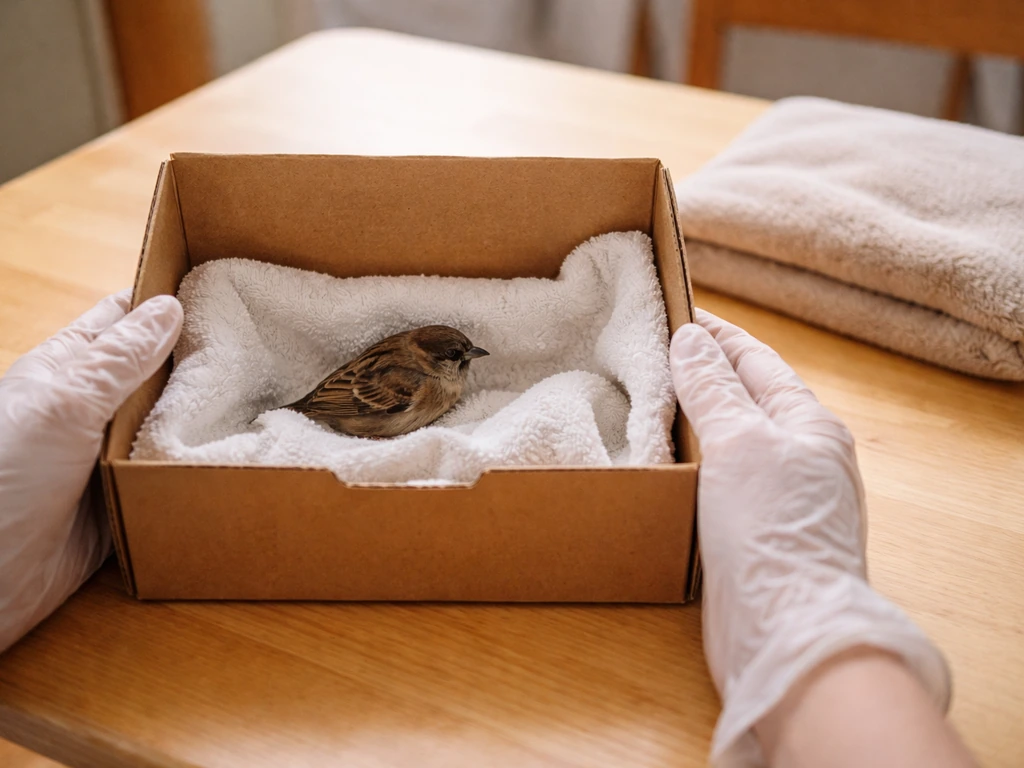
Put the bird in a small, ventilated cardboard box with a lid, place it somewhere warm, dark, and quiet, and do not feed or water it. That's the core of what you need to do right now. Everything else, including figuring out exactly what's wrong and who to call, can happen in the next few minutes once the bird is safe and calm. If you're wondering how to start a bird rescue, begin by keeping the bird safe and calm, then decide who to contact for professional help. If you need a quick, step-by-step checklist for what to do when you rescue a bird, follow the guidance in this article.
Rescued Bird: What to Do Next Step by Step Guide
Marcus Holloway
25 Apr 2026
The first 5 minutes: stay calm, stay safe, and don't make things worse
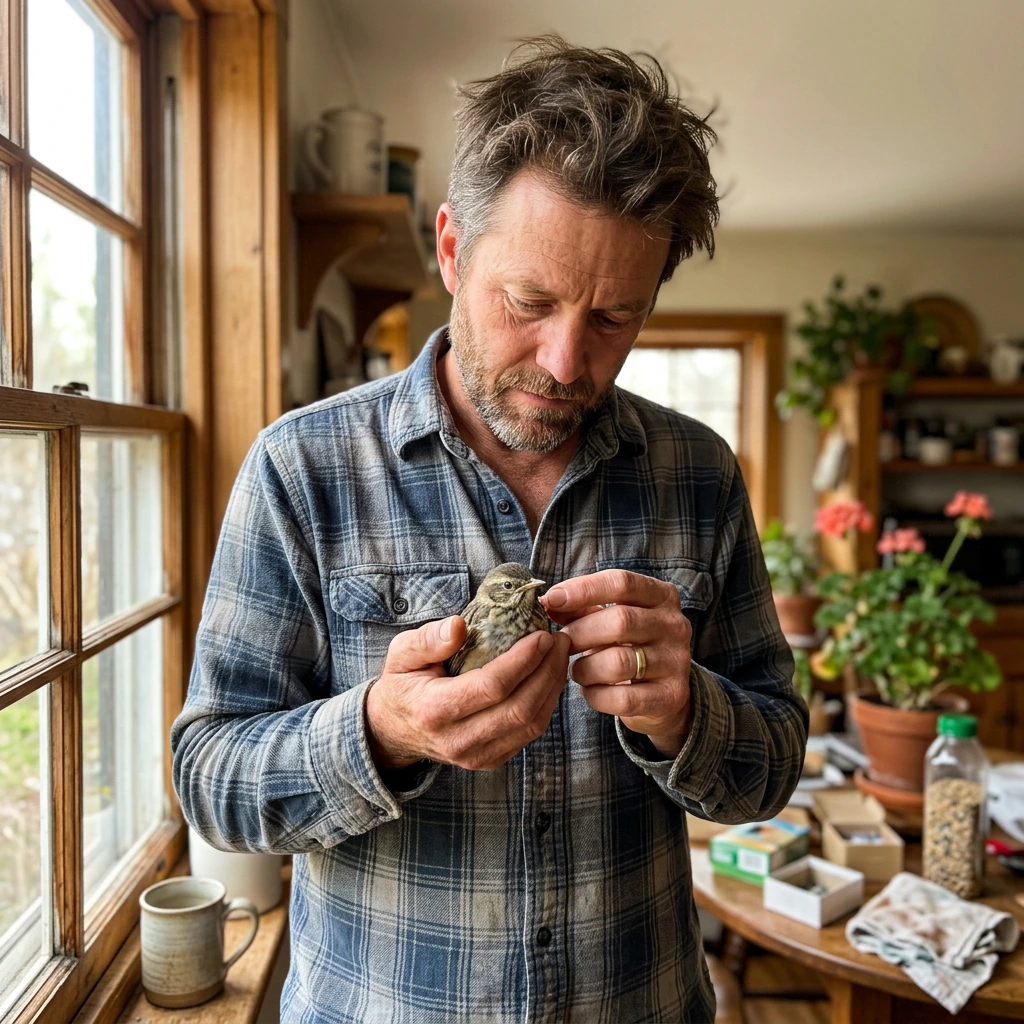
Before you touch the bird, take a breath. Adrenaline makes people rush, and rushing is how birds get accidentally hurt during handling. The bird is already stressed, and every extra second of handling adds to that stress.
First, a quick safety check for you. Some birds, especially raptors like hawks and owls, can scratch or puncture with their talons. Use gloves if you have them, or wrap your hands in a thick towel. Even small songbirds can peck hard enough to break skin. This is not a reason to panic, just a reason to be deliberate.
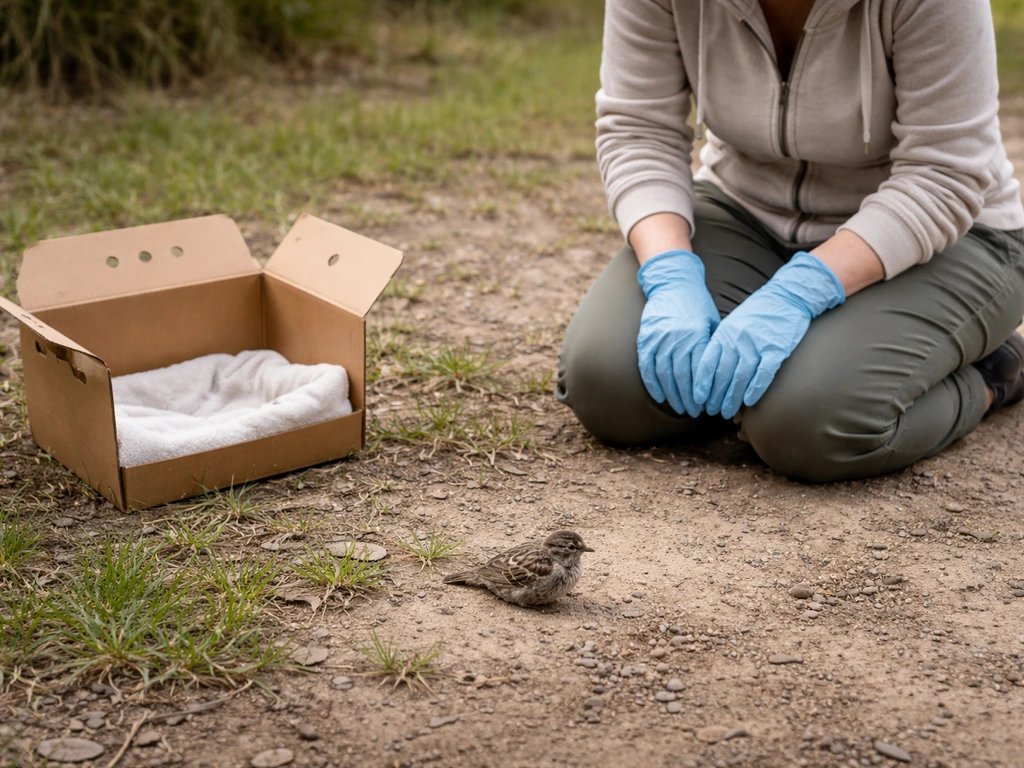
Second, ask yourself honestly: does this bird actually need your help? This sounds counterintuitive, but most wildlife agencies, including the U.S. Fish and Wildlife Service, point out that most of the time the best action is to leave the animal alone. A bird hopping on the ground near a nest is not necessarily in trouble. A fledgling with fluffy patches and a short tail is almost certainly learning to fly and its parents are likely nearby. If the bird is alert, holding its head up, and moving away from you, give it space and watch for a few minutes before intervening.
Signs that the bird genuinely needs help: it cannot move away from you, it has visible bleeding, a wing or leg is held at an odd angle, it is shivering, it is featherless or has eyes closed (for a baby), or there is a dead parent nearby. If you see any of these, proceed with the steps below.
Setting up a safe temporary home in the next few minutes
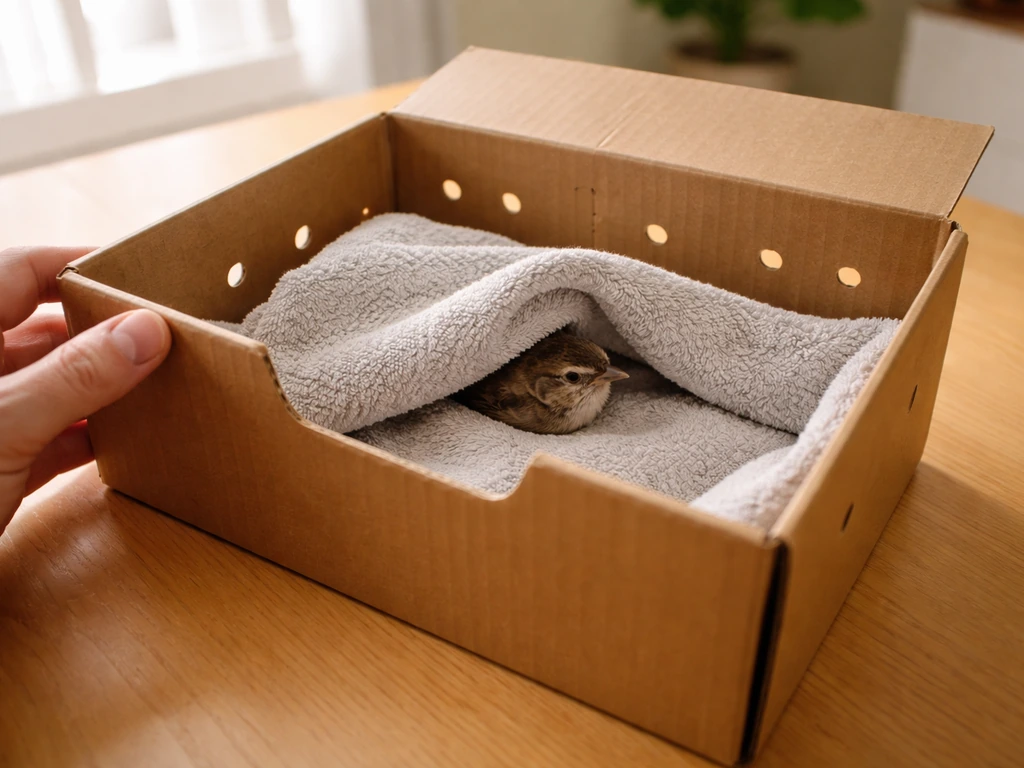
Grab a cardboard box sized to the bird, big enough to turn around in but not so large that it will bang around. Punch or cut several small air holes in the sides. Line the bottom with a folded towel or paper towel so the bird has something to grip. Do not use a mesh cage or wire crate for transport or short-term holding: the bird will injure itself trying to escape.
Place the bird gently inside and close the lid. Darkness is genuinely calming for birds. It lowers their heart rate and reduces the frantic escape behavior that causes secondary injuries. The Wildlife Trusts and AWARE Wildlife Center both specifically advise keeping the bird in a dark, quiet place, and this is consistently the first thing wildlife rehabilitators recommend.
Warmth is the other critical factor, especially for injured or stunned birds whose ability to regulate body temperature is compromised. Aim for about 80 to 90 degrees Fahrenheit inside the box. You can achieve this by placing a heating pad set to low under one half of the box, or by putting a hot water bottle wrapped in a towel next to (not under) the bird. The key detail: always leave the bird a way to move away from the heat source. If it gets too warm and cannot escape, it can overheat and die. A hand warmer wrapped in a cloth works in a pinch.
Put the box somewhere truly quiet. Not a busy kitchen, not a room with a TV, not near a dog or cat. A spare bathroom, a quiet corner of a garage, or a closet works well. Keep children and pets away. Minimize the number of times you open the box to peek. Every time you look in, you are adding stress.
Quick triage: figuring out what you're actually dealing with
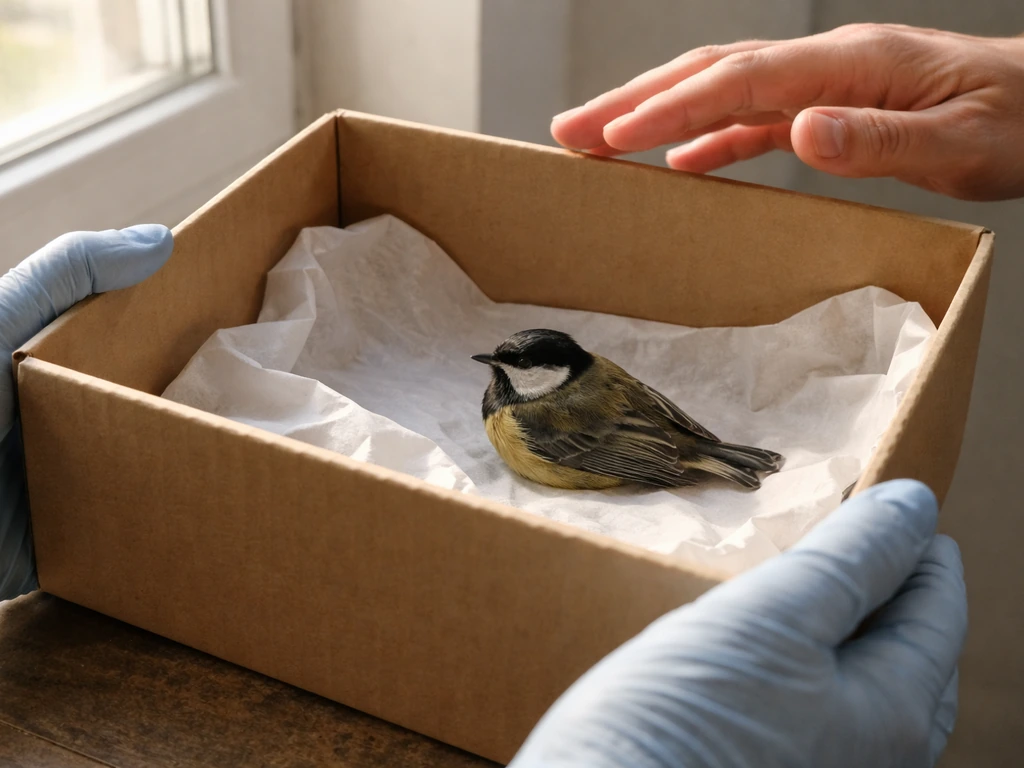
While the bird rests in the box, take a moment to think through what type of situation this is. The approach differs slightly depending on the scenario, and it helps to have this clear before you call a rehabilitator.
| Situation | Key signs | Immediate priority |
|---|---|---|
| Window/impact strike (stunned) | Eyes closed or half-open, not moving, found near glass | Dark, warm box; monitor for up to 2 hours |
| Injured adult (trauma) | Bleeding, broken limb, cannot fly, dragging wing | Contain carefully, call rehabilitator now |
| Orphaned baby (featherless or eyes closed) | No feathers or just fuzz, eyes closed, on the ground | Warm box, call rehabilitator immediately |
| Fledgling (learning to fly) | Feathers present, short tail, hopping, alert | Watch from a distance; parents likely nearby |
| Sick bird | Fluffed feathers, panting, lethargic, discharge from eyes/beak | Warm box, call rehabilitator or avian vet |
| Entangled bird | String, fishing line, or netting around legs/wings | Contain first; do not cut blindly, call for guidance |
If you are not sure whether the bird is a baby or an adult, the RSPCA advises taking a short video or a few photos while you have the bird in sight. This helps a rehabilitator advise you quickly over the phone without you needing to disturb the bird again.
What to do for specific common situations
Window strike or impact injury
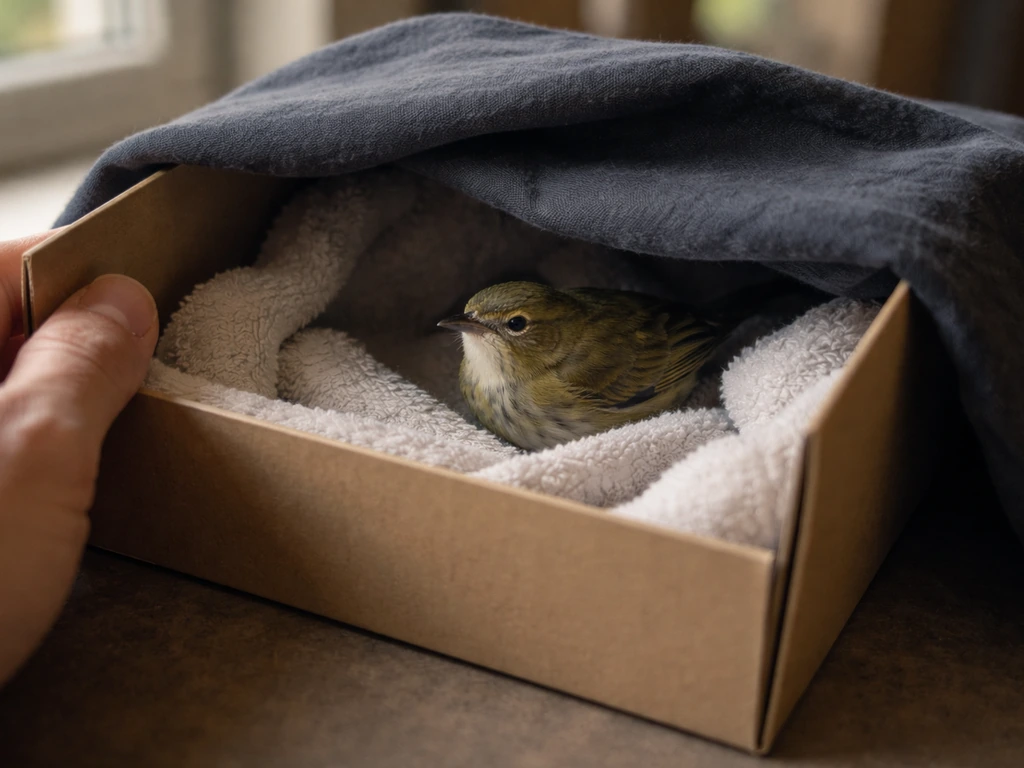
This is one of the most common calls wildlife rehabilitators get. A bird hits a window, falls to the ground, and appears stunned or unconscious. Most of the time, these birds recover on their own if given a quiet, dark, warm space. Place the bird in your box and wait. The RSPCA suggests monitoring for up to two hours. Audubon makes the same point: a stunned bird often just needs time to regain its senses. If after two hours the bird is alert and upright, you can take it outside and open the box. If it is still lethargic, not holding its head up, or has visible bleeding, it needs professional care.
Visible bleeding
If the bird is actively bleeding, you can apply very gentle pressure with a clean cloth or gauze for a minute or two. Do not use cotton balls, the fibers can stick to wounds. Do not apply any antiseptics, hydrogen peroxide, or ointments. Your job is containment and warmth, not treatment. Get the bird to a professional as quickly as possible.
Suspected fracture
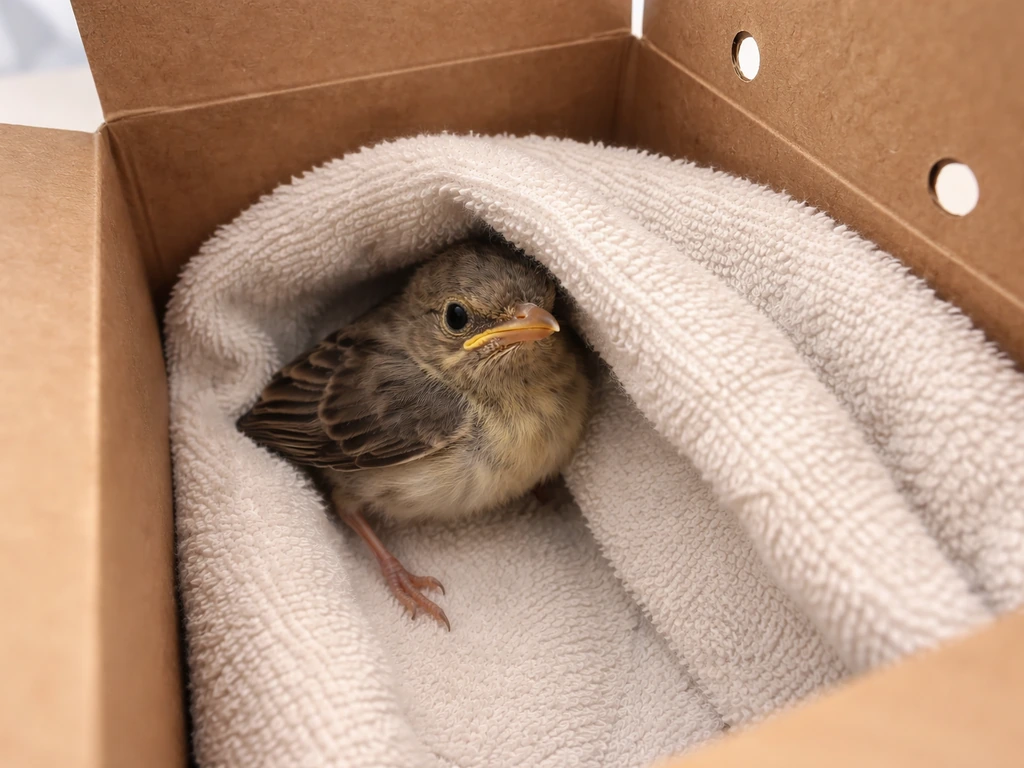
If a wing or leg is hanging at an odd angle, do not try to splint or tape it yourself. Improper splinting causes more damage. Place the bird in the box with a rolled towel around it to limit movement, keep it calm and warm, and get it to a rehabilitator or avian vet the same day. Fractures are treatable by professionals but the window for successful repair narrows quickly.
Baby birds (nestlings and fledglings)
If the bird is featherless or has its eyes closed, it is a nestling and it needs professional help urgently. These birds cannot regulate their own body temperature at all and will deteriorate fast without proper care. Warmth is the single most important thing you can provide while you arrange transport. Place it on a soft cloth in a warm box and call immediately.
If the bird has feathers, is alert, and is hopping around on the ground, it is almost certainly a fledgling doing exactly what fledglings are supposed to do: building flight muscles close to the nest while parents watch from nearby. The best thing you can do is leave it alone unless there is an immediate danger like a cat nearby. If a cat is the threat, move the bird to a low branch or shrub close to where you found it, then back off and watch.
Entangled birds
Fishing line, string, or netting around a bird's legs or wings is a genuine emergency. Contain the bird first, handling it as calmly as possible. If the entanglement is simple and you can see clearly what you are doing, very small scissors or nail scissors can sometimes free a bird quickly. But if the line is embedded in tissue, if the bird is a raptor, or if you cannot see exactly what is tangled, do not cut. Call a rehabilitator or animal control for guidance before you do anything.
What not to do (this list is just as important as the steps above)
The instinct to help is good, but several common actions can seriously harm or kill a bird that might otherwise recover. USDA APHIS wildlife guidance also warns against feeding wildlife, because doing so can attract animals to people and create harmful outcomes, including for wild birds actions can seriously harm or kill a bird that might otherwise recover. Wildlife organizations are remarkably consistent on this.
- Do not feed or water the bird. This is the single most repeated instruction from every wildlife agency and rehabilitator, including AWARE, CC Bird Alliance, the RSPCA, and USFWS. Giving the wrong food can cause metabolic problems. Giving water to a weak bird can cause aspiration (water in the lungs). Do not offer bread, milk, worms dug from the garden, or anything else unless a rehabilitator has specifically told you to.
- Do not keep the bird in a wire cage or mesh container. Birds injure their feathers and break their beaks trying to escape.
- Do not give any medications, antiseptics, or home remedies. This includes things that seem gentle, like hydrogen peroxide or herbal drops.
- Do not try to splint a broken wing or leg yourself without professional guidance.
- Do not keep the bird long-term. In the U.S., it is actually illegal under the Migratory Bird Treaty Act to keep most wild birds at home without a license, even with the intention of helping. Your role is short-term stabilization, not rehabilitation.
- Do not put the bird outside in a box and assume it will be fine. Unattended boxes attract predators.
- Do not show the bird to curious family members, neighbors, or the dog. Every interaction adds stress.
Who to call and what to tell them
Your first call should be to a licensed wildlife rehabilitator. In the U.S., you can find one through the National Wildlife Rehabilitators Association directory or by searching your state's fish and wildlife agency website. Many areas also have local Audubon chapters or bird alliances (like NYC Bird Alliance or CC Bird Alliance) that run bird-specific help lines. In the UK, the RSPCA and Wildlife Trusts are both good first contacts.
If you cannot reach a rehabilitator, an avian veterinarian is your next best option. A regular vet can stabilize a bird in an emergency, but an avian vet has specific training. Animal control can also help, especially with raptors or larger birds, and can sometimes connect you to the right resource in your area.
When you call, have this information ready so you can describe the situation quickly and clearly: If you are unsure what to do, call a wildlife rehabilitator for guidance right away.
- Species or a description of the bird (size, color, beak shape)
- Where you found it (location, habitat, near a window, near a road)
- What you observed: was it flying? was it on the ground? was there a cat involved?
- What it looks like now: alert or lethargic, any visible injuries, breathing normally or panting
- What you have already done: is it in a box, is it warm, have you tried to feed it
- Whether you have photos or video
The more specific you can be, the faster the rehabilitator can advise you, and the better the outcome for the bird.
Getting the bird to help, and what to do while you wait
If the rehabilitator or vet wants you to bring the bird in, transport it in the same closed, ventilated box. Keep the car quiet and warm, around 70 to 80 degrees Fahrenheit. Do not play music loudly. Do not let passengers hold the bird or open the box during the drive. The goal is to minimize stimulation for the entire trip.
If you are waiting for someone to come to you, or if you cannot get the bird to care until later in the day, keep the box in a consistently warm, dark, and quiet location. Check it only once every hour or so, and only briefly. Resist the urge to look more often. The bird is not comforted by your attention the way a dog or cat might be. Quiet and dark is genuinely what it needs.
If you are dealing with a stunned window-strike bird that seems to be recovering (becoming more alert, sitting upright), you can take the box outside after one to two hours, open the lid, and step back. Give the bird a chance to fly away on its own terms. If it does not leave within another 30 minutes, or if it seems to relapse, get it to a rehabilitator.
One more thing worth saying: you are doing the right thing by taking this seriously. Finding an injured bird can feel urgent and overwhelming, and it is easy to second-guess every decision. The steps above, warmth, darkness, quiet, no food or water, and a call to a professional, are genuinely what the experts recommend. blank" rel="noopener noreferrer">AWARE Wildlife Rehabilitation also advises against feeding wildlife bread and stresses getting proper guidance on what to feed, if anything, after you find an injured bird. If you are rescuing a newborn bird, the same calm setup and quick professional call apply, with special emphasis on keeping it warm. That combination gives the bird its best realistic chance.
FAQ
Can I give the rescued bird food or water later, after I get it to a quiet place?
No, not even later. Until a wildlife rehabilitator confirms what it is and its needs, feeding or watering can cause choking, aspiration, or the wrong diet. If the bird is dehydrated from the stress, the correct fix is professional care, not fluids at home.
What should I use as a heat source if I do not have a heating pad or hot water bottle?
Use a hand warmer or similar safe warming pack wrapped in cloth, placed so the bird can move away from it. Avoid direct heat sources that can burn (bare pads, microwaved items, uncovered hot packs). The goal is gentle warmth with a clear escape route.
How warm is “warm enough,” and how can I tell if the bird is overheating?
Aim for roughly 80 to 90°F in the box, but watch the bird’s behavior. If it looks overly hot, gasps, pants with an open mouth, or seems unusually lethargic despite being warm, your heat setup is too intense. Back off the heat immediately and seek a rehabilitator.
Is it safe to give a rescued bird water if it is bleeding or stunned?
Do not. Bleeding and shock are emergency states, and water can increase the risk of aspiration, especially if the bird cannot swallow normally. Keep it dark, warm, and calm, then get professional advice.
What if the bird is fully feathered and looks “fine,” but it is not flying right away?
That can be normal for fledglings that are still learning or recovering from a brief disturbance. Watch from a distance for several minutes. If it cannot get away from you, has obvious injuries (bleeding, deformity), or seems unable to hold its head up, it likely needs help.
Do I need to wear gloves, or can I use a towel without gloves?
A towel can be an effective barrier, but for birds with strong beaks or talons (including raptors), gloves are safer if you have them. The key is minimizing handling time, keeping the bird contained, and avoiding repeated grabbing or repositioning.
Should I try to “set” a wing or tape it if it seems out of place?
Do not. Even well-intended splinting can worsen fractures or dislocations, and improper tape can compromise circulation. Use containment with limited movement and warmth, then arrange care the same day.
What if the bird is entangled but I can clearly see the string on the outside?
Only attempt removal if it is truly simple, the bird is stable, and the line is not embedded in tissue and not involving a raptor. Use very small scissors, and stop immediately if the bird’s movement increases or you see bleeding. If anything is unclear, call for guidance rather than cutting.
How long should I keep a rescued bird in the box before taking it outside?
For window-strike or stunned birds that appear to be improving, monitor for up to two hours, then open the lid outdoors and step back. If it does not leave within about 30 minutes, or it relapses, contact a rehabilitator instead of trying to “help” it fly.
Is it okay to move a bird again if it seems calm in the box?
Yes, but only when it is time to contact or transport. Avoid unnecessary relocation and avoid opening the box for repeated checks. If you must move it, keep conditions consistent (warm, dark, quiet, ventilated container).
What if I find a nestling with eyes closed, and it is cold in my hands?
Warm it first. Use a soft cloth in a warm, dark, ventilated box, and prioritize a fast call or urgent pickup. Cold nestlings deteriorate quickly, so delaying for detailed assessment at home reduces the chance of survival.
Can I take the bird to a regular pet emergency clinic if an avian vet is not available?
An emergency clinic can help with stabilization, but avian experience matters. If no wildlife rehabilitator or avian vet is reachable, call first and tell them it is a wild bird, then transport in the same closed ventilated box to reduce stress.
What information should I gather before calling a wildlife rehabilitator?
Note the location found, approximate size, whether it is a baby, fledgling, or adult, what caused the issue (window, cat, fall, entanglement), current condition (bleeding, wing position, ability to stand), and any time line (when you found it). A short phone description plus a few photos or a brief video can speed up triage.
If a cat or dog was involved, is the bird more urgent than other cases?
Yes. Predation contact increases risk even if injuries look small. Keep it contained and warm, minimize handling, and seek professional care quickly because hidden tissue damage or infection risk can develop later.
Should I wash my hands or clean up after handling a rescued bird?
Yes. Handle the bird calmly, then wash thoroughly with soap and water afterward. If the bird was bleeding or you used gloves, change or sanitize before touching your face or food. This helps reduce the risk from both stress-related secretions and potential pathogens.
Next Article
How to Start a Bird Rescue: Step-by-Step First Aid
Step-by-step how to start a bird rescue, triage injuries or orphaning, give safe first aid, and contact experts.