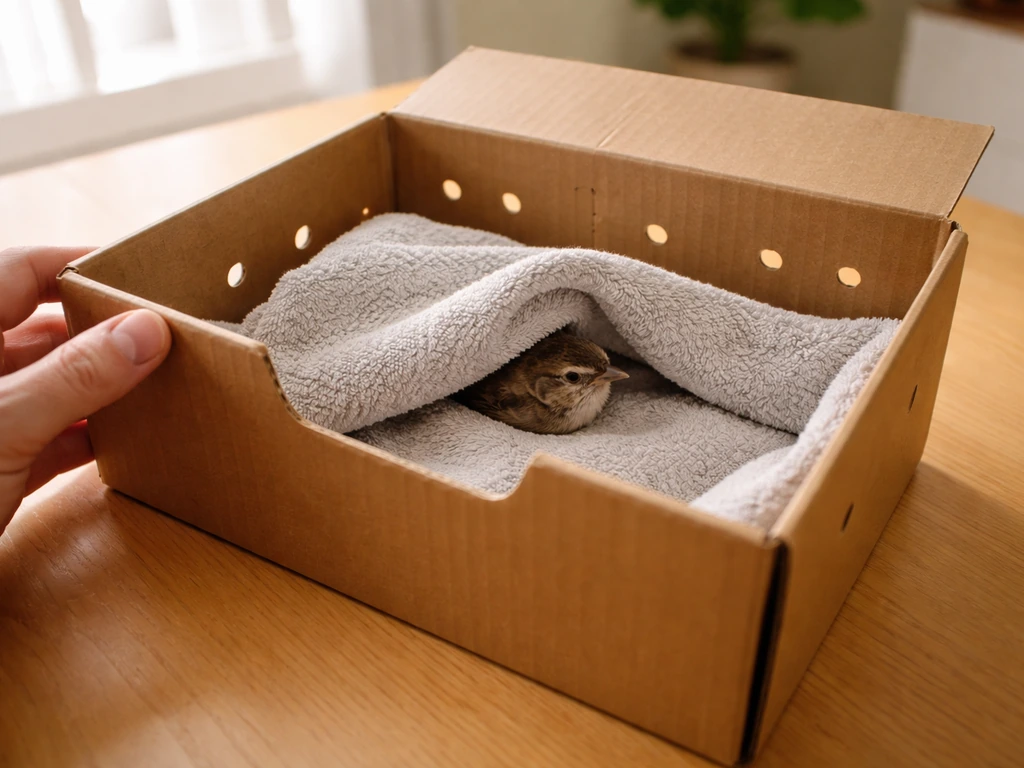
If you've just found a newborn bird, the most important thing you can do right now is keep it warm, keep it quiet, and resist the urge to feed it or give it water. Most baby birds that end up on the ground don't need a full rescue, they need you to pause, assess the situation for about two minutes, and then act on what you actually see. This guide walks you through exactly that, from the first 30 seconds to handing the bird off to a professional. If you want more guidance beyond these first steps, see our complete guide on how to start a bird rescue.
How to Rescue a Newborn Bird: Step-by-Step First Aid
Marcus Holloway
11 May 2026
Is it actually a newborn, and is it actually orphaned?
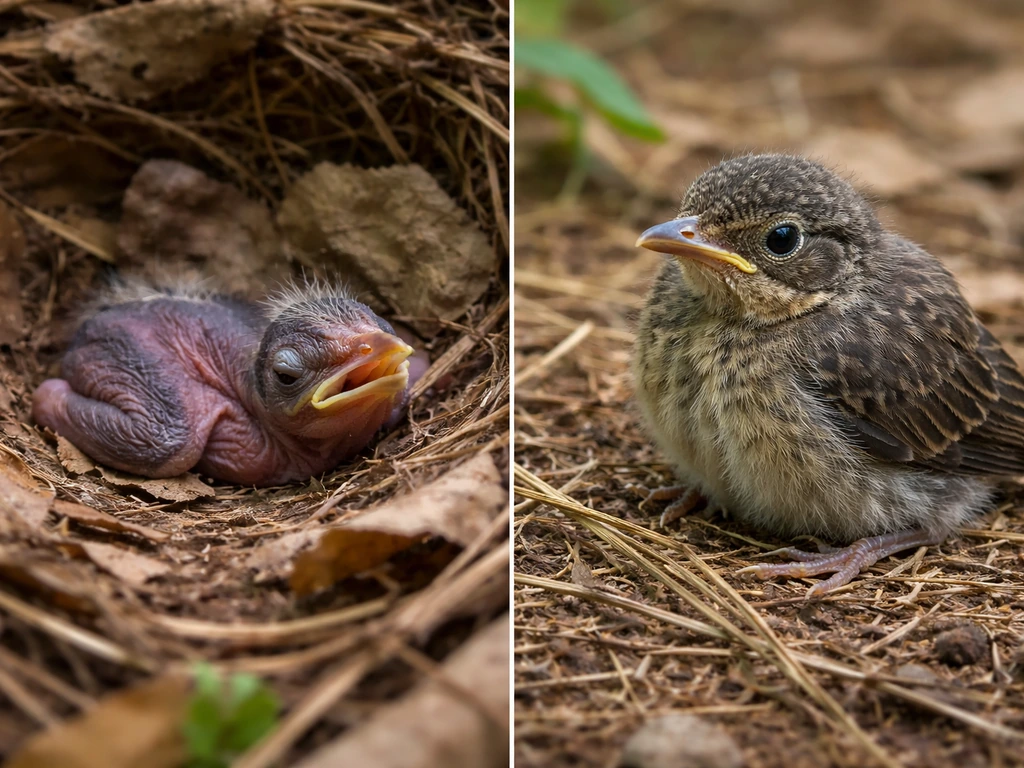
The word "newborn" covers a wide range of baby birds, and the difference matters a lot. A true nestling is largely or completely featherless, with closed or barely open eyes, a wobbly head it can barely hold up, and skin that looks almost translucent. It has zero ability to regulate its own body temperature or feed itself. A fledgling, on the other hand, has most of its feathers, can hop around and grip your finger, and is in the normal process of leaving the nest and learning to fly, often while its parents still feed it from nearby.
This distinction changes everything. A fledgling sitting on the ground with no obvious injuries almost certainly does not need rescuing. Its parents are almost definitely nearby and watching. If you pick it up and take it inside, you've just separated a healthy bird from the parents who are still feeding it. Leave it where it is, move any cats or dogs indoors, and watch from a distance for an hour or two.
A nestling is different. If a featherless or pin-feathered bird is on the ground, it fell or was pushed, and it genuinely can't survive without help. Look around for the nest, it may be in a nearby bush, tree fork, or ledge. If you can safely reach it and the nest is intact, you can place the bird back in it. The old myth about human scent causing parents to abandon the nest is false. Birds have a poor sense of smell and parents will readily accept a returned chick.
A bird of any age is truly orphaned if you've watched it for a full hour and no parent has appeared, if you've personally witnessed the parents die, or if the bird is visibly injured. If none of those things are true, give the parents time before intervening.
The first 10 to 30 minutes: safety, calm, and a quick assessment
If you've confirmed the bird needs help, your first job is to get it somewhere safe and quiet. Pick it up gently with both hands or use a soft cloth, place it in a small cardboard box with air holes punched in the lid, and put the box somewhere away from noise, pets, children, and direct sunlight. Scholars and SBWR’s advice page similarly recommends keeping sick, injured, or orphaned wildlife warm, dark, and quiet in a ventilated box rather than a wire cage until you can get help blank" rel="noopener noreferrer">somewhere away from noise, pets, children, and direct sunlight. A bathroom counter or a quiet corner works well. Minimal handling is the goal here, stress alone can kill a fragile nestling.
Once it's contained, do a quick visual check without touching it more than necessary. You're looking for three main problems: injury, chilling, and (later, once it's stable) hunger. These often overlap, but your order of operations matters.
- Injury: Is there visible bleeding, a drooping wing held at an odd angle, a leg that looks bent or twisted, a wound from a cat or dog bite, or swelling anywhere?
- Chilling: Is the bird cold to the touch, lethargic, limp, or barely responsive? Nestlings lose heat very fast — a cold bird is an emergency within the emergency.
- Hunger/dehydration: Is the skin on the back of the neck wrinkled or tenting when gently pinched? Is the bird's mouth lining dry rather than moist? These are signs of dehydration. Hunger is almost always secondary to these other issues in the first hour.
One critical rule for these first minutes: do not give the bird food or water yet. Even experienced people get this wrong. Water dripped into a baby bird's mouth can go straight into its lungs, the aspiration risk is real and serious. Food given at the wrong time or in the wrong form can cause additional harm and complicate intake when a rehabilitator sees the bird. Warmth comes first, everything else comes second.
Setting up emergency warmth: your makeshift brooder
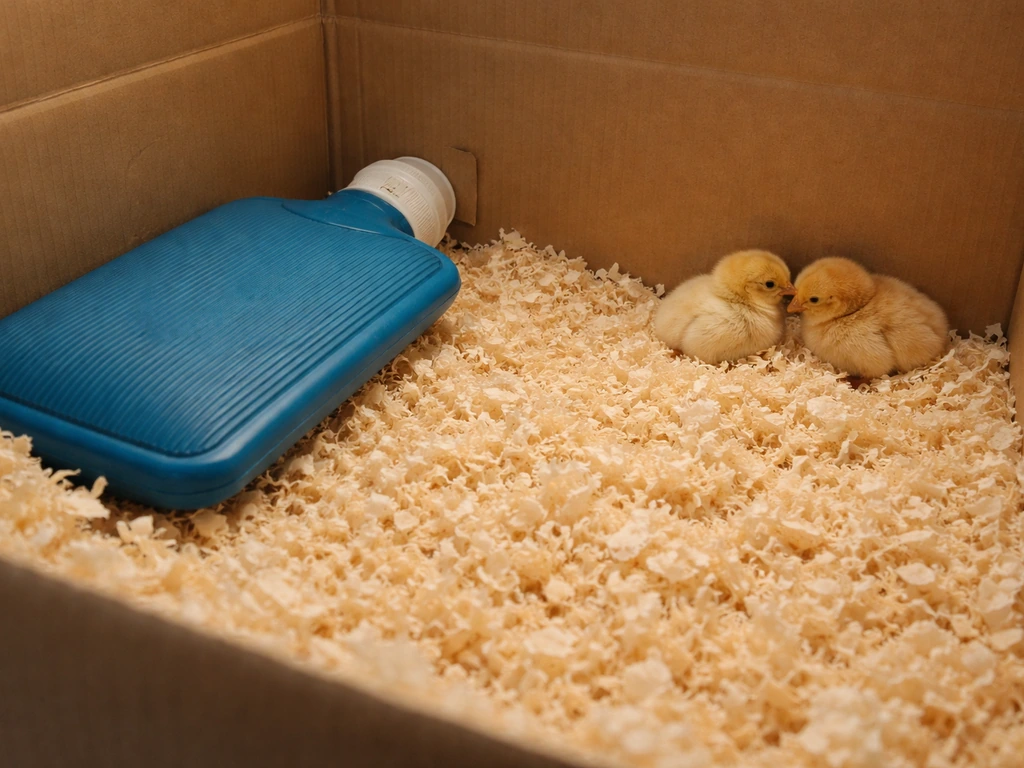
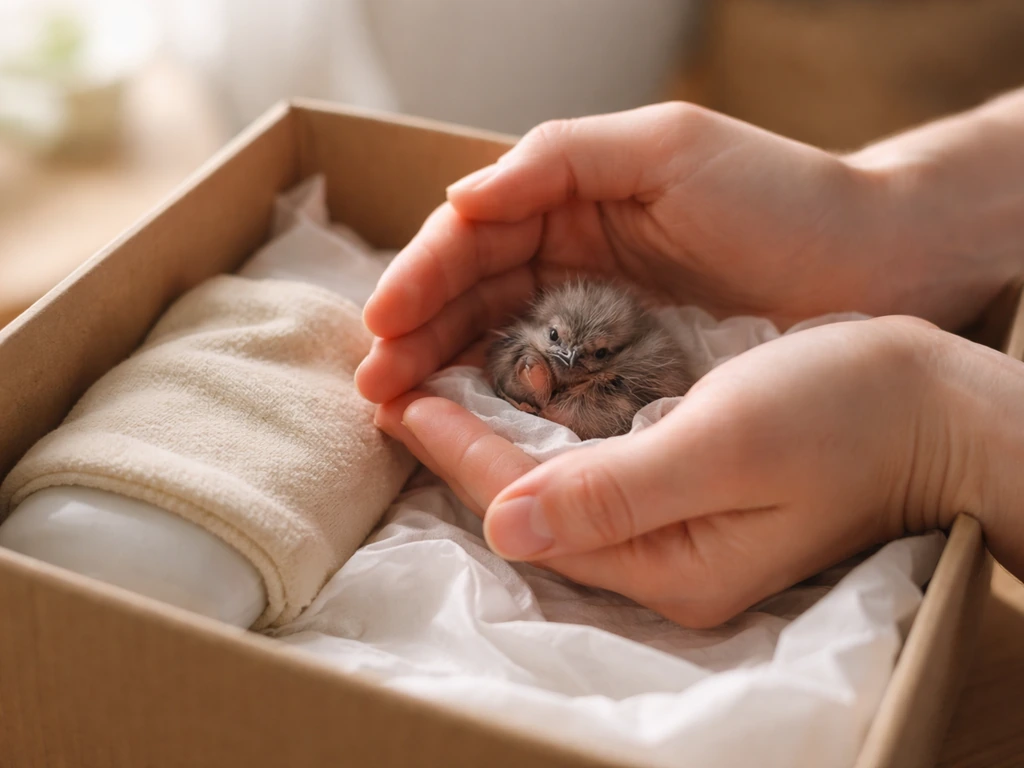
Nestlings can't generate their own body heat, and a cold bird will deteriorate quickly no matter what else you do. Your goal is to get the bird to roughly 85 to 95 degrees Fahrenheit and hold it there until you can get professional help. This sounds precise, but a simple setup works well enough for the first few hours.
Take a small cardboard box or a clean plastic container. Line it with facial tissues, paper towels, or a soft cloth, avoid terrycloth towels, as the bird's toenails can catch in the loops. Shape the lining into a shallow cup or bowl shape to mimic a nest and give the bird something to push against. Place the bird in the center.
For heat, a heating pad set to low and placed under half of the box works well. The key word is "half", the bird needs to be able to move away from the heat if it gets too warm. If you don't have a heating pad, fill a zip-lock bag or a water bottle with warm (not hot) water, wrap it in a thin washcloth, and tuck it against one side of the box. A sock filled with uncooked rice, microwaved for about 90 seconds, also works in a pinch. Check any improvised heat source every 20 to 30 minutes, once a water bottle cools, it can actually pull heat away from the bird rather than adding it.
Keep the box in a warm room, away from drafts and air conditioning vents. Put the lid on loosely or use a folded cloth over the top to keep things dark and calm. Do not use a heat lamp directly over a nestling, it's easy to overheat a bird this young, and overheating is just as dangerous as chilling. Watch for the bird panting with its beak open or holding its wings out from its body, which are signs it's too warm.
Feeding: what to do, what not to do, and when
The default position from virtually every wildlife organization is: do not feed or give water to a baby bird unless a licensed rehabilitator has specifically told you to. This is not overly cautious, it reflects real risk. That said, if you are genuinely hours away from any professional help and the bird is alert and warm, here is what you need to know.
What not to feed (ever)
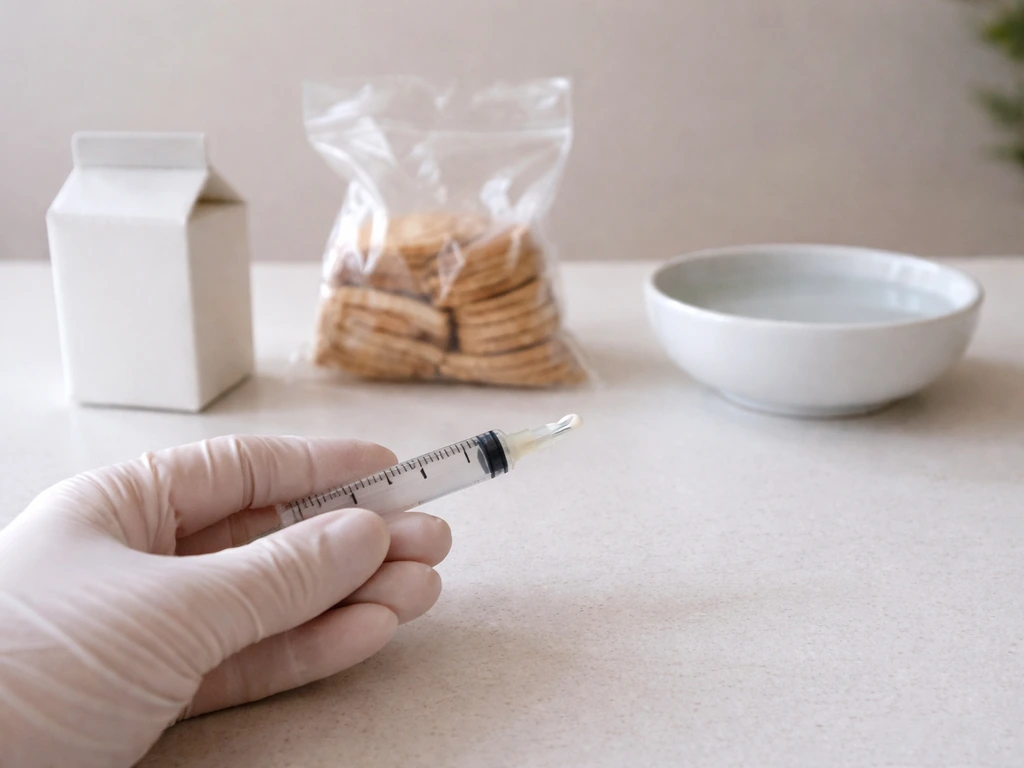
- Milk of any kind — birds cannot digest lactose and it can be fatal
- Bread, crackers, or any dry food — can cause serious nutritional deficiency and crop impaction
- Water dripped or squirted into the mouth — aspiration risk is high in very young birds
- Dog or cat food that contains garlic or onion powder
- Worms dug from chemically treated soil
- Any fruit juice, sports drinks, or sugary liquids
What may be appropriate in a genuine emergency
For nestlings (featherless or pin-feathered): if a rehabilitator has advised you to feed and you have no commercial nestling formula, small pieces of high-protein wet dog or cat food (plain, no additives) can be offered. Use blunt tweezers or the eraser end of a pencil to place tiny amounts at the edge of the beak. Never force the beak open. A healthy nestling will gape (open wide) on its own when it wants food. Offer a piece no larger than the bird's own eye every 30 to 45 minutes during daylight hours.
For fledglings: they may be able to pick up small pieces of food on their own. Mealworms, chopped earthworms, or small pieces of plain wet dog food can be placed in the bottom of the container. Again, no water by dropper or syringe. If the bird is dehydrated, that needs to be handled by a professional with the right fluids.
Realistically, if you expect to reach a rehabilitator within a few hours, it is far safer to skip feeding entirely and focus on warmth. A warm, calm, well-rested bird in a box arrives at a rehab center in much better shape than a bird that has been stressed by repeated handling for feedings.
Handling common problems: bleeding, shock, and dehydration
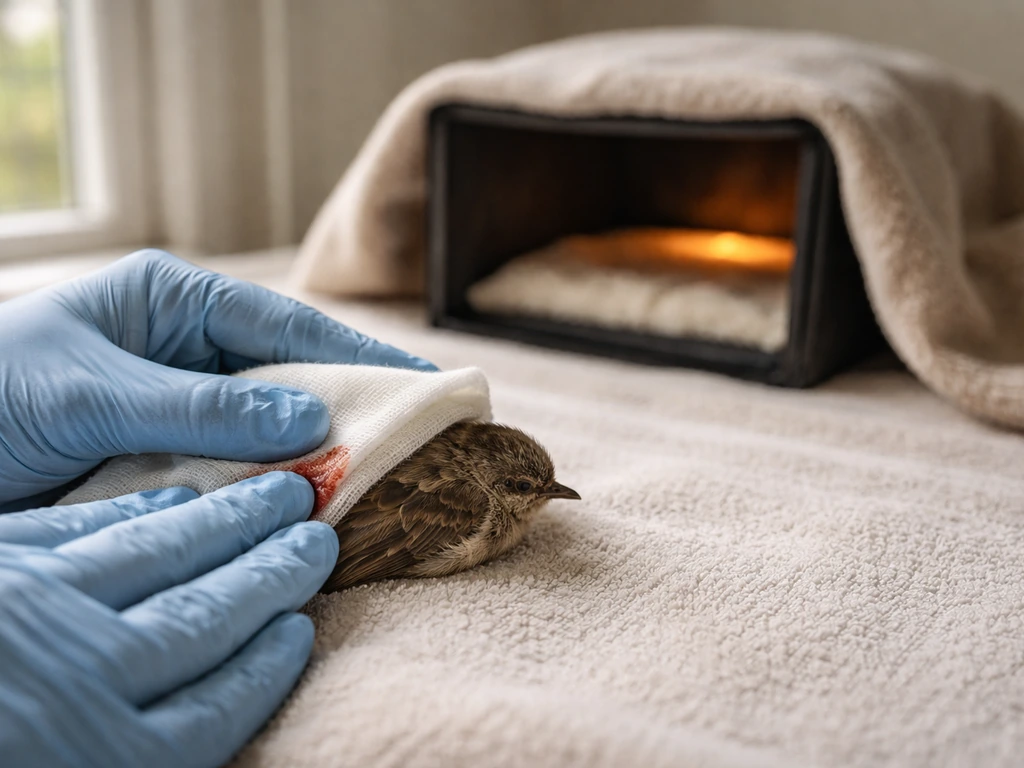
You are not expected to treat injuries, that's what wildlife rehabilitators and avian vets are for. But there are a few things you can and should do in the meantime.
Bleeding
If there is active bleeding, apply very gentle direct pressure with a clean cloth or tissue for a full minute without lifting to check. Do not use cotton balls, fibers catch in wounds. Cat and dog bites are especially serious in birds even when the wound looks small, because bacteria from punctures cause fatal infections within hours. Any bird that has been in a cat's or dog's mouth needs a vet the same day, even if it looks fine.
Shock
A bird in shock will look limp, unresponsive, and may have its eyes closed. Warmth and darkness are your best tools here. Place the bird in your warmed container, keep the room quiet, and do not handle it further. Shock is often reversed by warmth alone in the first 30 to 60 minutes. If the bird is still completely unresponsive after an hour of being warm, it needs professional help urgently.
Suspected broken wings or legs
Do not attempt to splint or bandage a wing or leg yourself. Improperly applied wrapping cuts off circulation fast in a small bird. Keep the bird contained so it can't thrash and injure itself further, keep it warm, and get it to a rehabilitator. A small, snug box limits movement better than any improvised splint.
Dehydration
As mentioned, do not give water by mouth. Signs of moderate to severe dehydration (wrinkled or tenting skin, sunken eyes, tacky or dry mucus membranes) mean the bird needs subcutaneous fluids from a professional. Keep it warm and get it there.
Watching for progress: how to know if you're helping or if things are getting worse
Once the bird is in a warm, dark, quiet box, check on it briefly every 30 minutes without picking it up. You're looking for a few key signs.
| Sign | Positive | Concerning |
|---|---|---|
| Posture | Holding head up, sitting upright or resting naturally | Limp, toppled over, head drooping continuously |
| Responsiveness | Reacts to your presence, may gape for food | No reaction, eyes closed, unresponsive to touch |
| Breathing | Steady, quiet, not visible as labored | Open-mouth breathing, tail bobbing with each breath, wheezing |
| Droppings | Small but present after feedings; dark/white is normal | No droppings at all after several hours, or pure liquid droppings |
| Temperature feel | Warm when you cup it briefly | Still cold to the touch after 30 minutes of warming |
Improvement means continuing to keep the bird warm and calm while you work on reaching a rehabilitator. It does not mean continuing DIY care indefinitely. Even a bird that seems to be doing better still has injuries, stresses, or nutritional needs you cannot fully address at home. The goal is stability, not recovery.
If the bird deteriorates after 30 to 60 minutes despite being warm and quiet, remains completely limp, stops breathing normally, or shows signs of severe distress like continuous tremors, escalate your efforts to reach professional help immediately. If you cannot reach anyone and the bird appears to be actively dying and suffering, that is a moment to honestly assess whether prolonged handling is in its best interest.
When and how to get professional help
Contacting a wildlife rehabilitator should happen in parallel with your stabilization steps, not after. If you are wondering where you can rescue a bird, start by contacting a local wildlife rehabilitator as soon as you have it warm and contained. If you need rescued bird what to do guidance, call a rehabilitator as soon as you have the bird warm and contained Contacting a wildlife rehabilitator should happen in parallel with your stabilization steps.
If you are wondering what to do when you rescue a bird, keep the animal warm, limit handling, and contact a wildlife rehabilitator right away. Make the call while the bird is warming up in its box. You do not need to wait until you've "done everything right" to call, rehabilitators expect to field calls from panicked people and are happy to guide you in real time.
How to find help fast
- Search 'wildlife rehabilitator near me' or 'bird rehabilitator [your city/state]'
- Call your state or provincial wildlife agency — most have a hotline or can refer you
- The National Wildlife Rehabilitators Association (NWRA) and the Wildlife Center of Virginia both have online search tools
- In the US, the USDA Wildlife Services hotline (1-866-487-3297) can direct you
- Any local avian vet or emergency animal hospital can stabilize a bird even if they don't specialize in wildlife
What to tell them
When you call, be ready to describe: what species you think it is (or just describe it), whether it's a nestling or fledgling, where you found it, what condition it's in (cold, bleeding, limp, etc.), and what you've done so far. This helps them triage over the phone and tell you if you need to come in immediately or if it can wait until morning.
Transporting the bird
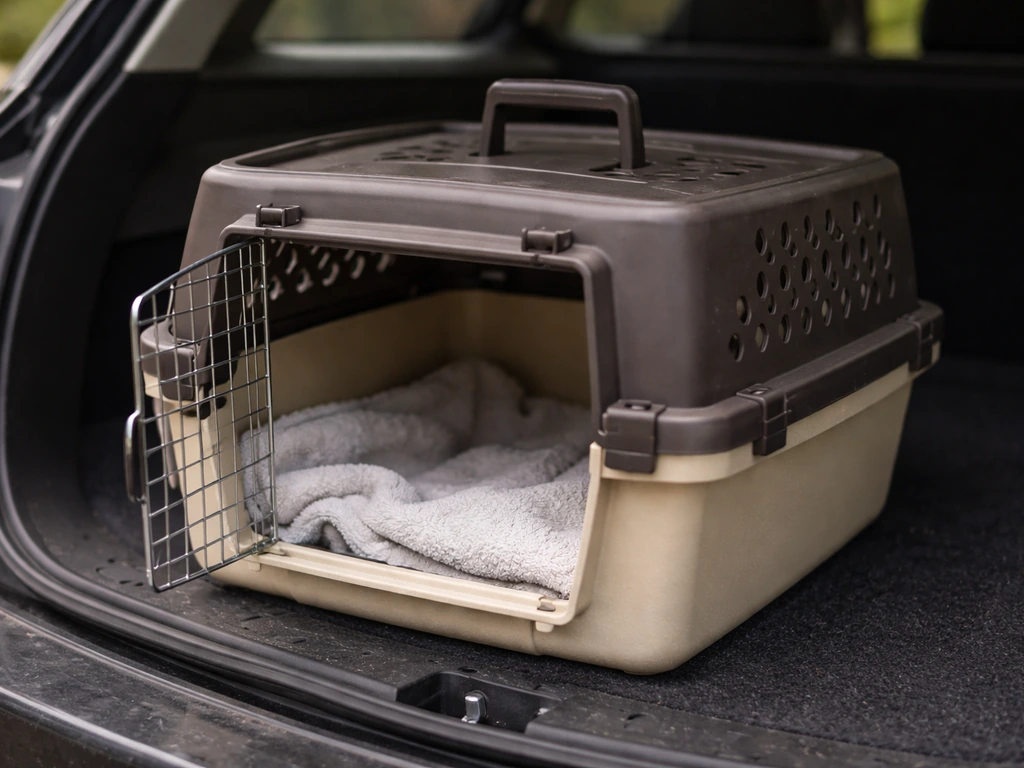
Keep the bird in its warm, dark box during transport. Do not play music loudly, put the box on a seat that will vibrate heavily, or stop to check on it frequently. Keep the car warm. If transport will take more than an hour, make sure your heat source is still active before you leave.
A note on the law
In the United States, most wild birds are protected under the Migratory Bird Treaty Act, which means it is technically illegal to keep them without a permit, even temporarily, even with good intentions. This law exists to protect birds, not to punish rescuers. The practical implication is that you are legally expected to transfer the bird to a licensed rehabilitator as quickly as possible. You won't be prosecuted for picking up an injured bird to get it help, but keeping it as a pet or attempting long-term care at home is a different matter.
Rehabilitation vs euthanasia
When a rehabilitator or vet sees the bird, they may assess that its injuries are not survivable or that the stress of treatment would cause more suffering than humane euthanasia. This is a hard thing to hear, but it is part of genuine wildlife welfare. A good rehabilitator will be honest with you about the bird's prognosis. If you've done everything right up to that point, you've given the bird the best possible chance, and that matters, even if the outcome isn't what you hoped.
Once you've handled this immediate rescue, you may find it helpful to read more about general rescued bird care, what to expect in the days after a bird is found, and how to support wildlife rehabilitation organizations in your area. Knowing the broader picture makes every future encounter easier to navigate.
FAQ
How do I tell if the bird is a nestling or a fledgling quickly from across the yard?
Use distance and behavior. Nestlings are mostly featherless or pin-feathered, with eyes closed or barely open and they cannot stand or grip reliably. Fledglings have more feathers and usually can sit upright, hop, or grip your finger, even if they look awkward.
Should I return a featherless nestling to the nest if I cannot see the nest exactly where it fell?
Look within a short radius (nearby bush, tree fork, or ledge) and try to place the bird back at the highest safe point you can reach. If you cannot locate a nest, you should still stabilize it (warm, quiet, contained) and contact a rehabilitator for guidance on best placement.
What should I do if the baby bird is chirping a lot or seems very alert, but it is still on the ground?
Alert and responsive does not automatically mean it is safe. If it is featherless or pin-feathered, treat it as a nestling and focus on warmth and minimizing stress. If it is feathered and can move normally, consider leaving it where it is and watching briefly for parents.
Can I give formula or milk to a newborn bird to “help it get stronger”?
Do not. Use only what a licensed rehabilitator explicitly instructs. Many common liquids cause aspiration or digestive injury, and improvised feeding can harm the bird even when the bird seems hungry.
Is it ever okay to warm the bird using a microwave heating pad, hot water, or a heat lamp?
Avoid heat lamps and any heat source that creates a hot spot. Use gentle, indirect warming with controllable low heat (heating pad under part of the container, warm water bottle wrapped in cloth). Check frequently, because overheating signs include panting with beak open or holding wings away from the body.
How can I tell if the bird is too cold versus just stressed from being handled?
Cold birds tend to be lethargic and may deteriorate quickly until warmed. After warming, improvement should be noticeable within about 30 to 60 minutes (more responsive, better posture). If the bird remains limp and unresponsive after warming, escalate to professional help immediately.
What’s the safest way to transport a rescued newborn bird to a rehabilitator?
Keep it in the warm, dark, ventilated box, minimize movement, and avoid frequent checking. Keep the car warm, and if the trip will be longer than about an hour, re-check that your heat source is still working before you leave.
If there is bleeding, can I use antiseptic, ointment, or styptic powder at home?
Do not apply medications unless a rehabilitator tells you to. For active bleeding, the immediate step is gentle direct pressure with clean tissue or cloth for a full minute without repeatedly lifting to check.
What if I suspect the bird was attacked by a cat or dog but there are no obvious puncture marks?
Treat it as high risk anyway. Even small-looking bites can cause deep infection in hours. Any bird that has been in a cat or dog’s mouth needs same-day veterinary or rehabilitator assessment.
Should I try to stop trembling or twitching by holding the bird still?
Don’t restrain it more than necessary. If the bird shows severe distress like continuous tremors, that is an escalation signal. Keep it warm, reduce handling, and contact professional help right away.
If parents do not return after I watched for a while, does that automatically mean the bird is orphaned?
Not automatically. The guidance is to wait up to about an hour while keeping distance if there is no visible injury and you did not witness harm to the adults. If you never see parents return after that longer window, or the bird is injured, escalate quickly to a professional.
Can I raise the bird at home if I cannot reach a rehabilitator immediately?
Home care for wild nestlings typically leads to poor survival. If help is delayed, your priority is stabilization only (warm, quiet, contained) and then prompt transfer. Avoid long-term DIY feeding or rearing without a rehabilitator’s instructions.
What equipment should I keep ready for emergencies so I can act fast without extra handling?
A small cardboard box with ventilation holes, soft non-looping lining (tissues or paper towels), and an adjustable warming option (heating pad on low under one side or a warm bottle wrapped in cloth) helps you stabilize quickly and limit repeated handling.
Is there any situation where I should not pick the bird up at all?
Yes. If it is a fledgling with normal movement (hopping, gripping) and no obvious injury, it often just needs to be left with parents nearby. Also avoid picking it up if it is already safely perched by itself and you can keep pets indoors and monitor from a distance.
Next Article
Rescued Bird: What to Do Next Step by Step Guide
Step-by-step guide for rescued bird emergencies: safety, warmth, triage, feeding, and when to call a wildlife pro.