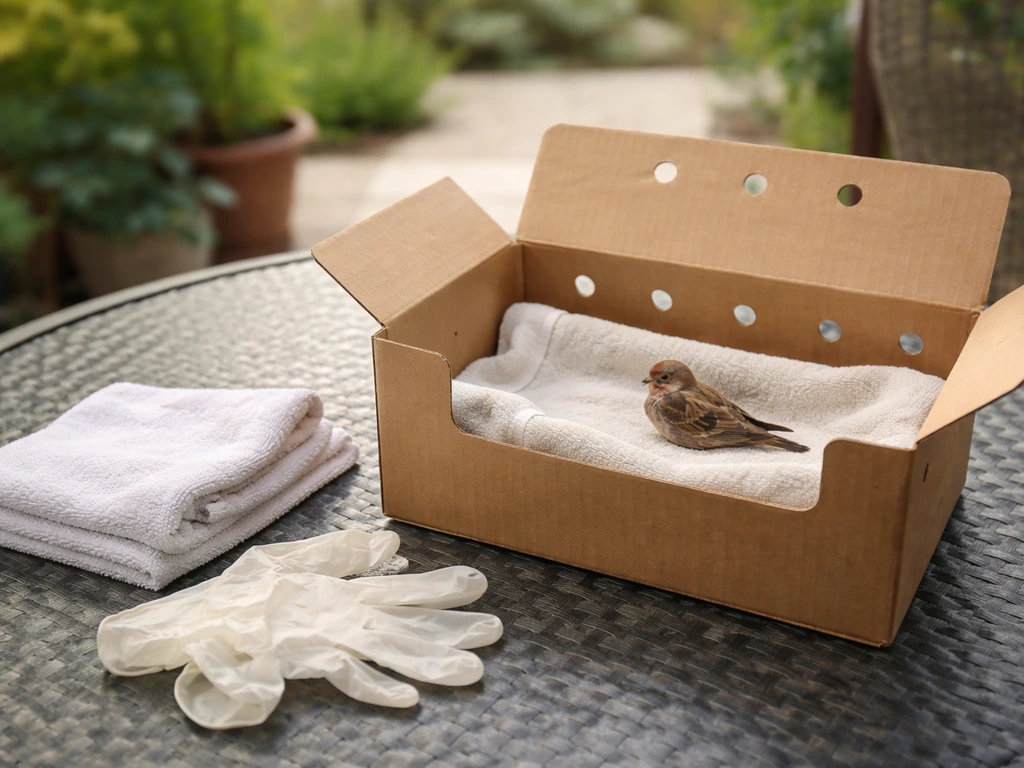
The very first thing you do when you find a bird in trouble is stop, take a breath, and resist the urge to scoop it up immediately. Most birds need you to slow down, assess the situation, and call a licensed wildlife rehabilitator before you do anything else. For a clear step-by-step approach to what to do when you rescue a bird, follow the guidance in the rest of this article. That one step, calling a professional, saves more birds than any home remedy ever will. This guide walks you through every decision point from the moment you spot the bird to handing it off to someone who can actually save it.
How to Start a Bird Rescue: Step-by-Step First Aid
Marcus Holloway
23 Apr 2026
What to do the moment you find a bird
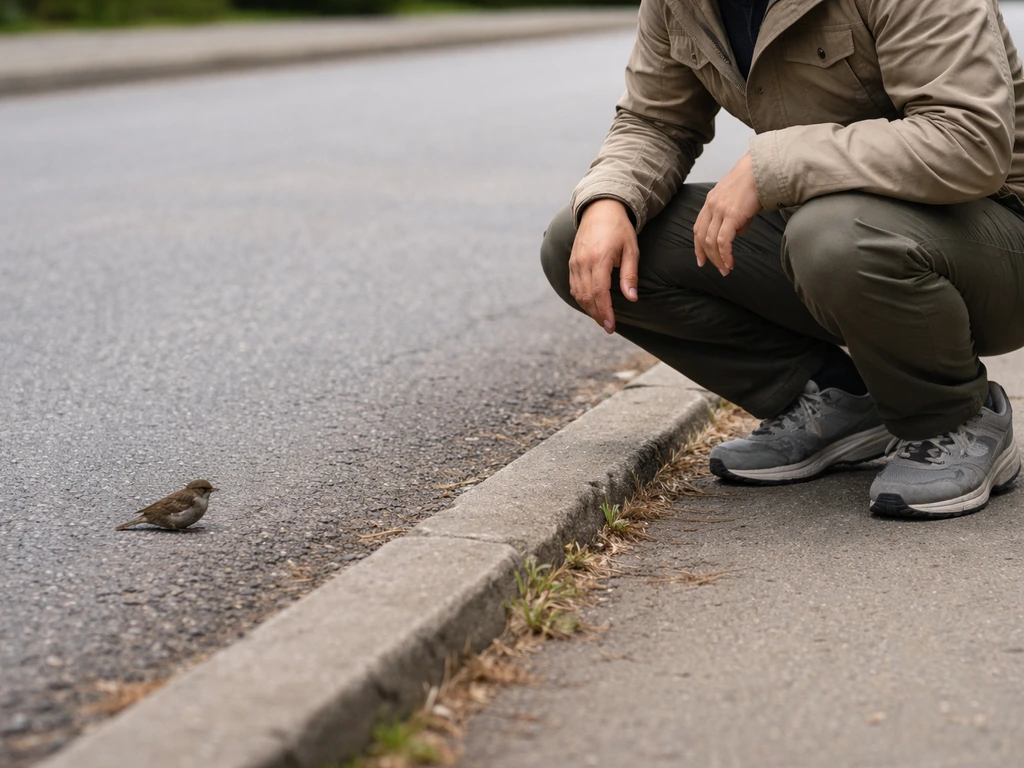
Keep your distance first. Watch the bird for a few minutes without approaching. Is it moving? Is a parent nearby? Is it bleeding or clearly unable to stand? That short observation period tells you a lot and stops you from stressing a bird that might be totally fine.
If the bird is in immediate danger, such as sitting in the middle of a road, in the path of a lawn mower, or being circled by a cat, carefully move it to the nearest safe spot, like a nearby shrub or a shaded patch of grass. You are not rescuing it yet; you are just removing the immediate threat. Note exactly where you found it, because that location matters when you talk to a rehabilitator.
Once the bird is out of immediate danger, call for guidance before touching it again. Wildlife rehabilitators and veterinary clinics with wildlife experience can tell you over the phone whether the bird actually needs intervention. The U.S. Fish and Wildlife Service and organizations like the Wildlife Center of Virginia both emphasize that most of the time, the best action is to leave the animal alone, and professionals can help you make that call quickly.
Quick triage: figuring out what you actually have
Not every bird on the ground is in trouble. Getting the triage right prevents well-meaning interference that can actually harm a healthy bird. There are four situations you are likely dealing with, and they each have a different response.
Nestling
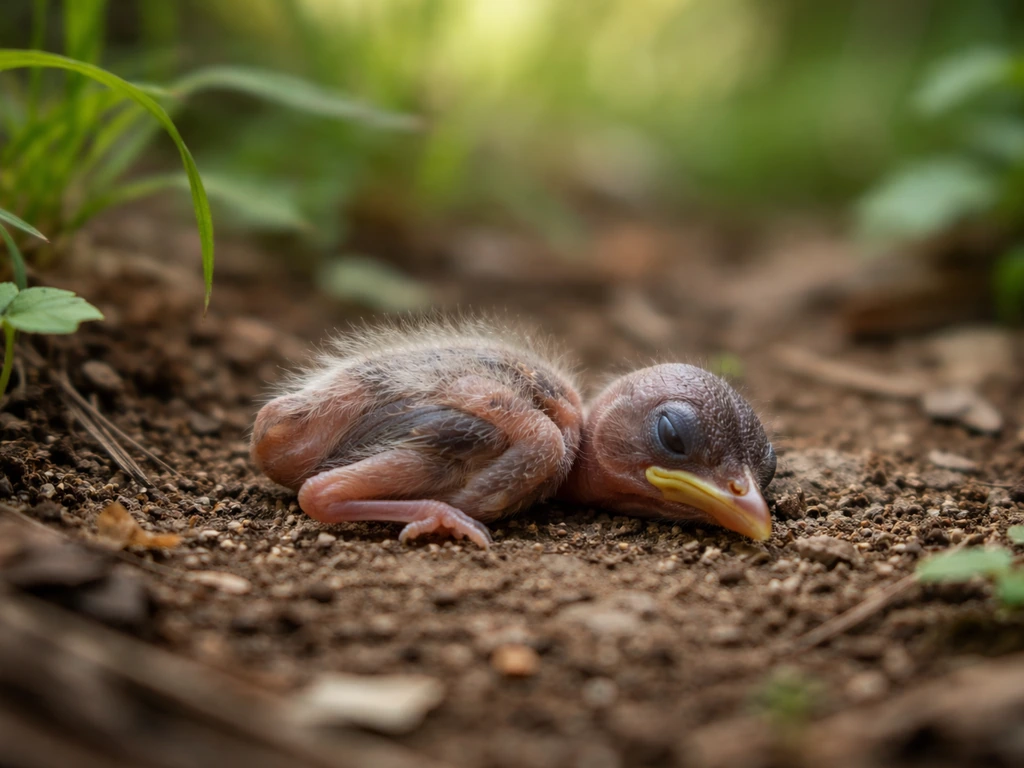
A nestling is naked or covered only in sparse down, eyes often still closed, and completely helpless outside the nest. If you find one on the ground, look for the nest above. If you can see it and safely reach it, gently place the bird back inside. The parent will not reject it because you touched it. If you cannot find the nest, move the bird to a shaded area nearby and watch from a distance to see if a parent returns. A nestling on the ground with no nearby nest and no returning parent after 30 to 60 minutes needs professional help.
Fledgling
A fledgling is partially or fully feathered, can hop and flutter, and has probably just left the nest on purpose. This is normal bird development. Fledglings spend days on the ground being fed by their parents while they practice flying. Unless this bird is visibly injured, the right move is to leave it alone. Keep cats, dogs, and curious kids away, and watch from inside. Tufts Wildlife Clinic puts it plainly: leave the fledgling where it is, keep pets indoors, and stay back. Fledglings very rarely return to the nest.
Injured bird
Signs that a bird genuinely needs help: visible broken limb, active bleeding, shivering, inability to stand upright, an eye that is swollen shut, or a deceased parent nearby. A bird that flew into a window and is stunned may recover on its own in 15 to 20 minutes if left in a quiet spot away from predators. One that is still down after that window has likely sustained a head injury and needs a rehabilitator.
Sick bird
A sick bird often looks fluffed up, is lethargic, has discharge from the eyes or nostrils, or is sitting exposed in the open when it should be hiding. Unknown illness is tricky because some bird diseases can spread to other wildlife or even people. Do not handle a sick bird without gloves, and call a rehabilitator or vet before doing anything else.
How to handle and transport a bird humanely
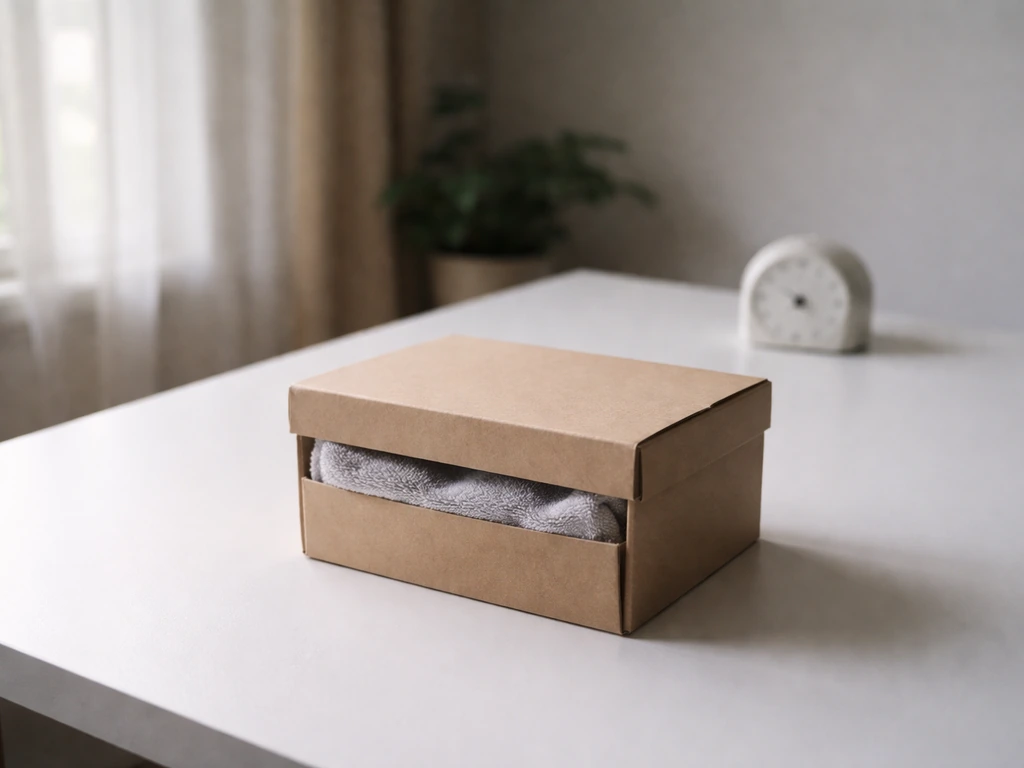
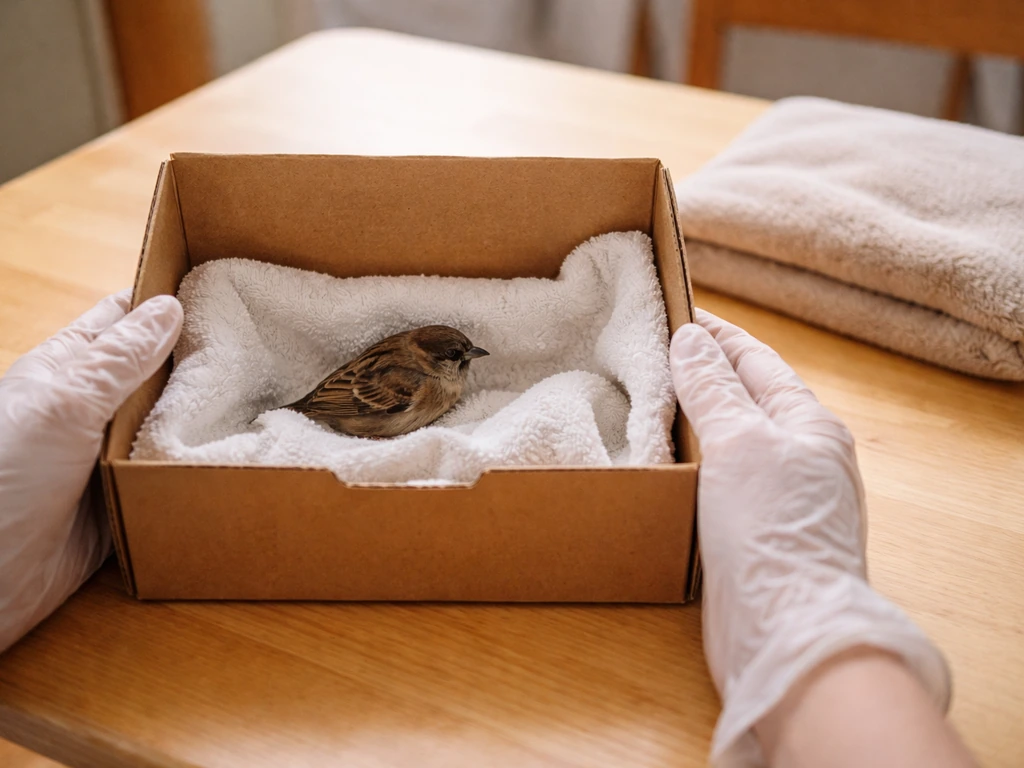
If you do need to handle the bird, put on disposable gloves first. This protects you and reduces disease transmission. Use a light towel or cloth to drape over the bird before picking it up, which reduces visual stimulation and calms it down. Cup the bird gently in both hands, keeping the wings folded against its body. Avoid squeezing. For raptors like hawks or owls, be especially careful of the talons, which are the real danger, not the beak.
Transfer the bird into a container as quickly and calmly as possible. A cardboard box works well because it is dark inside and the bird cannot see you through it. A paper bag with the top folded over, or a cloth tote held closed, also works for small songbirds. The NYC Bird Alliance recommends a breathable container where the bird cannot see out. Punch or cut a few small air holes if using a sealed box, and put a folded cloth or paper towels on the bottom so the bird has something to grip.
Do not transport the bird in a wire cage, open container, or with a pet present. Keep the car quiet and the radio off. A panicked bird can injure itself thrashing inside a container, so the calmer and darker the environment, the better the outcome.
Bird first aid: what helps and what to avoid
The most important first aid rule is this: do not feed or give water to an injured or orphaned bird unless a licensed rehabilitator specifically instructs you to. If you are wondering how to rescue a newborn bird, the safest move is to avoid feeding and contact a licensed wildlife rehabilitator for step-by-step guidance. This is not overly cautious advice; it is a real safety issue. Food given incorrectly can cause aspiration, choke the bird, or cause life-threatening digestive issues. Even water can be dangerous if a bird is too weak to swallow properly. The Wildlife Center of Virginia, the Raptor Trust, and virtually every rehabilitation organization agree on this point.
What you can do is provide warmth. If the bird is frozen, that same warmth guidance is especially important while you contact a rehabilitator right away provide warmth. An injured bird in shock loses body heat quickly.
Place a clean cloth in the bottom of the box, and if the bird is cold to the touch or shivering, put a covered heat source, such as a hot water bottle wrapped in a towel or a heating pad set to low placed under half the box, so the bird can move away from the heat if it gets too warm. Watch for signs of overheating: open-mouth breathing, lethargy, or sunken eyes.
If you see those, move the box somewhere cooler and ventilated.
Do not apply antiseptic, bandages, or any medication unless you are instructed to. Do not try to straighten a broken wing or limb. Do not put the bird outside in a cage to "get some air." Keep it inside, keep it dark, keep it quiet, and get it to a professional as fast as you can.
Setting up a temporary holding space
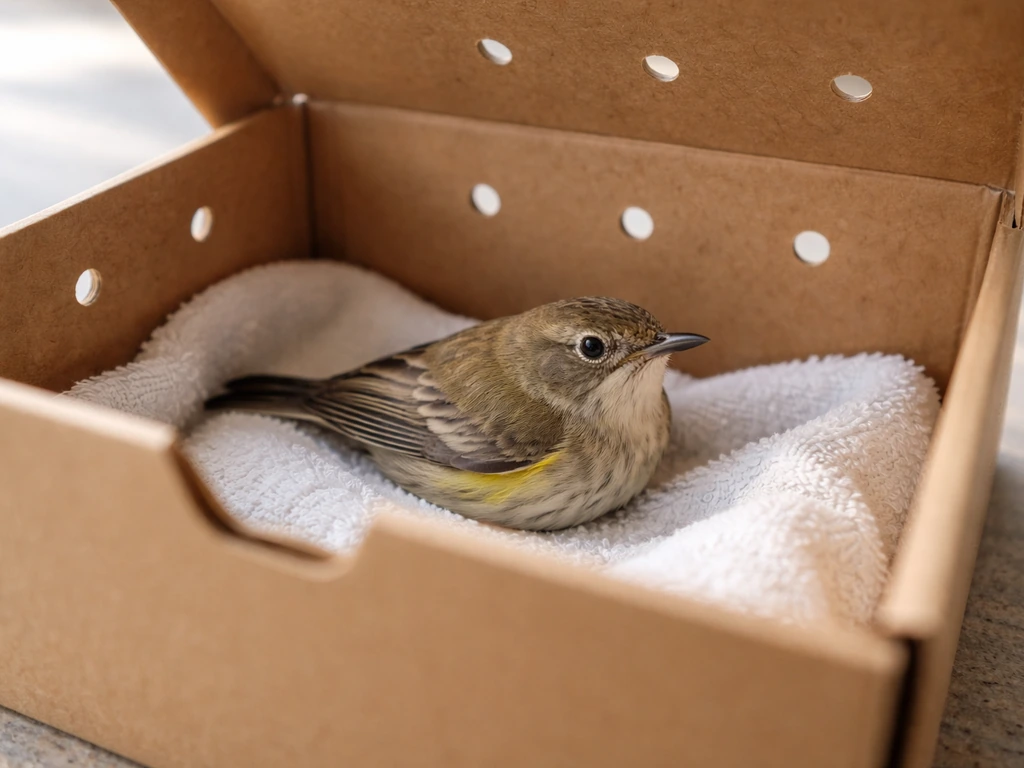
Your goal with temporary housing is simple: keep the bird alive and calm until you hand it off to a rehabilitator or vet. You are not treating it, you are stabilizing it.
- Use a cardboard box with a secure lid and a few small air holes punched in the sides or top.
- Line the bottom with a folded paper towel or soft cloth so the bird can grip and won't slip.
- Keep the box in a quiet, indoor room away from pets, children, and household noise.
- Maintain a warm environment, around room temperature (roughly 70 to 75 degrees Fahrenheit), with a gentle heat source under one end of the box if the bird seems cold.
- Do not peek inside repeatedly. Check only when necessary, and do it quickly.
- Do not place food, water bowls, or toys inside.
- Do not leave the bird in a parked car in the sun.
The sooner you secure this setup, the better the bird's chances. Stress is a genuine killer for wild birds, and a dark, quiet box reduces that stress dramatically while you arrange transport.
When and how to contact a wildlife rehabilitator or vet
Contact a rehabilitator as soon as you have confirmed the bird needs help. Once you have the right help lined up, follow the rehabilitator’s specific instructions for what to do when you rescue a bird. Once you have the right help lined up, follow the rehabilitator’s specific instructions for what to do when you rescue a bird, including rescued bird what to do steps. Do not wait until the next morning if the bird is injured, bleeding, or in shock. Many rehabilitators take calls in the evenings, and some emergency animal hospitals handle wildlife after hours.
To find a licensed rehabilitator near you, the National Wildlife Rehabilitators Association has a Find a Rehabilitator tool on their website. If you are unsure where to take the bird, contact a licensed wildlife rehabilitator using the tips below to find the right local option where can i rescue a bird. You can also search your state's fish and wildlife agency website, most of which maintain lists of permitted rehabilitators by county.
In the United States, rehabilitators who care for migratory birds (which includes most songbirds, waterfowl, and raptors) must hold a Federal Migratory Bird Rehabilitation permit, so the people you are calling are trained and vetted. In particular, the U. S. Fish and Wildlife Service notes that birds listed in 50 CFR Part 10 require a Federal migratory bird permit, including for rehabilitation-related activities [Federal Migratory Bird Rehabilitation permit](https://www.
fws. gov/service/3-200-10b-migratory-bird-rehabilitation). Mass. gov notes that wildlife rehabilitators must have a Federal Migratory Bird Rehabilitation permit to care for migratory birds [In the United States, rehabilitators who care for migratory birds must hold a Federal Migratory Bird Rehabilitation permit](https://www.
mass. gov/info-details/find-a-wildlife-rehabilitator).
When you call, be ready to describe: what species the bird appears to be (or your best guess), where exactly you found it, what condition it is in (bleeding, not moving, shivering, etc.), and whether it is currently in a container. Ask whether you should bring it in or if they can come to you, what to do in the meantime, and if they cannot take it, whether they can refer you to someone who can.
If you cannot reach a rehabilitator, call a local veterinary clinic. Not all vets treat wildlife, but many will provide emergency stabilization or point you toward the right contact. Some states also run wildlife conflict helplines, like Virginia's toll-free line, that can connect you with local resources quickly.
Building your bird-rescue starter kit
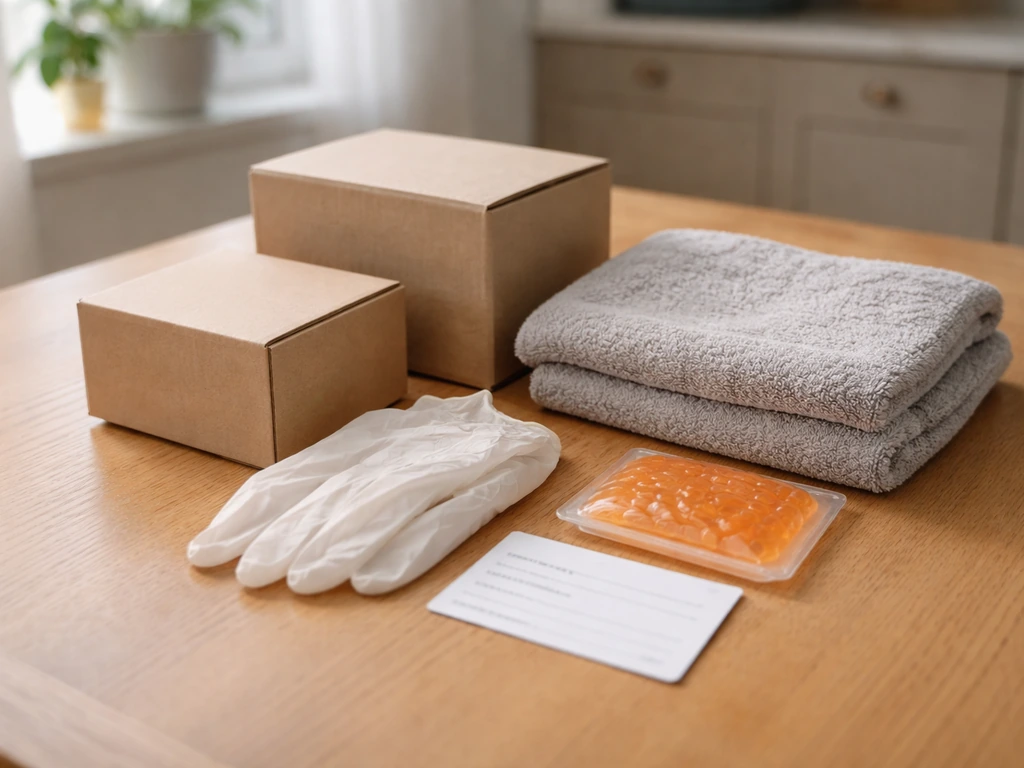
If you want to be ready the next time you find a bird in trouble, putting together a simple kit takes less than 30 minutes and costs very little. Having these things on hand means you spend less time scrambling and more time helping.
| Item | What it's for |
|---|---|
| Cardboard boxes (small and medium) | Temporary holding container; dark and breathable |
| Paper towels or soft cloths | Box lining for grip and warmth |
| Disposable gloves (latex or nitrile) | Protection when handling sick or injured birds |
| Hot water bottle or low-setting heating pad | Gentle heat source for cold or shocked birds |
| Light towel or cloth | Draping over bird during capture to reduce stress |
| Hole punch or scissors | Making air holes in transport containers |
| List of local rehabilitator numbers | Fast contact when minutes matter |
| Notebook or phone notes | Recording where and when you found the bird |
Alongside the physical kit, build your contact network before you need it. Save the number of your nearest wildlife rehabilitator, your state fish and wildlife agency's wildlife helpline, and a local vet that handles wildlife. The National Wildlife Rehabilitators Association directory is a good starting point. Knowing who to call before you are standing over a bleeding bird makes every subsequent step easier.
Common scenarios and what to do in each
You found a nestling with no nest in sight
Look up and around for the nest within a reasonable reach. If you find it, place the bird back inside. If you cannot find it or cannot safely reach it, move the bird to a shaded spot nearby and watch for 30 to 60 minutes to see if a parent comes. No parent and no nest means call a rehabilitator. Do not try to raise a nestling yourself; it requires feedings every 15 to 30 minutes and specialized formula, and doing it wrong is usually fatal for the bird.
You found a fledgling hopping on the ground
Leave it there. This is almost always the right call if the bird looks healthy and feathered. The parents are almost certainly nearby and will continue feeding it on the ground. Your job is to keep threats away: bring pets inside, ask kids to back off, and keep lawn equipment away from the area. If the fledgling is in a genuinely dangerous spot with no cover nearby, you can move it to a shrub or low branch a few feet away, but resist the urge to bring it inside.
A bird hit a window and is stunned
Place the bird in a small box with a cloth lining, close the lid, and set it somewhere quiet and safe, away from cats and out of direct sun. Wait 15 to 20 minutes. Many window-strike birds recover fully and can be released from the box outdoors. If it is still down after 20 minutes, is bleeding from the head, or cannot hold itself upright, it has likely sustained a more serious injury and needs a rehabilitator.
The bird is bleeding or has an obvious broken bone
This is a genuine emergency. Get the bird into a dark, warm container immediately using a cloth to minimize handling time, and call a rehabilitator or emergency vet right away. Do not apply pressure to a wound on a bird the way you would for a mammal. Do not try to splint a broken wing or leg. Just contain, warm, and transport as quickly as possible.
The bird looks sick but has no obvious injury
Wear gloves. A bird that is fluffed up, unresponsive to your approach, sitting in the open with dull eyes, or has visible discharge is likely ill. Some bird diseases can be transmitted to other animals or people, so hygiene matters here. Box the bird carefully, wash your hands thoroughly after, and call a rehabilitator or vet to describe the symptoms. Do not put a sick bird near other birds, wild or pet.
You found a raptor (hawk, owl, or eagle)
Raptors are powerful and their talons can cause serious injury. Use a heavy towel, not just a cloth, to cover and pick up the bird, and be very deliberate about controlling the feet. A large box in a dark, room-temperature environment is ideal; Audubon's raptor guidance specifically recommends warmth and darkness to calm them during transport. Call a raptor-experienced rehabilitator if possible. Most state wildlife agencies can direct you to one.
The bird appears healthy but a cat brought it in
Cat-caught birds almost always need professional evaluation even if they look uninjured. Cat saliva carries bacteria that cause fatal infections in birds within 24 to 48 hours. If a cat has had the bird in its mouth, treat it as an injured bird, box it up, and get it to a rehabilitator the same day. Do not release it and assume it will be fine.
Once you have worked through your first rescue and connected with a local rehabilitator, you will have a much clearer sense of what the process looks like in your area. Many people who start by rescuing one injured bird end up becoming regular volunteers or foster carers for their local wildlife rehabilitation center. If that interests you, ask the rehabilitator you contact how their volunteer program works. It is usually the best next step for anyone who wants to do this more than once.
FAQ
What should I do if the bird is in my yard and I cannot reach a rehabilitator right away?
Keep the bird in a dark, quiet box with ventilation until you can contact help, but do not leave it outside in the sun or where pets can access it. If it is bleeding heavily, stunned from a window strike, or shivering, prioritize calling an emergency wildlife-capable vet or leaving a message that clearly states urgency. Avoid repeatedly checking on it, because frequent handling increases stress.
Is it ever okay to give water to a bird that seems weak or dehydrated?
Only if a licensed rehabilitator or vet instructs you to. Many birds cannot swallow safely when stunned or injured, so water can enter the airway and worsen the condition. If you must wait for guidance, focus on warmth and minimizing movement rather than offering water or food.
What if I see a nest with eggs or a nestling and I do not know whether the parents are gone?
First confirm whether adult activity returns from a distance before taking the nestling in. If you can see parents nearby and the nestlings are not bleeding or obviously failing to stand, generally leave them in place and reduce threats (cats, dogs, mower access). If adults do not return after the relevant observation window described for nestlings, contact a rehabilitator rather than attempting to incubate or feed.
Can I keep more than one rescued bird in the same box to save time?
No. Do not house birds together, especially if one may be sick or injured. Separate containers reduce fights, stress, and the risk of disease spread. If you are transporting multiple birds, use individual boxes and keep them apart in the vehicle.
What container is safest if I only have what is in my house?
A sturdy cardboard box that can be secured closed is usually better than an open container because it reduces visibility and thrashing. If you use a bag, make sure it is not airtight, add a few small ventilation openings if needed, and keep the top folded closed. Line the bottom with a clean cloth so the bird can grip.
How do I avoid getting bitten or scratched, especially with larger birds?
Minimize time with exposed talons. Use gloves, cover the bird with a heavy towel, then control the feet carefully while placing it into the container. For raptors, avoid holding them upright or forcing them to spread wings, because that increases risk. If you are alone and the bird is actively fighting, focus on containment and call a rehabilitator for real-time guidance.
What should I do if the bird seems to have a leg injury, but I cannot tell if it is a fracture?
Do not attempt to straighten the leg or splint it. Contain the bird, keep it warm, and transport it promptly for assessment. Even if it seems stable, a fracture or joint injury can worsen quickly during attempts to manipulate it.
Should I give the bird a warm blanket or heating pad directly under it?
Use warmth indirectly so the bird can move away if it gets too hot. Place a covered heat source under half the box, not directly on the bird, and monitor for overheating signs like open-mouth breathing or lethargy. If the bird is panting or eyes look sunken, move the box to a cooler, ventilated spot.
What if the bird is still warm but very lethargic after being in the road or after being hit by a car?
Treat it as an active emergency regardless of temperature. Put it in a dark, warm container using minimal handling, then contact a rehabilitator or emergency vet quickly. Internal injuries can be present even if the bird does not look obviously broken.
What steps should I take for cleanup after handling a sick bird?
Wash hands thoroughly with soap and water after handling, and avoid touching your face during cleanup. If you used disposable gloves, remove them carefully and discard them. Keep the bird’s container and any towels separate from household laundry until you have guidance on safe handling, especially if discharge or fluffed, lethargic behavior suggested illness.
If a cat dropped the bird but it looks uninjured, is it still safe to release it?
No. Cat saliva can cause rapid, life-threatening infections even when the wound is not obvious. Box it, keep it warm, and contact a rehabilitator the same day. Do not release it until a professional confirms it is healthy.
How can I find the right type of help if the bird is a migratory species versus a local songbird?
Call a licensed wildlife rehabilitator and be ready to describe the species guess and exact location found. Migratory species often require permitted care, so the rehabilitator can confirm they can accept it and direct you to the correct facility. If they cannot take it, ask for a referral to a permitted option or a veterinary clinic that handles wildlife.
If I want to start volunteering, what is the best next step after my first rescue?
Ask the rehabilitator about their intake and volunteer process right after the case is over, including age requirements, training, and expectations for quarantine or sanitation. Many centers also have specific rules about what volunteers can do (for example, feeding schedules, transport limits, and hygiene protocols), so clarify those before committing.
Next Article
What to Do When You Rescue a Bird: First Steps Guide
Step-by-step rescue guide: calm, contain, assess injury or illness, give safe first aid, and when to call a rehab vet.