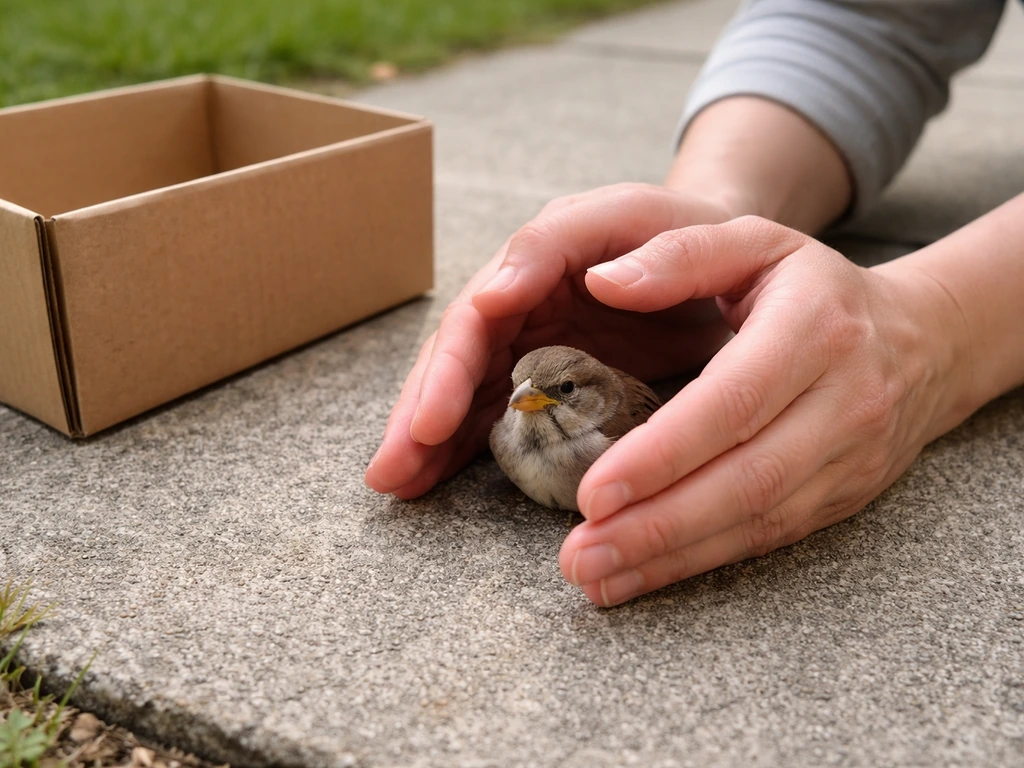
Get the bird out of the water or wet environment right now, move it somewhere warm, quiet, and dark, and do not give it food or water. Those three things, done in the next two minutes, are the most important actions you can take. Everything else, the assessment, the warming routine, the decision about professional help, flows from there.
How to Help a Bird That Almost Drowned: First Aid Steps
Marcus Holloway
16 May 2026
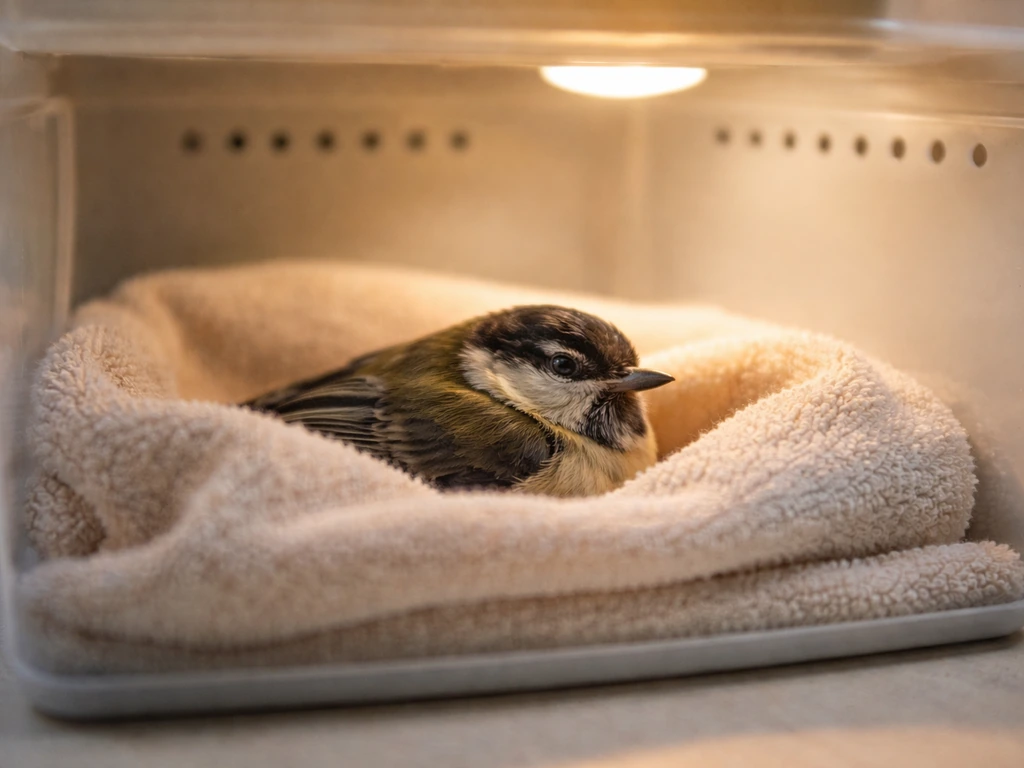
First: Get the bird to safety immediately
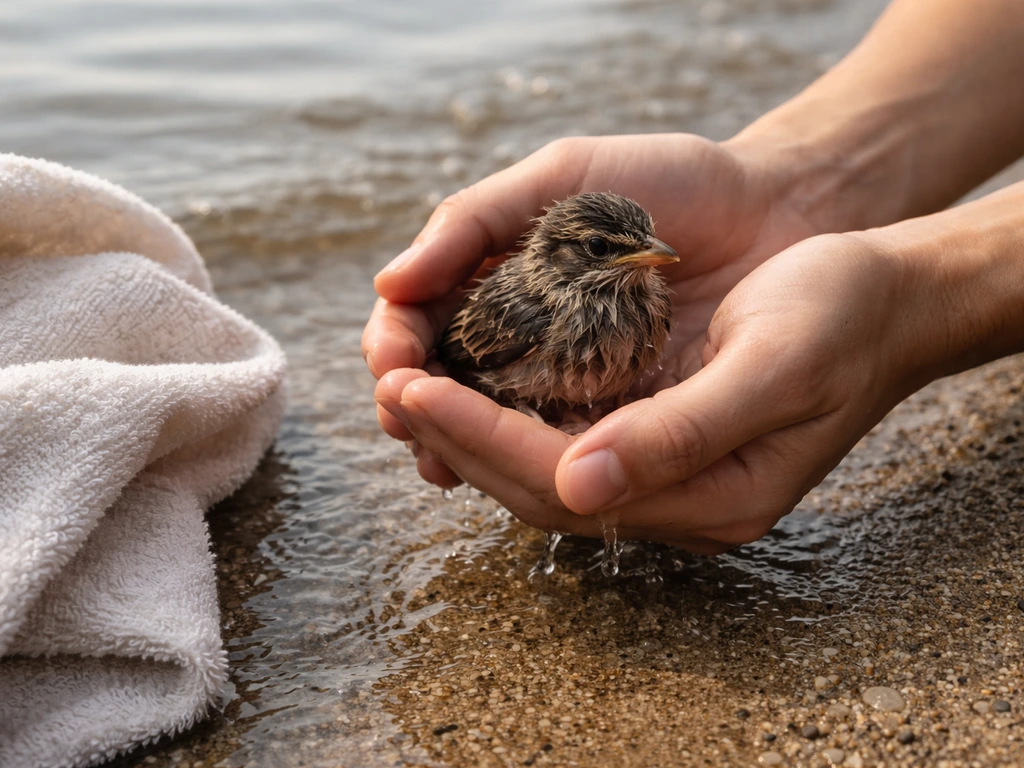
Before you do anything else, make sure you're safe. Watch your footing around water. If the bird is still in or very near water, use a towel, a net, or your hands to scoop it out gently. If you have a bird trapped inside your home or garage, the safest approach is still to keep it calm, contain it securely, and contact a wildlife rehabilitator for next steps how to help a bird trapped inside. Don't chase it into deeper water trying to grab it.
Once you have the bird, cup it loosely in both hands or wrap it gently in a dry towel to hold it still. You want to minimize handling as much as possible. Wild birds experience extreme stress when handled, and stress on top of shock can be fatal. The goal right now is: contained, calm, warm.
Prepare a temporary container right away. A cardboard shoebox or small cardboard box works well. Line it with paper towels or a folded cloth. Make sure the box has some ventilation, a few small holes in the lid are enough. Do not use a wire cage. Wire cages stress birds out and can cause feather and wing damage when a disoriented bird tries to flap. Place the bird inside, close the lid, and set it somewhere away from pets, children, loud noise, and direct sunlight.
Wash your hands after handling the bird. Wild birds can carry bacteria and parasites, and handling stressed wildlife is a two-way health risk.
How to assess breathing, consciousness, and shock
Once the bird is in its box and you've had a moment to breathe, take 30 to 60 seconds to observe it before closing the lid. You're looking for specific warning signs that tell you how serious the situation is.
Signs of breathing problems
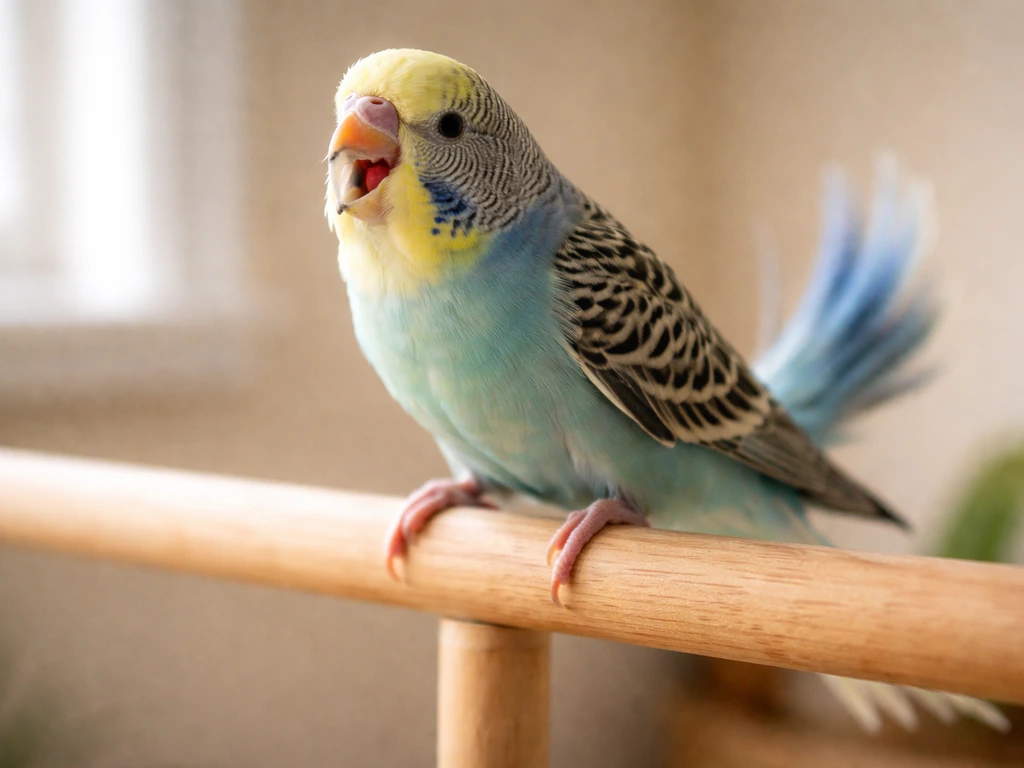
Open-mouth breathing and tail bobbing are the two clearest respiratory red flags. A bird breathing normally keeps its beak closed. If you see it holding its beak open and its tail pumping up and down with each breath, it's working hard to breathe. That's a sign its airway may be compromised. Also watch for noisy, clicking, or gurgling breathing, and bubbles at the nostrils. These are strong indicators that water has been inhaled into the airway, which is a serious situation that needs professional care quickly.
Signs of shock and hypothermia
A bird in shock or with dangerously low body temperature will look limp, unresponsive, or barely reactive. It may not try to right itself when placed upright, its eyes may be half-closed or glazed, and its feet may feel cold to the touch. Drooping wings are another indicator. Birds lose heat very fast when wet, so even a brief dunking in cool water can cause hypothermia, especially in small songbirds.
Signs of consciousness
A conscious bird will react when you open the box, blinking, moving its head, or trying to stand. An unconscious or barely conscious bird won't respond at all, or only very weakly. The more alert and reactive the bird is, the better its immediate prognosis. If it's completely unresponsive, treat it as an emergency and skip straight to contacting a wildlife rehabilitator or avian vet while you continue warming it.
Step-by-step first aid: drying, warming, and positioning
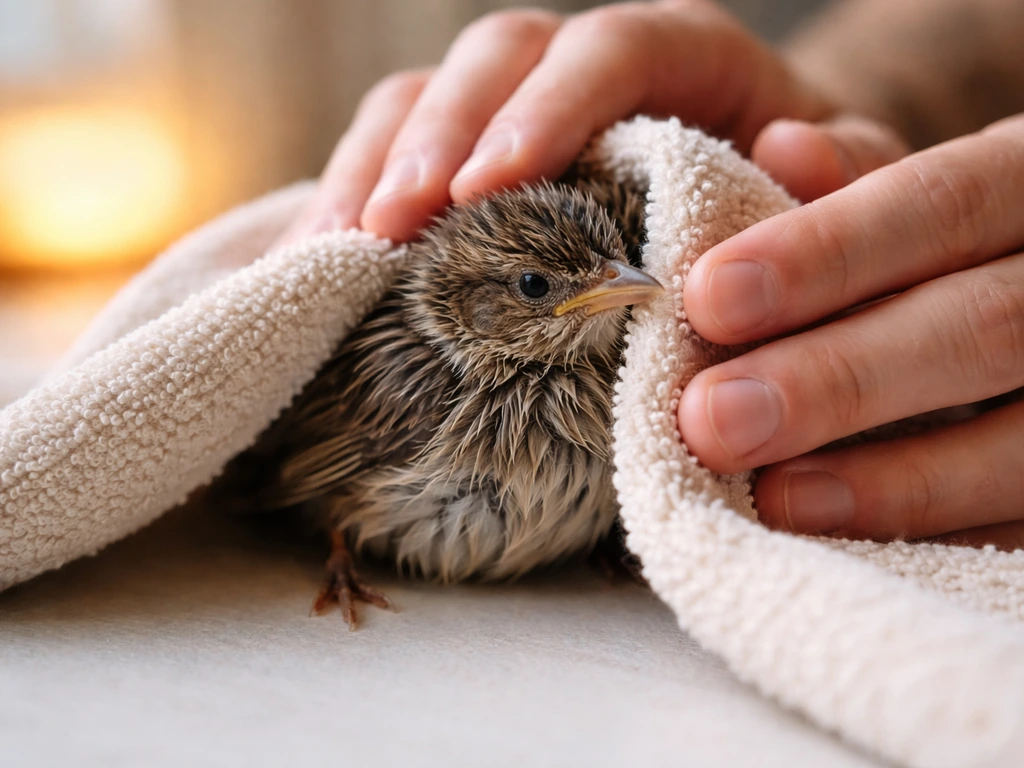
You are not trying to cure the bird. You are trying to stabilize it until a professional can take over. Here's exactly what to do.
- Gently blot the bird's feathers with a dry towel or paper towel. Do not rub, just press and absorb. Rubbing can damage waterlogged feathers and cause additional stress.
- Position the bird so its head is slightly lower than its body. This encourages drainage from the airway and reduces the risk of inhaling any remaining water. You can do this by tilting the box slightly, or by folding the bedding so the bird rests on a gentle incline.
- Add a heat source near, not under, the bird. A hot water bottle wrapped in a towel, a sock filled with uncooked rice and microwaved for about 60 to 90 seconds, or a heating pad set on low placed under half the box all work. The key is that the bird can move away from the heat if it gets too warm. The heat source should feel warm to your wrist, not hot. Never place the bird directly on a heating pad or directly against a heat source without a cloth barrier.
- Close the box and place it in a warm, dark, quiet room. Away from the TV, away from pets, away from conversation. Darkness calms birds and reduces the stress response significantly.
- Check on the bird every 15 to 20 minutes by lifting the lid slightly. You're looking for signs of improvement (alert, upright, responsive) or deterioration (labored breathing, no movement, collapse).
- If the bird seems to be recovering and is alert, upright, and breathing normally after about an hour, you can reassess whether it needs professional care. If it's not clearly improving, it needs to go to a wildlife rehabilitator.
What NOT to do (these mistakes can kill a bird)
This section matters as much as anything else here. When people find a distressed bird, the instinct is to help in every way possible. But several common impulses can cause serious harm. For example, Avian Wildlife Center advises not to force food or any liquid into the bird and recommends calling first for advice do not force food or any liquid into the bird.
- Do not give the bird food or water. This is the most important rule. A bird that has inhaled water has a compromised airway. Squirting water or liquid into its beak, or trying to get it to drink, can cause aspiration pneumonia or choking. The Avian Wildlife Center, Tufts Wildlife Clinic, and Carolina Waterfowl Rescue all say the same thing: do not force food or liquid into a wild bird.
- Never squirt water into a bird's mouth under any circumstances.
- Do not try to warm the bird with a hair dryer. The heat is too intense and too drying, and the noise causes panic.
- Do not place the bird in direct sunlight to warm it. Temperatures inside a container in direct sun can rise to dangerous levels within minutes.
- Do not give any medication, including human medications or supplements, without direct guidance from an avian vet or licensed rehabilitator.
- Do not let children or pets near the bird. Even well-meaning handling by kids can be fatal for a bird in shock.
- Do not put the bird in a wire cage. Solid-sided containers only.
- Do not shake, tip, or repeatedly open the container to check on the bird. Stress kills. Minimize disturbance.
Hydration and feeding after an almost-drowning
The general rule is: no food or water while the bird is in distress, has labored breathing, is unconscious, or is showing any signs of aspiration. Period. This isn't overly cautious, it's protective. A bird with water in its airway that also gets liquid forced down its throat is in far worse shape than a bird that waits a few hours to eat.
If the bird has fully recovered, is alert and standing, is breathing normally with its beak closed, and shows no signs of distress, a licensed rehabilitator or avian vet may give you the go-ahead to offer water. Even then, never force it. Place a shallow dish of clean water near the bird and let it drink on its own if it chooses.
Feeding is a question for the professional, not for you in the first few hours. Different species have vastly different dietary needs, and feeding the wrong thing causes serious harm. Hummingbirds are one exception where wildlife groups may advise offering sugar water in very specific circumstances, but even then, only if the bird is fully alert and you've been instructed by a rehabilitator. When in doubt, don't feed.
Red flags that mean get professional help right now
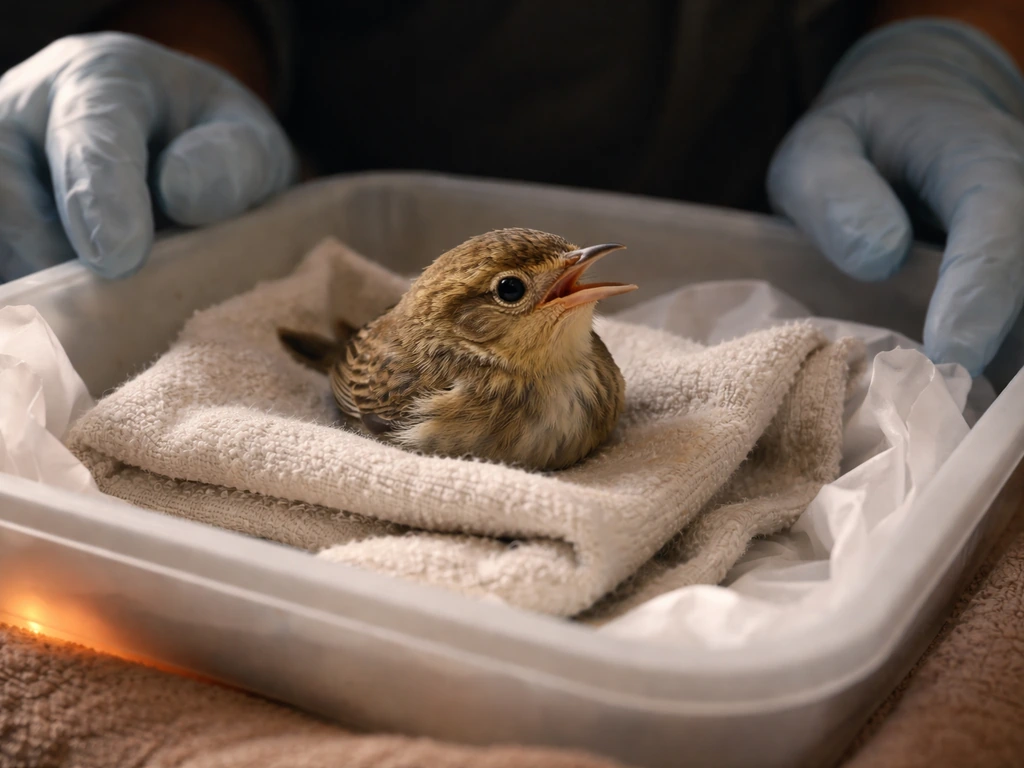
Some signs tell you that first aid at home is not enough and the bird needs a wildlife rehabilitator or avian vet immediately. Don't wait an hour to see if it improves. Make the call now if you see any of these.
- Open-mouth breathing that continues after the bird has been warming for 10 to 15 minutes
- Tail bobbing with each breath
- Gurgling, clicking, or noisy breathing
- Bubbles at the nostrils
- Complete unresponsiveness or inability to hold its head up
- Seizures or full-body trembling
- Blue or gray coloring around the beak or skin (if visible)
- Drooping wings combined with severe lethargy
- Bleeding that doesn't stop
- Obvious broken bones or injuries beyond just being wet and dazed
Even without these specific red flags, if the bird is not clearly improving after an hour in a warm, dark, quiet box, that alone is reason to seek professional help. Golden Gate Bird Alliance puts it simply: give it an hour, and if it hasn't recovered, take it to a wildlife rescue organization right away.
To find help, search for a licensed wildlife rehabilitator in your area, your state wildlife or natural resources agency (like the Iowa DNR) often maintains a directory. You can also search the National Wildlife Rehabilitators Association or call a local animal shelter or wildlife center and ask for a referral. Call before you show up so they can prepare.
Transport, housing, and keeping the bird stable until help arrives
Your temporary setup, the ventilated box with a heat source and paper towel bedding, is also your transport container. Don't transfer the bird to a different container right before the trip. Every unnecessary handling event adds stress.
During transport, keep the box on a flat surface so it doesn't tip. Place it on the seat or floor of your car, not in a sunny spot on the dashboard. Keep the car quiet: no loud music, minimal talking, and windows up. The drive itself is stressful for the bird, so a calm environment in the vehicle matters.
Maintain the heat source during transport. If you used a rice sock, check that it's still warm before you leave. You can reheat it if needed. If you used a heating pad, you may not be able to keep it plugged in during travel, so a hot water bottle or rice sock is more practical for the car.
If professional help is hours away rather than minutes, here's how to manage the wait. Keep checking every 20 to 30 minutes. Refresh the heat source as needed. Do not open the box to look at the bird unless you're checking its condition. Keep the room quiet and the box in the dark. Do not let the box get so warm that the bird is panting, that's overheating, which is just as dangerous as cold.
A near-drowning is a more specific emergency than simply finding a bird on the ground or a bird that's dazed after a window strike. If you’re wondering how to help a bird on the ground, this emergency-first approach is the right place to start before you think about feeding or treatment. The aspiration risk makes the no-food-or-water rule especially critical here, and the need to monitor breathing is higher.
If the bird is also unable to fly once it recovers, that's a separate issue to address with the rehabilitator, but your immediate job is stabilization, not diagnosis. If the bird can't fly once it recovers, ask the rehabilitator about ongoing care for a flightless bird and the safest environment to keep it comfortable.
You've done the right thing by looking this up. A warm, dark, quiet box with a gentle heat source and no forced feeding is genuinely what most wildlife clinics would tell you to do. Keep the bird calm, make the call to a rehabilitator, and get it there as soon as you can. When transporting an injured bird, AWARE Wildlife Center’s quickhelp advises keeping the carrier with the bird in a quiet, dark, warm and dry environment and arranging transport as soon as possible quickhelp advises keeping the carrier in a quiet, dark, warm and dry environment.
| Situation | What to do | What not to do |
|---|---|---|
| Bird is wet and dazed but breathing normally | Blot dry, warm gently, dark quiet box, monitor | Force food or water, use a hair dryer, handle repeatedly |
| Bird has open-mouth breathing or tail bobbing | Keep warm, call rehabilitator immediately | Wait more than 10 minutes, offer liquids |
| Bird is unconscious or unresponsive | Keep warm with head slightly lower than body, call for emergency help now | Assume it will recover on its own, try to force-feed |
| Bird is alert and upright after an hour | Reassess with rehabilitator guidance, consider release if species is appropriate | Release without confirming no internal injuries |
| Gurgling or bubbling at nostrils | Emergency, contact avian vet or rehabilitator immediately | Give any food or liquid, delay getting help |
FAQ
Can I give the bird water right away if it seems awake but still looks wet?
Yes. If the bird is still wet or you suspect it inhaled water, keep to the no-food, no-water rule until it is clearly alert with normal breathing (beak closed, no tail bobbing or noisy/gurgling sounds). If it is unresponsive or struggling to breathe, treat it as an immediate emergency and contact a wildlife rehabilitator or avian vet.
Is it okay to put the bird in a wire pet carrier for warmth?
No. A wire cage can increase stress and can cause wing or feather damage if the bird panics and flaps while disoriented. Use a ventilated cardboard box or shoebox with paper towel or cloth bedding instead, then transport in the same container to reduce handling.
How do I keep the bird warm during transport without overheating it?
If you used a heat source, aim for warmth without overheating. During transport and during the wait, avoid letting the bird pant or breathe rapidly with its beak open. Check the heat source temperature before leaving, and in the car keep the box out of direct sun on the seat or floor.
Why is it dangerous to “help” by feeding or dripping water into the bird’s mouth?
Do not. Inhaling water can make aspiration a continuing problem, and forced water or food can worsen airway injury. Offer anything edible only if a licensed rehabilitator instructs you to, and only when the bird is fully alert, breathing normally, and has no distress signs.
What should I use as a heat source, and can I use a heating pad or heat lamp?
Reheating is fine for your heat source, but avoid direct heat sources that can burn or create hot spots, like a heat lamp close to the box. A rice sock, hot water bottle, or similar gentle method is safer, as long as you can maintain warmth without causing panting.
What if the bird won’t respond at all after I warm it?
If the bird is completely unable to move or shows no meaningful response when you open the box, skip waiting and immediately contact a wildlife rehabilitator or avian vet. Continue the stabilization steps (warm, dark, quiet, contained), but do not delay calling while you monitor for improvement.
Should I towel-dry the bird or change towels right away?
Replace the bedding with a dry layer only if it is wet from the bird’s condition, but avoid repeated handling. Keep handling time short, do not wipe the bird aggressively, and focus on containment, calm, warmth, and monitoring breathing signs before changing anything.
After it recovers from almost drowning, what if it still cannot fly?
It depends on the cause of distress. If it is near-drowning, breathing is the priority because aspiration risk remains. However, if after stabilization it cannot fly once recovered, ask the rehabilitator specifically about long-term safety, injury assessment, and whether it should be kept flightless or in a modified enclosure.
Can I keep the bird in an indoor room, and what precautions should I take?
Yes, keep other animals and people away and minimize noise. If your house is warm and quiet, placing the box inside is fine, but the key is to stay dark and calm, keep the bird from being handled again, and avoid direct sunlight that can quickly overheat the box.
How long should I wait to see improvement before calling for help?
Yes. Even when you do the correct first aid, lack of improvement after about an hour in a warm, dark, quiet box is a strong reason to seek professional care. If you are waiting on a far-away appointment, continue heat monitoring every 20 to 30 minutes and keep the box closed except for necessary checks.
Next Article
How to Help a Bird on the Ground: Step-by-Step Guide
Step-by-step guide on how to help a bird on the ground safely, assess injury, warm and contain, and contact wildlife reh