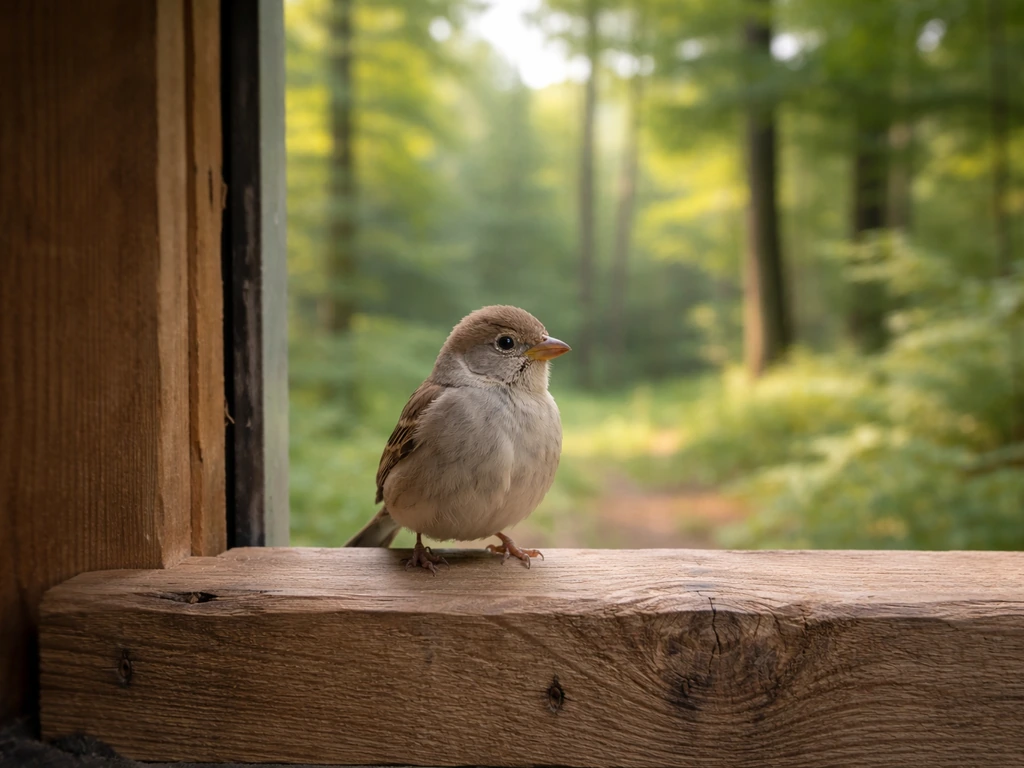
If you've got a bird flying around inside your house, garage, or another enclosed space, the good news is that most of these situations resolve quickly when you do the right things. The core strategy is simple: make the exit obvious, make the inside less appealing, and give the bird space to find its own way out. Where people go wrong is by chasing, grabbing, or panicking alongside the bird, which just makes everything worse. Here's exactly what to do, step by step.
How to Help a Bird Trapped Inside: Humane Steps Now
Marcus Holloway
21 Apr 2026
Quick safety checks before you approach
Before you do anything else, take 10 seconds to assess the situation. Is the bird a small songbird, or something larger like a hawk, owl, or heron? Columbus Audubon specifically advises against attempting to capture or release large birds of prey yourself. If you're dealing with a hawk or similar species, skip ahead to the section on calling a wildlife professional.
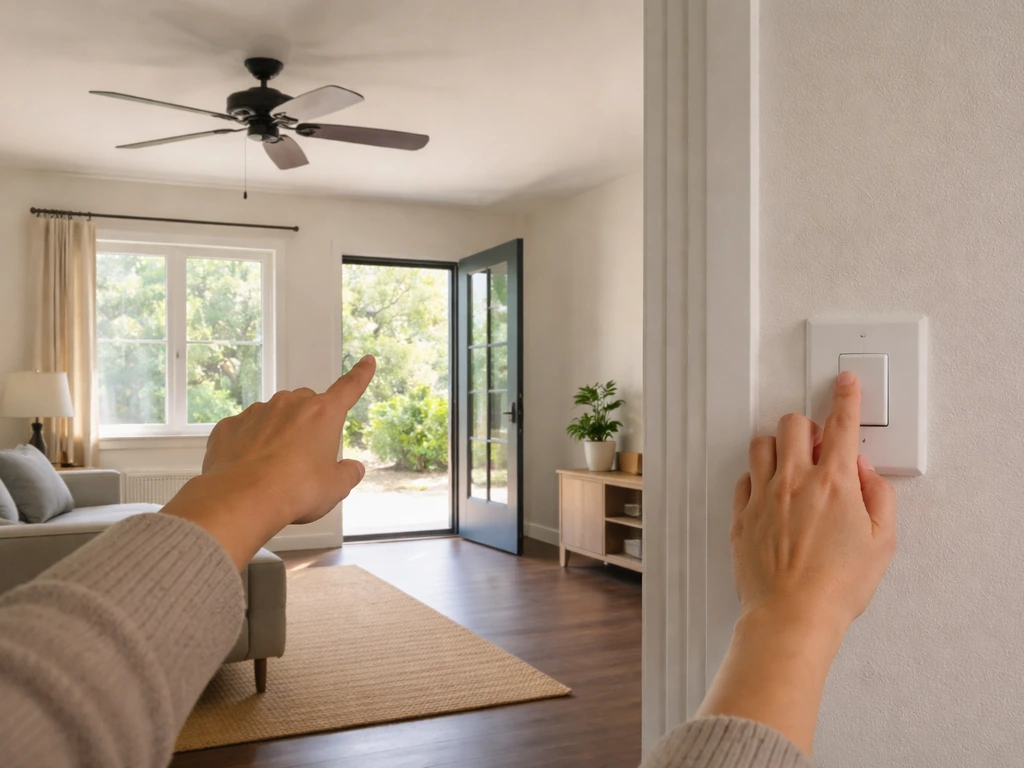
Also check the room quickly for hazards: ceiling fans should be turned off immediately, open water sources like fish tanks or pet bowls can be a drowning risk, and hot stove burners are an obvious danger. Secure any pets in another room. A dog or cat in the same space as a panicking bird is a recipe for injury.
Protect yourself too. Small birds rarely cause injury, but a startled bird can scratch or deliver a surprisingly firm bite. If you think you'll need to handle the bird, grab a pair of thin gloves. Don't use thick oven mitts, as you lose too much feel and risk squeezing the bird too hard.
Trapped vs. injured: what to look for
This distinction matters because it changes what you do next. A bird that is simply trapped is alert, flying or hopping actively, and reacts quickly when you move toward it. It's stressed and disoriented, but physically fine. Once you give it an exit route, it will usually find its way out on its own.
A bird that is injured or in serious distress will behave differently. Watch for these signs:
- Sitting still on the floor or a low surface and not attempting to fly when approached
- Visible bleeding, a drooping wing, or a leg that looks bent at an odd angle
- Eyes that are half-closed, dull, or sunken
- Labored or open-mouth breathing
- The bird lets you walk right up and pick it up without resisting
If you're seeing any of those signs, the bird needs more than just an open window. If you suspect it almost drowned, prioritize keeping it warm and contacting a wildlife rehabilitator for first aid and guidance. You'll still need to guide it out of the building, but after that, it needs hands-on help. The sections below on first aid and when to call a professional will walk you through what comes next. If the bird seems fine and is just frantically trying to get out, focus on the exit strategy first.
It's also worth noting that a bird sitting on the ground outside after you've freed it may not be injured at all. If the bird seems injured or unresponsive after you free it, follow the steps in how to help a bird on the ground instead of assuming it will recover on its own. Sometimes birds that have been trapped for a while need a few minutes to recover before they fly off. If you're unsure, the guidance on helping a dazed bird may also be useful, since a bird that has been flying into windows or walls repeatedly can show similar symptoms.
How to get the bird out humanely (without chasing it)
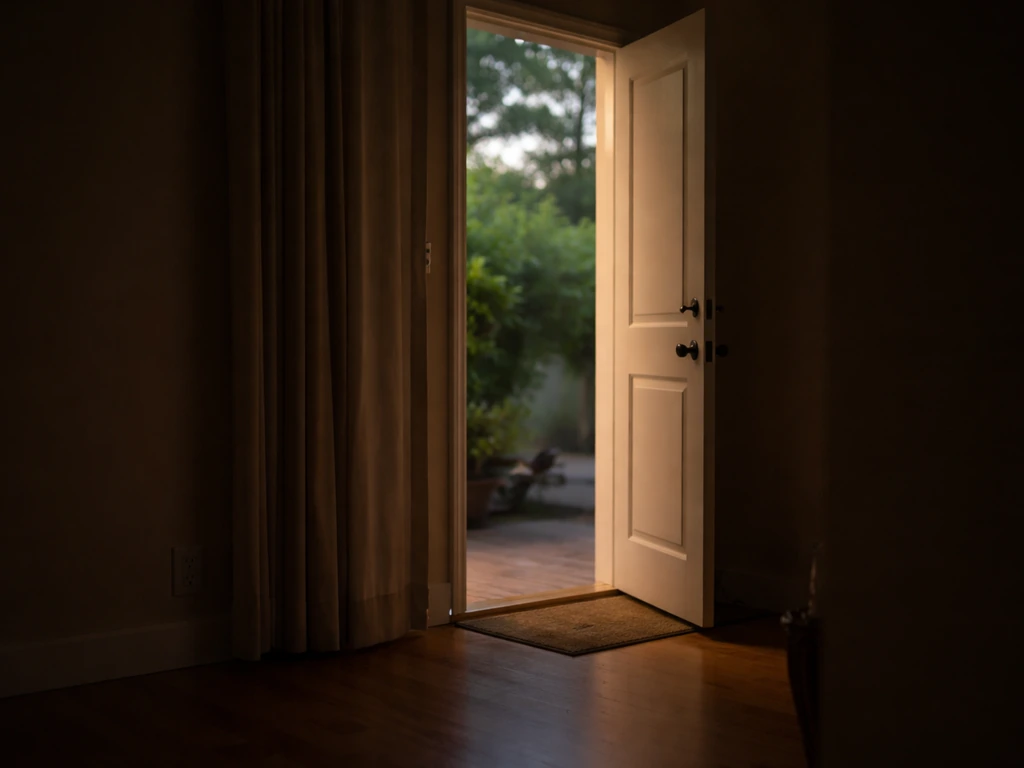
The single most effective technique for getting a bird out of an enclosed space is controlling light. Birds naturally fly toward light. The RSPCA recommends opening one main exit, like a window or exterior door, and then blocking or darkening all other light sources in the room. Close interior blinds on windows that aren't exits, turn off artificial lights, and if possible, draw curtains partway so that the open exit is the brightest spot in the room.
Columbus Audubon adds another key step: leave the room. Once you've set up the light and the open exit, close the interior door, reduce any noise, and give the bird time alone. A bird that has an audience will stay stressed and keep flying erratically. Without people in the room, it will calm down, orient toward the light, and often walk or fly straight out within a few minutes.
For a garage, this works even better. Open the main garage door all the way, turn off the garage lights, and step outside. Most birds will exit on their own within 5 to 15 minutes once you remove the distractions.
What not to do: don't wave your arms, throw towels, or use a broom to chase the bird toward the exit. This causes the bird to panic-fly in random directions and significantly increases the chance of it hitting a wall or window hard enough to injure itself.
When it won't leave: how to safely capture and contain the bird
Sometimes the light trick doesn't work, especially if the bird is exhausted, disoriented from repeated window strikes, or genuinely injured. In that case, you'll need to catch it and place it in a container so you can move it outside or transport it for care.
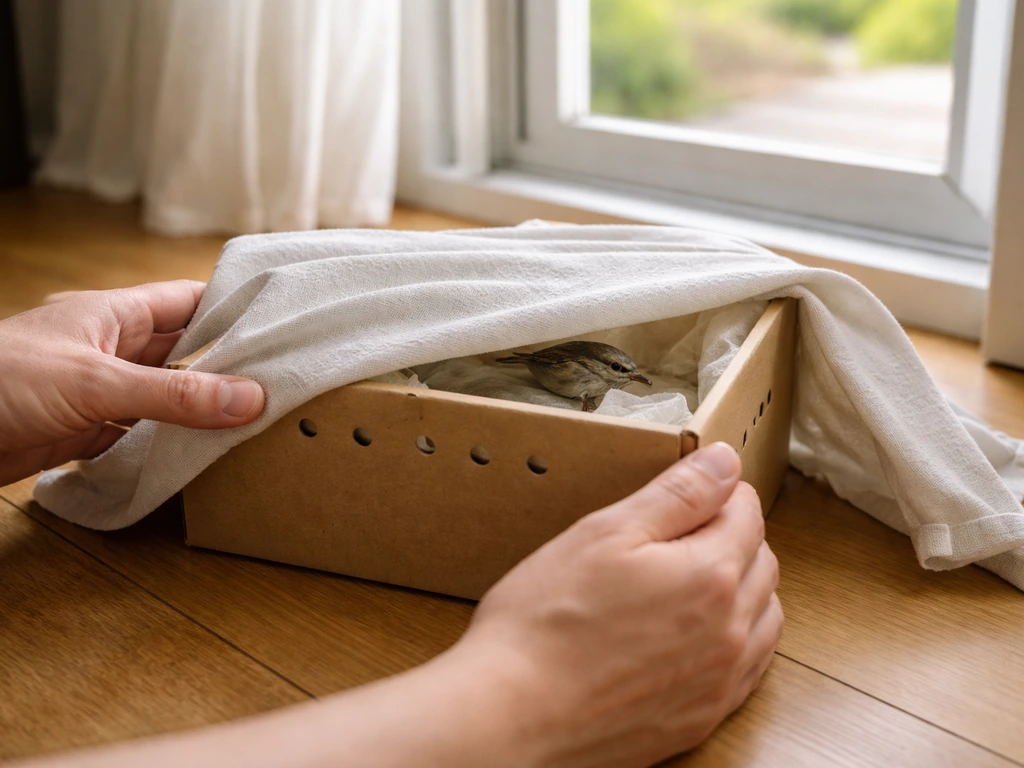
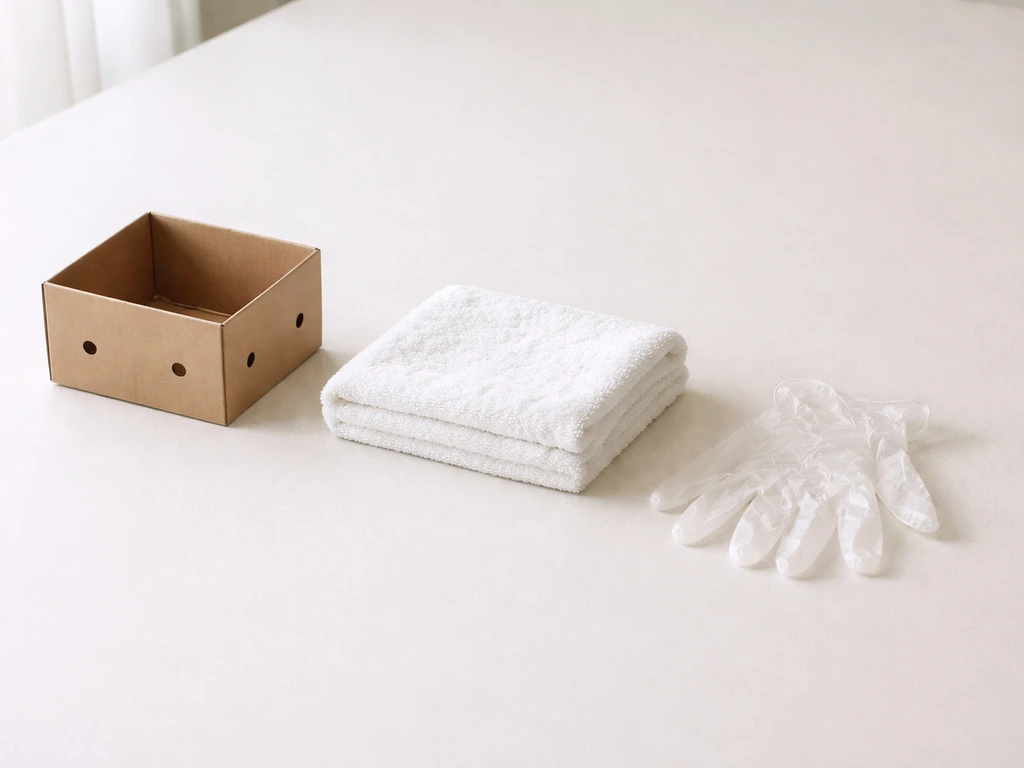
The best container is a cardboard box with a few small holes punched in the sides for ventilation. A shoebox works well for small birds. Tufts Wildlife Clinic recommends using a shoebox or box with air holes lined with cloth or a paper towel for most songbirds, and keeping them warm, dark, and quiet A shoebox works well for small birds.. Do not use a cage with open bars, a glass tank, or a plastic storage bin with a solid lid. You want ventilation without visual stimulation.
To catch the bird, wait until it lands and is still. Approach slowly and calmly, without making direct eye contact, which birds read as a threat. Cup both hands around the bird from above and behind, wrapping your fingers loosely around its body so its wings are gently held against its sides. Don't squeeze. The bird will likely struggle for a few seconds, but holding it firmly and calmly in a dark, enclosed space (like inside the box) will settle it quickly. Golden Gate Bird Alliance recommends placing an injured bird in a warm, dark, quiet place, such as a shoebox lined with cloth or paper towel dark, enclosed space (like inside the box).
If the bird is on the floor and won't let you approach, you can use a lightweight towel or a pillowcase to drape gently over it before picking it up. This reduces visual stimulation and makes the bird easier to hold. Once it's in the box, put the lid on and place the box somewhere dark, quiet, and warm. Avoid handling it further.
One important note: once a bird is in a container, do not give it food or water unless a licensed wildlife rehabilitator tells you to. This advice comes from multiple wildlife rescue organizations. A bird in shock can aspirate fluids easily, and feeding the wrong thing can cause serious harm.
Basic first aid if the bird appears hurt
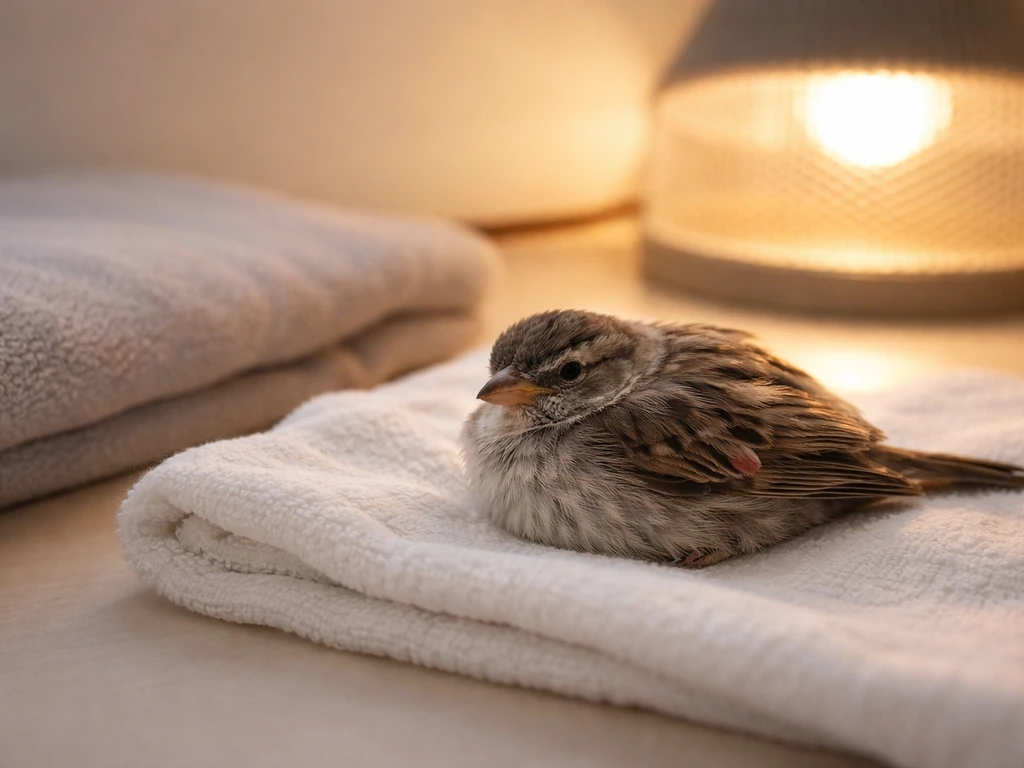
The honest truth about bird first aid at the citizen level is that it's mostly about doing less, not more. The most effective thing you can do for an injured or stressed bird is reduce stimulation and keep it warm. According to Think Wild, if there is no visible blood and no obvious fracture, gently place the bird in a well-ventilated box and keep it quiet, dark, and warm for about one hour. That's genuinely the right move for most situations.
Warmth matters more than most people expect. An injured bird can go into shock quickly, and a cold environment makes that worse. Room temperature (around 70 to 80 degrees Fahrenheit) is appropriate. You can place the box on a heating pad set to low, with only half the box on the pad so the bird can move off the heat if it needs to. Don't put the bird directly on the heating pad surface.
If you see active bleeding, you can apply very gentle pressure with a clean cloth or gauze for a minute or two. Don't try to splint a wing or leg, apply antiseptic, or give any medication. These actions can cause more harm than good and are beyond what a non-professional should attempt. Think Wild is clear that if there is visible blood or obvious fractures, you should skip DIY care entirely and get the bird to a licensed rehabilitator as quickly as possible.
Stress alone can be fatal to birds. Every minute you spend handling an injured bird adds to that stress load. The Center for Wildlife emphasizes this strongly: minimize handling, minimize noise, and minimize the time between capture and professional care.
When to call a wildlife professional or vet
Call a licensed wildlife rehabilitator or avian vet right away in any of these situations:
- The bird has visible blood, a broken bone, or a wound you can see
- It is a bird of prey (hawk, owl, falcon) or a large wading bird
- The bird is still unresponsive or unable to fly after being placed in a dark, quiet box for an hour
- It's a baby bird with no feathers or very few feathers (this is a different situation than a trapped adult)
- You're unsure whether the bird is injured or just disoriented and it isn't improving
To find a wildlife rehabilitator near you, search the National Wildlife Rehabilitators Association (NWRA) directory or contact your state's fish and wildlife agency. Many areas also have local Audubon chapters that can point you to the right resource quickly. If you can't reach a rehabilitator, an avian vet is a solid backup option.
When you call, have the following information ready: what species you think it is (or a description), where and how you found it, and what condition it appears to be in. This helps the professional advise you on whether to bring the bird in immediately or monitor it for a little longer.
After the rescue: release, monitoring, and next steps
If the bird flew out on its own and you're watching it outside, give it space. Don't hover. A bird that has just escaped an enclosed space may sit quietly for 5 to 20 minutes before flying off. That's normal recovery behavior, not a sign something is wrong. Watch from a distance to make sure it eventually flies away on its own.
If you had to capture the bird and place it in a box, give it about an hour in the dark and quiet before checking on it. When you open the box, do it outdoors or near an open window. If the bird immediately tries to fly and does so successfully, that's a great sign. Set it down gently on a branch or shrub and step back.
Don't release a bird at night. Most songbirds are not equipped to navigate in the dark, and releasing them after sunset puts them at serious risk from predators. If it's late in the day and the bird seems otherwise healthy, it's better to keep it in a quiet, ventilated box overnight in a garage or shed (away from household pets) and release it first thing in the morning.
Also think about why the bird got in. If it flew in through an open door or window, that's a one-time event. But if it was a bird of prey that came in after a smaller bird, or if you keep finding birds inside, it may be worth checking your vents, chimney caps, and any gaps near rooflines. Prevention is much easier than rescue.
If the bird was unable to fly when you found it, or it still can't fly after being given time to recover, that's a different situation that needs professional attention. The guidance on caring for a bird that can't fly goes deeper into those next steps, including what a wildlife rehabilitator will typically do and how long recovery can take.
Quick reference: what to use and what to avoid
| Item or Action | Use It? | Notes |
|---|---|---|
| Cardboard box with air holes | Yes | Best container for transport or temporary holding |
| Thin gloves for handling | Yes | Protects you without reducing feel |
| Lightweight towel or pillowcase for capture | Yes | Reduces visual stress during handling |
| Heating pad on low (half under box) | Yes | Helps prevent shock in injured birds |
| Food or water | No | Do not offer unless told to by a rehabilitator |
| Antiseptic or medication | No | Can cause harm; leave to professionals |
| Broom or towel to chase the bird | No | Causes panic and injury risk |
| Cage with open bars | No | Bird can injure itself trying to escape through bars |
| Bright artificial lights in the room | No | Disorients the bird; use natural light toward one exit only |
FAQ
What should I do if I cannot tell whether the bird is injured or just trapped?
If you cannot identify the species, treat it as “small bird, unknown” and use the same humane exit method first (control light, open one main exit, turn off other lights, leave the room). Avoid trying to capture, especially if it looks larger than a typical songbird or seems to be a bird of prey, and contact a wildlife rehabilitator sooner if the bird keeps colliding with windows or shows signs of injury.
Can I give the bird water or food while I’m trying to help it?
Do not use bird seed, bread, milk, or water bowls as a quick fix. Even small birds can aspirate fluids, and food can worsen shock or cause digestive problems. If the bird must be kept overnight, provide only warmth, quiet, and ventilation, then get professional guidance before offering anything.
Is it okay to use a pet carrier or a bird cage to move the trapped bird?
No. A cage can increase stress and harm because open bars and reflections can cause repeated panic-flying or wing strain. For containment, use a ventilated cardboard box with a few small side holes. If the bird is struggling, cup it gently and move it into the box rather than forcing it into any wire or open-bar structure.
What room hazards should I check for besides ceiling fans?
Ceiling fans should be off, but also check for other hazards like hot surfaces, open stairwells, fireplaces, and any cats or dogs that can reach the bird. If the bird is near a window, close the closest blinds so it does not keep re-striking glass, then keep one exit clearly lit as the “brightest route.”
What if the light-and-exit method does not work right away?
If the bird is still flying around after you darken the room and open one exit, wait a few minutes longer before trying to chase. Often the bird needs orientation time. If it repeatedly hits windows, seems unable to locate the exit, or is exhausted, switch to capture only if necessary and place it in a ventilated box for transport to a wildlife professional.
When is it appropriate to use a towel or pillowcase to pick up the bird?
Towel handling is for situations where the bird is on the floor and will not allow you to approach safely. Use the towel to cover and then pick up calmly, but avoid repeatedly lifting, uncovering, and re-covering. After it is boxed, limit handling and keep the container dark and quiet.
How long should I wait in the box before checking or trying to release?
Do not keep the bird in a box for many hours while you wait if it appears injured, bleeding, very weak, or unable to stand. For a seemingly uninjured trapped bird, about an hour of quiet time is typically enough before trying an outdoor check. If it still cannot fly or you see worsening symptoms, contact a rehabilitator immediately.
What should I do differently if I suspect the trapped bird is a hawk, owl, or other bird of prey?
For a bird of prey or any large bird, avoid capture and release attempts. Keep people and pets away, control the environment for safety, and contact a wildlife professional as soon as possible. If you must act to prevent harm, focus on turning off hazards and securing the space rather than trying to “handle the bird.”
How can I tell whether the bird is just recovering after getting out or truly injured?
A bird sitting on the ground outside can be normal recovery, but you should watch for movement and ability to hop or fly away. If it is upright and eventually departs within about 5 to 20 minutes, that is usually okay. If it remains unresponsive, cannot stand, or shows ongoing distress, treat it as injured and seek professional help.
What should I do after the bird flies out on its own, and how long should I keep watching?
If the bird escapes during the day and flies off on its own, you can stop monitoring once you no longer see it in immediate danger. If it lands nearby and does not leave, keep a safe distance and avoid hovering. If it cannot fly away after a reasonable recovery window, contact a rehabilitator for next steps.
Is it ever okay to release the bird at dusk or night?
If it is late in the day or near nightfall, do not release it after sunset. Keep it in a ventilated box, warm and quiet, in a protected area away from pets and household traffic, then release first thing in the morning. This reduces predation risk and prevents disorientation.
The bird keeps getting into my house, what should I check for prevention?
When birds keep entering indoors, look for entry points near rooflines, vents, soffits, and chimney caps, and check for gaps around windows, doors, and eaves. After you handle the urgent situation, consider sealing entry gaps or installing appropriate screens and closures, since preventing repeat exposure is often the best long-term fix.
Next Article
How to Release a Hand-Reared Bird Safely and Humanely
Step-by-step humane release for hand-reared wild birds: species checks, anti-imprinting care, soft vs hard release, afte