If you've found a bird that can't fly, the single most important thing you can do right now is put it somewhere warm, dark, and quiet, then stop touching it and call a wildlife rehabilitator. That's the core of it. Everything else, including figuring out why it can't fly, what to feed it, and whether it needs a vet, flows from that starting point. The details below will help you do it right.
How to Care for a Bird That Can’t Fly: First Steps
Marcus Holloway
27 Apr 2026
First: Is this bird actually in trouble?
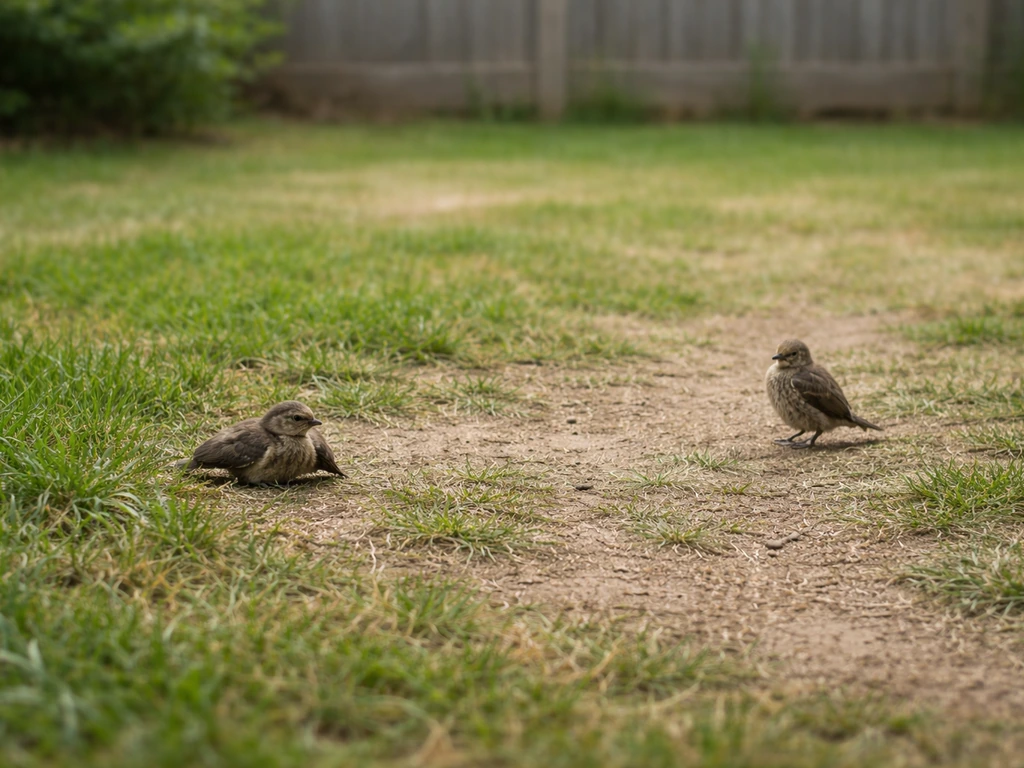
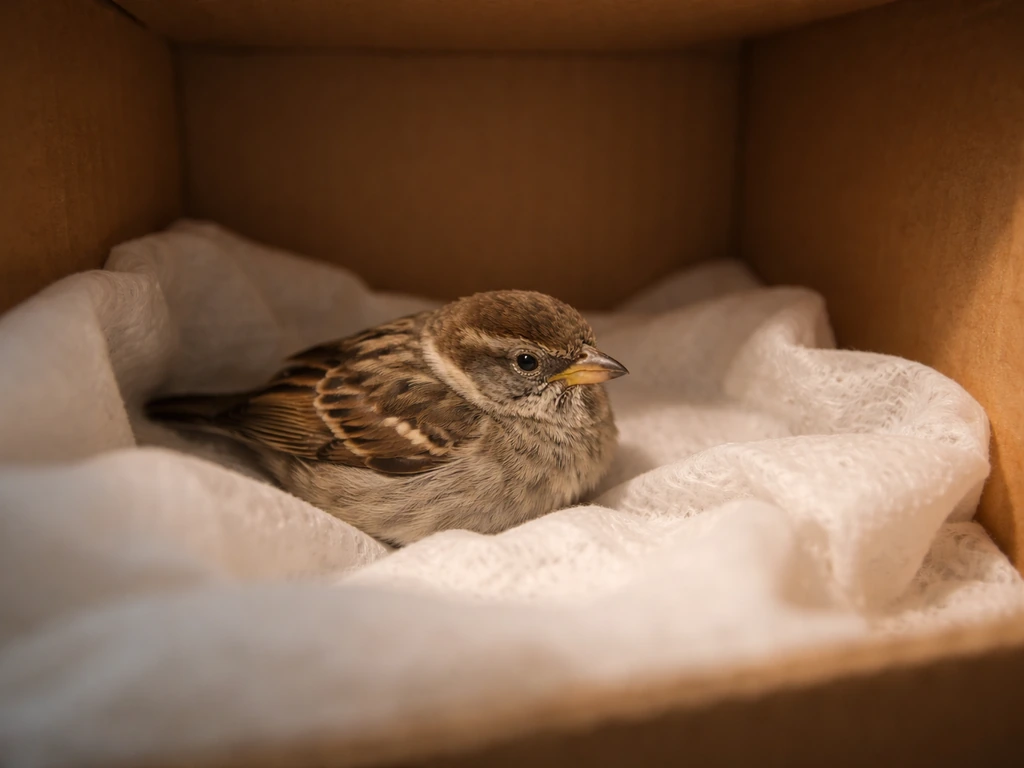
Before you scoop the bird up, take 60 seconds to watch it from a distance. Not every bird on the ground is injured. If you suspect the bird needs help, the best next step is to follow the guidance for how to help a bird on the ground and contact a wildlife rehabilitator Not every bird on the ground is injured.. The most common case of a 'bird that can't fly' is actually a fledgling, a young bird that has left the nest but hasn't fully mastered flight yet. These birds are supposed to be on the ground. Their parents are usually nearby and actively feeding them.
Here's how to tell a fledgling from a bird that genuinely needs help. A fledgling will have feathers, look alert, and may hop around or flap its wings awkwardly. It doesn't need to be rescued. A nestling, on the other hand, is featherless or has only patchy down, and has closed or barely-open eyes. If you can find its nest nearby, you can gently place it back, the parent will not reject it because of your scent. That's a myth.
An adult or juvenile bird that is genuinely sick or injured will usually look different: it won't move away when you walk toward it, it may be sitting on the ground hunched and fluffed up, and it may show obvious signs of injury. Watch for these red flags before deciding whether to intervene.
Signs a bird needs help right away
- Visible bleeding or open wound
- A drooping or hanging wing (one wing held lower than the other)
- Limping, an inability to stand, or an obviously broken leg
- Labored or open-mouth breathing
- The bird is unresponsive, limp, or barely reacting to your presence
- The bird is wet, cold to the touch, or shivering
- You can see the bird has been caught by a cat or dog
If none of those apply and the bird looks alert and feathered, there's a good chance it's a fledgling doing exactly what fledglings do. Keep pets inside, watch from a distance for an hour or two, and see if a parent shows up to feed it. If it's still in the same spot after two hours with no parent activity, or if the area is clearly unsafe (a busy road, cats roaming free), then it's appropriate to step in. This situation overlaps with what you'd handle if you found a bird on the ground, and the assessment process is similar.
What to do in the first 1–2 hours
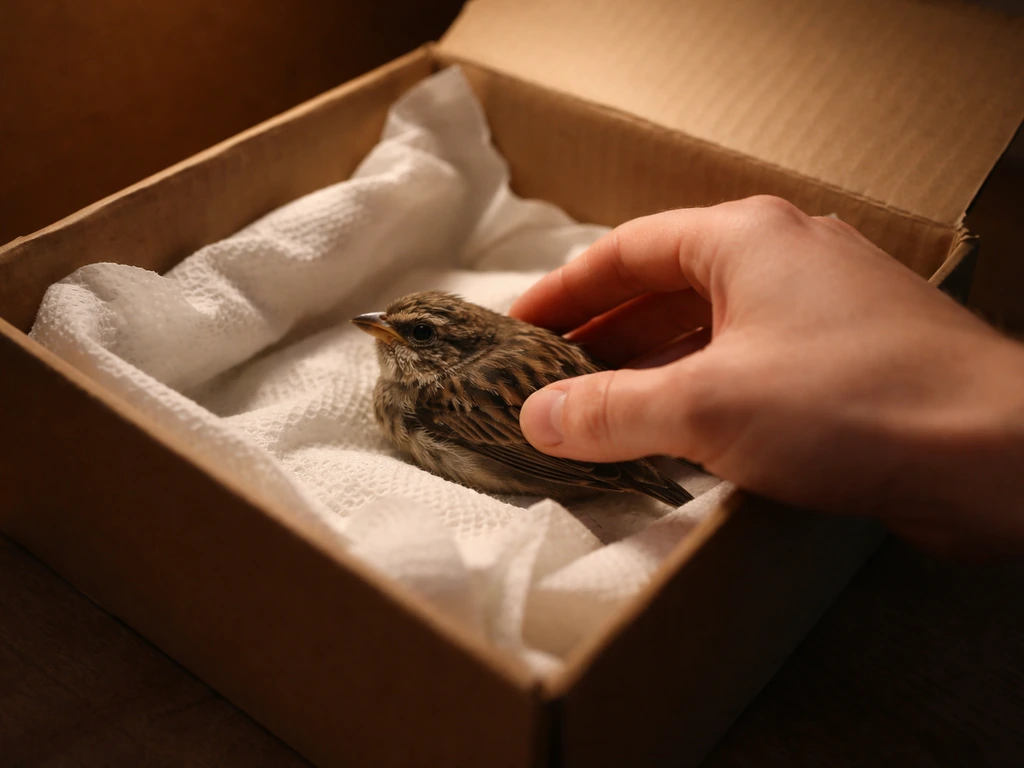
If the bird does need your help, your job in the first couple of hours is simple: keep it alive until you can reach a professional. You are not trying to treat it. You are keeping it stable.
Contain it safely
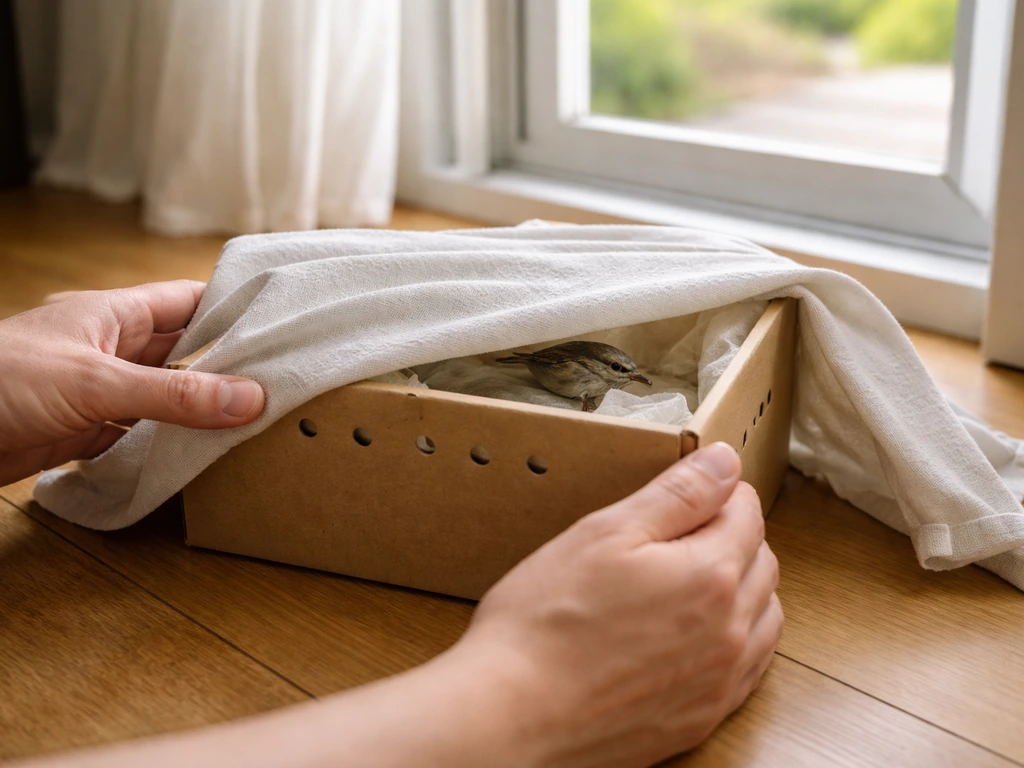
Grab a cardboard box, no larger than about twice the size of the bird. Line the bottom with a paper towel or a piece of cloth (not terry cloth or anything with loops the bird's feet could get caught in). If the bird has no leg or foot injuries, you can roll a small cloth into a donut shape to give it something to grip. Put a few air holes in the lid. Place the bird gently inside and close the box.
Keep the box somewhere warm (around 80 to 85 degrees Fahrenheit is the general target), dark, and as quiet as possible. Away from the TV, away from kids and pets, away from loud noise. Darkness genuinely reduces stress in birds, and stress kills injured wildlife. If you need a heat source, use a hot water bottle or a jar of warm water wrapped in a towel and placed next to (not under) the bird. Check it every 20 to 30 minutes to make sure it isn't getting too hot.
Minimize handling
Once the bird is contained, leave it alone. Injured birds can go into shock when disturbed, and every time you open the box to check on it, you're adding stress. Resist the urge. The bird does not need company. It needs quiet.
When you do need to handle the bird, wrap your hands in a light towel or wear thin gloves. This protects both you and the bird. Keep your grip firm but gentle, never squeezing the chest, which would prevent the bird from breathing. Support the body and keep the wings gently against its sides.
Basic first aid: what you can do and what you should leave alone
This is the part where most well-meaning people accidentally make things worse. The safe zone for first aid is very narrow. Here's what it actually looks like.
What you can do
- Apply very gentle pressure to a small, actively bleeding wound using a clean cloth or gauze, only if bleeding is significant and ongoing
- Remove obvious debris (like a loose piece of string or netting) from around the bird if it's safe to do so without causing more harm
- Keep the bird warm, dark, and contained as described above
- Cover the box so the bird feels hidden and secure
What to leave alone
- Do not try to splint or straighten a broken wing or leg yourself. You can easily cause more damage to blood vessels and nerves.
- Do not pull out feathers, even ones that look damaged or stuck
- Do not apply antiseptic creams, hydrogen peroxide, or any medication
- Do not try to wash or dry a wet bird with a hair dryer or by placing it near a heat lamp directly
- Do not manipulate the bird's head, neck, or spine if it seems to have a neurological issue (head tilt, circling, inability to hold its head up)
If the bird appears to have hit a window and is stunned, that's a slightly different situation (dazed birds often recover on their own in a quiet, contained spot). The key is the same: warmth, darkness, quiet, and time. Many birds that seem nearly dead after a window collision recover within an hour.
Food and water: the rules are stricter than you think
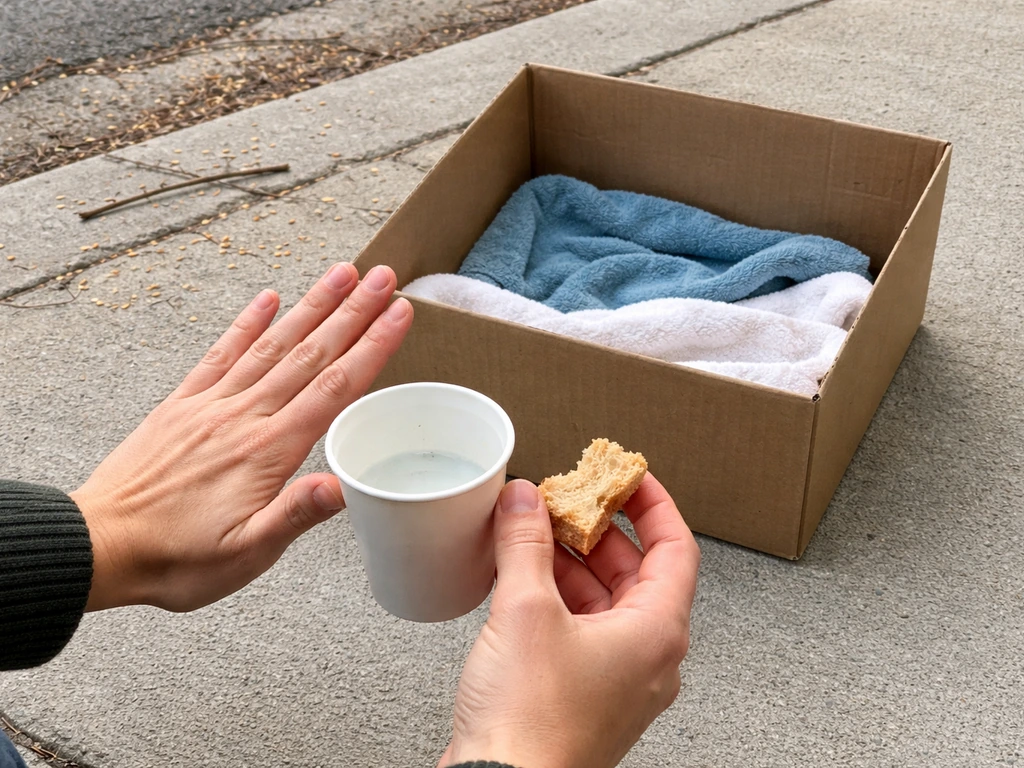
Almost every well-intentioned person who finds a bird in trouble immediately wants to give it food and water. Please don't. Unless you are specifically instructed by a wildlife rehabilitator or avian vet, do not feed or give water to the bird. This is one of the areas where the guidance from wildlife rehab organizations is unanimous and firm.
Here's why it matters. Giving water by squirting it into a bird's beak can cause aspiration pneumonia, which is when liquid enters the lungs. A bird that looks dehydrated can still drown from a single poorly aimed drop of water from a dropper or syringe. If the bird nearly drowned, the same early steps of keeping it warm, quiet, and calling a wildlife rehabilitator quickly can help reduce complications. Food can cause similar problems, and it can also make the bird's condition harder to treat when it does reach a professional. Injured animals don't process food normally, and some foods can be toxic to birds.
The exception that almost every source notes is hummingbirds. If you're certain the bird is a hummingbird and it's showing signs of weakness, a small amount of plain white sugar water (1 part sugar to 4 parts water) in a shallow bottle cap can be offered. But for any other species, keep food and water out of the picture until a professional weighs in.
A few things you should never give any bird
- Bread, crackers, or any human food
- Milk or dairy of any kind (birds cannot digest lactose)
- Cat or dog food
- Water forced into the mouth via dropper, syringe, or squirt bottle
- Any medication, including vitamins, unless a vet directs you to
When to get help fast and what to say
You should be calling a wildlife rehabilitator or avian vet at the same time you're setting up the box, not after. If the bird is trapped indoors, the same first steps apply: keep it warm and quiet and call a wildlife rehabilitator for species-specific guidance. Don't wait to see if the bird gets better on its own. Most injured birds deteriorate quickly without professional care, and the sooner you make the call, the better the bird's odds.
Get help immediately if the bird shows any of these signs
- Actively bleeding from any wound
- Breathing with its mouth open or gasping
- Completely limp, unresponsive, or unable to hold its head up
- Has obviously been attacked by a cat (even small puncture wounds from cat claws are almost always fatal without antibiotics within hours)
- Is cold and unresponsive (hypothermia)
- Has a clearly broken bone with bone visible or limb at a wrong angle
- Is convulsing or has an extreme head tilt with loss of coordination
How to find the right help
Search for a permitted wildlife rehabilitator in your area. The National Wildlife Rehabilitators Association (NWRA) and the International Wildlife Rehabilitation Council (IWRC) have directories. You can also search your state's fish and wildlife agency website, which usually keeps a list of licensed rehabilitators. In many states there's a wildlife helpline you can call. Your local humane society or animal control office can also often refer you.
When you call, be ready to give this information quickly so they can triage the situation properly:
- What kind of bird it appears to be (size, color, any distinguishing markings)
- Where exactly you found it (address or nearest cross streets)
- What you observed: how it was behaving, whether it's an adult or juvenile, and what injuries or symptoms you noticed
- What you've done so far: is it in a box, is it warm, have you given it anything
- Your location and whether you can transport the bird
What happens next: recovery, rehab, and realistic timelines
Once the bird is in the hands of a licensed rehabilitator or avian vet, your role shifts to patient waiting. Rehab timelines vary enormously depending on the injury and species. A bird in shock from a window strike might recover and be releasable within 24 to 48 hours. A bird with a broken wing or leg may need weeks to months of care, including surgery, before it can fly again. Some birds, particularly those with permanent neurological damage or lost limbs, will never be releasable.
In the meantime, keep a few practical things in mind while you're waiting to hand the bird off or for a callback from a rehabber.
While you wait
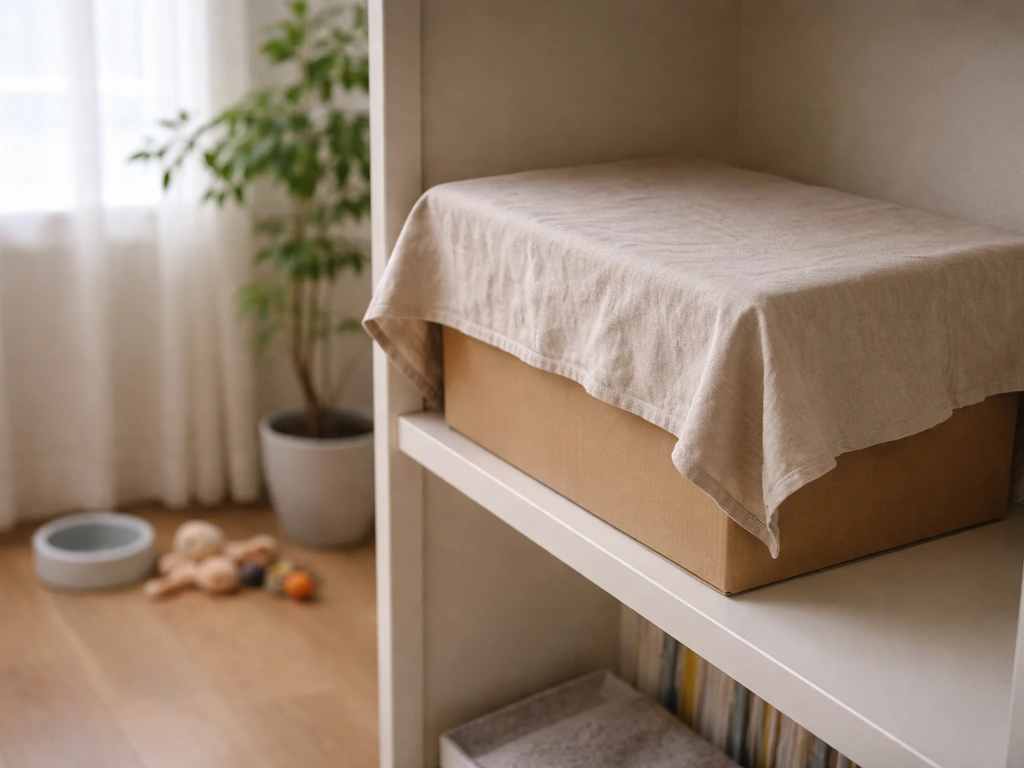
- Keep pets completely away from the area where the box is stored
- Don't show the bird to children, neighbors, or anyone else out of curiosity. Every look requires opening the box, which adds stress.
- Check the heat source every 20 to 30 minutes so the bird doesn't overheat
- Don't put the bird back outside until a professional tells you it's ready. Even if it seems more alert, a partially injured bird on the ground is easy prey.
- Don't attempt to build a home setup for long-term care. Wildlife rehabilitation requires permits, training, and proper facilities. It is illegal in most U.S. states to keep a wild bird without a permit, even temporarily.
If it's a fledgling near its parents
If you've confirmed the bird is a fledgling and the parents are around, the best outcome is to keep it safe in its immediate environment rather than removing it. Keep cats and dogs indoors. If the fledgling is in a genuinely dangerous spot (like the middle of a driveway), you can move it a short distance, up to about 30 feet, to a safer nearby location. The parents will find it by call, not by location. But don't bring it inside unless the parents are definitively gone or the bird shows injury signs.
The goal throughout all of this is to do as little as possible yourself, and to get the bird into professional hands as quickly as you can. That's not passing the buck. That's genuinely the best thing you can do for the bird.
A quick reference: do this, not that
| Do this | Not that |
|---|---|
| Place the bird in a warm, dark, quiet box | Keep peeking in to check on it |
| Use a warm (not hot) water bottle wrapped in a towel | Use a heating pad on high or a heat lamp directly on the bird |
| Call a wildlife rehabilitator right away | Wait a day or two to 'see if it gets better' |
| Keep pets and children away | Let family members handle or hold the bird |
| Apply gentle pressure to active bleeding with a cloth | Apply antiseptic, cream, or medication |
| Move a fledgling a short distance to safety if needed | Bring a healthy fledgling inside or try to hand-raise it |
| Give a hummingbird plain sugar water if it's weak | Force water into any bird's mouth with a dropper |
| Provide the rehabber with a full description of what you found | Attempt to diagnose or treat the injury yourself |
FAQ
What if the bird can’t fly because it looks tangled in string, fishing line, or netting?
Do not cut near the bird. First, move it to a warm, dark, quiet box, then call a wildlife rehabilitator. If you must remove something to prevent strangulation, only handle the loose ends from a safe distance and stop immediately if the bird struggles or its breathing seems affected.
How long can I keep the bird contained before the call is made?
Aim to contact a rehabilitator right away, but if you are making the call while setting up the box, that short delay is fine. After that, keep it in the warm, dark container and minimize opening it. If you cannot reach anyone quickly, continue trying local wildlife helplines, humane society, or animal control while keeping the bird stable.
Can I give an injured bird water if it looks like it’s choking or cannot swallow?
No. Do not squirt water or use a dropper. Liquid can go into the lungs and cause aspiration pneumonia, even if the bird seems thirsty. If the bird is very weak, keep it warm and quiet and let the rehab professional decide on fluids or supportive care.
What should I do if the bird is bleeding?
Contain it as usual, keep it warm and undisturbed, and call the rehabber. Avoid applying powders or human medications. If bleeding is from a minor superficial scratch, pressure with clean gauze around the area can be used only if the rehabber advises. Do not attempt to splint or tightly bind limbs unless a professional instructs you.
Is it okay to try to re-nest a bird that can’t fly?
Only for true nestlings, which are typically featherless or have patchy down with closed or barely-open eyes. For feathered fledglings that are alert, it is usually best to leave them outside and watch from a distance, since parents are often nearby. If you cannot identify age reliably or you see injury signs, contact a rehabilitator instead.
How do I know if the bird is a fledgling versus an injured juvenile?
Fledglings are usually feathered and alert, and they may hop or flap awkwardly but still respond to their surroundings. Injured birds often sit hunched and fluffed, may not move away when you approach, and may show clear trauma. When in doubt, treat it as injured and arrange professional help.
What if the bird keeps trying to escape the box once I place it inside?
That can happen, especially with window-strike or shock. Make sure the container is only about twice the bird’s size, has proper air holes, and the towel lining is secure. Keep the environment dark and quiet, and avoid repeated checks that increase stress.
Should I put the box on a heating pad or under a blanket?
Use gentle heat next to the bird, not directly under it. A hot water bottle or warm jar wrapped in a towel is safer because it reduces the risk of overheating or burns. Check the bird and the heat source every 20 to 30 minutes to confirm it is warm but not too hot.
Can I use towels, socks, or terry cloth inside the box?
Avoid looped or snag-prone fabrics that can catch feet. Use paper towel or a flat cloth lining, and if you use a donut-shaped grip, make sure it is smooth and not abrasive. This reduces the risk of further leg injury.
What if the bird is a hummingbird, and it is weak and can’t fly?
If you are certain it is a hummingbird and it is weak, a small amount of plain white sugar water (1 part sugar to 4 parts water) can be offered in a shallow cap. Do not do this for other species, and still call a wildlife rehabilitator since hummingbirds can worsen quickly.
When is it safe to release a bird I found?
Do not release it based on how it looks after a short wait. Even if it becomes more alert, injuries can worsen during recovery. Release should be decided by a licensed rehabilitator after proper assessment and observation.
Next Article
How to Help a Bird Trapped Inside: Humane Steps Now
Humane step-by-step rescue for a stuck indoor bird: calm handling, safe first aid, transport, and when to call experts.