If you find a bird on the ground and it's not moving normally, the best thing you can do right now is resist the urge to immediately scoop it up. Take 30 seconds to assess what you're actually looking at, then act. Most birds on the ground fall into one of three situations: they're stunned and just need quiet recovery time, they're a fledgling doing exactly what fledglings do, or they're genuinely injured and need professional help fast. The steps below will help you figure out which one you're dealing with and what to do next.
How to Help a Bird on the Ground: Step-by-Step Guide
Marcus Holloway
11 May 2026
Quick safety check for you and the bird
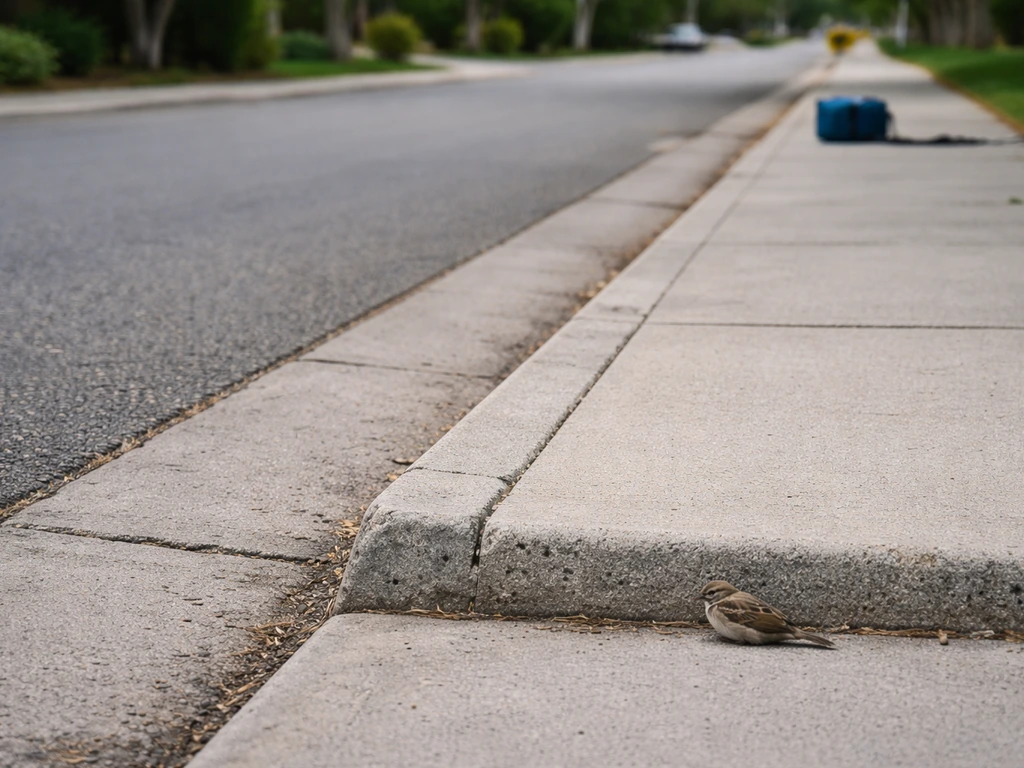
Before you touch anything, scan the area. Are there cats, dogs, or other predators nearby? Is the bird in a road or somewhere it'll get stepped on or run over? Is it near an open drain or body of water? If yes to any of those, you need to act quickly. If the bird is in a genuinely safe, sheltered spot and isn't visibly bleeding or critically distressed, you have a little time to observe first.
For your own safety, keep a few things in mind. Most wild birds don't carry diseases you're at serious risk from in a brief outdoor encounter, but it's still smart to avoid bare-hand contact when possible. Use gloves if you have them, or wrap the bird loosely in a cloth or small towel. Wash your hands thoroughly afterward. Some larger birds like herons, hawks, or owls can injure you with their beaks and talons, so be especially careful if you're dealing with anything bigger than a robin.
One quick distress check: watch the bird's breathing. Rapid panting or labored breathing that continues for two or more hours is a sign of serious stress and means you should contact help without delay. If breathing problems continue for at least two hours, that is a sign to get help, according to the RSPCA breathing problems that continue for at least two hours. Closed or half-closed eyes, limpness, or inability to hold the head up are also red flags.
Figure out the situation: injured, stunned, or young bird?
This is the most important step, because the right action depends entirely on what you're dealing with. These three scenarios look similar but call for very different responses.
The stunned bird
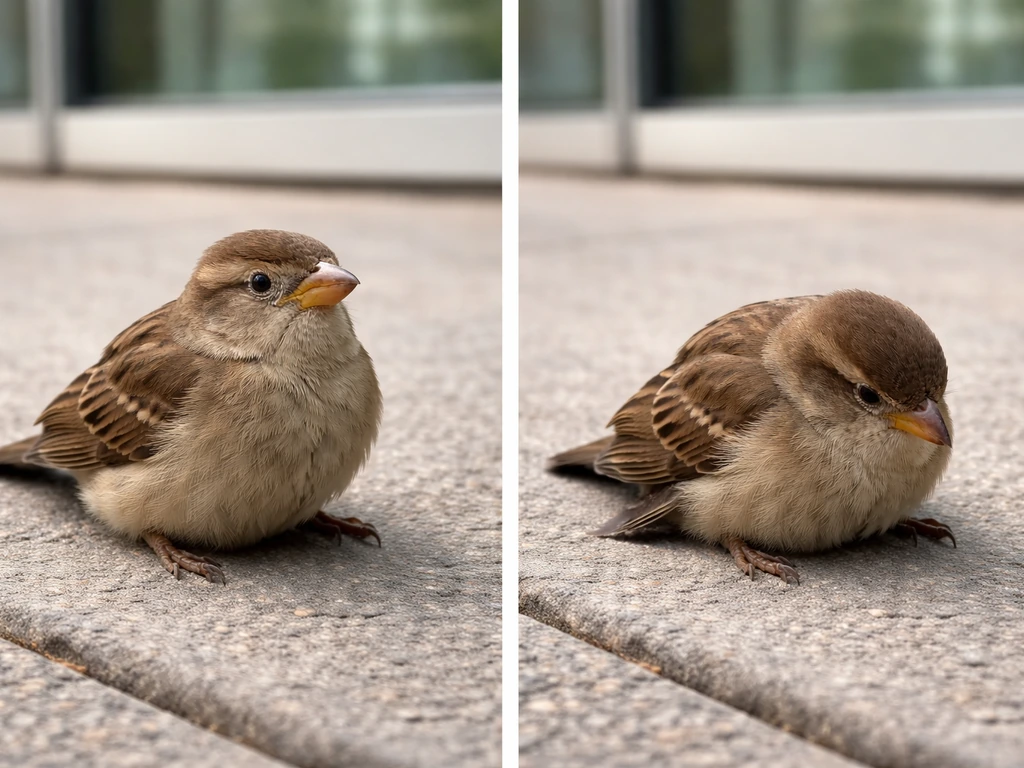
Window collisions are the most common reason a bird ends up dazed on the ground. If the bird is near a window and was otherwise healthy-looking before impact, it's likely stunned rather than seriously injured. A stunned bird may sit still, look glassy-eyed, or be unable to fly, but it doesn't have obvious wounds. Many of these birds recover fully within an hour if kept safe, warm, and undisturbed. For more detail on handling dazed birds specifically, there's a companion guide on how to help a dazed bird.
The genuinely injured bird
Signs of real injury include visible bleeding, a drooping or oddly angled wing, the bird dragging a leg, a wound on the body, or an eye that's swollen shut. If you see any of these, the bird needs professional care and you should move straight to containment and contacting a wildlife rehabilitator or vet.
The fledgling or nestling
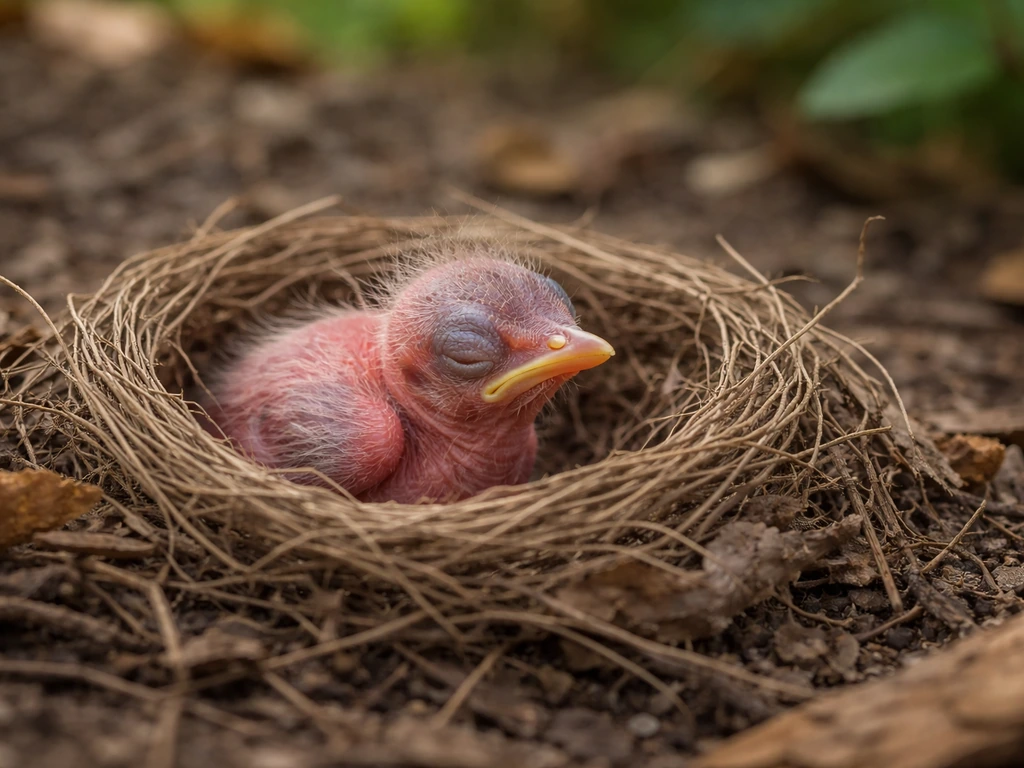
A nestling is a very young bird with little to no feathers, pink skin showing, and eyes that may still be closed. It belongs in a nest. A fledgling is older, has most of its feathers, and looks like a small, slightly scrappy version of an adult bird. Fledglings are supposed to be on the ground. They leave the nest before they can fully fly, and their parents are usually watching from nearby. If you find a fledgling that isn't visibly injured, it almost certainly doesn't need to be rescued.
A healthy adult bird resting on the ground is also not automatically in trouble. According to the RSPCA, a healthy bird should still try to walk or flutter away when a person approaches. If it does that, even weakly, it may just be resting. If it doesn't react to your presence at all, that's when you should be concerned.
Immediate steps: quiet, warm, and contained
If you've determined the bird needs help, here's what to do right now while you contact a professional.
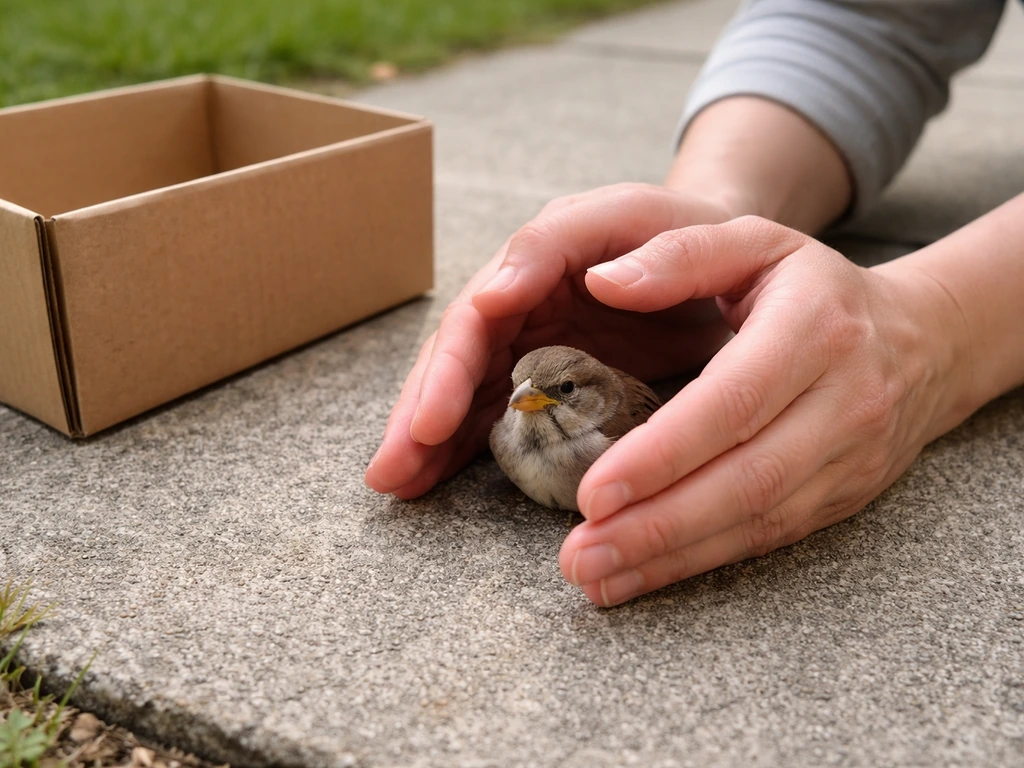
- Find a cardboard box, like a shoebox, and punch several small air holes in the lid. Line the bottom with a small cloth, paper towel, or a few sheets of newspaper folded flat.
- Use a towel or cloth to gently scoop the bird up, avoiding squeezing the body or the wings. Place it in the box in an upright position if it can hold itself that way.
- Close the lid securely so the box is dark inside. Darkness reduces stress significantly.
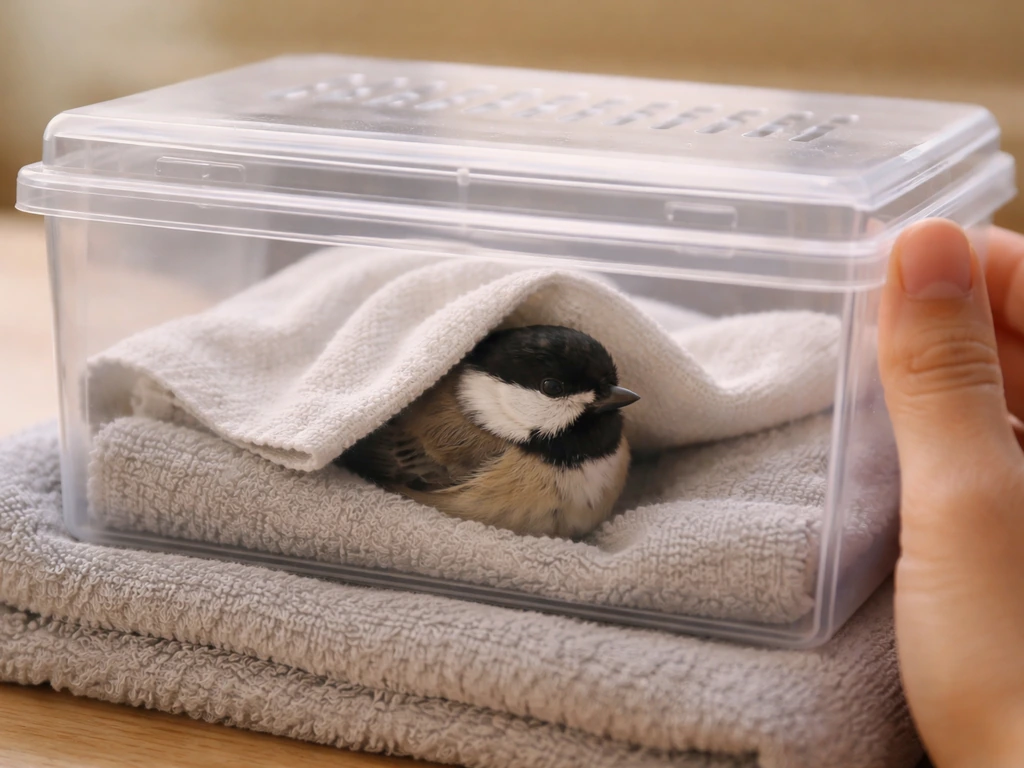
- Place the box somewhere warm, quiet, and away from drafts, household pets, children, and loud noise. Room temperature (around 70 to 75 degrees Fahrenheit) is ideal. If the house is cold, you can place a warm water bottle or hand warmer wrapped in cloth near (not under) the box for gentle warmth.
- Leave the bird alone. Do not keep opening the lid to check on it. Every time you look, you're stressing it out.
If you can't get a box right away and the bird is in immediate danger, loosely cupping it in both hands and moving it to a sheltered spot nearby buys you time. Just keep the handling brief.
What NOT to do (common mistakes that make things worse)
This is where well-meaning people often hurt the bird without realizing it. The instinct to feed and comfort a suffering animal is natural, but with wild birds it can be genuinely dangerous. Mass Audubon also recommends placing an injured bird in a box if it cannot fly, but not forcing it to eat do not force feed it.
- Do not give the bird food or water. This is one of the most consistent pieces of advice from wildlife clinics including Tufts and Mass Audubon. A stressed or injured bird can inhale liquid into its lungs and die. You don't know what it eats, and the wrong food can make a bad situation worse. Leave feeding to the professionals.
- Do not give bread, milk, crackers, or anything from your kitchen. None of these are appropriate for wild birds, and some are actively harmful.
- Do not try to force the bird to fly or stand. If it can't do it on its own, pushing it won't help and may cause additional injury.
- Do not keep the bird outside in a box. Exposure to cold, heat, or predators adds stress. Bring it inside.
- Do not put the bird in a wire cage if you can avoid it. Wire can damage feathers and cause further injury. A cardboard box is better.
- Do not handle it more than necessary. Every time you pick it up, it's terrified. Minimize contact.
- Do not keep the bird overnight without professional guidance. If you haven't reached a wildlife rehabilitator by evening, keep trying. Overnight captivity without proper care and nutrition can be fatal, especially for small songbirds.
When to leave the bird alone vs. when to step in
The decision to intervene or leave the bird in place is genuinely one of the harder calls, because doing the wrong thing in either direction causes harm.
| Situation | What to do |
|---|---|
| Fledgling on the ground, no visible injury, parents possibly nearby | Leave it alone. Watch from a distance to confirm parents return. Only intervene if parents don't come back after a few hours or if predators are a real threat. |
| Nestling (very young, featherless) found on the ground | Try to locate and return it to its nest if you can safely reach it. The myth that parents reject touched babies is not true for most birds. |
| Bird near a window, appears stunned but uninjured | Contain it in a dark box for up to an hour. If it recovers, release it outdoors. If it doesn't improve, contact a rehabilitator. |
| Bird with visible injury (bleeding, broken wing, eye damage) | Contain immediately and contact a wildlife rehabilitator or vet. Do not release. |
| Bird panting or showing breathing distress for over two hours | Treat as a medical emergency. Contact professional help now. |
| Healthy adult resting, reacts to approach by moving away | Observe from a safe distance. It likely doesn't need intervention. |
If you found a bird that can't fly but seems otherwise alert and uninjured, the guide on how to care for a bird that can't fly goes into more detail on those specific decisions.
How to get professional help fast
Your two main options are a wildlife rehabilitator or a veterinarian. In most cases, a licensed wildlife rehabilitator is the better first call for wild birds. They're trained specifically in wild animal care, they have the right permits, and they won't charge you for emergency intake in most situations.
To find one fast, search online for 'wildlife rehabilitator near me' or use the National Wildlife Rehabilitators Association directory. The Humane Society and ASPCA also maintain resource lists. If you're in the US, you can also call your state's fish and wildlife agency for a referral. Many areas have 24-hour hotlines specifically for wildlife emergencies.
If you can't reach a rehabilitator quickly, call a local veterinary clinic. Not all vets treat wild birds, but many will do a basic assessment and stabilize the animal while you locate proper long-term care. Some clinics have contacts with local rehab networks and can make the referral for you.
When you call, be ready to describe: the species if you know it (or what it looks like), where you found it and under what circumstances, what symptoms or injuries you can see, and how long the bird has been down. The more specific you can be, the faster they can triage the situation and tell you what to do next.
Safe transport and short-term holding
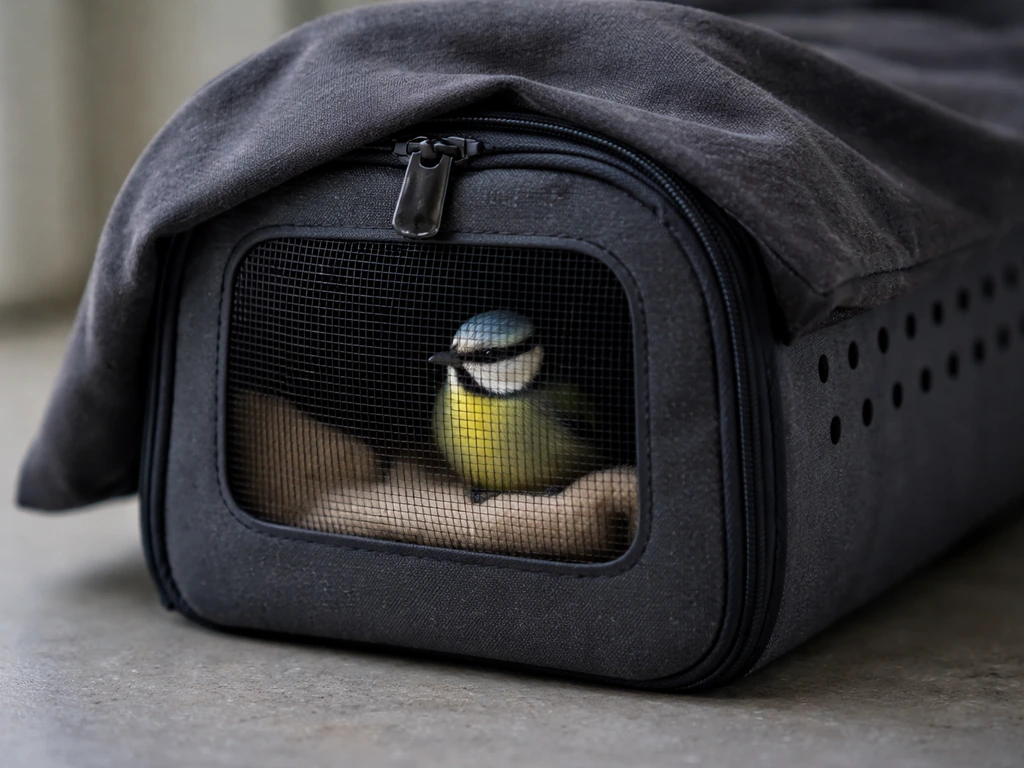
If you need to transport the bird to a vet or rehab facility, keep it in the same dark, enclosed box. Don't switch containers mid-trip if you can avoid it. During transport, keep the car quiet (no loud music), keep the box level, and avoid sudden acceleration or braking. Don't leave the bird in a hot car, even for a few minutes.
For short-term holding while you wait for a callback or arrange transport, continue keeping the box in a warm, dark, quiet spot indoors. Check on the bird as little as possible. If you have to peek to confirm it's still alive, do it briefly with minimal light and close the lid quickly.
If the bird needs warmth and you don't have a heat lamp, a hand warmer or a small bottle of warm (not hot) water wrapped in a cloth and placed to the side of the box, not under it, can help maintain temperature without overheating. Aim for a gentle, consistent warmth rather than intense heat.
Remember: do not offer food or water during this period, no matter how long the wait. This is hard to sit with emotionally, but it's the right call. Aspiration pneumonia from improper feeding kills more birds than a few hours without food does.
Your rescue checklist and next steps
Here's everything pulled together into a clear sequence you can follow from the moment you find the bird.
- Scan the scene first. Is the bird in immediate danger? Are there predators, traffic, or hazards nearby? If yes, move it gently to safety before assessing further.
- Observe before touching. Watch from a few feet away for 30 to 60 seconds. Does it react when you approach? Is it a fledgling (fully feathered, small, scrappy-looking)?
- Identify the situation: stunned, injured, nestling, fledgling, or sick adult. Use the table above to decide whether to intervene.
- If intervening: put on gloves or use a cloth. Gently place the bird in a ventilated shoebox lined with a paper towel or soft cloth.
- Close the lid, bring the box indoors, and place it somewhere warm, dark, and quiet.
- Do not feed or water the bird.
- Call a licensed wildlife rehabilitator or local vet immediately. Have your location, the bird's appearance, and symptoms ready.
- Follow their instructions exactly. They may advise you to transport the bird or simply hold it until a pickup is arranged.
- If the bird is a fledgling and uninjured, return to step 2. Step back, watch from a distance, and see if the parents return. Give it a few hours before deciding to intervene.
- If you touched the bird, wash your hands with soap and water.
- Follow up with the rehabilitator if you don't hear back within a couple of hours. Don't assume no news is good news.
Finding a bird in distress is stressful, and the urge to do more than you should is real. The most helpful thing you can give a wild bird right now is warmth, darkness, quiet, and a fast phone call to someone with the training to take over. If the bird is trapped inside, follow the same calm approach and contact a wildlife rehabilitator for guidance on safe release or transport. You've already done the most important part by stopping to help at all.
FAQ
How long should I watch the bird before I call for help?
If the bird is not clearly improving within about 1 hour, or if it is unable to stand, droops, has labored breathing, or has any visible wound, call a wildlife rehabilitator or a bird-friendly vet immediately. Also call sooner if the bird is near hazards like roads, predators, or open water.
What if the bird is chirping, but still won’t fly?
Vocalizing does not rule out injury or severe shock. Use the same checks for breathing quality, head control, and leg or wing positioning. If it cannot get up or its eyes look closed or glassy for an extended period, treat it as potentially injured and seek professional help.
Can I give a found bird water or food just a little?
No, do not offer food or water while you are waiting for triage. Even experienced people can cause aspiration, which can be fatal. The safe exception is only if a licensed professional explicitly instructs you to administer something.
Should I try to put the bird back in a nest if I find it on the ground?
Do not move it unless you are confident it is a nestling. For fledglings, the ground is normal and parents are often nearby. If the bird appears nestling (mostly bare skin, very few feathers), then gently contacting a rehabilitator for confirmation is safer than guessing.
How can I tell if it’s a fledgling and not injured?
A fledgling typically has most of its feathers, looks slightly untidy, and may hop or flutter when approached. If it has a drooping wing, dragging leg, swollen eye, bleeding, or obvious trauma, it is not “normal fledgling behavior,” and you should call for care.
What if I accidentally touched the bird with bare hands?
Wash your hands thoroughly with soap and water right away, and avoid touching your face or food until you do. Cover any open cuts or sores on your hands. For bigger birds with beaks or talons, wear gloves next time to prevent injury.
Is it safe to cover the bird with a towel or hold it in place?
Yes for short handling, especially if it is in immediate danger. Keep the bird loosely contained, avoid pressing on the chest, and minimize time with your hands. Prolonged handling can stress the bird and make breathing worse.
What should the “transport box” look like?
Use a sturdy, ventilated, dark enclosure sized so the bird can stand but not flap freely. Place padding so it stays stable and level. Avoid materials that can snag (like loose string), and do not use a leaky container or anything with gaps where claws can get stuck.
Do I need to keep the bird warm even if it looks alert?
Often yes, because chilling can worsen shock and breathing issues. Use gentle, consistent warmth by placing a warm bottle or hand warmer to the side of the box, not underneath. Stop increasing warmth if the bird seems overheated or is panting.
What if the bird is on the road, and moving it takes time?
Move it only if it is in immediate danger and you cannot reach help fast enough. Loosely cup it briefly and move it to the nearest safe, sheltered spot. Once it is out of danger, focus on contacting the nearest rehabilitator or emergency bird hotline.
What if I can’t find a wildlife rehabilitator after I call?
Ask the caller for the next-best option in your area, such as an emergency triage clinic, a bird-specific hotline, or a vet that has a rehab network referral. If you are in the US, also call your state fish and wildlife agency for guidance on the correct receiving service.
How do I safely release a bird after it recovers?
Do not release a bird until it can stand and move normally and appears fully alert. Release it in the same general area where you found it, away from roads and heavy foot traffic. If it still cannot fly or has ongoing breathing problems, keep it contained and hand off to a rehabilitator instead.
Next Article
How to Help a Dazed Bird: Step-by-Step First Aid
Step-by-step first aid for a dazed bird: safety, assessment, shock care, feeding do’s and transport, when to seek help