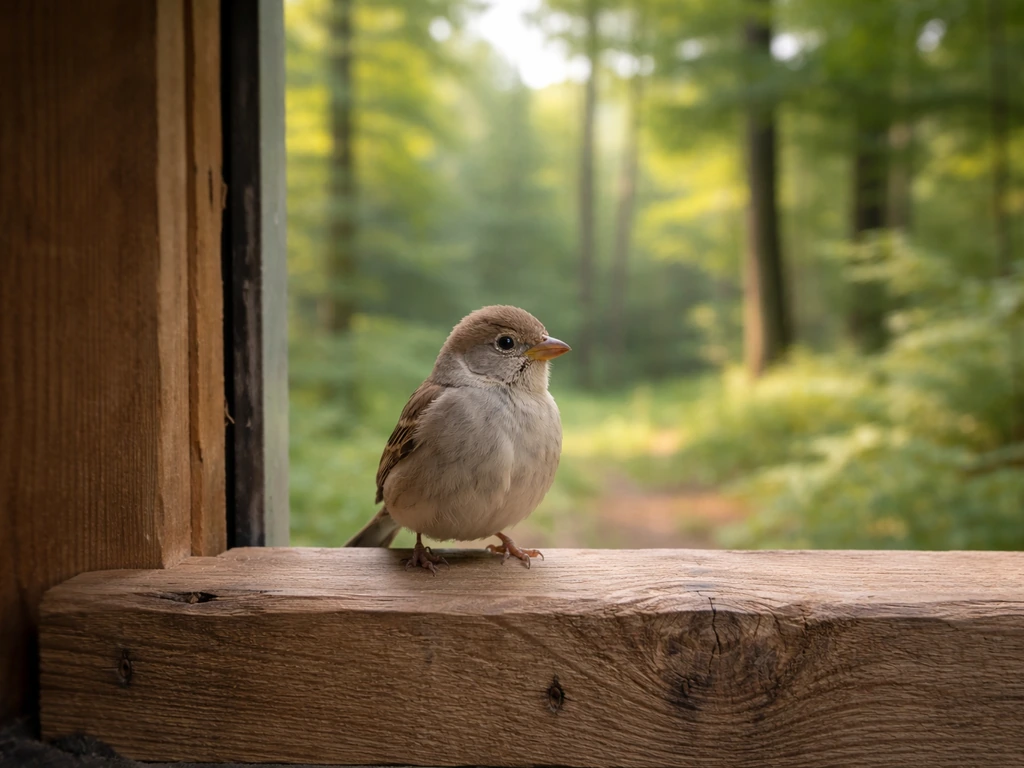
If you've just found a little bird on the ground and you're not sure what to do, here's the short answer: stay calm, don't rush to feed it or force water on it, keep it warm and quiet in a covered box, and contact a licensed wildlife rehabilitator as soon as possible. Virginia's Department of Wildlife Resources also recommends keeping a wet, chilled bird warm in a box near a heat source (such as a 75-watt bulb) and not giving food or water, then getting it assessed by a vet or permitted rehabilitator stay calm, don't rush to feed it or force water on it, keep it warm and quiet in a covered box. Everything else in this guide builds on those four steps. Whether the bird is injured, orphaned, sick, or simply trapped somewhere it shouldn't be, the core approach is the same: stabilize first, get professional help second.
How to Help a Bird: First Aid, Safe Handling, and Next Steps
Quick safety checks and when to call for help
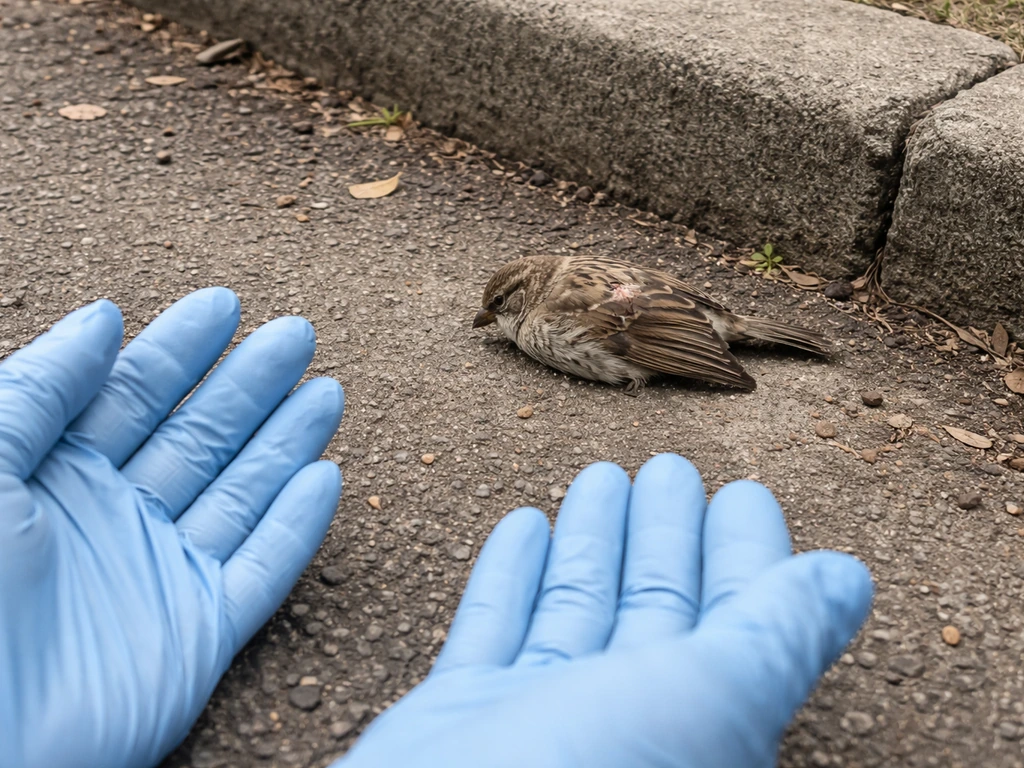
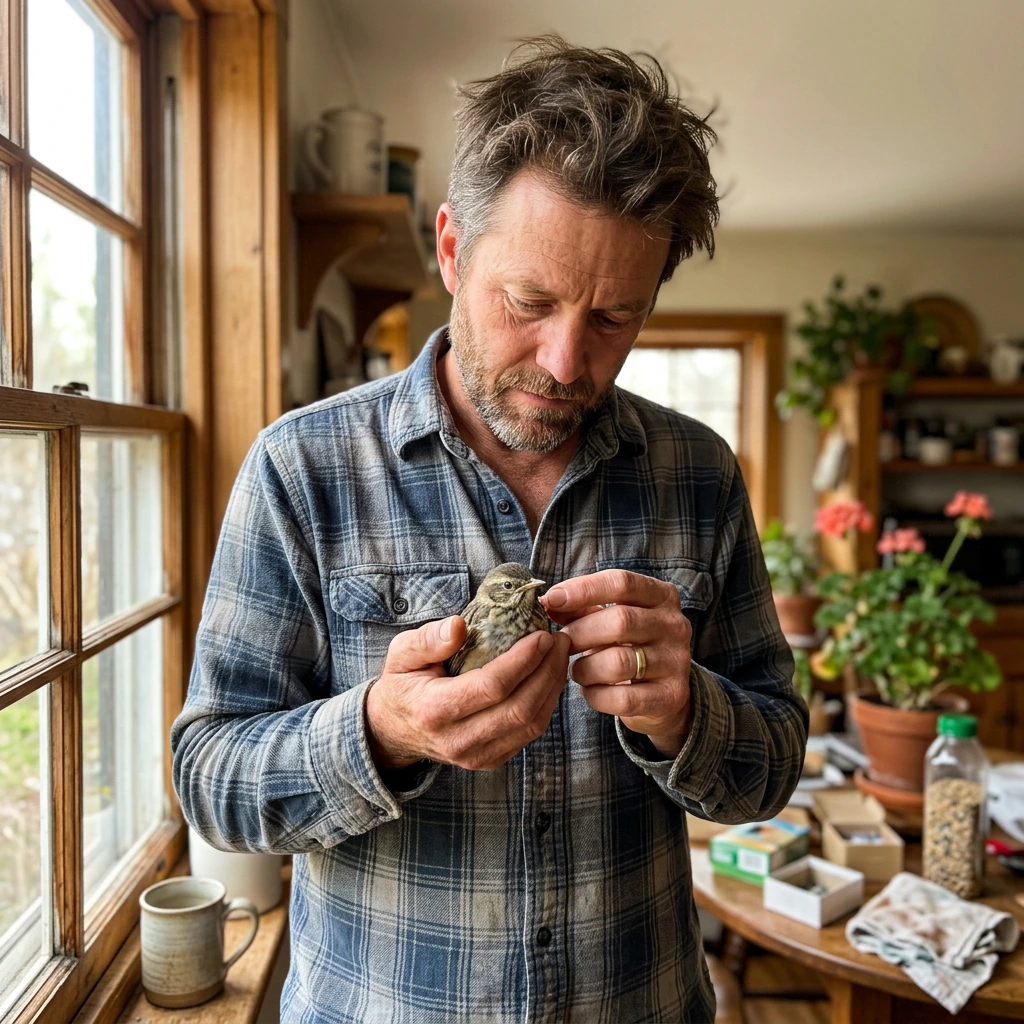
Before you touch anything, protect yourself. The CDC advises people to avoid direct contact with wild birds whenever possible, and that applies here. Sick birds in particular can carry avian influenza, and you should never touch a bird's eyes, beak, or feces with bare hands. If you need to handle the bird, wear disposable gloves. Wash your hands and any equipment thoroughly afterward. Keep children and pets away from the area entirely.
Now look at the bird without picking it up. Ask yourself: Does it have a visible broken limb? Is it bleeding? Is it shivering? Is there a dead adult bird nearby? These are the clearest signs that the bird genuinely needs help right now. The U.S. Fish and Wildlife Service is clear that in most cases, the best thing is to leave wildlife alone. But if you see any of those warning signs, intervention is warranted. Call a wildlife rehabilitator or avian-experienced vet immediately, before you attempt to capture or move the bird.
Finding the right person to call is step one. Search for a licensed wildlife rehabilitator in your area through your state's wildlife agency or a directory like the National Wildlife Rehabilitators Association. Most areas have a hotline you can reach within minutes. If you are in the Bi-State area, the Bi-State Wildlife Hotline offers a public way to quickly locate nearby wildlife rehabilitators. Make that call first. The advice you get over the phone will be specific to your situation and your region, which is far more valuable than guessing.
Assess what kind of problem it is
Not every bird on the ground is in trouble. Before you do anything else, figure out what you're actually dealing with. The four main situations are: injured (bleeding, broken wing or leg, unable to stand), sick (dull eyes, fluffed feathers, lethargic, unable to move away from you), orphaned nestling (featherless or barely feathered, eyes closed), or a fledgling that's learning to fly. There's also the trapped bird scenario, where a bird has flown into a garage, window, or enclosed space and just needs an exit.
Fledglings are the most commonly misidentified "emergencies." A fledgling is a young bird that has most of its feathers and has recently left the nest. It hops around on the ground, flaps its wings awkwardly, and may look completely helpless. It isn't. Fledglings are typically being fed and monitored by their parents from nearby. If you see a feathered, alert bird that's hopping around and not obviously injured, the best thing you can do is leave it alone and keep people, dogs, and cats away. Parents may stay back while humans are present, so give the bird plenty of space before concluding it's been abandoned.
A nestling is a different story. Nestlings are featherless or very sparsely feathered, often with closed eyes, and they belong in a nest. If you find one on the ground and it appears uninjured, look for the nest nearby and gently return it. The parent will not reject it because you touched it. If the nest is destroyed or unreachable, you can place the bird in a small container lined with tissue and position it as close to where you found it as possible. Then watch from a distance to see if the parents return. If no parent returns within 4 to 5 hours, the bird needs professional help.
Immediate first aid: keep warm, quiet, and protected
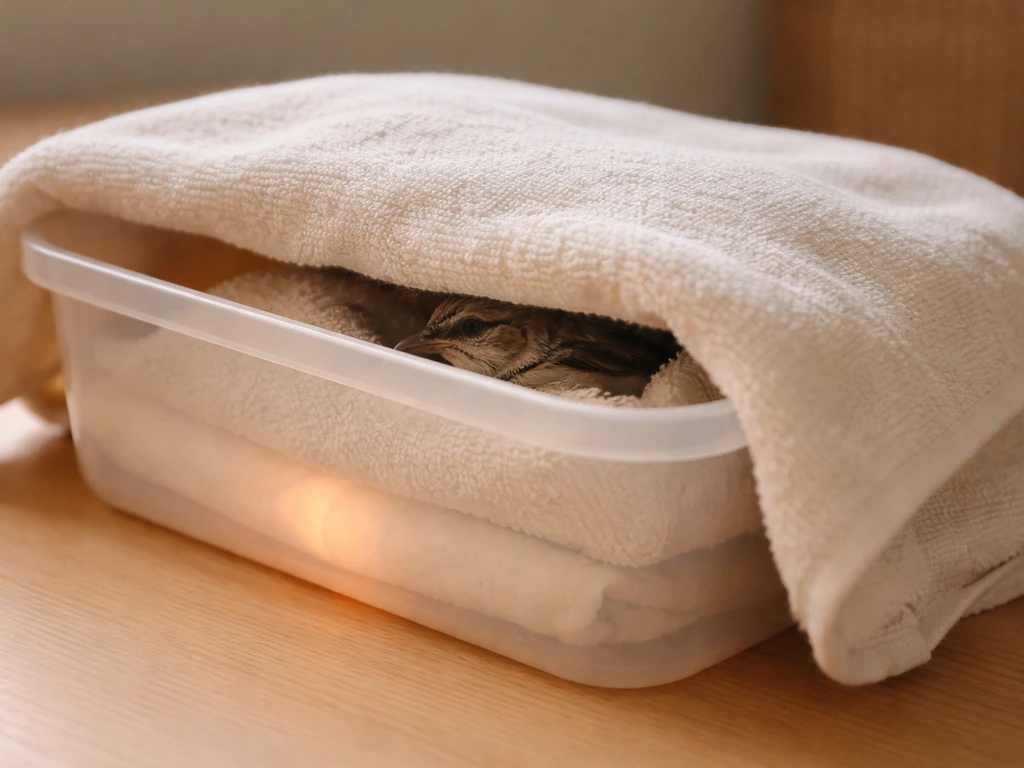
Once you've confirmed the bird needs temporary care, the goal is simple: don't make things worse. The three priorities are warmth, quiet, and protection from further harm. Everything else, including feeding, watering, and examining the bird closely, can wait until you've spoken to a rehabilitator.
If the bird feels cold to the touch, warming it is your first job. A cold bird cannot digest food, regulate its own body temperature, or recover from shock. A target ambient temperature of around 85 to 90 degrees Fahrenheit is appropriate for baby birds. You can achieve this with a heating pad on its lowest setting placed under half of the box (so the bird can move away from the heat if needed), or by using a small hand warmer wrapped in a towel. Never place the heat source directly against the bird.
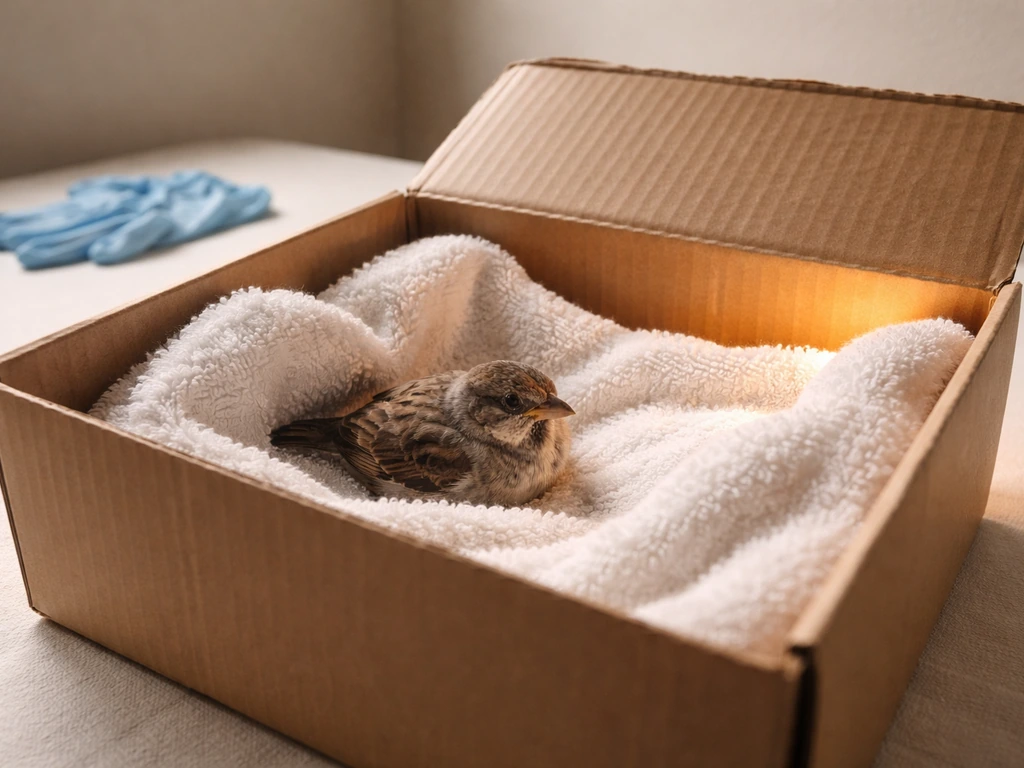
Once the bird is warm, place it in a covered box and put it somewhere dark and quiet, away from pets, children, loud noise, and strong smells. Darkness reduces stress significantly. Resist the urge to keep checking on it. Every time you lift the lid, you're adding stress to an animal that is already in crisis. A quiet, covered box is genuinely the most helpful thing you can provide while you wait for professional guidance.
How to handle little birds safely
Nestlings
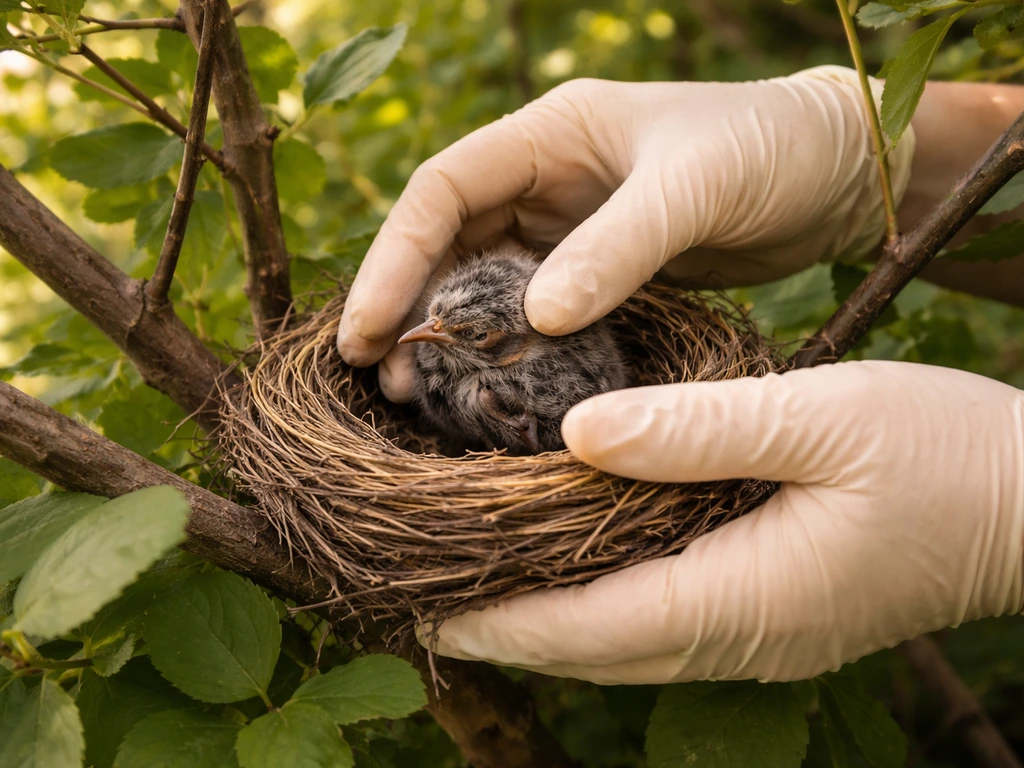
Nestlings are fragile. Their bones are soft, their skin tears easily, and they're prone to hypothermia within minutes of being removed from a warm nest. When you need to pick one up, use gloves and cup the bird gently in both hands with minimal pressure. Don't hold it too tightly. Place it into a small container lined with soft tissue or paper towel. Never use terry cloth or anything with loops that tiny toes can catch on.
If the nest is intact and reachable, place the nestling back in it as quickly as possible. If you need to construct a substitute nest because the original is destroyed, a small container (a berry basket or margarine tub with drainage holes works well) filled with dry grass or tissue and secured to a branch near where you found the bird is a reasonable option. Then step well back and watch quietly to see if the parents return.
Fledglings
For a fledgling that seems healthy but is in a dangerous spot, like a busy road or an open yard with free-roaming cats, you can gently guide it to a nearby shrub or low tree branch. You don't need to pick it up at all if you can herd it to safety. If a fledgling is clearly injured, then handle it the same way as an injured adult: gloves, minimal contact, a covered box, warmth, and a call to a rehabilitator.
Feathered fledglings being cared for by parents on the ground are often watched over for several days while they build strength. The best way to help them is to keep the area calm. Keep dogs and cats indoors during that window, and ask neighbors to do the same. helping a wild bird through a fledgling period often requires more patience than action.
Feeding and hydration: what to do and what absolutely not to do
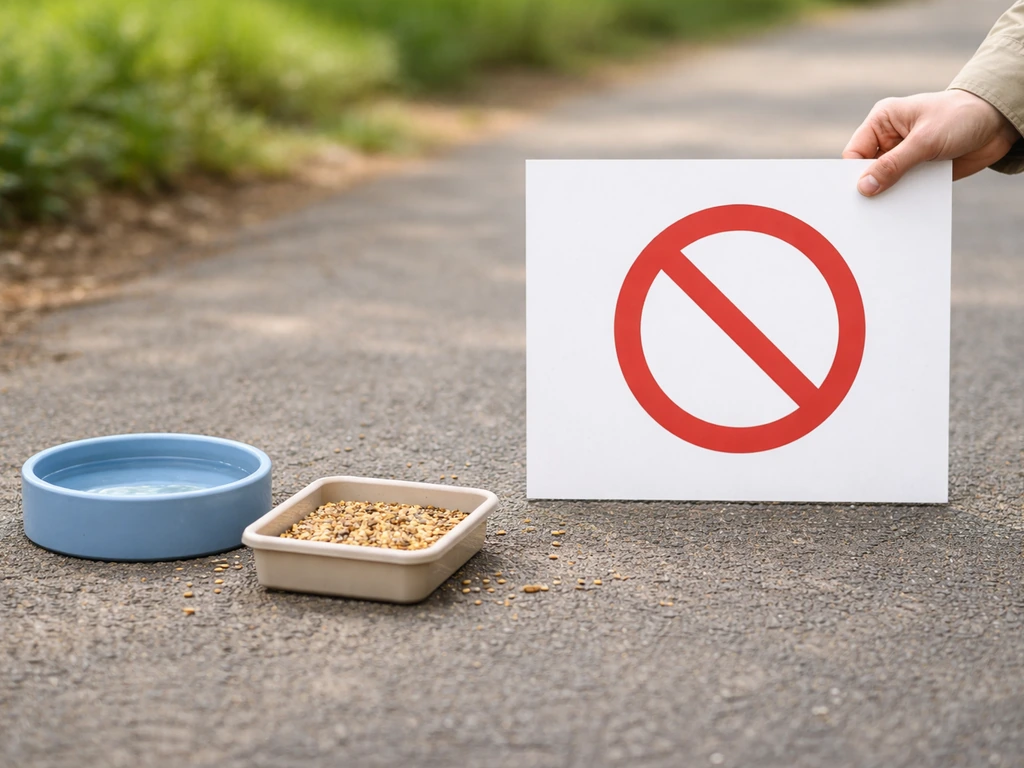
This is where most well-meaning people cause unintentional harm. The single most important rule: do not feed or give water to any bird unless a wildlife rehabilitator has specifically told you to, and told you exactly what to give. This applies to nestlings, fledglings, injured adults, and sick birds equally. Multiple wildlife organizations, including the Audubon Society, Best Friends Animal Society, and the Philadelphia Metro Wildlife Center, give the same instruction with no exceptions.
Here's why it matters. A bird in shock or with internal injuries can aspirate liquid into its lungs if you try to give it water, which can kill it within minutes. Baby birds require species-specific diets that vary significantly, and even "safe-sounding" foods like bread, milk, or fruit can cause serious harm. A cold bird cannot digest food at all. Feeding it before it's warm enough is pointless at best and dangerous at worst. The urge to do something is understandable, but feeding is the one action most likely to hurt rather than help.
- Do not give water by dropper, spoon, or any other method unless instructed
- Do not offer bread, milk, crackers, or seeds to a baby bird
- Do not force the beak open to insert food or liquid
- Do not offer worms, insects, or berries unless a rehabilitator has confirmed the species and instructed you to
- Do not put water in the bottom of the containment box
If a rehabilitator does instruct you to offer an emergency feeding, they'll tell you exactly what to use and how. Until that call happens, warmth and quiet are the only interventions the bird needs from you.
Temporary housing and getting the bird to a professional
A well-ventilated cardboard box is the ideal temporary container for almost any small bird. Punch several small air holes near the top (not the sides, where drafts can chill the bird). Line the bottom with paper towel or a thin layer of dry tissue. Do not use a wire cage or a glass tank: cages allow the bird to injure itself trying to escape, and glass tanks trap heat and provide no visual shelter. Place the box in a warm, dark location away from noise, pets, and direct sunlight.
When it comes to transport, the same box works fine. Place the box on the car seat rather than the floor, drive smoothly, keep the radio off, and avoid sudden stops. Keep the car at a comfortable temperature, neither too hot nor too cold. The bird does not need to see out, and it does not need you to talk to it. Silence and stability are what help most during transit.
To find a licensed wildlife rehabilitator near you, contact your state or local wildlife agency, call a veterinary office and ask for a referral, or search the National Wildlife Rehabilitators Association or the Wildlife Center of Virginia's online directory. Many areas also have wildlife hotlines that operate after hours. When you call, describe what you found, where you found it, and what it looks like. They'll tell you whether to bring it in, wait, or take a different step.
If you're also thinking longer-term about what you can do to support birds beyond a single rescue, there's a lot of practical work involved in helping bird populations at the local and landscape level, from habitat restoration to reducing window strikes.
Aftercare, monitoring, and keeping stress low while you wait
Once the bird is in its box, your job is mostly to leave it alone. Check on it only when necessary, and when you do, do it quickly. Watch for changes in posture (a bird that was upright and is now slumped has gotten worse), breathing (labored or open-mouthed breathing is a bad sign), and temperature (the bird should feel warm, not cold or clammy). If the bird's condition deteriorates rapidly, treat it as an emergency and head to the nearest avian vet without waiting.
Keep the room the bird is in as quiet as possible. Turn off televisions and loud music nearby. Don't let children or other animals into the room. Don't place the box near a window where the bird can see movement outside. Every visual or audio stimulus triggers a stress response in a wild bird, and repeated stress responses can tip a weakened bird into fatal shock. The most caring thing you can do is make its environment as boring and non-threatening as possible.
One thing worth noting: even a bird that looks like it's recovering on its own should still go to a rehabilitator. An injured bird that appears to be flying around the box is not necessarily healed. Internal injuries, infections, and neurological damage often aren't visible from the outside. The American Bird Conservancy makes this point clearly: a bird that can fly away may still have a fatal injury. Let a professional make that call.
If you found the bird near an active nest, it's also worth reading up on how to help a nesting bird in your yard more broadly, since protecting the nest itself and reducing disturbance around it can prevent more birds from ending up on the ground in the first place.
A quick comparison: nestling vs fledgling vs injured adult
| Feature | Nestling | Fledgling | Injured Adult |
|---|---|---|---|
| Feathers | Featherless or pin feathers only | Mostly feathered, may look scruffy | Fully feathered |
| Eyes | Closed or just opening | Open and alert | Open, may look dull if sick |
| Movement | Cannot stand or hop | Hops, short flutters | May be still, dragging a wing, or limping |
| Likely situation | Fallen from nest | Normal ground phase, or in danger | Injured, sick, or stunned |
| Action needed | Return to nest or substitute nest, monitor | Leave alone if uninjured, guide to safety if at risk | Contain, warm, call rehabilitator immediately |
| Feed or water? | No, unless instructed by rehabber | No, unless instructed by rehabber | No, unless instructed by rehabber |
What if the bird is trapped indoors?
A bird that's flown into a garage or room and can't find its way out is usually uninjured and just panicked. Close interior doors to contain it to one room, then open the largest exterior window or door and darken the rest of the room so the only light source is the exit. In most cases, the bird will find the opening within a few minutes. Don't chase it or try to grab it. If after 30 minutes it hasn't found the exit and is clearly exhausted or has hit a window hard, treat it like an injured bird: contain it gently in a box and monitor it.
A bird that has struck a window and is sitting stunned on the ground nearby may recover on its own within 30 to 60 minutes. Keep it protected from predators while it recovers, either by placing a box loosely over it (not sealed) or by watching from a distance. If it doesn't recover and fly away on its own within an hour, or if it seems to be deteriorating, place it in a proper containment box and call a rehabilitator.
Finally, if you've come across a bird in an unusual or specific scenario that doesn't quite fit the patterns above, there are dedicated resources worth exploring. For example, if you play the video game Life is Strange and are searching for something completely different, how to help the bird in Life is Strange is a separate topic covered elsewhere on this site. For real-world situations, stick with the steps above and get a rehabilitator on the phone as quickly as you can.
FAQ
What should I do if the bird looks injured but I cannot tell how badly? Can I safely check it?
Yes. If the bird’s eyes are crusted, there is visible bleeding, or it is shivering hard, you can worsen the situation by handling it too much. Use gloves if you must move it, warm it first in a covered box, and call a wildlife rehabilitator for the exact next step, especially for possible fractures or internal bleeding.
How do I know if I’m looking at a fledgling versus a bird that needs first aid immediately?
If the bird is fully feathered, alert, and hopping or fluttering awkwardly, it is usually a fledgling. In that case, you typically should not pick it up to “help,” instead keep pets and people away and make nearby hazards safer (move a cat carrier indoors, block access to the road, guide it only if you can do so without grabbing).
Is it okay to give a little water or formula to a baby bird while I’m waiting for the call?
Do not use a bird’s water dish, droppers, or “soaked food” unless a rehabilitator tells you exactly to. The safest practical alternative is to focus on warmth and a quiet container, because cold birds cannot digest and fluid can cause aspiration if the bird is weak or in shock.
What if I warm the bird and it seems overheated or too stressed?
If the bird is in a glass tank or an uncovered box and you notice it’s overheating, drafts, or the bird is frantic, switch to a covered, ventilated cardboard box and move it out of direct sun. If you think it’s too hot, allow it to move away from the heat source rather than increasing warmth further.
Can I keep watching from a distance if I find a nestling on the ground, or do I have to act right away?
Yes, but only in a limited way. You can place a small container with dry, breathable bedding near the found location and watch from a distance, but avoid long delays with nestlings if parents are not returning. If no parent activity resumes within 4 to 5 hours, treat it as an urgent need for professional care.
How should I transport the bird in my car so it stays calm and warm?
For transport, keep it calm and stable. Use a covered ventilated box, avoid putting it where it can slide around, and keep the box out of direct sunlight and away from heater vents. Turning off the radio matters because sudden noises can spike stress, which is especially risky for cold or injured birds.
What are the best signs to monitor at home, and when does “waiting” turn into an emergency?
Handle the bird as little as possible once it’s contained. When you do check, use posture and breathing cues rather than repeated lifting. If breathing looks open-mouthed or labored, or the bird becomes rapidly slumped, treat it as an emergency and go to the nearest avian-capable vet.
What if the bird seems quiet and settled, does that mean it’s okay to wait?
If a bird is lethargic, repeatedly falling over, or unable to perch, consider it urgent even if it “might be sleeping.” Birds can look quiet while still cold, sick, or internally injured. Warm it in a covered box, minimize stimulation, and keep the call to a rehabilitator on schedule.
After a window strike, when should I release the bird versus keep it contained and call for help?
Avoid dawn-to-dusk “training” or repeated relocation attempts. For window strikes, if it is not flying away within about an hour, it should be contained and assessed by a rehabilitator rather than released outdoors repeatedly. For exhausted birds, repeated handling and relocation can extend stress and delay recovery.
What’s the safest way to clean up after helping a wild bird if gloves were used?
Yes. Wash hands thoroughly after glove removal, and wipe down the area you worked in if you touched anything contaminated. Keep pets and children away until the bird is transferred or returned to professionals, and do not clean bird messes with bare hands.
How to Release a Hand-Reared Bird Safely and Humanely
Step-by-step humane release for hand-reared wild birds: species checks, anti-imprinting care, soft vs hard release, afte