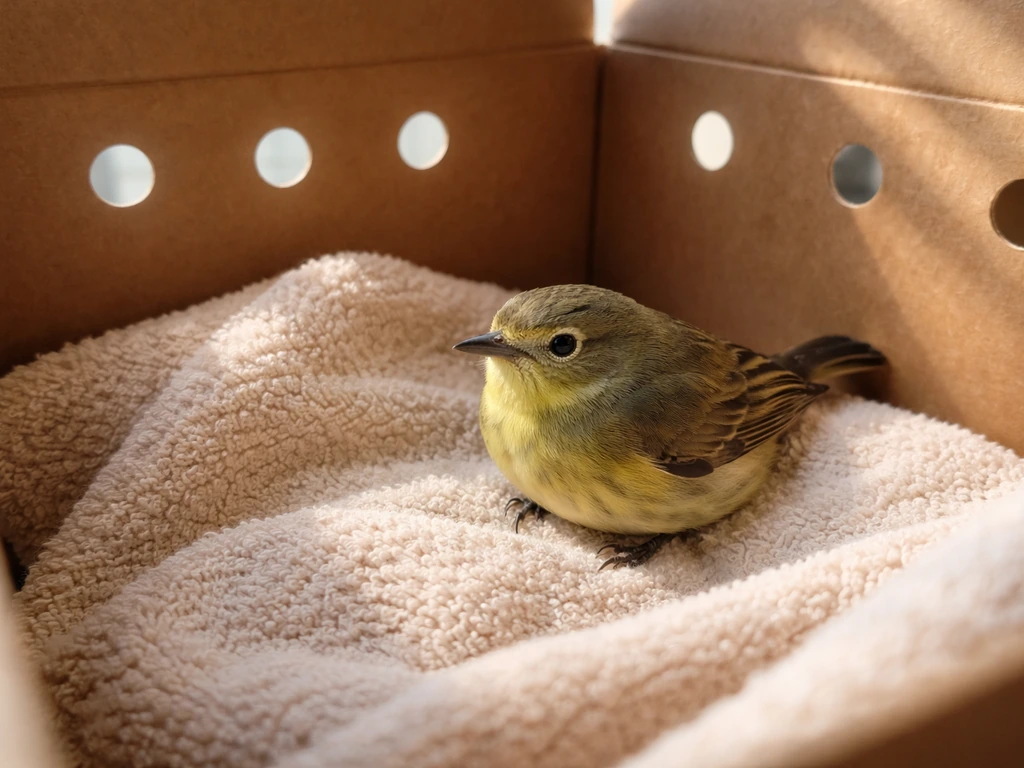
If you've found a nesting bird or a baby bird on the ground, the most important thing you can do right now is slow down and look before you touch anything. Most of the time, the bird does not need your help the way you think it does. But when it does, there are clear steps to follow: assess the situation, minimize disturbance, return nestlings to the nest if you safely can, and get a licensed wildlife rehabilitator or vet involved as quickly as possible for anything that looks injured or truly orphaned. If you want a safer, step-by-step approach, use this guide on how to help a wild bird: assess first, minimize disturbance, and contact a licensed wildlife rehabilitator or vet.
How to Help a Nesting Bird: Step-by-Step Rescue Guide
Marcus Holloway
30 Apr 2026
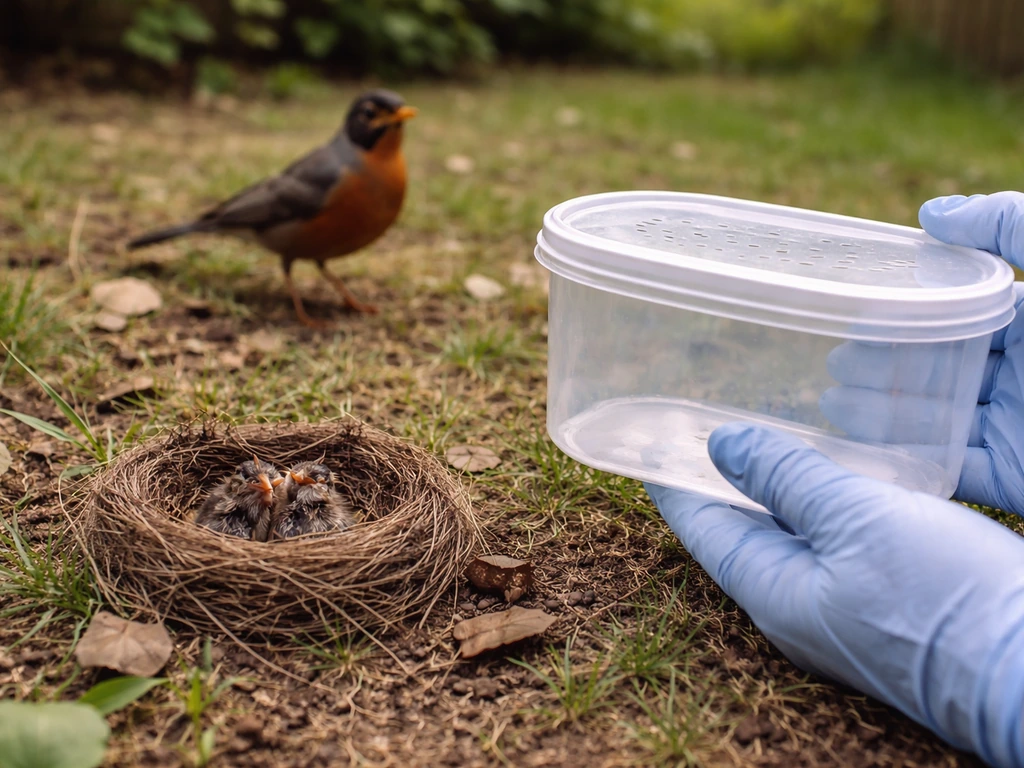
Nesting bird vs. nestling in distress: figure out what you're dealing with first
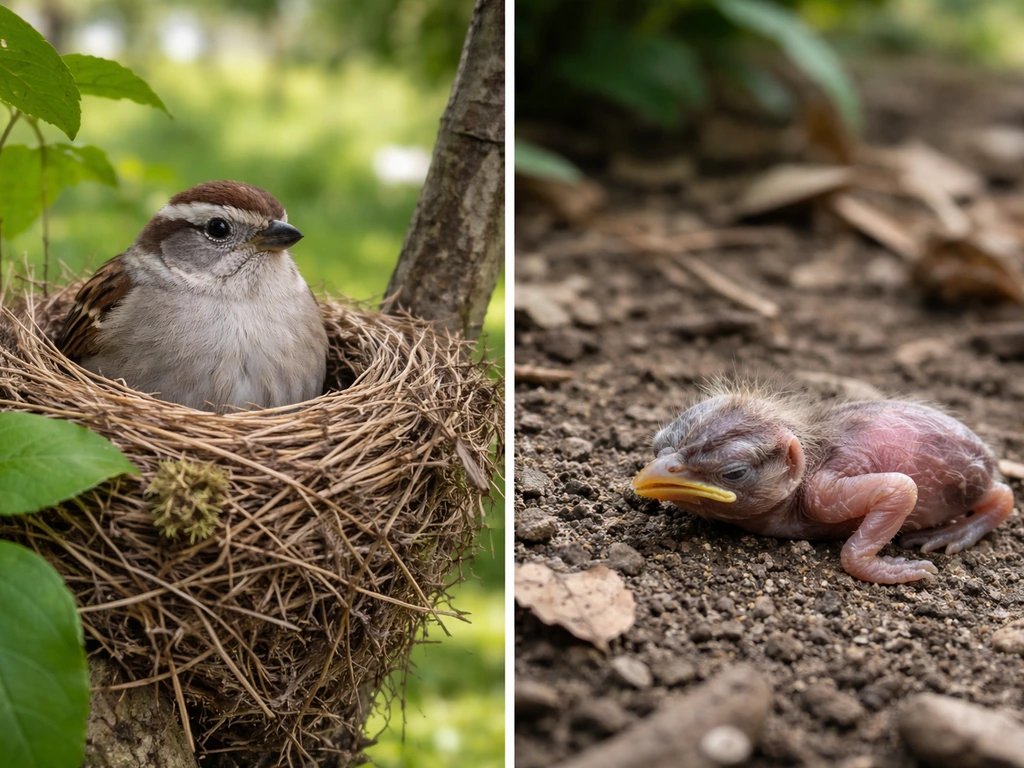
Not every baby bird you see on the ground is in trouble. Before doing anything, figure out which situation you're actually in.
A nesting bird is an adult sitting on a nest, incubating eggs or brooding young. If you've come across an active nest, the best move is almost always to walk away quietly. The parent birds are doing exactly what they should be doing. Disturbing the nest, even with good intentions, can cause adults to abandon it.
A nestling is a very young bird, usually featherless or covered in fuzzy down, with its eyes possibly still closed. Nestlings cannot fly and have no business being on the ground. If you see one on the ground, it has likely fallen from a nest that is close by.
A fledgling is older than a nestling. It has real feathers starting to come in, can hop, and is in the normal process of leaving the nest and learning to fly. Fledglings on the ground are almost always fine. Their parents are nearly always nearby, keeping watch and still bringing food. This stage typically lasts a few days and it looks alarming, but it is completely normal. Leave fledglings where they are.
The quickest way to tell them apart: nestlings may drag themselves along the ground using their bare wings and cannot hop or perch. Fledglings can hop and move with some coordination. If the bird is fluffy, has most of its feathers, and is hopping around, it is almost certainly a fledgling doing what fledglings do.
| Bird type | Appearance | On the ground? | Action |
|---|---|---|---|
| Nesting adult | Full feathers, sitting on nest | No (on nest) | Walk away, do not disturb |
| Nestling | Featherless or downy, eyes possibly closed | Fallen from nest (problem) | Locate nest, return if possible |
| Fledgling | Mixed feathers, can hop | Normal behavior | Leave alone, keep pets away |
How to help a nesting bird from a distance
If you have found an active nest with a parent bird on it, your job is to make the area as undisturbed as possible. That means fewer people, quieter movement, and no hovering nearby to watch. Even well-meaning observation puts stress on nesting birds and can make them leave the nest, exposing eggs or chicks to cold and predators.
- Keep people, dogs, and cats well away from the nesting area.
- Do not try to touch, move, or "improve" the nest.
- If the nest is in an inconvenient spot, such as a wreath or a garage shelf, try to limit your use of that space until the nesting cycle is complete (most songbirds fledge within two to three weeks of hatching).
- Do not stand nearby watching to see if the parent returns. Your presence alone can delay their return. Walk away and check from a distance or through a window.
- Avoid loud sounds, power tools, or strong vibrations near the nesting area during active use.
- Do not handle birds, eggs, or nesting material without a permit. It is illegal to disturb active nests of most wild birds.
If a nest has been accidentally knocked down or dislodged and the eggs or chicks are unharmed, you can gently place the nest back in its original location or as close to it as possible. The idea that parent birds will abandon a nest because you touched it is a myth. Touch does not cause abandonment, but prolonged disturbance does.
What to do if the bird is on the ground or looks injured
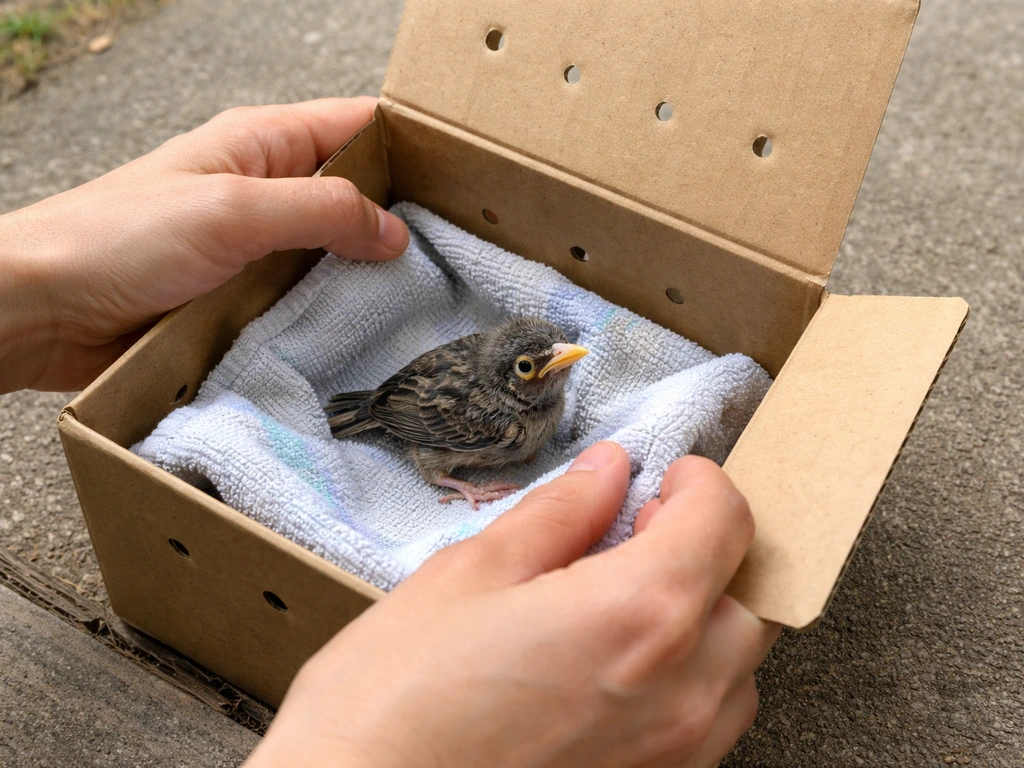
If you find a baby bird on the ground, first check for these clear signs that it genuinely needs help:
- It is featherless or has its eyes closed (a true nestling, not a fledgling).
- It is visibly bleeding or has a wound.
- A limb is broken or hanging at an odd angle.
- It is shivering or feels cold to the touch.
- A parent bird is lying dead nearby.
- It has been in contact with a cat, even briefly (cat saliva carries bacteria that are rapidly fatal to birds).
If none of those apply and the bird is hopping and feathered, it is almost certainly a fledgling and does not need rescuing. The best thing you can do is remove any cats or dogs from the area and leave it alone. Resist the urge to pick it up.
If the bird does show warning signs, here is the basic triage sequence to follow right now:
- Do not try to treat wounds or give food or water. Force-feeding or giving liquids to an injured bird can cause aspiration or serious nutritional harm.
- Gently pick up the bird using a soft cloth or gloves and place it in a small cardboard box lined with paper towels. Do not use fabric with loose threads that can snag toes.
- Poke a few small air holes in the lid. Keep the box closed to minimize stress.
- Put the box somewhere warm, dark, and quiet, away from people and pets.
- Do not check on the bird repeatedly. Every time you open the box, you add stress.
- Call a licensed wildlife rehabilitator or wildlife vet immediately.
How to safely return a nestling to its nest
If the bird is an uninjured nestling and you can see the nest nearby, returning it is the right move. Parent birds will continue to care for a chick that has been handled by humans. Helping bird populations often starts with doing the least disruptive thing that still gets the bird safe care help bird populations. Do this carefully and quickly.
- Locate the nest. Look in the tree or shrub directly above where you found the bird.
- Cup the nestling gently in your hand and carry it up to the nest. Do not squeeze it.
- Place it in among the other chicks and step away immediately.
- Observe from a distance (not standing directly below the tree) for 30 to 60 minutes to confirm a parent returns. If you stay too close, the parents will not approach.
- If a parent does not return after an hour, call a rehabilitator for next steps.
If the original nest is destroyed, damaged beyond use, or completely out of reach, you may be able to create a simple substitute nest. Use a small plastic container (like a strawberry basket or a berry pint) lined with dry leaves, pine needles, or the original nesting material if you have it. Punch a few drainage holes in the bottom, then wire or zip-tie the substitute nest as close to the original location as possible, ideally in the same tree. Place the nestling inside and back away. Do this only if you have been unable to reach a rehabilitator for guidance first.
One important note: avoid extended handling. The more a wild nestling is held and talked to by humans, the greater the risk of it imprinting on people, which can make it impossible to survive in the wild. Handle it only as much as you need to place it back.
When to call wildlife rescue, a rehabilitator, or a vet
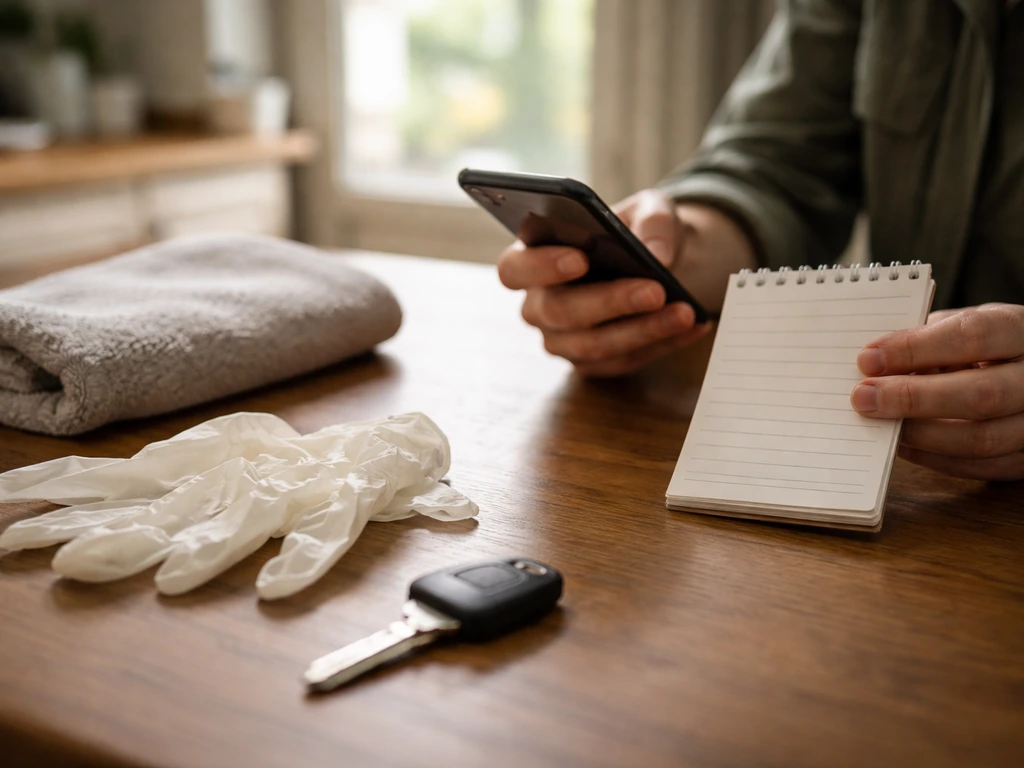
Call a professional the moment you are unsure. If you think you’ve found an orphaned or injured baby bird or other wildlife, contact a professional wildlife rehabilitator and/or your local state agency for next steps. You do not need to wait until things look obviously bad. It is legal and appropriate to call for advice even if you end up not needing a rescue. Attempting to care for wild birds without a permit is illegal in most of the United States, so if the bird needs more than a quick return to the nest, the responsibility has to be handed off.
Call right away if any of the following are true:
- The bird is injured (bleeding, broken limb, cat attack).
- It is a featherless or eyes-closed nestling and the nest cannot be located or reached.
- You cannot confirm a parent has returned after returning it to the nest.
- The bird is shivering or unresponsive.
- You have any doubt at all about what you're dealing with.
To find a licensed wildlife rehabilitator, search the National Wildlife Rehabilitators Association (NWRA) or the Wildlife Center of Virginia's directory, or call your state's Department of Fish and Wildlife. You can also call a local avian vet, who may be able to provide emergency guidance or refer you.
When you call, be ready to tell them: the species if you know it (or describe the bird), where you found it, what condition it's in, whether you've handled it, what you've done so far, and how long it's been since you found it. The more specific you are, the faster they can help.
Safe temporary care while you wait for help
Once you have the bird boxed up and a call in to a rehabilitator, your main job is to keep it warm, dark, and calm until help arrives or you can get it to a facility.
Warmth
Baby birds lose body heat very quickly. If the bird feels cold, place a heating pad set on its lowest setting under one half of the box only, so the bird can move away from the heat if it gets too warm. Never put the heating pad under the entire box. If you don't have a heating pad, a small zip-lock bag filled with warm (not hot) water and wrapped in a cloth can work temporarily. Keep checking that the bird isn't panting, holding its wings out, or opening its beak, which are signs of overheating. If it does, remove the heat source.
Feeding and water: do not
blank" rel="noopener noreferrer">Do not give the bird food or water unless a licensed rehabilitator has specifically told you to and given you species-appropriate instructions. This is not just cautious advice, it is critical. Birds can aspirate liquids very easily, meaning liquid can go into the lungs and cause rapid death. Improper food can also cause serious nutritional harm. Do not drip water into its beak. Do not offer bread, milk, worms dug from the yard, or anything else. Keep the box closed and wait. If you are unsure about the right steps, see how to help a bird for a clear triage checklist and what to do next.
Handling and stress
Every time you open the box to look at the bird, check on it, or show it to someone, you are causing stress. Stress alone can kill an already vulnerable bird. Resist the urge. Check only when necessary and keep your interactions as brief and quiet as possible. Keep children and pets away from the area where the box is sitting.
Release and next steps
You should not attempt to release the bird yourself unless a rehabilitator has cleared it. A bird that has been injured, orphaned, or in captivity needs a professional assessment before release. Releasing too early, in the wrong location, or without the right conditioning can be just as harmful as not releasing at all. If the nestling was successfully returned to its nest and the parent has resumed care, that is the best outcome and no further action is needed from you. For anything beyond that simple scenario, follow through with the rehabilitator until the bird is either cleared for release or transferred to a licensed facility for continued care.
Finding a vulnerable bird is stressful, and the instinct to do something, anything, is strong. The most helpful thing in most cases is restraint: less handling, less noise, less intervention, and a fast call to someone with the training and permit to actually help. That is why it helps to learn how to help the bird life is strange safely, step by step, instead of trying to improvise. Your job is to stabilize the situation and get the bird to a professional, not to fix it yourself.
FAQ
How do I help a nesting bird if I am not sure whether it is a nestling or a fledgling?
Use behavior and feathering. If it can hop or perch and has most of its feathers, treat it as a fledgling and leave it where it is, then secure the area from cats and dogs. If it is featherless or mostly down, has eyes that look closed or is dragging along the ground and cannot hop, treat it as a nestling and look for a nearby nest to return it to, if you can do so safely.
What should I do if I accidentally move the baby bird while trying to help a nesting bird?
Stop and minimize further disturbance. If you already placed the bird back or boxed it, do not keep handling to “check” repeatedly. After the initial correction, keep the bird warm and calm and contact a licensed wildlife rehabilitator or vet for guidance, especially if the bird seems injured or you cannot locate the nest.
Can I help a nesting bird by putting food or water near it until help arrives?
Do not offer food or water unless a rehabilitator or avian vet specifically instructs you for that exact species. Even small mistakes can cause choking (aspiration) or serious nutritional harm. Instead, keep the bird dark, warm, and calm, and call for species-appropriate instructions.
If the nest is in a risky spot, like near a road or on my property, should I move the nesting bird or nest?
Avoid moving nests as a first response. First make the area safe by keeping pets and people away, then contact a wildlife rehabilitator or your state wildlife agency for permission-guided options. If the nest was already knocked down and eggs or chicks are unharmed, only then consider returning nestlings as close to the original spot as possible while minimizing disturbance.
What if I see a nesting bird sitting very still after I walked by, does that mean it abandoned the nest?
Not necessarily. Many birds sit tightly during normal disturbance and resume care once people move away. The decision aid is duration and intensity, if you can back off and keep quiet, it often reduces stress. If you later find eggs or chicks exposed, cold, or injured, that is when you should escalate to a professional.
How long can a boxed nestling wait before a rehabilitator can take it?
Do not delay once you have the situation identified as a nestling needing help. Keep the bird in a warm, dark, quiet box and call right away. Timing varies by species and condition, but prolonged waiting increases risk from dehydration, overheating, and stress.
Is it safe to use a heating pad for a nestling I am trying to help?
Yes, if used correctly. Place the heating pad on its lowest setting under only half of the box so the bird can move away. Check frequently for overheating signs like panting, holding wings out, or opening the beak, and remove the heat source if those occur.
Should I use gloves or a towel to avoid leaving human scent when helping a nesting bird?
Minimize handling time and keep contact brief. Gloves and towels can be used for short, necessary placement, but the bigger risk is extended human interaction that increases stress and possible imprinting. If you cannot return the nestling quickly and safely, box it and call for professional guidance.
What if the baby bird is bleeding, shaking, or looks limp, but I cannot reach a rehabilitator immediately?
Treat it as urgent. Keep it warm, dark, and calm, do not force food or water, and contact an emergency line such as a wildlife center, avian vet, or your state wildlife department for interim directions. If it is injured and you are unsure, do not attempt DIY stabilization beyond warming and quiet containment.
When is it okay to release a nesting bird I helped?
Do not release on your own unless a rehabilitator clears you. Release too early, into the wrong area, or without proper conditioning can be harmful. If you successfully returned a nestling to the nest and the parent resumes normal care, that is the best-case outcome and you typically do not need further action.
If I find a nestling but the nest is out of reach, what should I do while trying to help a nesting bird?
If you cannot safely access the original nest, do not keep climbing or handling the bird. If guidance is not available yet, you may create a simple substitute nest (a lined small container with drainage holes), then place it as close to the original location as possible and back away. Only do this after you have been unable to reach a rehabilitator for guidance first.
What are common mistakes people make when trying to help a nesting bird?
The biggest mistakes are handling too often, assuming every bird on the ground is orphaned, and feeding or watering without instructions. Other common errors include leaving cats or dogs nearby, hovering for observation, using whole-box heat sources, and attempting release without professional approval.
Next Article
How to Help a Wild Bird: Sick or Injured First Aid
Step-by-step humane first aid for a sick or injured wild bird: triage, safety, stabilization, and when to call rehab.