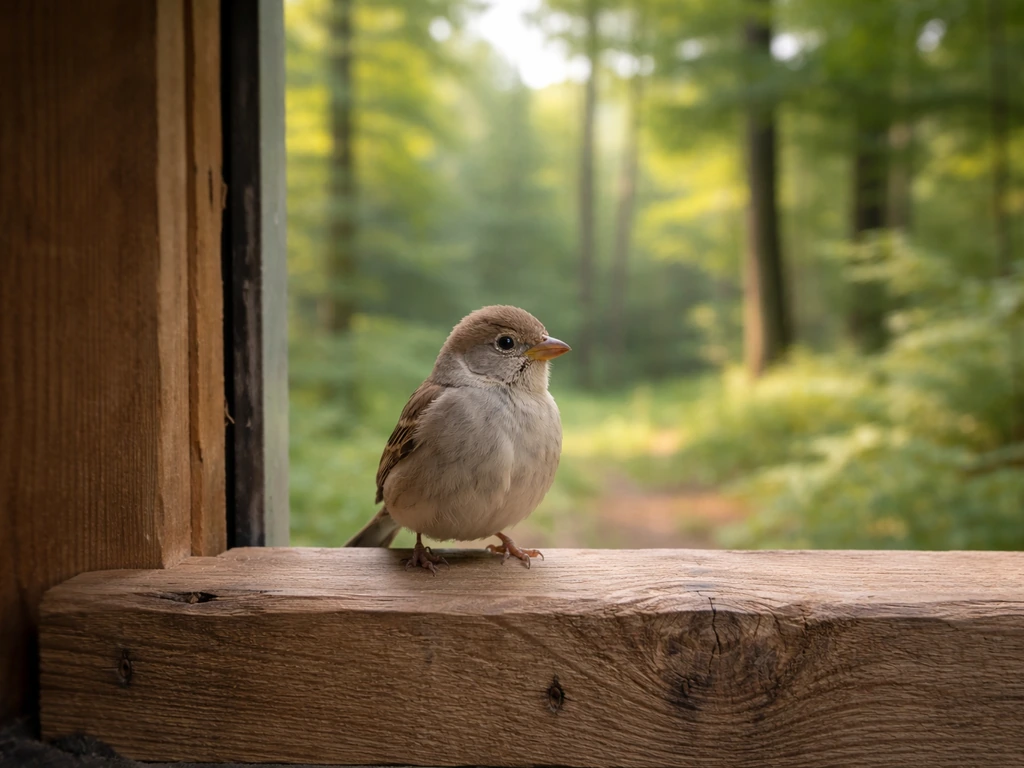
If you're holding a bird egg right now and wondering what to do, here's the short answer: keep it warm, minimize handling, and contact a wildlife rehabilitator as soon as possible. The rest of this guide will walk you through exactly how to do that safely, what to watch for, and when DIY care is and isn't appropriate.
How to Take Care of Bird Eggs: Step-by-Step Guide
Marcus Holloway
3 Apr 2026
Before you touch the egg: legal and safety considerations
This is not a technicality worth skipping. In most countries, wild bird eggs are protected by law, and handling them without authorization can technically put you in legal territory you don't want to be in, even when your intentions are good.
In the United States, the Migratory Bird Treaty Act protects the vast majority of wild bird species and their eggs. The U.S. Fish and Wildlife Service is clear: the default action for wildlife encounters is to leave them alone and contact a licensed wildlife rehabilitator if intervention seems necessary. Not all rehabilitators are licensed for birds specifically, so it's worth asking when you call.
In the UK, wild birds and their eggs are protected under the Wildlife and Countryside Act 1981. Intentionally taking or destroying wild bird eggs is an offence, with specific licensing routes (like GL12) for authorised persons under defined conditions. In Canada, the Migratory Birds Regulations 2022 prohibit disturbing, removing, or destroying a nest that contains a viable egg without a permit. Across the EU, the Birds Directive (Directive 2009/147/EC) requires member states to protect wild bird species and their eggs, forming the basis for strict national laws.
What this means practically: if you find a wild bird egg, you are generally not legally permitted to collect it, keep it, or sell it. Temporarily stabilizing it while you reach out for professional help is the humane middle ground, and that's what this guide focuses on.
Is the egg actually abandoned? Identifying the situation first
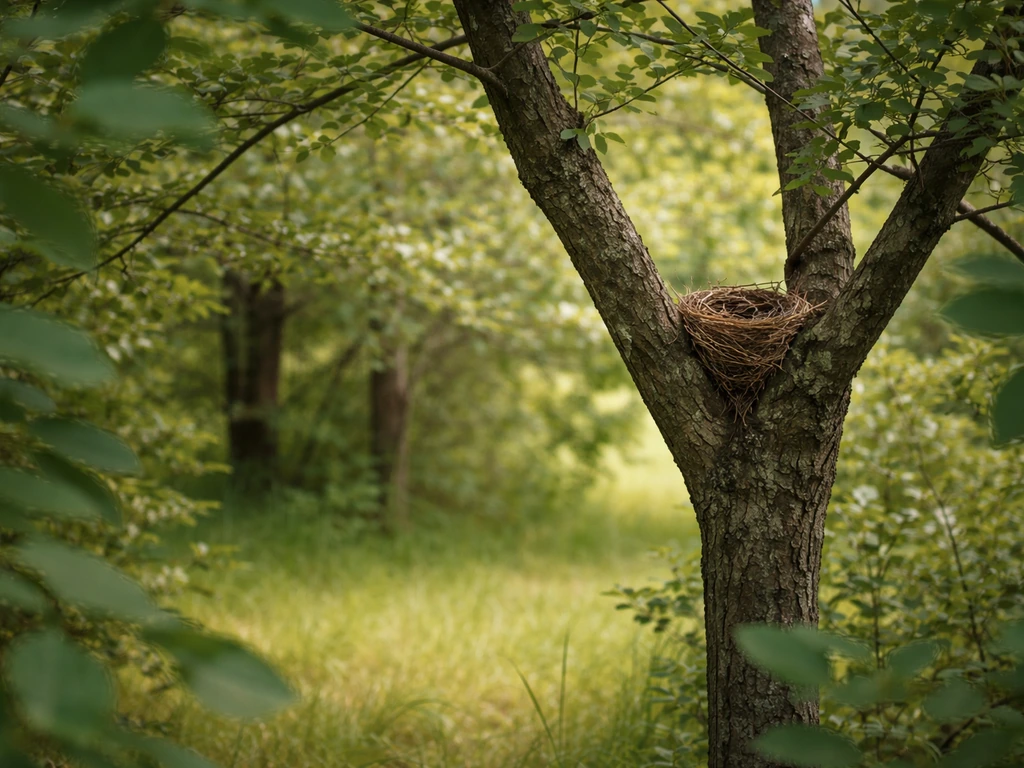
Before doing anything else, spend some time observing from a distance. Parent birds often leave a nest for extended periods to forage, and a nest that looks abandoned usually isn't. A good rule of thumb is to watch from at least 10 feet away for a couple of hours before concluding the egg has been left for good.
There are a few distinct situations you might be dealing with, and each calls for a slightly different response:
- Egg in an intact nest, parents not visible: Wait and observe. The parents are very likely nearby and may be avoiding the nest because you're close.
- Egg on the ground near a nest: The egg may have been pushed out (sometimes by competing birds or predators) or fallen. Check whether the nest is still active and whether the egg looks intact.
- Egg in a nest with no parent activity for 24+ hours: This is when genuine abandonment becomes more plausible. Cold or damp eggs and no sign of adult birds returning are stronger indicators.
- Egg from a captive or domestic bird (like a pet dove or parrot): This is a different situation and doesn't carry the same legal restrictions, but the care basics are similar.
- Unhatched egg past the expected incubation period: The egg may not be viable. More on this below.
Canada's regulatory guidance uses a 'wait time' concept, meaning the amount of time that must pass with a nest unoccupied before it's considered abandoned. This varies by species, but the underlying logic is useful: don't assume abandonment quickly. Patience before intervention is almost always the right call.
Home incubation basics: temperature, humidity, and handling
If you've determined that an egg genuinely needs temporary care, your job is essentially to mimic what the parent bird was doing: keep it at the right temperature and humidity, and turn it regularly. You won't be feeding the egg (more on that shortly), so the physical environment is everything.
Temperature
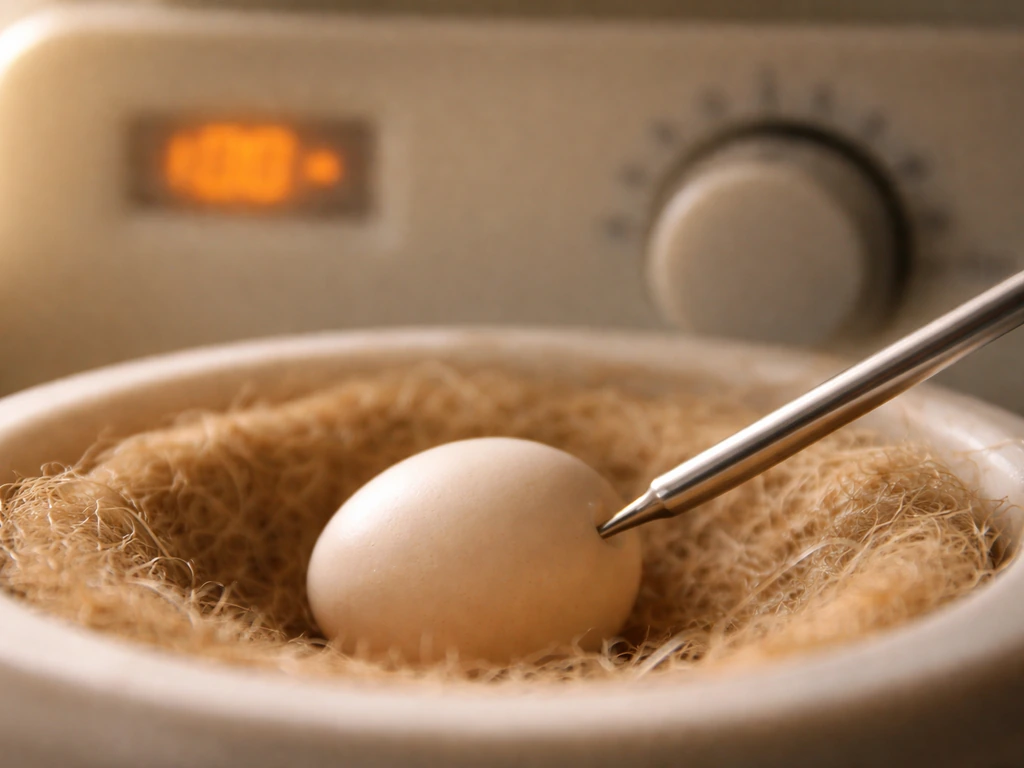
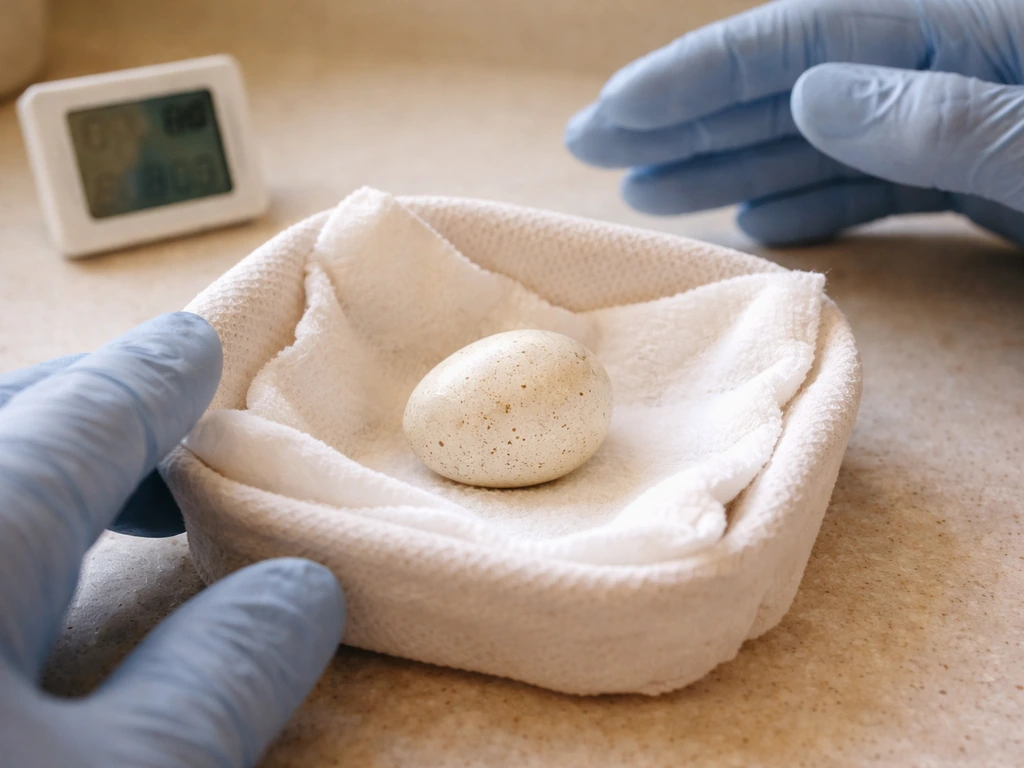
Most wild bird eggs need to be kept between 99°F and 101°F (37.2°C to 38.3°C). Waterfowl eggs tend toward the lower end; small songbird eggs are often toward the higher end. If you don't have an incubator, a brooder lamp or even a heating pad on its lowest setting under a container can work temporarily, but you need a thermometer to confirm the temperature. Guessing here is risky: too cold and development stops, too hot and the embryo can die within hours.
Humidity
Humidity matters because eggs lose moisture through their shells over time. Too little humidity and the egg dries out too fast; too much and bacteria can grow. A general target range is 50% to 60% relative humidity for most species, dropping slightly to around 40% to 50% in the final days before hatching. A small dish of water inside a covered container can help raise humidity if you don't have a hygrometer.
Egg turning
Parent birds rotate their eggs multiple times per day to prevent the embryo from sticking to the shell membrane. If you're caring for an egg manually, aim to turn it gently at least 3 to 5 times per day, always using clean hands or nitrile gloves. Rotate the egg about 90 degrees each time, and mark one side with a small pencil mark so you can track which way it's been turned. Stop turning in the last two to three days before the expected hatch date, as the chick needs to position itself.
For a more detailed breakdown of what's involved in setting up a proper incubation setup at home, the guide on how to incubate bird eggs covers equipment, setup steps, and species-specific considerations in much more depth.
What not to do
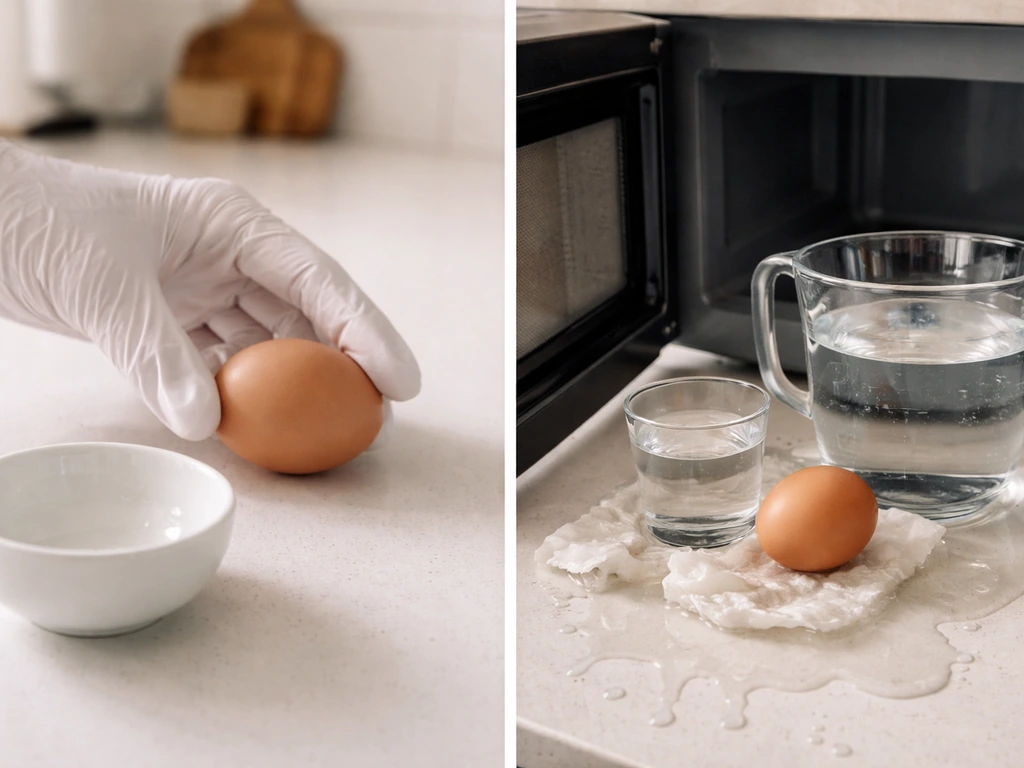
- Don't use a microwave to warm an egg. Ever.
- Don't submerge the egg in water to test for viability (this can harm the embryo and introduce bacteria).
- Don't leave the egg in direct sunlight, thinking it will incubate naturally.
- Don't handle it more than necessary. Each pick-up is a risk.
- Don't place the egg directly on a heating pad without a buffer layer, as direct contact creates hot spots.
Egg care doesn't involve feeding, but it does involve monitoring
One of the most common misconceptions is that caring for an egg means feeding it somehow. It doesn't. An egg is self-contained. The embryo inside develops using the nutrients already present in the yolk and albumen. There is nothing to feed, nothing to water, and no supplements to add.
What you should be doing is monitoring. Watch the egg for changes in appearance: discoloration, cracking that isn't from a hatching chick, unusual odor, or liquid seeping through the shell. A healthy egg in the late stages of incubation may show small movements or faint sounds if you hold it very carefully near your ear. These are good signs.
One of the most useful monitoring tools available to you is candling, which means shining a bright light through the egg in a dark room to see what's developing inside. A viable egg in mid-to-late incubation will show a dark mass (the embryo) with visible blood vessels. A clear egg, or one with a 'blood ring' (a ring of reddish tissue with no other development), usually indicates the embryo has stopped developing. You can learn the step-by-step technique in this guide on how to candle a bird egg, which explains what to look for at different stages.
If the egg smells noticeably bad, it may have gone rotten and could even burst. In that case, there's a safe way to handle it, and instructions for how to drain a bird egg can walk you through that process carefully.
Containing and caring for an egg you found
If you've found an egg and need to stabilize it while you seek help, the goal is to keep it warm, upright, and undisturbed. Here's a simple setup that works:
- Find a small container like a clean plastic tub or cardboard box, at least 6 inches deep.
- Fill the bottom with a soft nesting material: tissue paper, dry grass, or clean cloth formed into a shallow bowl shape.
- Place the egg gently in the center of the nest, small end slightly down.
- Position a low-heat source nearby, like a hand warmer wrapped in a cloth or a heating pad on low underneath half the container (so the egg can move away from heat if needed).
- Place a small bottle cap of water inside the container to add some humidity.
- Cover the container loosely with a breathable cloth or a lid with air holes. Do not seal it airtight.
- Check the temperature inside with a thermometer and adjust as needed.
Keep the container somewhere quiet, away from pets, children, and loud noise. Minimize how often you open it. If the egg is in a nest that can be moved, it's sometimes better to keep it in the nest rather than transfer it to a bare container. For guidance on when and how that's safe, this article on how to safely move bird eggs is worth reading before you act.
When to stop and call a professional
DIY egg care is always a temporary bridge, not a solution. The goal is to keep the egg stable while you get it to someone with the skills and equipment to give it a real chance. There are some clear signs that you need to make that call immediately rather than waiting.
Signs the egg may not be viable
- The egg has a foul smell, suggesting bacterial decomposition.
- Candling shows no development, a blood ring, or a completely clear interior past the first week of expected incubation.
- The shell is cracked in a way that wasn't from hatching, or is leaking fluid.
- The egg has been cold for an extended period (several hours at temperatures well below incubation range).
- The egg is past its expected hatch date with no signs of pipping (the chick breaking through the shell).
When to call regardless of the egg's condition
Contact a wildlife rehabilitator or avian vet any time you have a wild bird egg in your possession, ideally within the first few hours. They can assess viability, have proper incubation equipment, and are legally authorized to care for protected species. When you call, be ready to share: the species if you know it (or a description), where and when you found the egg, what condition it's in (temperature, any cracks or smell), and what you've done so far.
To find help in the US, the USFWS recommends contacting your state wildlife agency or a local wildlife rehabilitation organization. The U.S. Fish & Wildlife Service provides federal guidance on migratory bird rehabilitation permitting requirements and notes that rehabilitators must meet federal and state permit requirements to possess or rehabilitate migratory birds. You can also search the National Wildlife Rehabilitators Association or Wild Bird Fund directories. In the UK, the RSPCA and local wildlife rescue centers handle wild bird eggs. In Canada, your provincial wildlife authority can direct you to licensed migratory bird rehabilitators.
A note on egg-bound birds
Sometimes the concern isn't about an egg you found but about a pet bird that is struggling to lay one. This is a medical situation called egg binding, and it requires hands-on care. If your bird seems distressed, is straining, or is sitting fluffed and motionless, the guide on how to massage an egg-bound bird explains what you can do at home while getting emergency vet help arranged.
A quick reference for egg care decisions
| Situation | What to do | Contact a professional? |
|---|---|---|
| Egg in active nest, parents seen recently | Leave it alone entirely | No, unless nest is damaged or in danger |
| Egg in intact nest, no parent activity for 2+ hours | Observe from a distance for several more hours | Yes, if still unattended after full day |
| Egg on the ground, nest visible | Gently return to nest if possible and safe | Yes, if you can't safely return it |
| Egg found with no nest nearby | Stabilize in warm container, contact rehab immediately | Yes, as soon as possible |
| Egg smells bad or shows no development on candling | Do not attempt to incubate | Yes, for guidance on disposal or confirmation |
| Egg past expected hatch date | Candle to check viability | Yes, for professional assessment |
| Captive/pet bird egg (dove, parrot, etc.) | Set up home incubation setup | Yes, if unsure of species needs or health issues arise |
The most important thing you can do for a bird egg is act quickly and calmly. Keep it warm, don't handle it unnecessarily, and get a professional involved as fast as you can. That combination gives the egg the best possible chance at making it.
FAQ
What should I do in the first 10 minutes after I find a wild bird egg?
Do a quick distance check first (watch for a couple of hours from at least 10 feet if you can), then place the egg in a quiet, temperature-stable container (upright or in the same orientation it was found). Avoid washing, wiping, or shining a light right away, and contact a licensed wildlife rehabilitator or avian vet as soon as possible, ideally within the first few hours.
Is it ever okay to keep a wild bird egg temporarily until a rehabilitator arrives?
In many places, you can stabilize it long enough to seek help, but you generally should not “take it home to raise it.” The safest approach is short-term care for transport, then immediate transfer to a permitted person. If you cannot reach help quickly, prioritize maintaining temperature and minimizing disturbance over any DIY incubation plans.
How can I tell if a nest truly has been abandoned, not just momentarily unattended?
Look for context and timing, not just appearance. Parent birds commonly leave for extended foraging bouts, especially with small songbirds. If the parent has not returned after a sustained observation window and other nearby signs of activity are absent, contact a rehabilitator anyway, because “abandoned” thresholds can vary by species and jurisdiction.
Do I need to turn the egg as soon as I start caring for it?
If you have confirmed the egg needs temporary care, you should mimic natural rotation, but treat it gently and only as often as recommended (typically at least 3 to 5 times per day). Start as soon as you’re set up with clean hands or nitrile gloves and a way to track sides. If you are unsure the egg is viable, wait for professional guidance before intensive handling.
What’s the safest position for the egg, upright or in the original nest?
When possible, keep the egg in the original nest material and orientation, since it’s already set up for the right microclimate. If you must transfer it, keep it upright or match the orientation it had in the nest, then mark the orientation so you do not accidentally rotate it beyond the planned turning routine.
Should I candle the egg immediately to check if it’s alive?
Not immediately. Candiding can be stressful and risks further disturbance if done too early or in the wrong conditions. Wait until the egg has stabilized in a proper warm, incubator-like environment, and then candle gently with a plan for what stage of development you are likely dealing with. If you’re not trained, ask the rehabilitator what timing they prefer.
What temperature should I use if I don’t know the species?
Use the general target of about 99°F to 101°F (37.2°C to 38.3°C) and confirm with an actual thermometer, since guessing is risky. As a backup, heating pad or lamp setups must be monitored to prevent overheating, and water-based humidity helpers should not be placed so close that they cool the egg or soak it.
How do I manage humidity without making it too wet?
Aim for roughly 50% to 60% relative humidity for most species, easing down slightly near the end. Use a covered container and a small water dish to raise humidity, but avoid dripping water contact with the egg. If you do not have a hygrometer, prioritize keeping the environment stable and let the rehabilitator advise adjustments rather than repeatedly opening the container.
If the egg smells bad, is it always safe to discard it?
A noticeably bad odor can indicate spoilage, and the egg could be rotten and potentially burst. Treat it as hazardous, avoid breathing close to it, and contact the appropriate professional for guidance. If you are instructed to handle it, follow a specific “draining” or containment method designed for this situation, rather than improvising.
Can I feed a “found egg” or give it supplements to help it hatch?
No. Wild bird embryos use the existing yolk and albumen, there is nothing to feed and no supplements to add. The correct priority is temperature, humidity, rotation (if applicable), and minimal disturbance while you arrange authorized care.
What signs mean I should contact help immediately, even if I thought I had time?
Call right away if the egg is cracked beyond the natural thin surface, you see liquid seeping through the shell, there is an unusual or foul odor, the egg seems extremely cold, or you notice rapid deterioration. Also seek urgent advice if you find the egg alongside evidence of predators or heavy nest disturbance.
I found a bird egg but suspect it came from a pet bird’s nest. Is it the same process?
It’s different. A pet bird that appears distressed or is straining can be dealing with egg binding, which needs hands-on veterinary care. If your concern is a live bird, prioritize emergency vet guidance over egg incubation steps, because pet and wild situations have different medical and legal considerations.
How should I transport the egg to a rehabilitator without harming it?
Keep it warm, quiet, and undisturbed in a stable container, with minimal opening during transport. Use a thermometer so you can confirm conditions are not drifting too low or too high, keep the egg protected from pets and children, and bring any notes you have (where found, time found, visible condition).
Next Article
How to Release a Hand-Reared Bird Safely and Humanely
Step-by-step humane release for hand-reared wild birds: species checks, anti-imprinting care, soft vs hard release, afte