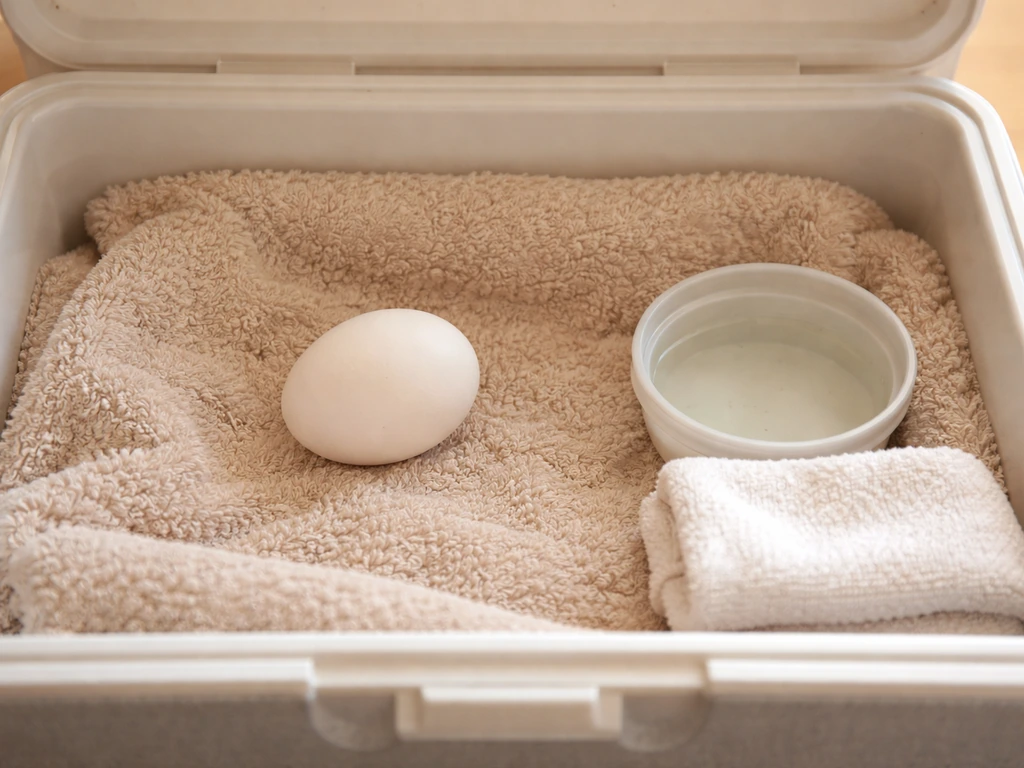
If you've just found bird eggs in a dangerous spot, here's what to do: assess the immediate threat first, touch as little as possible, and only move the eggs if leaving them there means near-certain destruction. Most of the time, the safest move is to leave them exactly where they are and monitor from a distance. When moving truly is necessary, it means gently relocating the nest (with eggs inside) to the closest safe spot, keeping eggs horizontal in the same orientation you found them, and working quickly to minimize how long they're exposed to temperature changes. That's the short version. Here's how to do it right.
How to Safely Move Bird Eggs: Step by Step Rescue Guide
Marcus Holloway
12 May 2026
When moving bird eggs is (and isn't) necessary
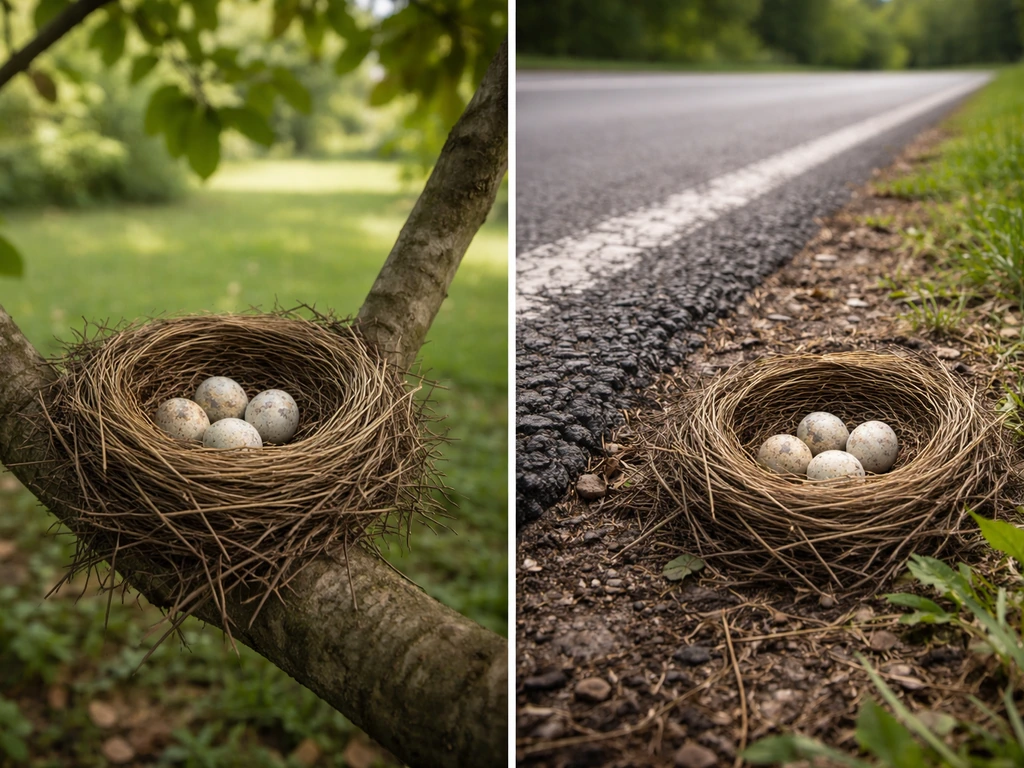
Most nests that look 'unsafe' to us are actually fine. A nest on a low branch, near a busy path, or in an awkward corner isn't necessarily in danger. Birds are surprisingly good at choosing locations, and parent birds will often return to a nest even after a disturbance. Before you do anything, pause and ask yourself: is there an immediate, concrete threat?
Situations where moving may be genuinely necessary include: a nest directly in the path of construction equipment that's starting work within hours, eggs that have fallen out of a nest that's still intact and reachable, a nest on the ground in an area actively patrolled by cats or dogs with no way to protect it, or a nest on a surface that is about to be destroyed (a vehicle being towed, a tree limb coming down).
Situations where you should leave the eggs alone and just watch: the nest looks exposed but is dry and structurally intact, the parents are nearby and agitated (a great sign they're still active), you just happened to notice it and there's no active threat, or you're unsure. When in doubt, don't move them.
There's also a legal piece you need to know. In the United States, the Migratory Bird Treaty Act makes it illegal to disturb, destroy, or possess the nests and eggs of most wild bird species without a permit. Under federal regulations, it is also illegal to take, possess, transport, or export migratory birds, or any part, nest, or egg, in violation of applicable law or regulation makes it illegal to disturb, destroy, or possess the nests and eggs of most wild bird species without a permit.. That covers the vast majority of songbirds, raptors, shorebirds, and waterfowl you're likely to encounter. The law does allow you to move eggs a short distance to a safer location if the birds are in immediate danger, but 'I thought it looked safer over there' doesn't qualify. If you're unsure whether moving is legal or necessary, contacting your local wildlife rehabilitator or state wildlife agency first is the right call.
Safety first: gear, hygiene, and minimizing handling time
The most important rule with bird eggs is: the less handling, the better. Every minute an egg spends away from the nest is a minute without regulated warmth, humidity, and protection. Your goal is to work quickly, cleanly, and with minimal contact.
One common concern people have is whether their scent will cause the parents to abandon the nest. For most bird species, this is actually a myth. Birds have a limited sense of smell and won't reject eggs just because you touched them. That said, keeping your hands clean still matters for the eggs' health: oils, bacteria, and residues from your skin can compromise the egg's protective coating (called the cuticle), which helps regulate gas and moisture exchange. So wash your hands thoroughly with plain soap and water before handling anything.
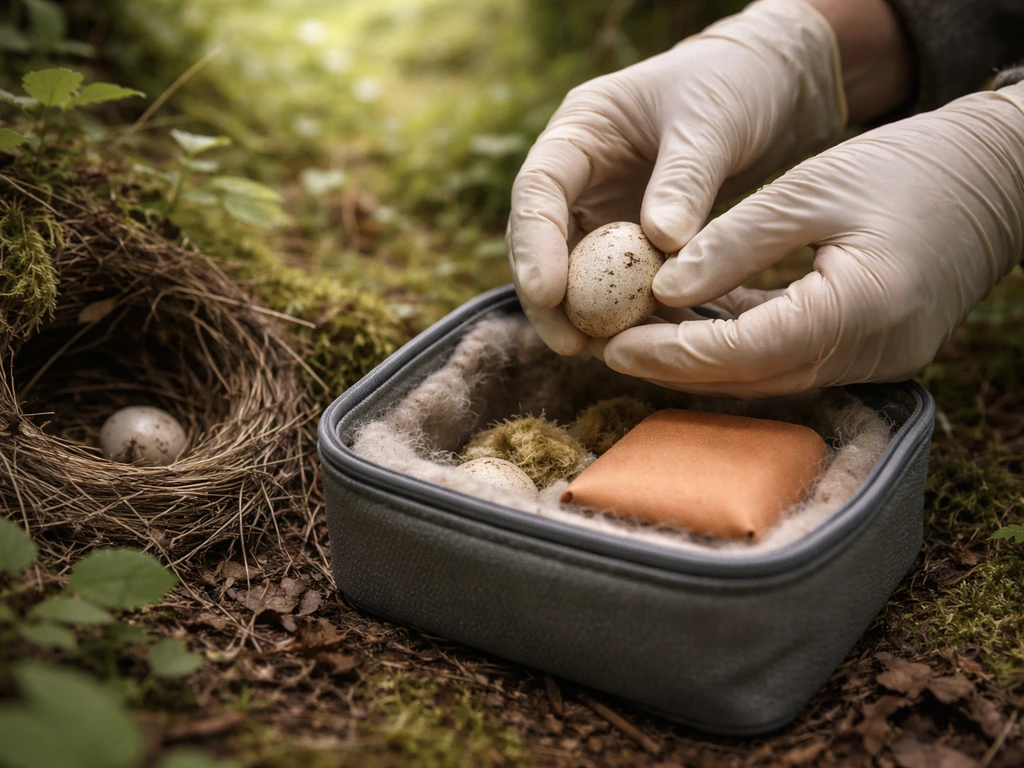
If you have nitrile or latex gloves available, wear them. If not, clean dry hands are fine. Avoid heavily scented soaps, hand sanitizers, or any cleaning product with harsh chemicals, all of which can damage the egg's surface. Keep your phone or camera nearby so you can photograph the nest position before touching anything. That photo will help you replace things accurately.
Also: if you're in an area with known avian influenza activity, check current guidance from your local wildlife or agricultural authority before handling any wild birds or eggs. In those situations, additional precautions (masks, eye protection, disposal of gloves) may apply.
How to inspect the nest and egg situation without damaging it
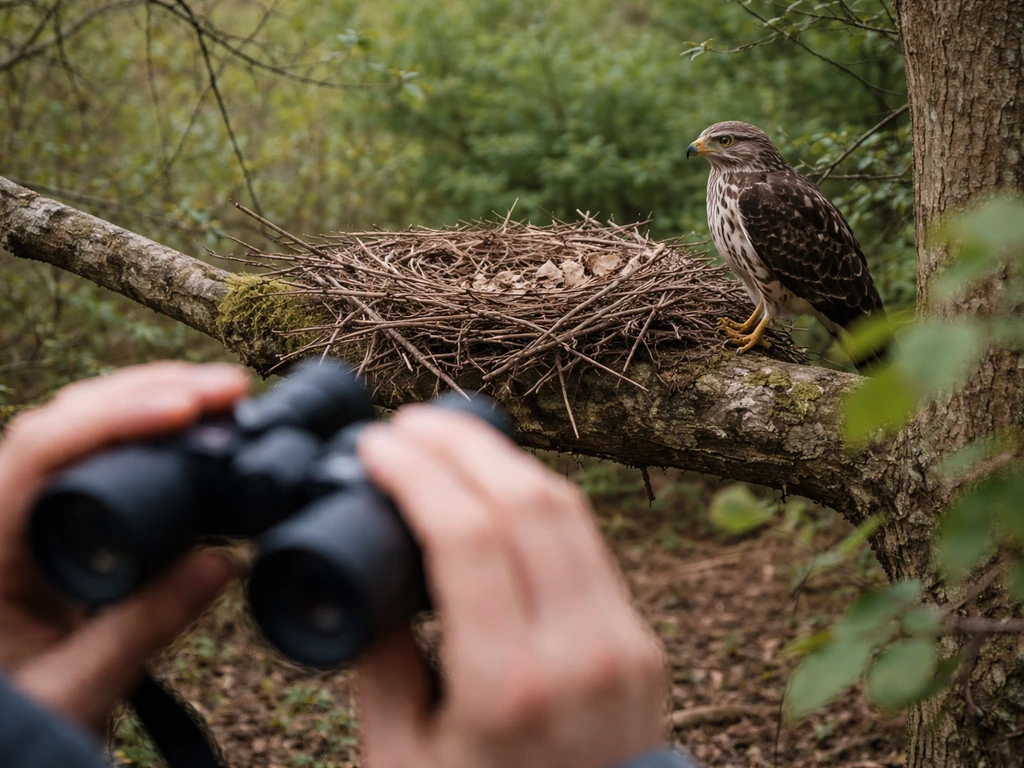
Before you touch anything, spend a few minutes observing. Stand back at least 10 to 15 feet and watch. Are parent birds nearby? Are they vocalizing, dive-bombing, or landing close to the nest? Active parental behavior is the most important indicator that a nest is not abandoned. If you see it, step back further and give them space.
Look at the eggs themselves from a distance first. Intact eggs with no cracks, no foul smell, and no signs of damage are much more likely to be viable than eggs that are cracked, weeping fluid, or smell bad. If you need to get closer to check, approach slowly and minimize sudden movements.
Gently check the nest structure. Is it attached to something solid, or is it about to fall? A nest that's slightly tilted but still secure doesn't need to be moved. A nest hanging by a few fibers over a concrete surface is a different situation. If you need to touch the nest to assess stability, use one hand under it like a platform rather than gripping it from the sides, which can compress the structure and damage eggs.
One thing to be careful about: don't confuse a temporarily unattended nest with an abandoned one. Most birds leave the nest periodically, especially during incubation. A nest with no adult present for 20 minutes doesn't mean it's been abandoned. True abandonment usually involves eggs that have gone cold, started to smell, or show signs of spoilage, combined with no adult bird activity in the area over several hours or more.
Step-by-step: moving and placing eggs correctly
If you've confirmed that moving is genuinely necessary, here's how to do it without causing harm. The goal is to move the entire nest with the eggs inside, not the eggs alone. Separating eggs from their nest is a last resort.
- Photograph the nest in its current position before touching anything. Note the orientation, how the eggs are arranged, and what direction the nest opening faces.
- Identify your target location before you pick anything up. It should be as close as possible to the original spot (ideally within a few feet), sheltered from direct sun and rain, out of reach of ground predators, and still within the territory the parent birds are using.
- If the nest is intact, slide both hands underneath it and lift it as a single unit. Keep it level. Don't tilt, squeeze, or jostle it.
- If eggs have fallen out and the nest is still accessible, place the eggs back in the nest before moving it. Use your fingertips and keep eggs in the same horizontal orientation you found them. Do not rotate them end-over-end.
- If the original nest is destroyed and you need a surrogate, use a small plastic container or a woven basket lined with dry natural material (dry grass, leaves, soft plant fibers). Do not use synthetic materials, cotton balls, or anything that could tangle. Make it roughly the same size and shape as the original nest.
- Place the relocated nest or surrogate at your target spot, secured so it won't shift or tip. A natural fork in a branch, a ledge, or a mesh platform bracket all work depending on the species.
- Step away immediately and observe from a distance. The faster you back off, the sooner the parents will return.
Keeping eggs at the right temperature during the move
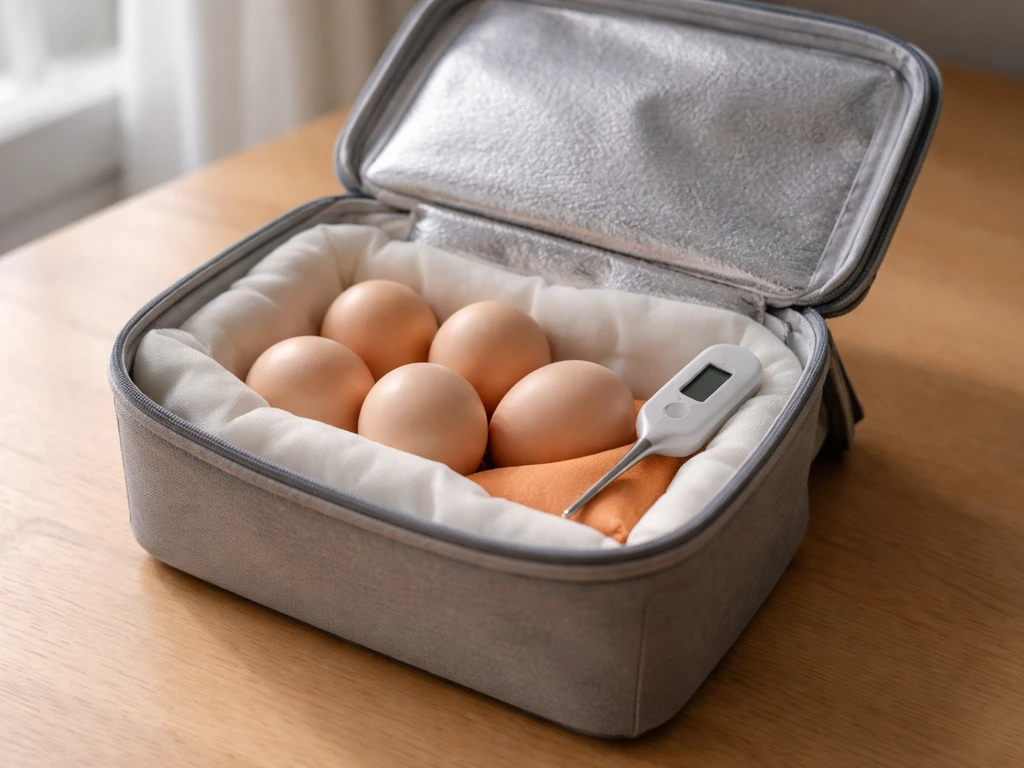
Bird eggs need to stay warm, ideally in the range of 99 to 102 degrees Fahrenheit for most species. During a short relocation (meaning a few minutes, not hours), the eggs will retain enough warmth on their own if you work quickly. Do not use a heating pad, heat lamp, or any direct heat source during transport unless you are a trained rehabilitator with the right equipment. Overheating is as fatal as chilling, and improvised heat sources are unpredictable.
If the eggs feel cold to the touch and you need to briefly warm them before placing them back, cup them gently in your palm for a minute or two. Your body temperature is close enough to incubation temperature to help stabilize them in a pinch. But this is a stopgap, not a solution. Getting them back under the parents is the only real answer.
What not to do when handling bird eggs
A few common mistakes can harm or kill an egg even when the person handling it is trying to help. If you are dealing with egg bound birds, don’t try to force anything yourself. Get guidance from a licensed wildlife rehabilitator right away, since the right steps depend on the species and situation how to massage egg bound bird. Here are the ones to avoid:
- Don't wash the eggs. The cuticle is a natural protective barrier. Washing removes it and exposes the egg to bacteria and moisture loss.
- Don't rotate or flip eggs end-over-end. During incubation, the embryo develops in a specific orientation. Rotating eggs the wrong way can cause the embryo to detach or become malpositioned. If you need to reposition an egg, keep it horizontal and gently roll it into place.
- Don't put eggs under a lamp, on a heating pad, or near a direct heat source without professional guidance. The temperature zone that keeps an embryo alive is narrow, and improvised heat easily goes too high.
- Don't take eggs home unless you are a licensed wildlife rehabilitator. Possessing wild bird eggs without a permit is a federal violation under the Migratory Bird Treaty Act, and without proper incubation equipment the eggs will likely not survive anyway.
- Don't delay reunification. The longer eggs are away from the nest, the greater the risk. Every extra minute of handling or deliberating costs the embryo something.
- Don't move a nest to a completely different area of your yard or away from the parents' territory. If the adults can't find the relocated nest, they'll abandon it.
- Don't use materials like cotton balls, fleece, or synthetic stuffing in a surrogate nest. These can tangle around a developing bird's legs or feet.
After you move eggs: reunification, monitoring, and when to call for help
Once you've relocated the nest or eggs, move away quickly and give the parents space to return. Get at least 30 feet away and observe quietly. In most cases, if the adults were active before the disturbance, they will find the relocated nest within minutes to an hour, especially if you placed it close to the original location.
Watch for these signs that the parents have returned and are attending the eggs: an adult landing on or near the nest, brooding behavior (sitting low and settled on the eggs), adults carrying food and returning to the nest area, or agitated alarm calls that stop once they've assessed the situation and calmed down.
If you don't see any parental activity after two to three hours of consistent monitoring, it's time to contact a licensed wildlife rehabilitator. Don't wait longer than that before reaching out. Wildlife rehabilitation typically requires proper permits and training, and most state wildlife agencies maintain lists of licensed rehabilitators in your area. The Humane Society and Audubon Society websites also offer rehabilitator finders.
While you wait and monitor, do not keep returning to the nest to check on things. Repeated human presence is one of the main reasons parent birds stay away. The Smithsonian’s National Zoo nest monitoring guidelines similarly stress responsible nest monitoring with as little disturbance as possible, including waiting to see if adults leave on their own before approaching Repeated human presence is one of the main reasons parent birds stay away.. Check once every hour from a distance, and resist the urge to intervene further unless something clearly goes wrong.
If parents don't return: next actions and humane escalation
If after two to three hours the eggs remain unattended and cold, and you've confirmed no adult activity in the area, the eggs are unlikely to survive without professional intervention. This is the point where you contact a licensed wildlife rehabilitator and describe the situation clearly: species if known, how long the eggs have been unattended, the ambient temperature, and what you've already done.
Do not attempt home incubation unless a rehabilitator has specifically instructed you to and told you exactly how. Proper egg incubation requires calibrated temperature and humidity control, egg turning on a precise schedule, and species-specific knowledge about incubation periods and candling. If you need to assess whether an egg is developing properly, candling should be done carefully and typically only as part of guidance from a rehabilitator. If you're curious about what that process involves, understanding how to incubate bird eggs is a whole discipline on its own, one best handled by trained rehabilitators with the right equipment. If you want the basics, review our guide on how to incubate bird eggs so you know what professionals do and why home methods can be risky.
When you call a rehabilitator, they may ask you to bring the eggs in, or they may instruct you on short-term stabilization. Follow their guidance exactly. While you wait or travel, you can place the eggs in a small box with a loosely fitted lid, lined with dry natural material, and set the box near (not on) a gentle heat source like a warm water bottle wrapped in a towel, keeping the temperature around 99 to 100 degrees Fahrenheit. Check the temperature with a thermometer if possible. This is a bridge measure only, not a long-term solution.
One last note: if you're in this situation because eggs were laid in a problematic location you'll need to deal with again (a dryer vent, a frequently used doorway, a piece of machinery), document the species and consult your local wildlife agency about long-term deterrence options before the next nesting season. Addressing the root problem humanely prevents repeat emergencies and keeps you on the right side of the law.
FAQ
How far can I move bird eggs safely if I decide moving is necessary?
Use the shortest relocation possible, ideally to the closest safe spot. Avoid moving to a completely different habitat, and do not relocate repeatedly. Keep the nest orientation the same as you found it (horizontal and facing the same direction) to reduce disruption.
Is it ever better to cover eggs or place them in a temporary box instead of moving the nest?
Covering or isolating eggs is generally riskier than relocating the nest because it reduces access to the parents and can change humidity and temperature faster than the nest would. Only use a small box for short-term stabilization if the eggs cannot remain with the nest, and follow a rehabilitator’s instructions.
What should I do if the nest is wedged in a spot I cannot access without shaking it?
Avoid shaking, pulling, or gripping the sides. If you cannot assess stability without disturbing the structure, step back and switch to observation and professional help. For relocation, support the nest with a hand under it like a platform and minimize any contact time.
How long can eggs be out of the nest before they are unlikely to survive?
There is no single safe time across species and temperatures, but the goal is “minutes,” not “hours,” and work quickly to minimize temperature drop. If eggs remain unattended and cold for two to three hours despite your monitoring, contact a licensed rehabilitator rather than continuing to improvise.
Can I use warm water, a heating pad, or a heat lamp to keep eggs from getting cold?
Do not use heating pads, heat lamps, or direct heat sources unless you are trained and equipped. Improvised heat can overheat eggs or create hot spots. If a rehabilitator instructs temporary warming, use body-warmth for a brief stabilizing step (a minute or two) or a warm water bottle wrapped in a towel with temperature checked.
What if the eggs are visibly cracked, leaking, or smell bad?
Do not try to “save” damaged eggs by cleaning or attempting home incubation. Damaged or spoiled eggs often won’t recover, and handling can worsen the situation. Contact a rehabilitator and describe the condition (cracks, fluid, odor, and how long it has appeared unattended).
How can I tell the nest is truly abandoned versus just temporarily unattended?
Parents may leave frequently during incubation, and a single gap in attendance does not mean abandonment. Look for cold, spoilage signs (foul odor, weeping fluid, discoloration) and absence of adult activity for several hours, not minutes. Active parental behavior (vocalizing, landing nearby, brooding) is the strongest indicator the nest is still in use.
Do I need to wash eggs or remove debris from the nest?
No. Cleaning eggs can remove protective coatings and increase infection risk. Instead, leave the nest as intact as possible, handle for the shortest time, and keep your hands clean (plain soap and water).
Can I use hand sanitizer or scented soap if I wear gloves and clean quickly?
Avoid scented soaps and sanitizers or harsh chemical products on the eggs or nest material. Even with gloves, it’s best to wash with plain soap and water and keep handling surfaces free of residues.
What should I do if I find eggs after a wildfire, storm, or power outage?
Treat it like an urgent disturbance and assess whether there is an immediate threat (predators, collapsing structure, ongoing hazards) before touching anything. Because conditions can change quickly (temperature, pathogens, debris), it’s often best to contact a wildlife rehabilitator promptly rather than attempting at-home stabilization.
If parents are aggressive or dive-bombing me, can I still move the nest?
Parental agitation can still indicate the nest is active. Do not rely on aggression alone to decide. Step back, give them space, and focus on the concrete threat. If the threat is immediate to the eggs (construction, predators with no protection), minimize contact and use the least disruptive relocation possible.
What information should I gather before calling a rehabilitator?
Have the best estimate of species, exact location, photos of the nest placement, whether eggs were intact or damaged, when you first observed no adults, ambient temperature (if you can), and what you already did (for example, whether you moved the nest and how long it was uncovered). This helps them advise whether immediate stabilization is needed.
Are there special precautions if avian influenza or other diseases are suspected?
Yes. Follow local guidance, limit contact, and consider protective barriers like masks and eye protection. Avoid transporting eggs in ways that expose you or others to contaminated materials, and dispose of used gloves or materials as instructed by authorities.
What are common legal or practical mistakes people make besides disturbing eggs?
One major mistake is moving “because it looks safer” without an immediate, concrete threat. Another is repeated return visits that increase abandonment risk. If you are unsure about legality or necessity, contact your state wildlife agency or a licensed rehabilitator before acting.
Next Article
How to Drain a Bird Egg Safely: Emergency Steps
Emergency steps to safely drain a bird egg, assess distress, prevent harm, and provide warm aftercare until help arrives