If you have a bird that is scratching, head-shaking, picking at its feathers, or rubbing against surfaces, the first thing to do is stay calm and observe before you touch anything. An itchy bird is telling you something is wrong, and your job right now is to figure out how serious it is and whether you can safely help at home or need to hand this off to a professional fast. This guide walks you through exactly that, step by step.
How to Tame Itchy Bird Ark: Safe Relief and Next Steps
Marcus Holloway
18 Apr 2026
Quick safety check and triage first
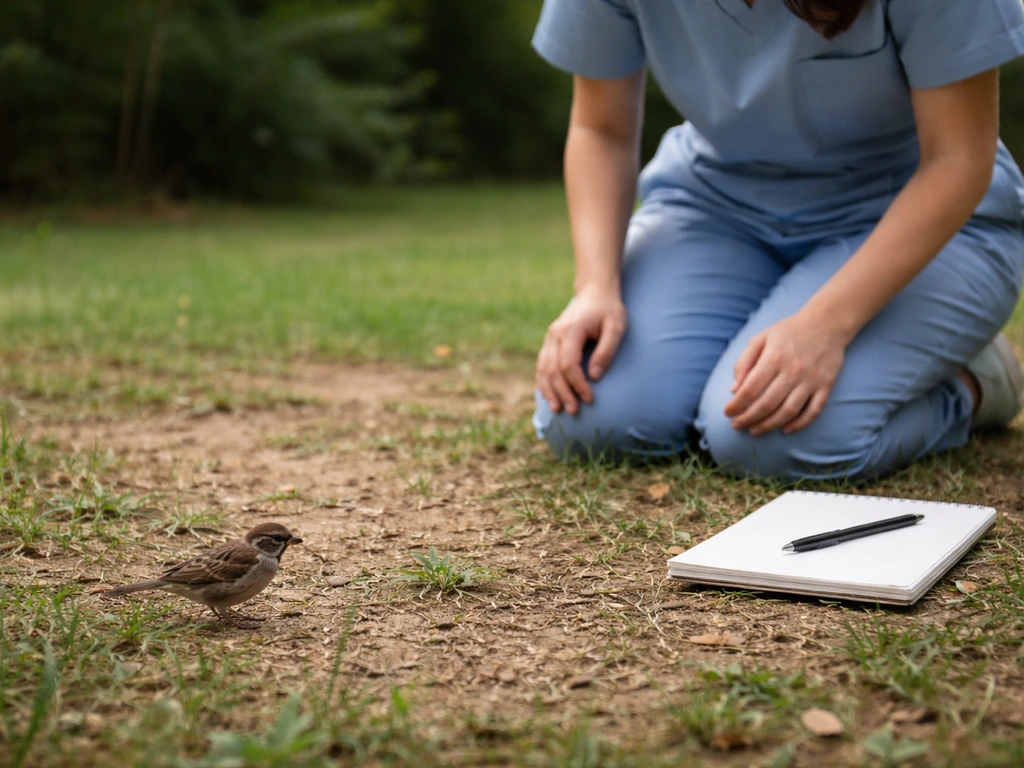
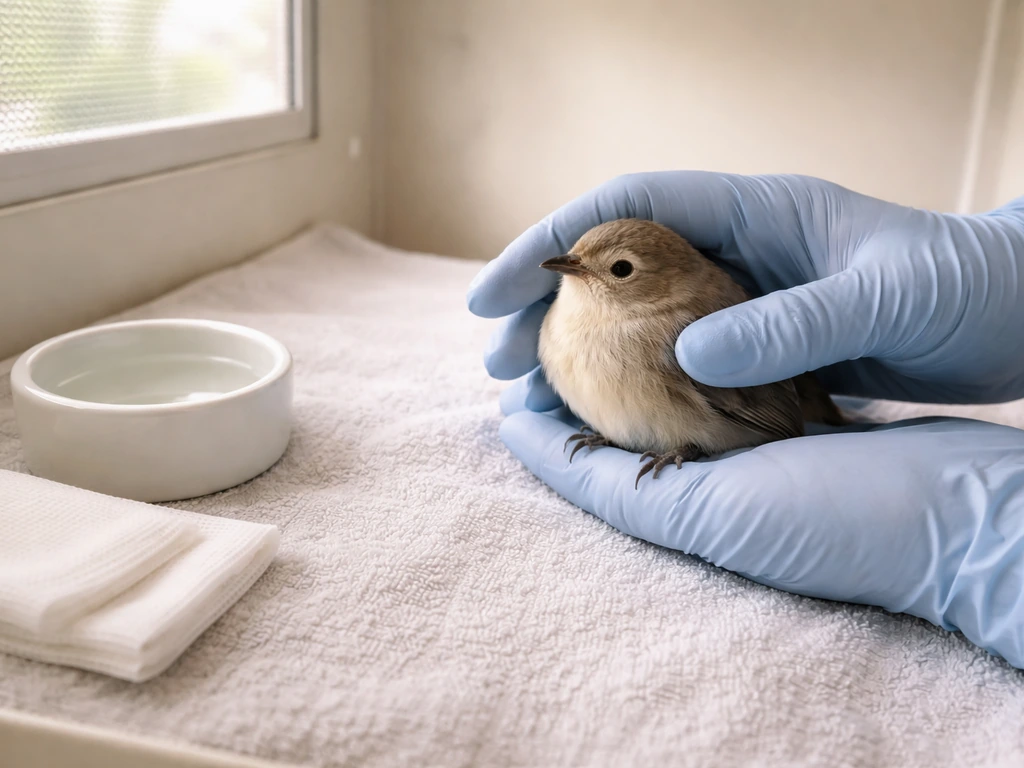
Before you do anything else, stand back and watch the bird for two to three minutes. You want to assess its overall condition without adding stress. Ask yourself: Is the bird alert and upright, or is it slumped and unresponsive? Is it breathing with an open beak or tail-bobbing with each breath? Can it hold its own weight, or is it falling over? Is there visible bleeding, an open wound, or obvious feather loss in patches?
Any of the following is an emergency that requires you to skip straight to contacting a wildlife rehabber or avian vet right now:
- Labored or open-mouthed breathing
- Heavy bleeding or open wounds with visible tissue
- Collapse, inability to perch or stand
- Seizures or uncoordinated movement
- Severe lethargy (bird does not react when you approach)
- Visible fly eggs or maggots in a wound (flystrike, which is a true emergency because larvae hatch fast and tissue damage escalates within hours)
- Extremely heavy parasite burden visible to the naked eye
If none of those red flags are present and the bird is alert and mobile, you have a little time to assess further and provide basic interim care. Move through the sections below in order.
What is actually making the bird itch
Itching in birds shows up as scratching with the feet, rubbing the head or body against perches or cage bars, excessive preening, feather plucking, or restlessness. The cause is not always obvious at first glance, and several things can look identical from the outside. Here are the most common culprits and what to look for with each.
Mites and lice
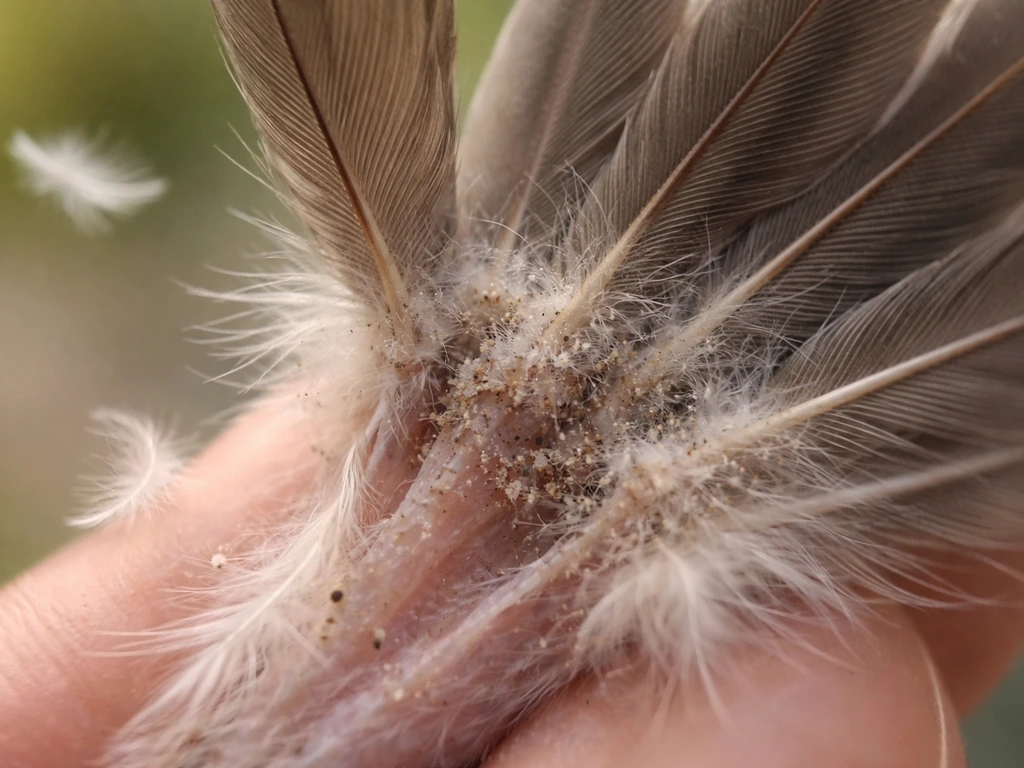
Lice are among the most common avian ectoparasites you will encounter, especially in wild birds. They tend to live on feathers and skin and can cause significant irritation. Mites are harder to see but can cause anemia in young chicks and nestlings when infestations are heavy, which is why a badly infested baby bird needs professional help quickly. A specific mite called Knemidokoptes causes scaly face or scaly leg disease, where you will see crusty, honeycomb-textured lesions on the beak, legs, feet, or skin around the eyes and vent. Confirming this requires a skin scraping examined under a microscope, which means a vet needs to be involved for a reliable diagnosis.
Dry skin and environmental irritants
Low humidity, dusty enclosures, cigarette smoke, scented candles, aerosol sprays, and non-stick cookware fumes can all irritate a bird's skin and respiratory system. If the bird is scratching but you see no parasites, no lesions, and no feather damage, environment is worth examining closely.
Stress-related feather picking
In captive birds, behavioral stressors including boredom, sexual frustration, or the perceived presence of a predator can trigger feather picking that looks a lot like a skin condition. The feathers will be damaged, but the skin underneath is usually intact. If you are dealing with a pet bird and no parasites are found, stress is a leading suspect.
Fungal or bacterial skin infections
These can develop in areas of existing feather damage or from wounds. They tend to look red, flaky, or weepy. You cannot reliably distinguish a bacterial from a fungal issue at home, and treating the wrong one can make things worse. This is another situation where a vet needs to be part of the picture. If you are unsure where to start with basic care while you arrange that, treating a sick bird at home covers the safe interim steps in more detail.
Immediate steps to calm the itching at home
The single most effective thing you can do right now is reduce stress and get the bird into a stable environment. Stress worsens skin conditions, suppresses immunity, and can accelerate feather damage. Here is what to do:
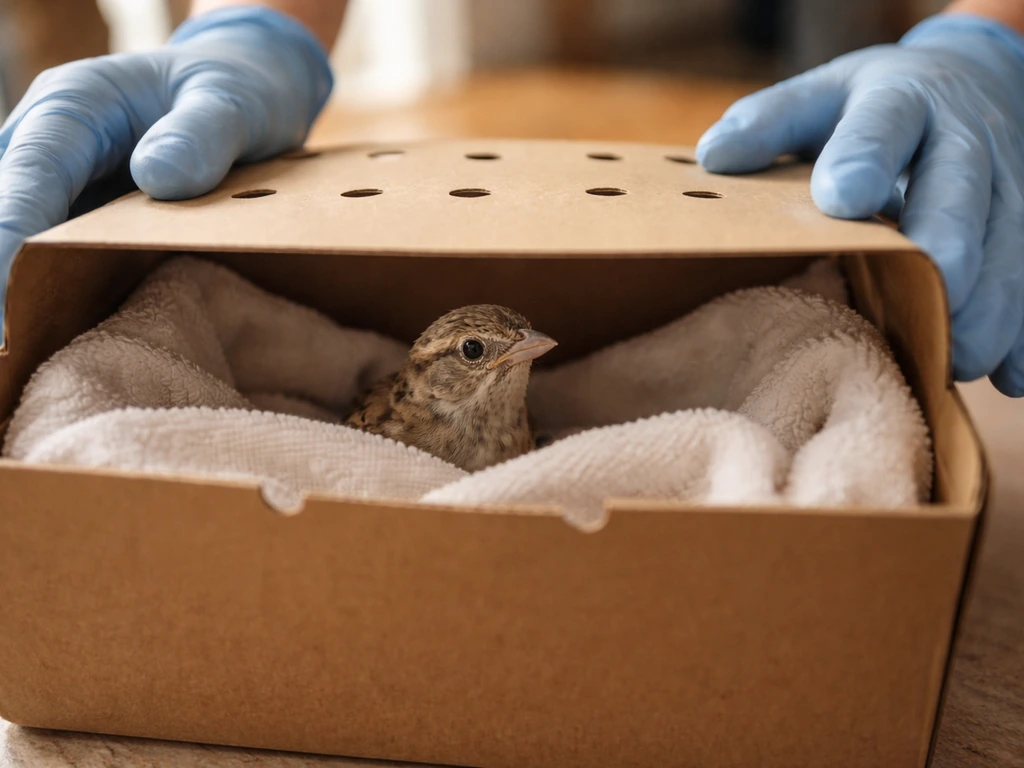
- Place the bird in a clean, ventilated box or container with air holes. A shoebox or small cardboard box works for wild birds.
- Keep it warm. If the bird feels cold or is shivering, place one end of the box on a heating pad set to LOW, with a folded towel between the pad and the box. The other half of the box should stay at room temperature so the bird can move away from the heat if needed.
- Cover the box with a light cloth or put it in a dim room. Darkness reduces panic and lowers the bird's stress response significantly.
- Keep the area quiet. No loud voices, no other pets nearby, no handling unless necessary.
- Do not offer food or water yet, especially for wild birds. Incorrect feeding can cause aspiration or other harm. Wait until you have professional guidance.
For a pet bird you already care for, minimizing handling during an itchy flare is important. Resist the urge to constantly check on the bird or examine it repeatedly, as repeated disturbance keeps cortisol elevated and can worsen the skin response.
Checking for parasites and when to stop the DIY approach
You can do a basic visual inspection without specialized tools. In good natural light, part the feathers gently (if the bird is calm enough to allow it) and look at the skin. You are checking for small moving dots, which could be mites, elongated sesame-seed-sized insects on the feathers, which could be lice, crusty or scaly lesions on the beak or feet, and reddened or broken skin.
Here is the critical point: even if you spot what looks like mites or lice, do not reach for over-the-counter insecticide sprays, flea powders, or anything designed for mammals. Human and mammal pest products can be acutely toxic to birds. Diagnosing exactly which parasite you are dealing with matters because different parasites have different life cycles and require different treatments. A vet will use a skin scraping and microscopic examination to confirm the diagnosis before prescribing anything. Attempting treatment without knowing the cause is one of the most common ways people accidentally harm a bird they are trying to help. For a broader look at how professionals approach bird care and treatment decisions, the guidance on how to treat a bird is a useful reference.
The same caution applies to herbal remedies, essential oils, and home treatments you might find suggested online. Birds have sensitive respiratory systems and absorb substances through their skin differently than mammals do. When in doubt, do nothing beyond supportive care and get a professional involved.
Bathing, moisture, and environment: what helps versus what harms

A light, lukewarm misting can provide temporary relief for a dry or irritated skin condition, and many birds respond positively to a gentle spray of plain water. Use a clean spray bottle with room-temperature water, mist lightly, and let the bird air dry in a warm room (not in a draft or cold air). Do not soak the bird, and avoid this entirely if the bird is already weak, cold, or injured, since a wet bird loses heat rapidly.
For pet birds, a shallow dish of clean water that they can bathe in themselves is safer than forced misting because the bird controls the exposure. Avoid adding any soaps, shampoos, or commercial bird bath products unless specifically prescribed by a vet.
Enclosure hygiene plays a major role in skin and feather health. Dust, dried fecal matter, and feather dander accumulate quickly and can both trigger and worsen skin irritation. When cleaning:
- Do not dry sweep or vacuum the cage area without removing the bird first, as this aerosolizes particles that can be inhaled by both the bird and you
- Wipe surfaces down with a damp cloth before disinfecting
- If you use a disinfectant, allow adequate contact time (at least 5 minutes) before rinsing, and make sure all surfaces are completely dry and odor-free before the bird returns
- Bleach and vinegar can both release fumes that are harmful to birds; use bird-safe disinfectants and ensure thorough rinsing and full airing out of the space
- Wash your hands thoroughly after handling the bird or cleaning its enclosure
Beyond the enclosure itself, check the room for common irritants: non-stick cookware, scented candles, air fresheners, cigarette smoke, and aerosol sprays. Remove these from the bird's environment immediately. If humidity in the room is very low (below 40 percent), a cool-mist humidifier placed nearby (not pointed directly at the bird) can help.
When to call a rehabber or avian vet urgently
If you found this bird in the wild or you are caring for an injured or orphaned bird temporarily, the honest answer is: contact a licensed wildlife rehabilitator as soon as possible, ideally today. U.S. federal law and most state laws prohibit keeping and treating wild birds yourself, and even well-intentioned home treatment can cause harm or legal issues. A rehabilitator has the training, permits, and supplies to do this correctly.
Contact a wildlife rehabilitator or avian vet urgently if the bird shows any of these signs:
- Significant feather loss with exposed skin, especially if the skin looks raw or infected
- Visible wounds, even if the itching seemed to start the problem
- Any signs of weakness, lethargy, or inability to hold posture
- Suspected flystrike (you see fly eggs or larvae in or near a wound)
- Anemia signs in a nestling or chick (pale mucous membranes, weakness, cold)
- The itching is severe enough that the bird is causing self-injury
- You cannot identify or eliminate the cause after a careful environment check
- The bird is not improving or is getting worse over 12 to 24 hours
To find a licensed wildlife rehabilitator in the U.S., you can contact your state's fish and wildlife agency, search the National Wildlife Rehabilitators Association directory, or call a local wildlife hospital or nature center. For a pet bird, an avian-specialist vet is preferable over a general practice vet for skin and feather issues because the diagnostics and treatments are quite specialized.
It is also worth knowing that some seemingly minor symptoms can indicate something more systemic. Digestive changes alongside skin symptoms, for instance, can point to an internal issue. If you notice loose droppings in addition to the itching, the article on how to treat bird diarrhea may help you assess whether that combination warrants faster escalation.
Follow-up care: what to track, what professionals will do, and how to prevent it next time
What to document before the vet or rehabber visit
Good documentation helps the professional make a faster, more accurate assessment. Before you hand the bird off, note the following and write it down or take photos:
- Where and when you found the bird (if wild), or when symptoms first appeared (if a pet)
- What the itching looks like: scratching, head-shaking, feather picking, rubbing, or a combination
- Which body areas are affected: head, neck, back, vent, feet, beak
- Any visible lesions, parasites, feather damage, or discharge
- Recent changes in environment, diet, cleaning products, or new animals in the home
- Any treatments you have already attempted and what happened
- Photos of the affected areas, ideally in natural light
What professional treatment typically looks like
A vet will typically start with a physical exam and may take a skin scraping to identify parasites under a microscope. For mite infestations like scaly face disease, treatment usually involves a prescribed antiparasitic medication such as ivermectin or similar, applied at precise doses that are safe for the bird's size and species. Lice and other ectoparasites are treated differently, and the vet will choose based on the specific organism identified. For bacterial or fungal infections, cultures may be taken to identify the exact pathogen before antibiotics or antifungals are prescribed. Some birds benefit from supportive treatments during recovery, and medicated or restorative products may be part of the plan. If you are curious about those options, looking into how healing bird ampoule treatments are used can give you a sense of what supportive care looks like in practice.
Eye involvement sometimes accompanies skin and feather conditions, particularly when mites spread to the area around the eyes. If you notice any swelling, discharge, or crust around the eyes alongside the itching, flag that for the vet immediately. Resources like the guidance on how to treat a bird eye injury and how to treat a bird eye infection can help you understand what you are looking at while you wait for the appointment.
Prevention going forward
Once the bird has been treated and is recovering, prevention is about keeping the environment clean, low-stress, and free of irritants. For captive birds, this means regular enclosure cleaning with bird-safe products, monitoring humidity, eliminating airborne toxins, and scheduling routine avian vet checkups. For new birds entering a home with other birds, quarantine for at least 30 days is standard practice to prevent parasite transfer.
Occasionally a bird showing itching symptoms also shows signs of constipation or digestive discomfort, which can point to a systemic issue rather than a purely skin-based problem. Knowing how to recognize those signs, as covered in the guide to treating a constipated bird, can help you give a complete picture to your vet and avoid missing something important.
The bottom line is that an itchy bird is not something to watch and hope resolves on its own. Most causes are treatable when caught early, and the combination of calm interim care at home and prompt professional assessment is almost always the right path. Do the basic triage, stabilize the environment, document what you see, and get a professional involved sooner rather than later. That is genuinely the most useful thing you can do today.
Quick comparison: at-home care vs. professional treatment
| Situation | Safe to manage at home | Needs professional help |
|---|---|---|
| Mild scratching, alert bird, no visible lesions | Yes, supportive care and environment check | Contact vet if no improvement in 24 hours |
| Visible lice or mites | Basic isolation and hygiene only | Yes, for diagnosis and correct parasite treatment |
| Scaly lesions on beak, feet, or around eyes | No DIY treatment | Yes, requires skin scraping and prescription medication |
| Feather picking with no parasites found | Stress reduction, enrichment, environment check | Yes if self-injury occurs or picking is severe |
| Suspected flystrike (eggs or larvae visible) | No | Emergency, contact vet or rehabber immediately |
| Wild bird found with itching symptoms | Warmth, quiet, darkness only | Yes, contact wildlife rehabilitator immediately |
| Nestling or chick with heavy parasite burden | No | Emergency, anemia risk is high |
FAQ
How long should I wait before calling a vet or wildlife rehabber for an itchy bird?
If the bird is alert but actively scratching, plan to contact a professional the same day, especially if symptoms persist more than a few hours or keep worsening. If it is slumped, breathing with an open beak, has visible wounds, or is losing feathers rapidly, treat it as urgent and call immediately.
What should I do if I think it is lice or mites, but I cannot see anything clearly?
Do not guess with insecticides or powders. Instead, focus on removing obvious irritants, keeping the environment stable, and documenting what you observe (where itching occurs, any crusting on beak or feet, any feather damage). Ask the vet about a skin scraping because microscopic identification drives the correct treatment.
Can I bathe or shampoo my pet bird to relieve itching?
Avoid soaps and shampoos unless a vet prescribed a specific product, because many can strip natural oils or irritate a bird’s skin and respiratory tract. For temporary comfort, a controlled, gentle mist or a shallow bath option is safer, but only if the bird is warm, stable, and not weak.
Is it safe to use human anti-itch creams, essential oils, or “natural” remedies?
Usually no. Many are toxic to birds or can trigger respiratory irritation when absorbed through skin. Even “natural” products can harm, so stick to supportive care (stress reduction, clean environment, safe water options) and get professional guidance before applying anything.
What enclosure cleaning steps matter most for itchy skin?
Prioritize removing dust and dried droppings, then replace paper liners and wash perches with bird-safe methods. Also remove potential irritant sources nearby, like aerosol sprays, scented candles, air fresheners, and non-stick cookware fumes, since these can worsen irritation even if the bird has no visible parasites.
My bird is itchy but also acting stressed or restless. How can I tell stress picking from parasites?
A practical clue is the presence of skin lesions or visible parasites. Stress-related picking often damages feathers while the skin beneath stays intact, while mite or lice issues are more likely to show crusting, broken skin, or dots and crawling insects on feathers. Since the patterns can overlap, a vet confirmation still matters if symptoms persist.
When should I worry that itching is actually a systemic problem?
Escalate sooner if you see loose droppings, changes in appetite, lethargy, weight loss, or breathing changes alongside itching. Those combined signs can point to internal illness or broader infection, meaning parasite-focused treatment alone may not be enough.
What photos or notes help the vet diagnose faster?
Capture close-ups of the most affected areas (feet, beak, around the eyes, vent), and note the timing of symptoms (when it started, whether it’s worse after a particular food or cleaning). Also record the bird’s species, age, diet changes, new toys or bedding, and any recent exposure to aerosols, candles, or smoke.
Can constipation or digestive upset cause scratching or feather damage?
Yes, it can happen indirectly. Pain, stress, or systemic illness can increase grooming and picking, so if itching coincides with constipation, swollen abdomen, reduced droppings, or digestive discomfort, tell the vet. This combination may shift the diagnosis away from purely skin-based causes.
How should I handle the bird while I wait for an appointment?
Keep handling minimal and predictable. Do a quick, gentle visual check only if the bird tolerates it, and avoid repeated “checking” that raises stress. If you need to move the bird, use a calm approach and keep it warm to prevent heat loss.
If I find crusty scaly lesions on the beak or legs, what is the safest next step?
Treat it as more than minor irritation and arrange veterinary evaluation promptly, since scaly face or scaly leg disease requires specific confirmation and dosing. Until the visit, avoid applying OTC products, remove irritants, and keep the bird stable and warm.
What should I do for a wild bird that is itchy but otherwise looks okay?
Contact a licensed wildlife rehabilitator as soon as possible. Wild birds can legally and medically require specialized handling, and home attempts can worsen stress or miss underlying injuries or parasites. Provide quiet, warm, minimal-interaction containment only while arranging help.
Next Article
How to Treat a Bird: First Aid Steps and When to Get Help
Step-by-step first aid for injured or orphaned birds, safe handling, recovery setup, and when to call a wildlife rehab v