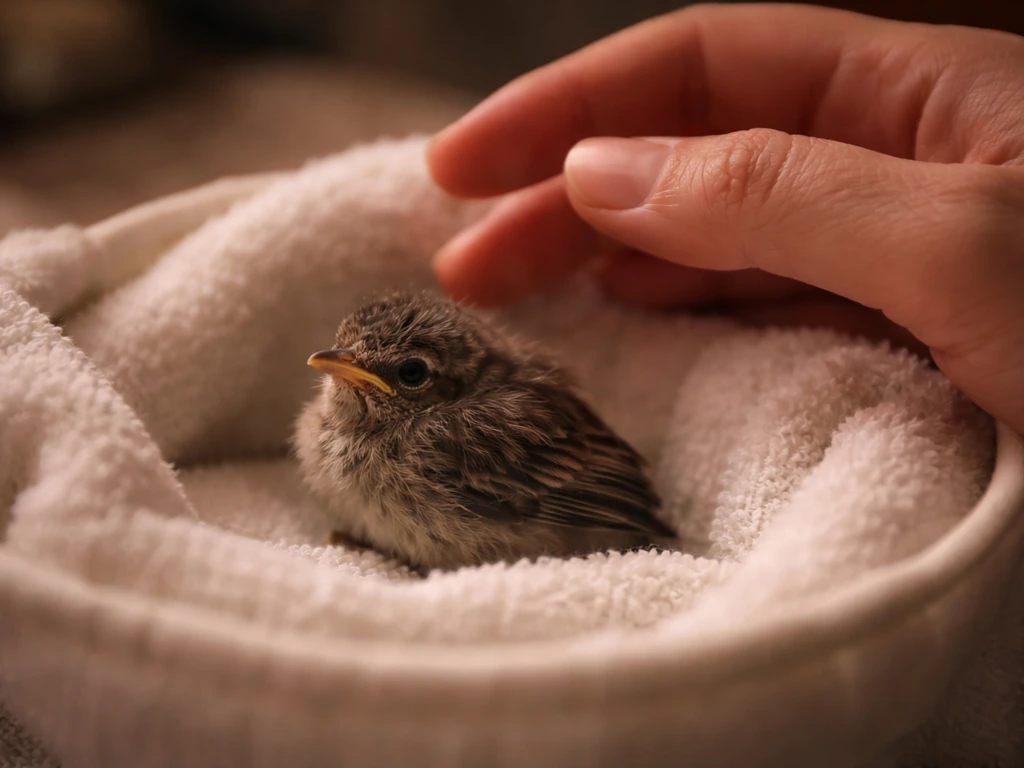
Releasing a hand-reared wild bird safely means working through a clear sequence: confirm the bird is healthy and old enough to survive on its own, reduce any human imprinting before the release date, transition it to a natural diet, build its flight and foraging skills in a pre-release enclosure, then use a soft release at the right site and time of year. Done well, most hand-reared birds can make it. Done in a rush, the odds drop sharply.
How to Release a Hand-Reared Bird Safely and Humanely
Marcus Holloway
20 May 2026
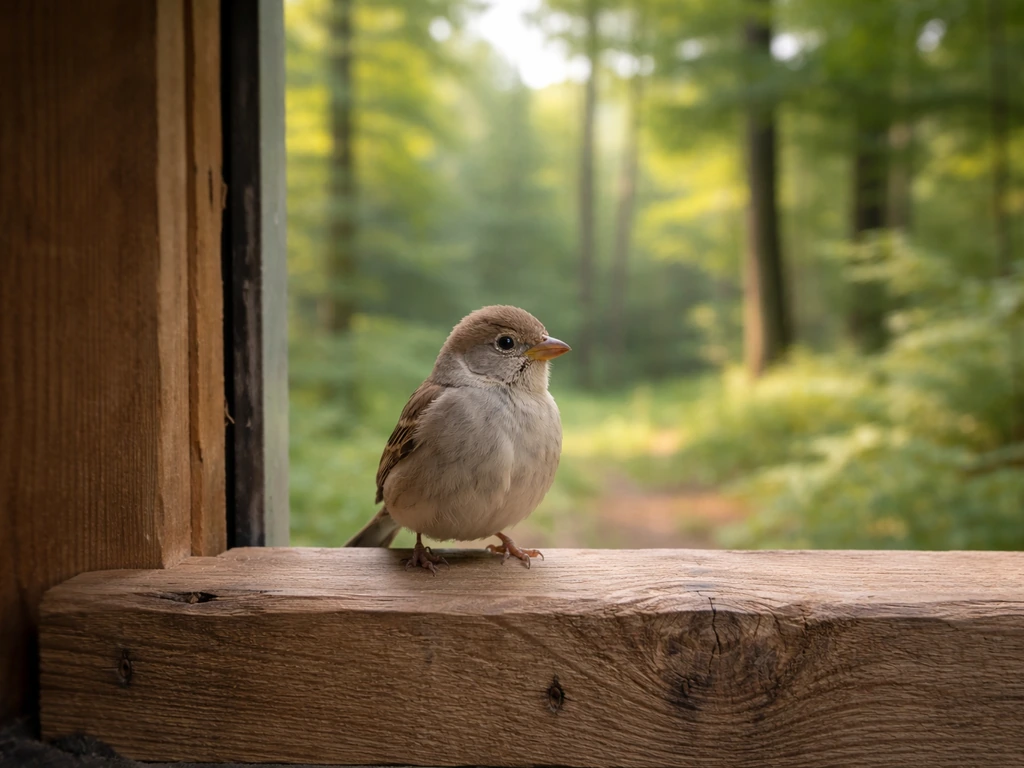
Here is exactly how to do it right. If you are working with a fledgling specifically, the preparation should be tailored to its shorter time on the ground and its need to quickly feed and take cover on its own how to release a fledgling bird.
First, figure out exactly what you have
Before you plan a release, you need to be honest about two things: what species and developmental stage you are dealing with, and whether this bird is actually a candidate for release at all. Those two questions shape everything else.
Nestling, fledgling, or juvenile?
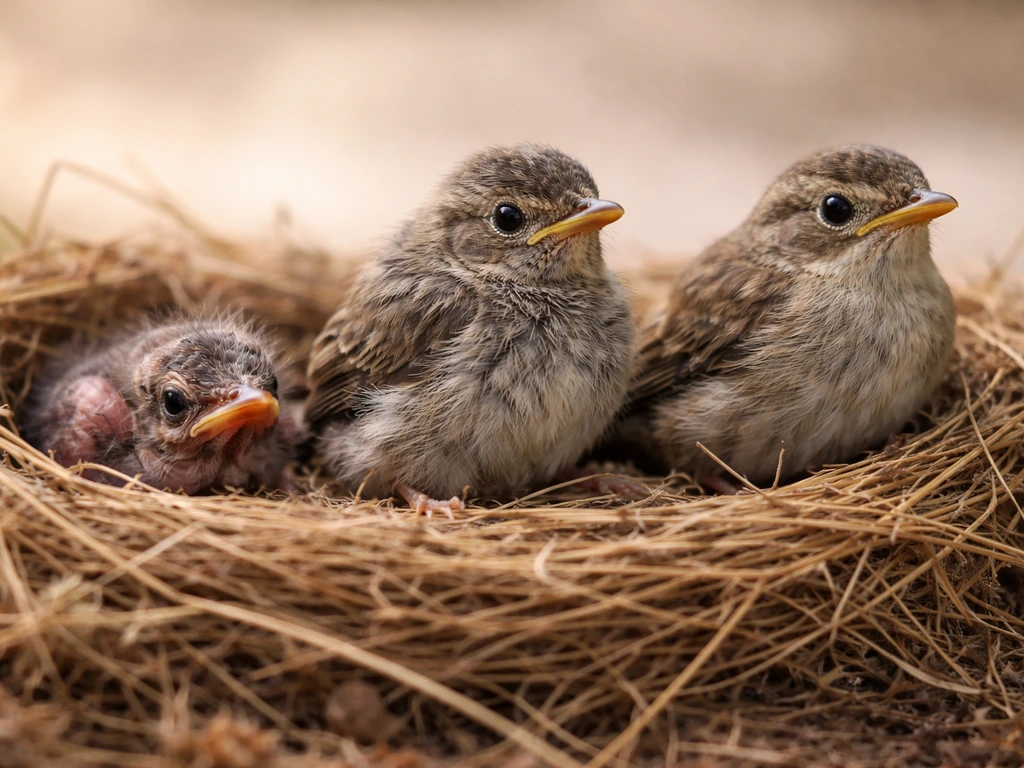
Nestlings are featherless or only partially feathered and completely dependent on adult care. Fledglings have most of their feathers, have left the nest, and are in the short but normal phase of hopping on the ground and low branches while their parents still feed them a few times an hour. Juveniles look almost like adults and are close to true independence. The stage your bird is at tells you how much work is ahead before release is realistic. A true nestling that you have raised from bare pink skin needs weeks more preparation than a juvenile that arrived nearly flight-ready.
Is this bird actually releasable?
Not every bird can or should be released. For release to make sense, the bird needs full recovery from whatever injury or illness brought it into care, no ongoing medical needs, species-typical body condition, and functional flight. If the bird has a permanent disability such as a wing that cannot extend fully, vision problems, or a significant leg injury, release into the wild is not a welfare-positive outcome. Be honest with yourself.
If you are unsure, a licensed wildlife rehabilitator or avian vet can assess releasability in a single appointment. [Virginia DWR lists specific signs that require professional assessment: broken bones, bleeding, deformity, cat bite puncture wounds, head tilting, or maggots. ](https://dwr. virginia.
gov/wildlife/injured/birds/) If any of those apply, get professional help before you do anything else.
The imprinting question
Hand-rearing carries a real risk of human imprinting, especially in species like raptors, corvids, and some songbirds. An imprinted bird treats humans as its own species, seeks human company, and lacks appropriate fear of people and predators. The Wildlife Center of Virginia is direct about this: successful rehabilitation means restoring species-typical fear of humans, not a bond with them. Assess your bird honestly. Does it approach you eagerly, call for you, or ignore other birds entirely? If so, imprinting mitigation needs to be a major part of your pre-release plan.
Build a rearing-to-release plan before you do anything else
A release plan is not a single decision you make the day you open the cage door. It is a structured process that starts while the bird is still in your care. The Victorian Code of Practice for Wildlife Rehabilitation puts it plainly: hand-reared animals may lack the survival and behavioral skills needed to compete for food, shelter, and territory in the wild. Your job from this point forward is to close that gap deliberately.
The core elements of a good plan are: a timeline tied to the bird's developmental stage and the natural season when it would normally become independent, a pre-release enclosure that supports flight and foraging practice, a feeding transition plan, a strategy for minimizing human contact, and a chosen release site that matches the bird's species and original range. Write it down. Working through it step by step is the difference between a bird that survives and one that does not.
Also check your local regulations. In most parts of the US and Australia, keeping and rehabilitating wildlife without a permit is illegal regardless of your intentions. If you have been raising this bird on your own, connect with a licensed wildlife rehabilitator now. They can often advise you, supervise the final steps, or take over care if the situation is beyond what an unlicensed carer can manage legally or practically.
Feeding and transitioning to a natural diet
Tufts Wildlife Clinic puts this bluntly: incorrect diets can injure or kill baby birds. Diet transitions are species-specific and welfare-critical. What you feed, how you feed it, and when you stop hand-feeding all matter enormously.
Early feeding intensity
If you have been raising a nestling from early stages, you already know the intensity involved. Featherless nestlings need feeding every 15 to 20 minutes from sunrise to around 10 p.m. That schedule does not leave room for error in diet or technique. If you are at this stage and have not already been working with a rehabilitator, call one today. WDFW is explicit that improvised feeding by untrained carers is a real risk to the bird.
Moving toward independence
As the bird matures, the goal is to progressively reduce hand-feeding and replace it with self-directed foraging. SPCA BC notes that experienced rehabilitators minimize hand-feeding as early as possible, reserving it only for very small babies that genuinely cannot self-feed yet. For most birds approaching release age, this means making food available in the enclosure in a way that requires the bird to find and access it independently, rather than delivering it directly to the bird's mouth.
The specific foods depend entirely on species. Insectivorous birds need live insects, not seeds. Granivores need appropriate seeds they can crack themselves. Omnivores like corvids and starlings can eat a wider range but still need to practice finding and processing food on their own. Research your specific species or ask a rehabilitator for a diet protocol. The RSPCA notes that food must be plentiful for the species at the time of release, so also check that natural food sources will be available where and when you release.
The final transition
In the two to three weeks before release, you should not be hand-feeding at all. The bird should be eating entirely on its own from food placed in the enclosure, and ideally foraging for live prey items or natural food sources you have introduced into its space. This is non-negotiable. A bird that still expects hand-delivery of food when it goes into the wild is not prepared for release.
Reducing human imprinting and building wild behavior
This section matters more than almost anything else for long-term survival. A bird that sees humans as safe, familiar, or food-associated is at severe risk from people, cars, and domestic animals once released.
Minimize handling from day one
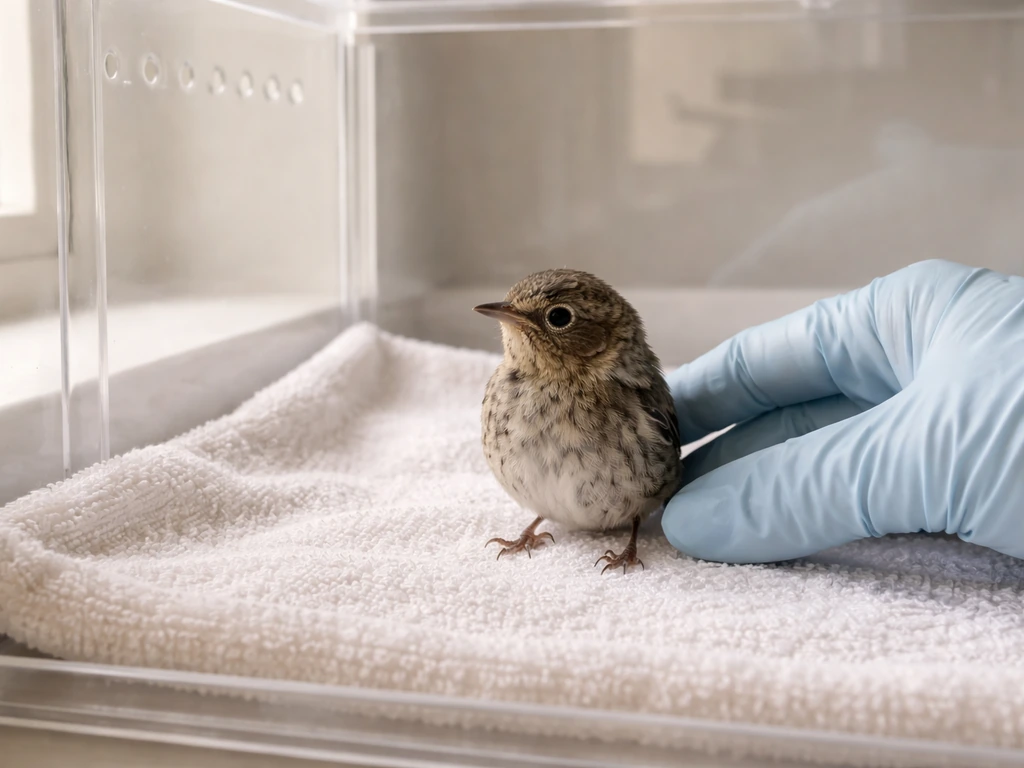
SPCA BC is clear: rehabilitators don't hand-feed except for very small babies that need extra help. Every time you interact with the bird, pick it up, talk to it at close range, or let it sit on you, you are reinforcing human association. From the moment you recognized this bird as a release candidate, all unnecessary handling should stop. Wear a face covering or disguise when you do have to approach it for care. Keep your voice down. Make your presence in its space brief and task-focused.
Use conspecifics where possible
One of the most effective tools for reducing imprinting is giving the bird appropriate company from its own species. The Wildlife Center of Virginia emphasizes surrogacy and conspecific-based strategies as the best counterweight to human imprinting. Even one or two other birds of the same species in the same enclosure shifts the bird's social orientation significantly. SPCA BC also notes that keeping compatible birds together for company is standard practice in wildlife rehabilitation for exactly this reason. If you have access to a rehabilitator who has other birds of the same species, ask whether your bird can be housed alongside them.
Expose the bird to natural stimuli
Recordings of conspecific calls, exposure to natural weather conditions (within safe limits), and visual access to outdoor environments all help the bird tune into its species' world rather than yours. If the enclosure can be placed outdoors or have an open-air section, that is ideal. The bird should be hearing natural soundscapes, experiencing wind and rain, and seeing other wildlife moving around outside its enclosure well before release day.
Building flight, foraging, and predator awareness
Physical fitness and behavioral competence are two separate things and both have to be in place before release. A bird that can fly but has no predator awareness, or that is alert but physically weak, is not ready.
The pre-release enclosure
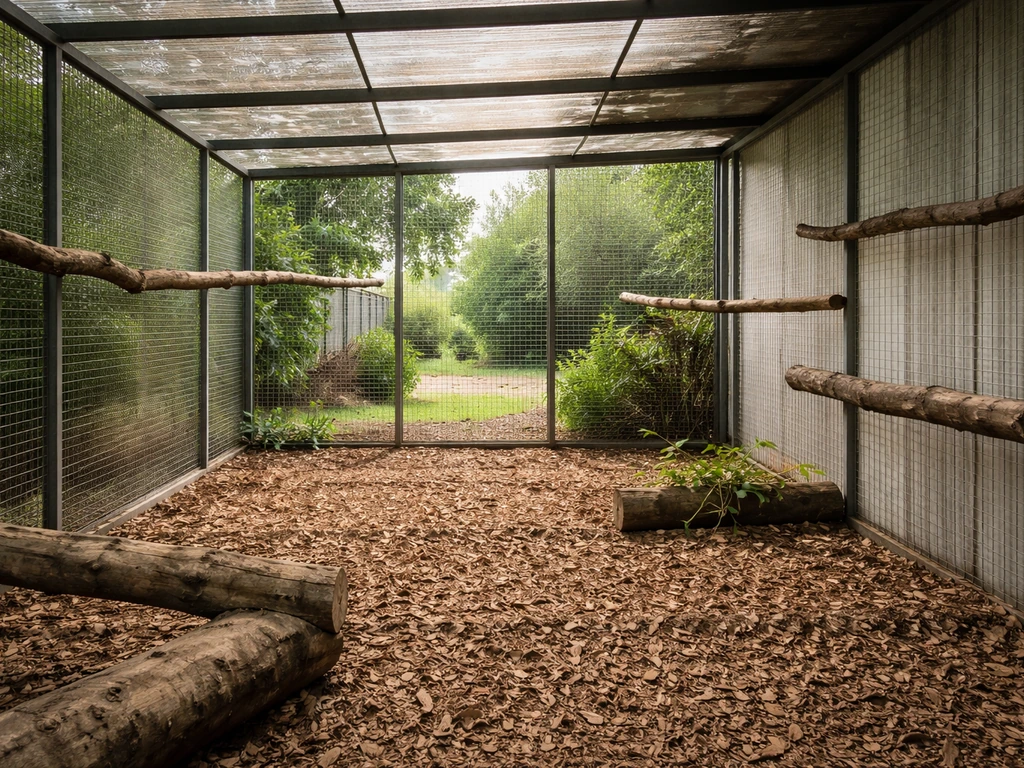
You need a large outdoor or semi-outdoor enclosure at least several weeks before the planned release date. For most songbirds, this means something at minimum 2 to 3 metres long that allows full flight from perch to perch. For larger birds like corvids, raptors, or waterfowl, significantly more space is needed. The Victorian Code of Practice reinforces that enclosure design directly affects release welfare outcomes. The bird needs room to actually fly, practice landing, and build the muscle condition required for sustained outdoor flight.
Foraging practice
Place food in locations that require searching, not just at an obvious feeding station. Hide mealworms under bark or leaf litter for insectivores. Scatter seeds across different substrate types for granivores. Introduce live prey when appropriate. The bird needs to develop the searching behavior, not just the ability to consume food once it has been located for them.
Predator awareness
A bird that is not afraid of cats, dogs, or unfamiliar large animals is in serious danger after release. Controlled, safe exposure to natural predator cues, such as the sight and smell of a dog or cat at a safe distance from outside the enclosure, can help activate appropriate alarm responses. Watch for the bird to show alert posture, alarm calls, or movement away from the stimulus. That response is what you want to see. A bird that ignores the presence of a cat is not ready for an outdoor environment.
Soft release vs hard release: choosing the right approach
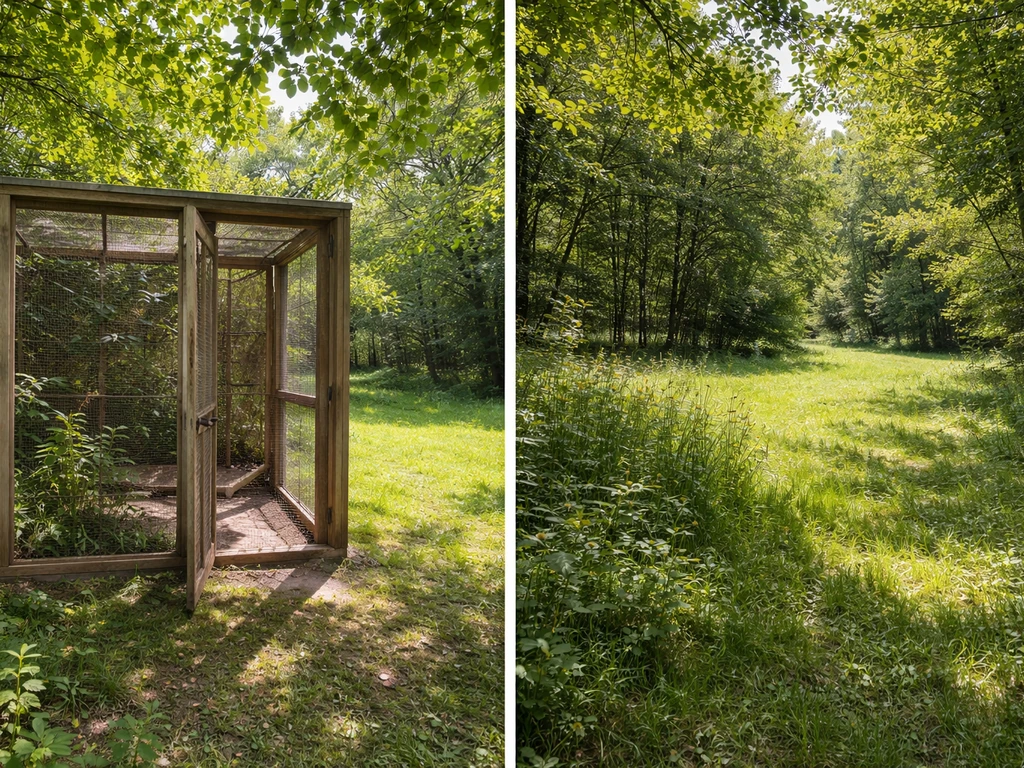
These two approaches differ significantly in how abruptly the bird transitions from captivity to full independence, and for hand-reared birds, the choice almost always points in one direction.
| Approach | How it works | Best for | Main risk |
|---|---|---|---|
| Soft release | Bird is moved to an enclosure at the release site, allowed to acclimate for days to weeks, then given free access to come and go while supplemental food is still available | Hand-reared birds, birds after extended captivity, species with strong site fidelity | Requires ongoing monitoring and management; can delay full independence if supplemental food is continued too long |
| Hard release | Bird is transported to the release site and freed immediately with no acclimation period | Short-term rehab cases, adult birds with minimal captivity time, birds with very low imprinting risk | High stress; bird has no familiarity with the site; higher mortality risk for hand-reared individuals |
For a hand-reared bird, soft release is almost always the right choice. The Rehabber's Den describes it simply: shift the animal into an enclosure at the release site, let it acclimate, then give it the option to come and go freely. During this phase, keep supplemental food available but place it in a way that encourages the bird to also explore and forage naturally. Gradually reduce supplemental food over one to two weeks as the bird demonstrates it is finding food on its own.
Choosing the right release site
The site should be within the species' natural range and ideally close to where the bird was originally found, if that is known. Victoria's authorisation conditions are explicit that releasing wildlife outside their known individual range is not permitted due to welfare concerns and risks to resident populations, including disease spread and disruption to social structure. Even if you are not operating under formal rehabilitation permits, these are sound welfare principles to follow.
The site should have: adequate food sources for the species at that time of year, cover from predators, access to fresh water, and ideally the presence of conspecifics already in the area. Hearing other birds of the same species at the site is a good sign. Releasing into an area already occupied by the species gives the bird social cues to follow and models to observe.
Timing the release
The RSPCA is clear that release success depends on weather, season, and time of day, not just the bird's fitness. The right season is the one when that species would naturally be becoming independent, food is plentiful, and the weather is stable. Releasing during cold snaps, heatwaves, storms, or at the onset of winter significantly reduces survival odds. Within a day, early morning on a calm, mild day is generally best. The bird has the full day ahead of it to orient and find food before nightfall.
After release: what to watch for and when to step in
Post-release monitoring is a real part of the process, not an optional extra. The IWRC has documented how post-release observation helps evaluate whether hand-rearing techniques actually produced birds that survive and behave normally in the wild. You do not need banding equipment to do basic monitoring, but you do need to commit to watching from a distance for at least the first week or two.
What normal looks like
A bird doing well after release will be actively moving, foraging, responding to alarm calls from other birds, and roosting appropriately at night. During a soft release, you may see it return to the release enclosure or feeding station at first, which is fine. Over days, the returns should become less frequent as it integrates into the natural environment.
Warning signs that need action
- The bird is actively approaching people, cars, or domestic animals without alarm
- It is sitting on the ground and not responding to disturbance or touch (a healthy wild bird should attempt to flee)
- It appears thin, with prominent keel bone visible through feathers
- It is not foraging at all after the first couple of days
- It shows signs of injury: drooping wing, bleeding, lameness, or discharge from eyes or nares
- It is being harassed repeatedly by other birds and cannot escape or defend itself
When to call a wildlife rehabilitator or vet
If you see any of the warning signs above, do not wait. Recapture the bird if you safely can (a towel over the bird, then a ventilated box) and contact a licensed wildlife rehabilitator or avian vet the same day. The U. S.
Fish and Wildlife Service advises contacting licensed rehabilitators whenever intervention is needed for injured or struggling wild birds. The Wildlife Center of Virginia offers public phone advice if you are unsure whether what you are seeing warrants action. Wildlife Center of Virginia provides public phone advice and emphasizes that professional wildlife rehabilitation can lead to treatment and release back to the wild Wildlife Center of Virginia offers public phone advice.
It is always better to make the call and be told the bird is fine than to leave a struggling bird out there and lose it.
Also call for help before release if you have any doubt about releasability. If the bird has not reached full flight capacity, is still accepting food from your hand, or shows clear imprinting behaviors after your mitigation efforts, a licensed rehabilitator may have resources you do not, including flight cages, conspecific foster birds, and the legal authority to keep the bird longer if that is what it needs. Connecting with that network early gives your bird the best possible chance.
A note on related situations
If you are still in the early stages of caring for a bird rather than approaching release, the guidance for raising a newborn bird covers those first intensive weeks in detail. If you are caring for a true newborn bird, focus on the first intensive weeks too, since those early feeding, warmth, and handling choices shape survival later how to raise a newborn bird.
If the bird you have is already feathered and moving around on its own, the approach for helping a fledgling bird is worth reviewing, since fledglings on the ground are often not in distress at all and may still have parents nearby. If you are specifically trying to help a fledgling bird, use the same release-focused thinking: verify what you have, keep handling minimal, and prioritize getting it back to its parents and habitat when appropriate.
And if you specifically need guidance on releasing a fledgling that was briefly in care rather than fully hand-reared from hatchling stage, that process is somewhat simpler and faster than what is covered here. If you need help rescuing a fledgling before release is needed, focus on assessing injuries, keeping it warm and contained, and getting it to a licensed wildlife rehabilitator releasing a fledgling that was briefly in care. If you are searching for how to rescue a fledgling bird before release is needed, the key steps are to assess injury, keep the bird warm and contained, and contact a licensed rehabilitator for next actions releasing a fledgling.
The hand-rearing-to-release process described in this article applies most to birds raised from nestling stage with significant human contact over a period of weeks or months.
FAQ
My bird can fly. How do I know it is truly ready to release (not just capable of flying)?
Not necessarily. If the bird can take off, perch, and forage independently but still shows strong fear of other birds or does not respond to conspecific calls, it may be unready even though it is “flying.” Readiness is behavioral and nutritional, not just flight capability, and if it still expects close-range food delivery, delay release and get a rehabilitator to verify you have completed the last diet and contact steps.
Can I do a trial release in my yard before the real release date?
Do not try to “test” readiness by taking it outside for a quick walk or letting it roam around your yard. Short unsupervised exposure can reinforce people or predators without providing the full soft-release acclimation and diet-foraging transition. Use the pre-release enclosure and follow your timeline, then do a site-specific soft release when the bird is eating entirely on its own.
What should I do if the bird still follows me or asks for food from my hand?
If it is still coming to you, begging, calling for you, approaching eagerly, or tolerating close human contact, that is a red flag for imprinting. Continue strict minimization of handling, increase conspecific-based social cues, and keep food delivered through foraging access in the enclosure, not in your hand. If those behaviors persist despite these steps, a rehabilitator can assess whether the bird should be held longer.
My bird is not fully eating independently yet. Can I release anyway?
If the bird is not eating on its own during the final 2 to 3 weeks, assume it is not prepared. The fix is not more hand-feeding right up to release day, it is adjusting diet realism and foraging practice (species-appropriate items, correct placement, live prey access when appropriate) while you still stop hand-feeding on schedule. If it still will not feed independently, contact a licensed rehabilitator before attempting release.
During soft release, how much supplemental food is too much?
Yes, and it is often overlooked. Soft release should include a plan for supplemental food placement that encourages searching, but you should still reduce and then remove predictably provided food over 1 to 2 weeks as the bird demonstrates wild-style foraging. If you keep feeding it in the same obvious spot, it may become dependent and less able to compete after supplemental food ends.
Can I put my hand-reared bird with other birds to reduce imprinting, and how do I choose who to pair with?
For most hand-reared birds, use the same species-conspecific approach in the enclosure, but the exact method depends on species and legality. A practical decision aid is to ask your rehabilitator whether your bird can safely be housed with compatible birds of the same species, and whether conspecific foster contact is appropriate. Avoid mixing with different species unless specifically advised, because it can add stress or create wrong social cues.
What behaviors after release suggest the bird is not integrating and needs help?
Watch for night roosting and normal daily activity. If it stays near you, repeatedly returns to the enclosure feeding station beyond the initial adjustment period, fails to roost in a natural manner, or does not respond to alarm calls from other birds, those are common “not integrating” signs. At that point, prioritize immediate recapture if safe and contact a licensed rehabilitator the same day.
How do I pick the best release day if the forecast is mixed (sunny but windy, or mild but rainy)?
Weather matters, but “bad weather” is not only about storms and heat. Avoid releasing right before heavy rain, strong winds, or abrupt cold snaps, and avoid times when food availability is likely to drop. Even on a mild day, choose early morning so the bird has daylight to orient and forage before nighttime roosting.
What is the quickest way to decide whether I should call help immediately after release?
If you are seeing an injury or behavior change you do not understand, intervene sooner rather than later. A concrete rule of thumb from practical wildlife handling is to treat “still accepting hand food” or “obvious injury signs” as an emergency-level uncertainty, recapture if safe, and contact a rehabilitator or avian vet the same day. Waiting increases the chance the bird’s condition worsens outdoors.
What if I already released the bird in an area that might be outside its normal range or legality?
If you released outside the bird’s known or expected range, or you are unsure about legal permissions, do not assume “it will be fine.” The welfare and population risks can include disease spread and disruption to resident birds. If you still have contact with the situation, stop additional releases, document what you did, and contact a licensed rehabilitator for guidance on the safest next steps.
Next Article
How to Rescue a Fledgling Bird: Step-by-Step Guide
Rescue a fledgling bird: assess injury vs learning, give safe warm care, avoid wrong feeding, and contact rehab fast.