Finding a fledgling bird on the ground feels urgent, but the most important thing you can do in that first moment is slow down. Most fledglings do not need to be rescued. Many of the birds people scoop up and bring inside are perfectly healthy young birds doing exactly what they're supposed to do: learning to live outside the nest. That said, some fledglings genuinely do need help, and knowing the difference quickly is the whole game.
How to Help a Fledgling Bird: Immediate Steps and Do Not
Marcus Holloway
14 Apr 2026
Fledgling or true orphan? How to tell before you touch anything
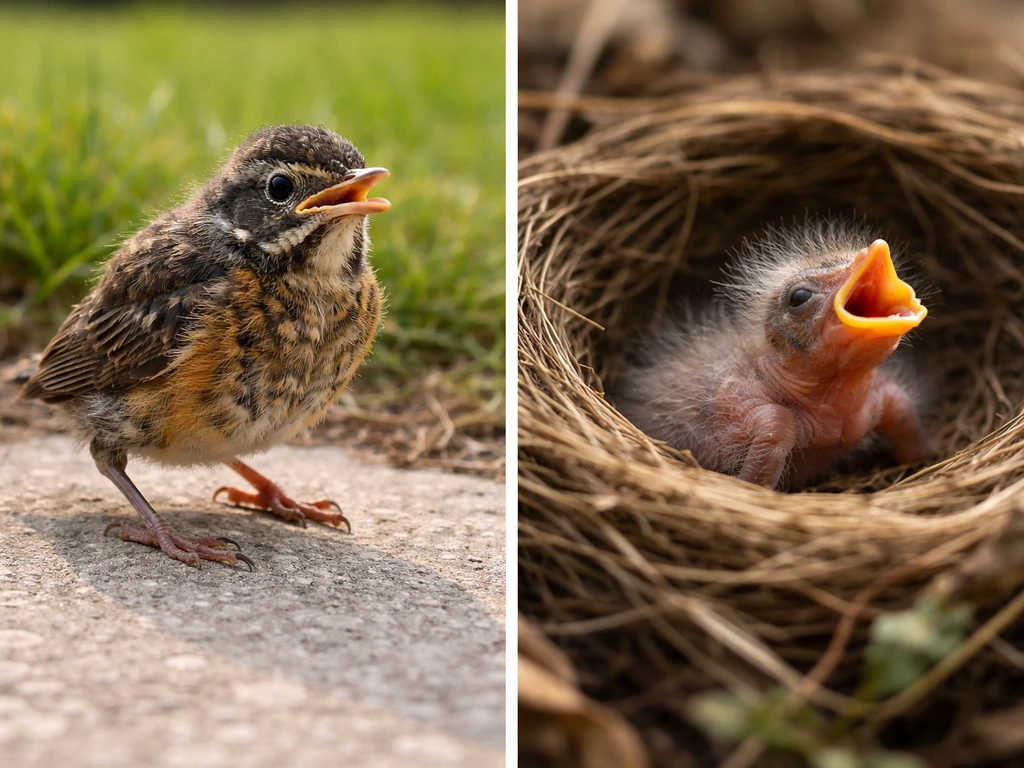
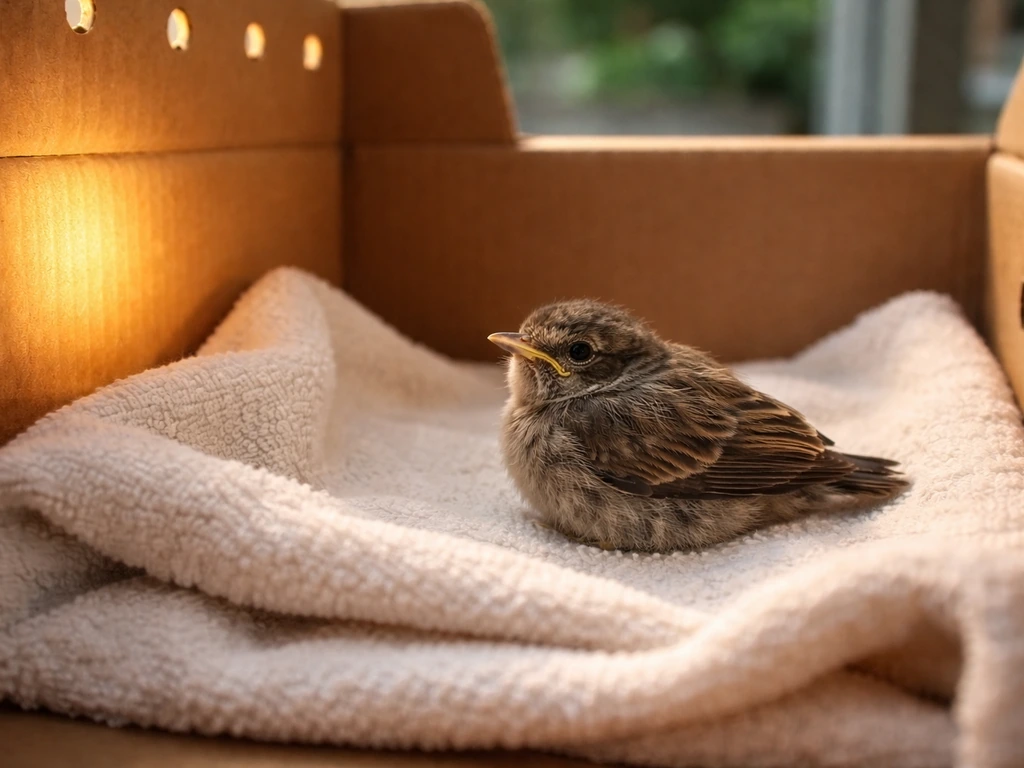
The first thing to figure out is what kind of bird you're actually looking at. A fledgling is a young bird that is mostly feathered, can hop or walk, and may even make short awkward flights. It has a short tail, usually about a quarter to half an inch long, and it holds itself upright. If you see all of that, the bird is almost certainly fine. Fledglings are 14 to 28 days old on average, they've already left the nest, and they don't go back. Their parents are still nearby, often watching from a branch or fence, and will keep feeding them on the ground.
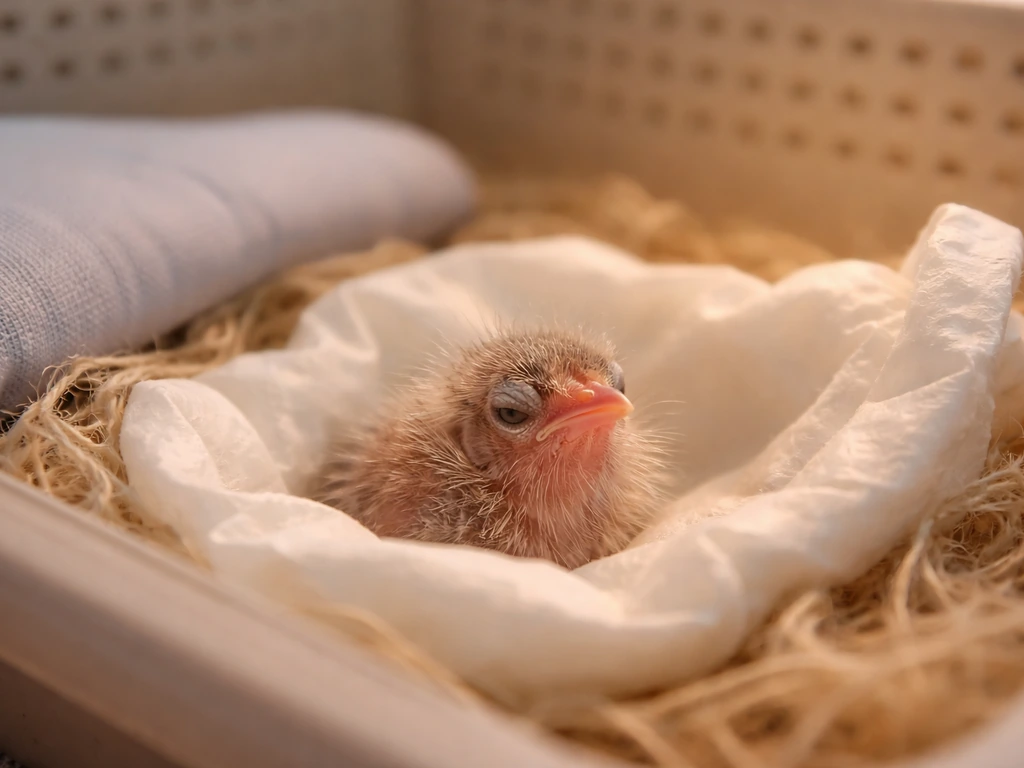
A nestling is a different situation. If the bird is tiny, mostly featherless, has its eyes closed, or looks like a pink jelly bean with a beak, it genuinely needs intervention. That bird fell or was knocked from a nest before it was ready. If you can see the nest and reach it safely, placing the nestling back is always the right first move. The myth that parent birds reject chicks touched by humans is not true.
If you're looking at a fully feathered bird and you're not sure whether it's injured or just a normal fledgling doing its thing, step back and watch from a distance for at least two hours. Look to see if other birds come down to it, bring food, or call to it. If that's happening, the parents are on the job and the bird doesn't need you. Fledglings are removed from the wild unnecessarily far more often than most people realize.
Intervene immediately if you see any of the following, regardless of how feathered the bird looks:
- The bird is featherless or has its eyes closed
- It's lethargic, limp, or not standing upright
- There's an obvious injury: bleeding, a drooping wing, or a visible wound
- A cat or dog has had it in its mouth, even briefly
- It's in the path of traffic or in another immediate danger zone
- There are extreme weather conditions and the bird is exposed with no shelter
- You've watched for two hours and no parent has appeared
How to handle a fledgling safely and humanely
Before you touch the bird, put on gloves if you have them. Not because you'll catch a disease from casual contact, but because it's good practice and it reduces the scent and oils you transfer to the bird. If no gloves are handy, a light cloth or paper towel works. Keep your movements slow and deliberate. Don't chase the bird around, don't crowd it, and don't try to grab it from above, which mimics a predator strike and causes serious stress.
Cup your hands gently around the bird from the sides. Hold it firmly enough that it can't flap free and injure itself, but don't squeeze. A bird's respiratory system is fragile and constricting the chest can be fatal. The goal is to hold it securely and move it once, calmly, into a container.
If the bird is in immediate danger but appears healthy, you may not need to pick it up at all. A fledgling found near a busy road can sometimes be gently guided or shooed to a safer spot, like the base of a nearby bush. Placing it in a bush (not up in a tree, which is actually harder for the parents to access and harder for the bird to manage) close to where you found it keeps it in its parents' territory and off the ground where it's most vulnerable.
Setting up temporary shelter while you get help
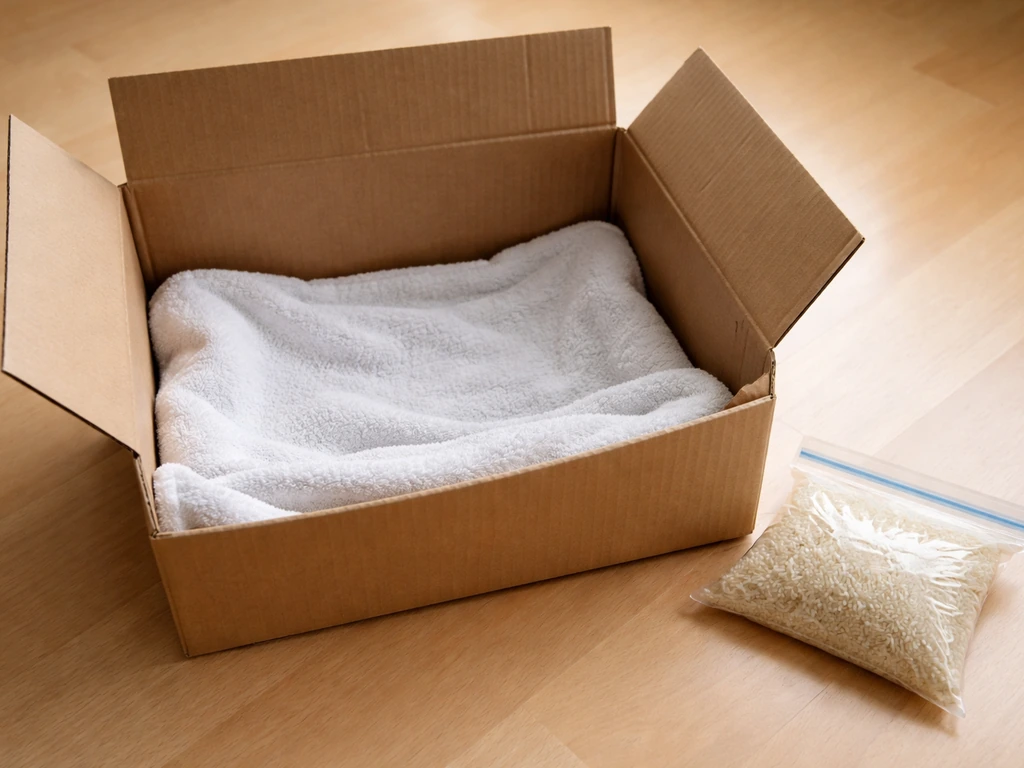
If the bird needs to come inside temporarily, a cardboard box is your best tool. Use one that's big enough for the bird to move slightly but not so large it can flap around and injure itself. Punch small air holes in the sides (not the top, where they can let in cold air). Line the bottom with a clean cloth, a paper towel, or unscented tissue. Do not use terrycloth towels; the loops snag on tiny toenails and cause injuries.
For warmth, fill a zip-lock bag or a clean sock with dry rice or uncooked beans, microwave it for about 30 to 45 seconds, and place it under half the box floor wrapped in a thin cloth. The bird can move toward or away from the heat as it needs. The target is gentle background warmth, not a hot surface. A fledgling that is already alert and feathered doesn't need extreme heat, but one that is weak or cold needs warmth urgently.
Keep the box in a quiet, dark, warm room away from pets, children, loud music, and direct sunlight through a window. Darkness reduces stress significantly. Put a light cloth over the top of the box. Do not keep checking on the bird every few minutes. Every time you open that box, you're causing a stress response. Set it up right, then leave it alone while you make calls.
Food and water: less is almost always more
This is where well-meaning people cause the most harm. Do not try to feed a fledgling unless you have specific guidance from a rehabilitator. Wildlife rehabilitators advise that if you cannot locate the nest or the baby is not warm or needs care, you should keep it warm and contact a rehabilitator rather than trying to feed it yourself [Do not try to feed a fledgling unless you have specific guidance from a rehabilitator. ](https://wildlifecenter.
org/help-advice/healthy-young-wildlife/if-you-find-baby-bird). Young birds have very specific nutritional needs depending on their species, and the wrong food causes serious harm quickly. Bread, milk, crackers, and water from a dropper are all on the "do not give" list. Audubon advises not to attempt to feed or give water to young birds (including fledglings and nestlings) you find, unless you have guidance from a wildlife rehabilitator [a dropper or a dropper are all on the "do not give" list](https://www.
audubon. org/debs-park/about-us/what-do-if-you-find-injured-or-orphaned-bird).
Forcing water into a bird's beak is one of the most dangerous things you can do. Birds don't drink the way mammals do. Water forced into the beak goes directly into the airway and causes aspiration, which can kill the bird within minutes. If the bird is dehydrated, that's a problem for a professional to assess and treat properly.
If you've confirmed the bird is a fledgling that's been in your care for a short time and it's alert and active, you can place a small shallow bottle cap of water in the corner of the box in case it wants to drink on its own. That's as far as you should go with hydration. For food, if a rehabilitator isn't reachable for several hours and the bird is clearly hungry and alert, a small amount of moistened (not wet) dog kibble or a few mealworms from a pet store can hold a fledgling temporarily. But this is genuinely a last resort, not routine care.
Checking the bird for injuries
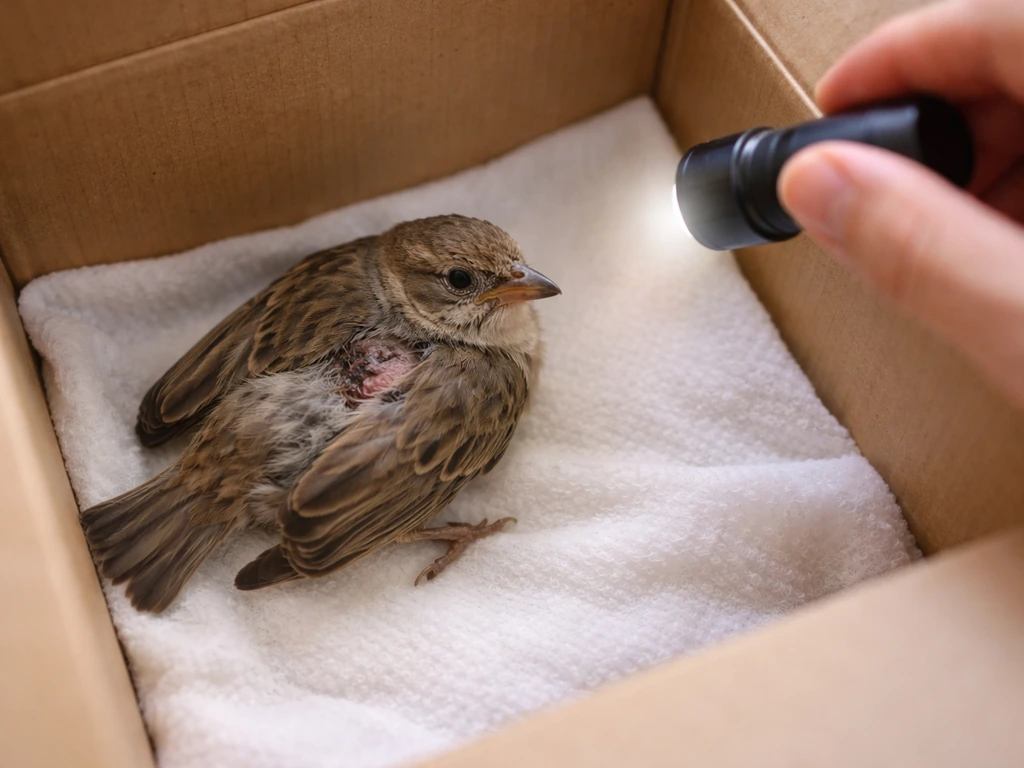
Once the bird is in a box and settled, you can do a quick visual check without handling it repeatedly. Look for the following signs that indicate something is wrong:
- One wing drooping lower than the other at rest
- Visible bleeding, open wounds, or missing feathers in patches
- The bird holding its head at an odd angle or tilting to one side
- Labored breathing or the beak open constantly (not just from heat)
- Discharge from the eyes or nostrils
- The bird is unable to grip or stand, even when placed upright
- Leg or foot deformity or swelling
- The bird was caught by a cat, even momentarily (cat saliva carries bacteria that cause fatal sepsis in birds within 24 to 48 hours without antibiotics)
Any of these signs means the bird needs professional care urgently. Even if the bird looks fine after a cat encounter, treat it as an emergency. Internal puncture wounds from cat claws are often invisible from the outside.
Getting the right help: who to call and when
Your first call should be to a licensed wildlife rehabilitator. In the U.S., you can find one through the National Wildlife Rehabilitators Association (nwrawildlife.org) or your state's Fish and Wildlife agency website. Many areas also have local Audubon chapters or wildlife centers that take bird calls. Search "wildlife rehabilitator near me" plus your city or county and you'll usually find someone quickly. Have the following information ready when you call: the species if you know it, where exactly you found the bird, what it looked like and how it was behaving, and whether there was any known hazard like a cat.
Call a vet immediately, not just a rehabilitator, if: the bird is bleeding actively, was caught by a cat or dog, has a visible broken bone, is unconscious or barely responsive, or is having trouble breathing. Some avian vets and emergency animal clinics will stabilize wild birds even if they don't specialize in wildlife. It's worth calling ahead to ask.
If you're waiting on a callback or can't reach anyone right away, keep the bird in the dark quiet box and don't keep disturbing it. Stress kills birds that injury doesn't. While you're waiting, it's worth reading up on how to rescue a fledgling bird for more detail on the process of getting a bird safely to a rehab facility.
Urgent vs. non-urgent: a quick reference
| Situation | Priority Level | What to Do |
|---|---|---|
| Cat or dog contact (any) | Urgent — call vet now | Do not wait; cat bacteria is fatal without fast antibiotics |
| Visible bleeding or open wound | Urgent — call vet now | Minimize handling; keep bird still and warm |
| Unconscious or barely responsive | Urgent — call vet now | Warm, dark box; call emergency vet immediately |
| Suspected broken wing or leg | Urgent — call vet or rehab now | Don't try to splint; keep confined and call |
| Alert but grounded with no parent | Non-urgent — call rehab today | Box setup, quiet, call rehabilitator within hours |
| Healthy fledgling near traffic | Precautionary | Move to nearby bush; observe from distance for 2 hours |
| Healthy fledgling, parents nearby | No intervention needed | Leave it alone; observe from a distance |
Mistakes that make things worse (and how to avoid them)
The single biggest mistake people make is deciding to raise the bird themselves. It feels kind, but it causes real harm. Young birds imprint on the first faces and sounds they spend extended time around, and an imprinted bird cannot survive in the wild. It won't learn to find food, avoid predators, or interact normally with its own species. If you're curious what proper early-stage bird care actually involves, the guide on how to raise a newborn bird shows just how specific and demanding the process is, and why it genuinely requires trained hands.
Another common error is overheating. People place heating pads directly under a bird or use heat lamps too close, and the bird overheats within an hour. Always give the bird a way to move off the heat source. If the bird is panting with its beak open, it's too hot.
Giving water by dropper or syringe is the mistake that probably kills the most birds in home care. Even a small amount of water in the wrong place causes aspiration pneumonia. Don't do it. If you're unsure whether the bird is dehydrated, that's a question for the rehabilitator.
Handling the bird too much is another issue. Every time you pick up the bird to show someone, check on it, or try to calm it down, you're causing a cortisol stress spike that uses up the bird's limited energy reserves. Handle once to place in the box, then leave it alone.
Don't put the bird in a cage with perches, mirrors, bells, or other birds. Don't play bird calls to it. Don't put it outside in direct sun "to see how it does." Keep it boring, dark, warm, and quiet until it's in professional hands.
Finally, don't delay getting help because you think the bird is "doing better. " A bird that appears to stabilize can crash quickly. The goal of everything you're doing, the box, the warmth, the quiet, is to buy time for a professional to take over, not to replace that professional. Once the bird is with a licensed rehabilitator, your job is done.
And when the time eventually comes, understanding how to release a fledgling bird properly is equally important to giving it a real chance at survival. For birds that have been through extended hand care, the process of releasing a hand reared bird back to the wild requires its own careful approach to give the bird the best possible outcome.
FAQ
I found a mostly feathered baby bird. How can I tell if it really needs rescue or just needs space?
If the bird is fully feathered and can hop, assume it is a fledgling until proven otherwise. For most of them, the safest help is to put it back where it belongs (often the ground under nearby cover) and keep pets away, then watch from a distance for at least two hours to see if parents resume feeding.
What container should I use if I don’t have a box or a proper rehab setup?
If you have a bird cage, don’t use it. Use a simple cardboard box so it cannot climb, flap into perches, or get injured by bars. Also avoid any container with mesh tops, aquarium lids, or anything that can snag the feet.
Can I use a heating pad or hot water bottle instead of the rice or bean warmers?
No. Uncooked rice or beans for a warming bag can work, but you must microwave only until warm, not hot, and you must wrap the bag in cloth and keep it under part of the box so the bird can move away. Also avoid hot water bottles, heating pads, or direct contact heat.
Is it okay to give water right away, and how do I know if the bird can drink safely?
Check the box corner water only if the bird is alert. Skip hydration attempts if it seems weak, is lying on its side, has trouble swallowing, or you see foamy saliva, gaping, or coughing, because those can signal aspiration risk. In those cases, focus on warmth and get professional help.
Can I take the fledgling outside or keep it in different rooms while waiting for help?
Place the bird in the warm box near where you found it, and do not take it outside for “fresh air.” If it must be moved for safety, move it once and keep the container dark. Going in and out repeatedly increases stress and can worsen breathing issues.
What if the bird survived a cat encounter and looks okay, do I still need to call?
If the bird was caught by a cat or dog, treat it as an emergency even if there are no visible wounds. Call an avian or wildlife professional immediately because puncture injuries and internal damage can be invisible at first.
If I can’t reach a rehabilitator for several hours, when is it safe to give temporary food?
Food timing matters. Only attempt temporary “holdover” feeding if the rehabilitator is unreachable and the bird is clearly hungry and alert. If the bird is lethargic, cold, breathing fast, or not responsive, do not feed, focus on warmth, and prioritize urgent medical advice.
What should I feed, if I’m not sure what species it is?
Don’t use birdseed, bread, mealworms as a staple, or anything “close enough.” Nutrition is species-specific, and wrong mixes can cause rapid digestive and metabolic problems. Until a pro directs you, avoid feeding entirely except the limited holdover guidance already mentioned.
I can’t tell whether it’s a fledgling or a nestling. What are the clearest signs?
If you don’t know the age, use behavior plus appearance. A fledgling usually has enough feathers for a recognizable body shape, can stand or hop, and holds itself upright. A nestling is mostly featherless, with closed or barely open eyes and a very “nest-like” look, which changes the first step to returning it to the nest.
If the bird is on a sidewalk, should I pick it up or try to move it myself?
Use safety boundaries instead. Keep pets and kids away, block access to roads, and guide the bird gently to the base of nearby cover if it is in a hazardous spot. If it walks away and parents seem to be nearby, you can stop and monitor rather than repeatedly picking it up.
How long is it acceptable to keep the bird in a box before transporting it?
If the bird is in your care longer than a few hours, keep using the same stress-minimizing setup, dark and quiet, and avoid additional handling. Then transfer promptly to the rehabilitator, since prolonged home care increases the chance of imprinting and nutrition errors.
What should I do immediately if the bird is bleeding or seems to be having trouble breathing?
If it’s bleeding, in shock, or breathing with effort, do not attempt home triage. Use minimal handling, place it in the box for warmth, and call an avian vet or emergency clinic right away. Even if you plan to call a rehabilitator, medical stabilization can be time-critical.
Next Article
How to Raise a Newborn Bird: Nestling vs Fledgling Care
Learn nestling vs fledgling care, feeding, warmth, first aid, what to avoid, and when to contact rehab.