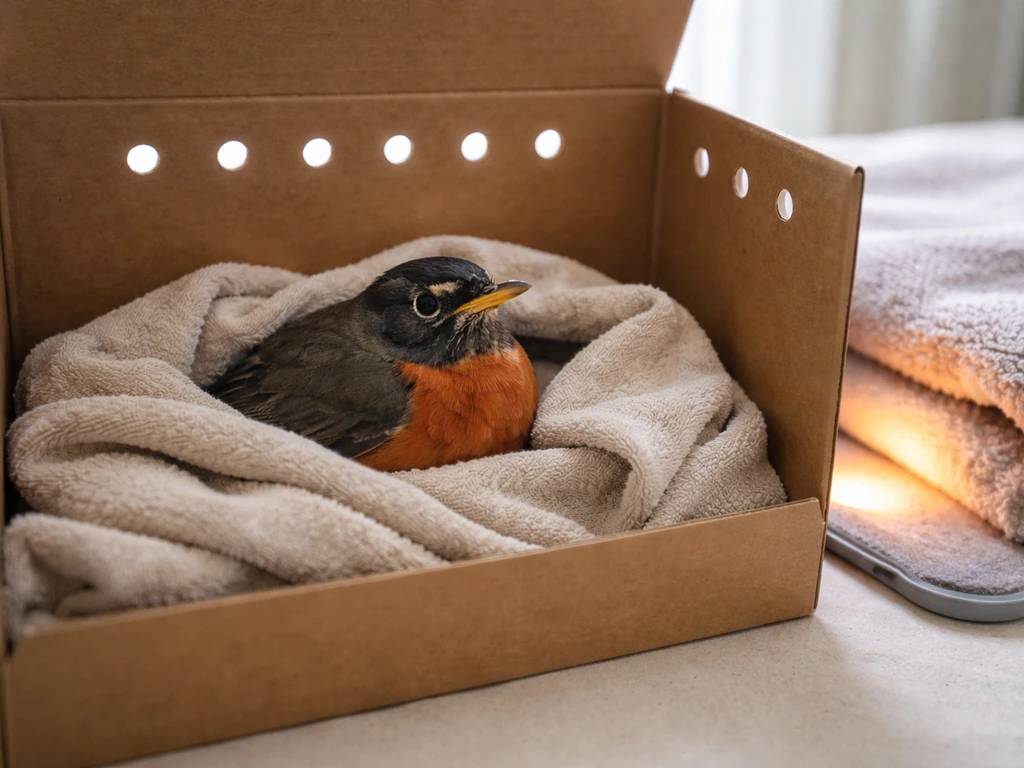
If you find a stray bird today, the most important things you can do right now are: contain it gently in a cardboard box with air holes, place that box somewhere warm, dark, and quiet, keep pets and people away, and call a licensed wildlife rehabilitator as soon as possible. Do not feed it or give it water. That one rule alone will prevent most of the accidental harm people cause with the best intentions.
How to Take Care of a Stray Bird: Humane Steps Now
Marcus Holloway
21 May 2026
Quick assessment: injured, orphaned, or just grounded?
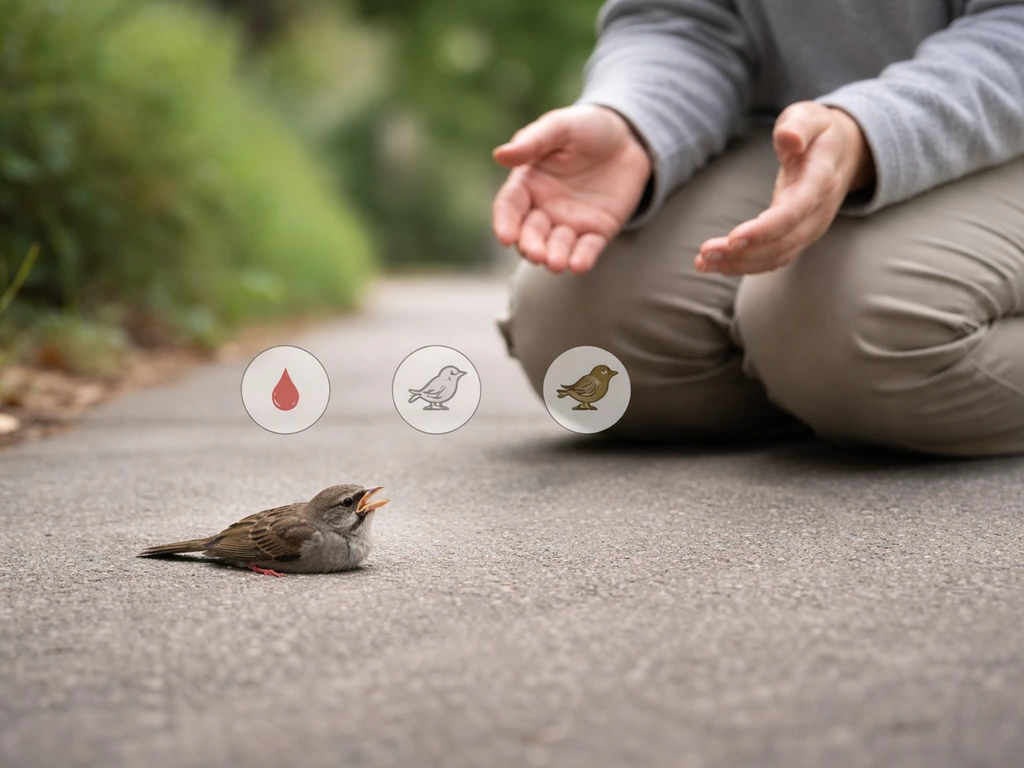
Before you touch anything, spend a minute watching the bird from a short distance. Most birds on the ground do not actually need rescuing, and knowing which category you're dealing with changes everything about what you do next.
Ask yourself these questions. Is the bird bleeding, unable to stand, lying on its side, breathing with obvious difficulty, or unresponsive? If yes, that is an emergency and it needs professional help today. Does it have visible wounds, a drooping or crooked wing, puncture marks (especially from a cat), maggots, tilted head, or large bubbles under the skin? Those are all serious injury signs that go beyond anything you can manage at home.
If none of those apply, check whether the bird is a baby or an adult. A baby with few or no feathers is a nestling that has fallen from the nest and does need help getting back. A baby with a full coat of short feathers, a stubby tail, and the ability to hop around is almost certainly a fledgling learning to fly. Fledglings on the ground are completely normal, and their parents are almost always nearby, still feeding and watching over them. The U.S. Fish and Wildlife Service is clear on this: a young bird on the ground is probably a fledgling, and parents are usually close by, listening for its calls.
For adult birds, a common situation is a window collision. The bird may just be stunned and need 30 to 60 minutes to recover on its own. If it hit a window and has been sitting in the same spot for more than three hours or is still unable to fly after trying, it needs help.
| Situation | What you're likely seeing | What to do |
|---|---|---|
| Injured adult or baby | Bleeding, broken limb, puncture wound, can't stand | Contain carefully and call a rehabber immediately |
| Nestling on the ground | Sparse or no feathers, eyes may be closed | Return to nest if possible, or call for guidance |
| Fledgling on the ground | Feathered but short-tailed, hops around | Leave it alone, remove pets, watch from a distance |
| Window-struck adult | Sitting still, stunned but upright | Place in quiet box, check again in 1 hour, call if no improvement |
| Exhausted migrant | Alert but weak, won't fly | Contain, call rehabber, do not feed or water |
Safety first: how to approach without making things worse
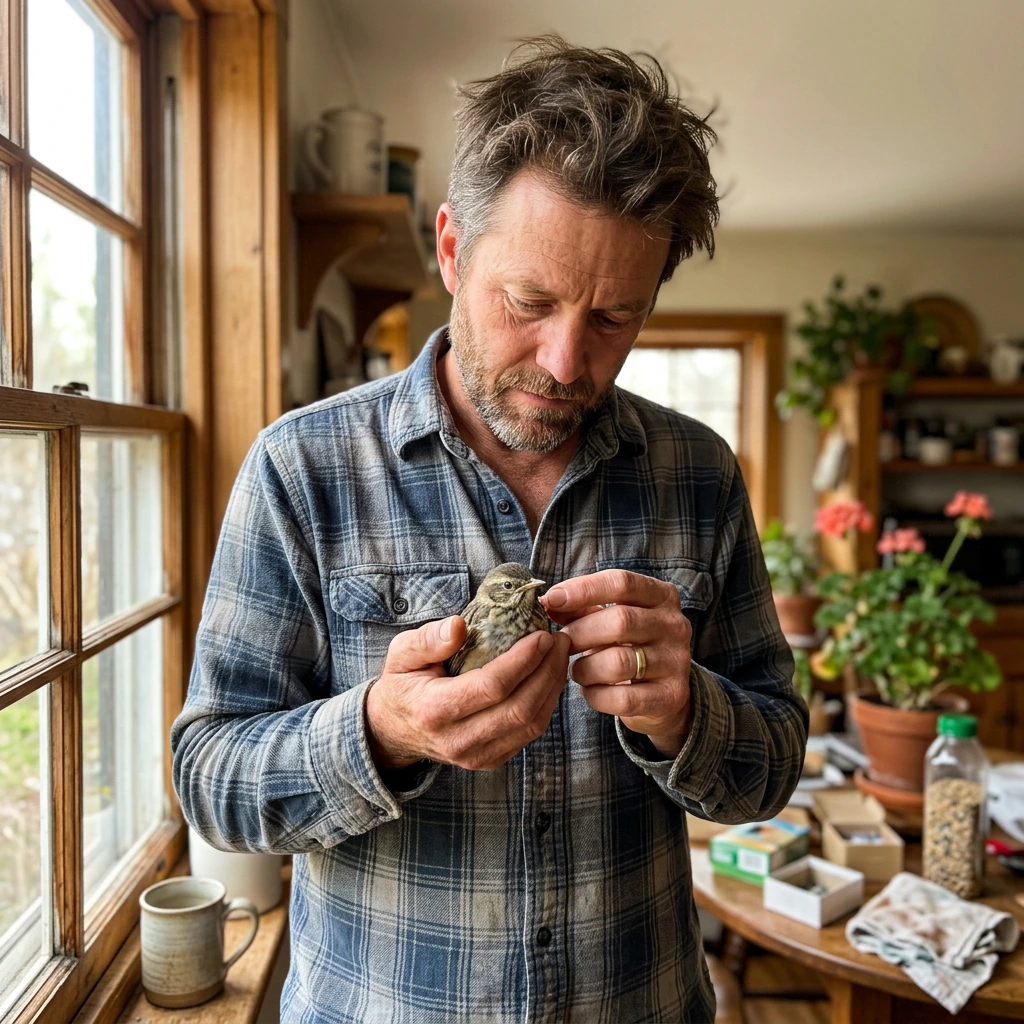
A wild bird that lets you walk right up to it is already under serious stress. Your instinct to help is good, but a panicked bird can injure itself worse trying to escape, and some species carry diseases that can transfer to humans through feathers, droppings, or bites. Always wear gloves if you have them. If you don't, use a folded towel or a thick cloth to cover and pick up the bird. Wash your hands with soap and water thoroughly after any contact, even if you only touched feathers or droppings.
Approach slowly and quietly from the side rather than straight on. Avoid sudden movements or loud noises. Crouch down to reduce your profile. If the bird tries to run or flap away, do not chase it. Follow patiently and wait for a moment when it's calm. With injured birds, draping the cloth over them first and then scooping gently from underneath works much better than grabbing.
Get pets indoors before you start. Even a calm dog or cat nearby is enough to send a bird into a fatal stress response. Birds' heart rates under threat can spike dangerously, and what looks like a calm moment can still be a crisis internally.
Immediate shelter, warmth, and stress control
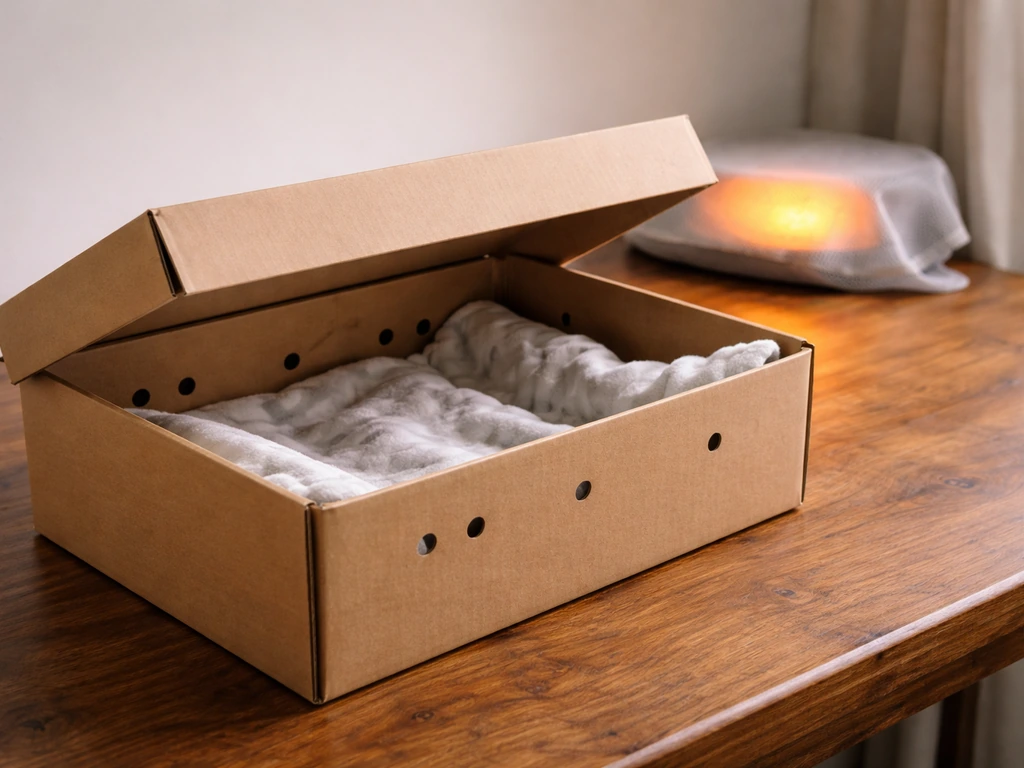
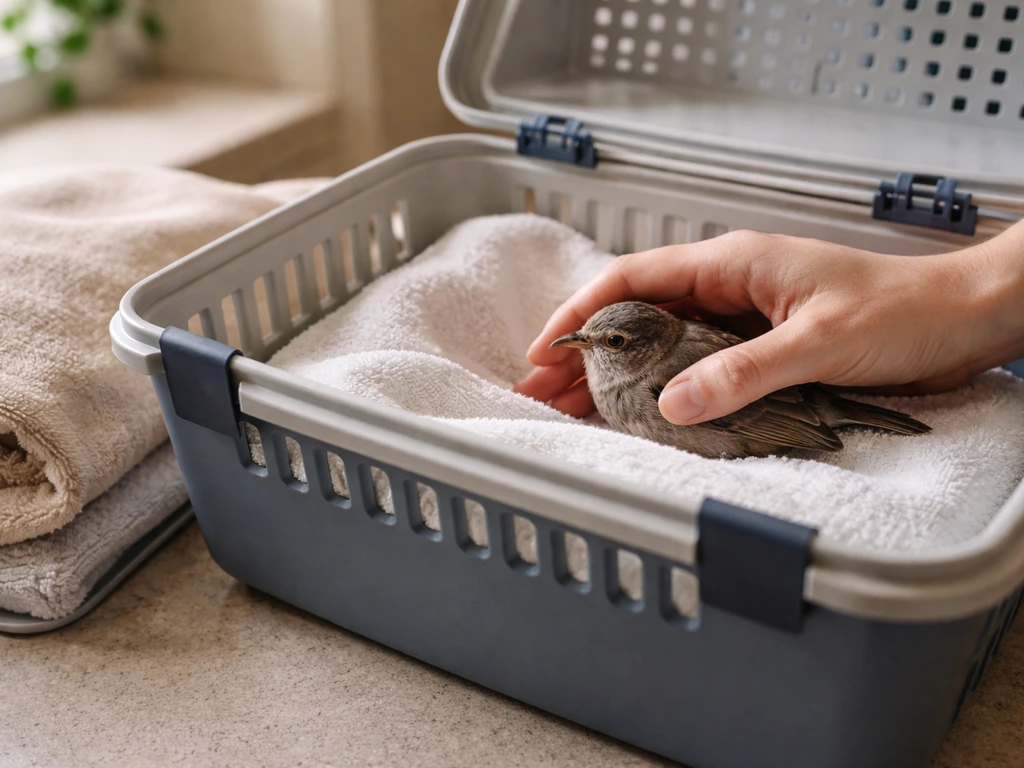
Once you have the bird safely in hand, get it into a container immediately. A cardboard shoebox or a medium cardboard box with a lid works perfectly. Poke several small air holes in the sides and lid before you put the bird in. Line the bottom with a clean, dry cloth or a few paper towels so the bird has something to grip. Do not use a wire cage or aquarium, since visibility increases stress and wire can cause feather and foot damage.
Place the box somewhere warm (around 85 to 90 degrees Fahrenheit for injured or baby birds), dark, and quiet. A bathroom away from foot traffic works well. If the bird is cold to the touch, especially a nestling, you can place a heating pad on its lowest setting under one half of the box so the bird can move away from the heat if it gets too warm. Alternatively, a sealed zip-lock bag filled with warm (not hot) water wrapped in a cloth and placed beside the bird can help. Never place heat sources directly on the bird.
Darkness is not just comfortable for the bird, it's genuinely calming. It reduces the visual stimulation that drives panic. Resist the urge to keep checking on it by lifting the lid. Every time you open that box, you're adding stress. Check minimally, and when you do, do it quickly and quietly.
Do not place a water bowl inside the box during transport or holding. It will tip, soak the bird, and cause chilling. This matters especially for injured birds, where hypothermia is a serious secondary risk.
Basic first aid essentials and common don'ts
Your role here is stabilization, not treatment. The goal is to prevent the bird from getting worse while you get it to someone qualified. Here's what you can actually do and what you must avoid.
- Do contain the bird in a dark, warm, quiet box as described above
- Do wear gloves or use a towel when handling
- Do wash your hands thoroughly after any contact
- Do keep the bird away from pets, children, and noise
- Do call a wildlife rehabilitator or avian vet as soon as the bird is contained
- Do not give food or water under any circumstances unless a rehabber specifically tells you to
- Do not try to splint or bandage a broken wing yourself
- Do not attempt to clean or flush wounds
- Do not give any human medications, electrolyte drinks, or supplements
- Do not keep the bird in a cage where it can see outside or see people moving around
- Do not handle the bird more than necessary
- Do not let children or pets near the box
The feeding rule deserves a dedicated moment because it's the one people break most often with the best intentions. Feeding an injured or stressed bird the wrong food, or giving fluids the wrong way, can kill it. Baby birds are especially prone to aspiration because the opening to their airway sits at the base of their tongue, so even a few drops of water given incorrectly can cause fatal pneumonia. Feeding can also interfere with anesthesia if the bird needs emergency surgery. Just don't do it.
Baby birds: nestlings vs fledglings and what to do with each
This is where most people make the wrong call, so it's worth being very specific.
Nestlings (sparse feathers or none at all)
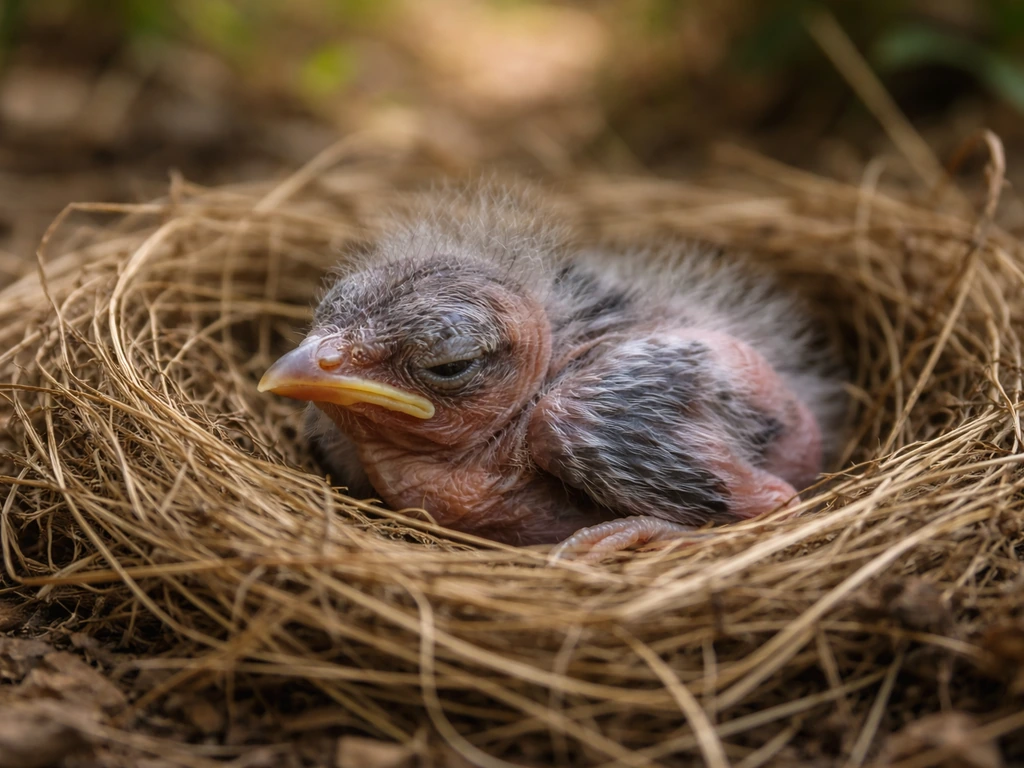
If the bird has no feathers or just a few sparse tufts and its eyes may still be closed, it's a nestling. It has fallen or been pushed from its nest too early and cannot survive on the ground. Look for the nest nearby, usually within a few feet in the tree or shrub directly above. If you can see it and reach it safely, place the bird back in it. The widely repeated idea that parent birds will reject a baby touched by human hands is a myth. Birds have a limited sense of smell and will absolutely continue caring for a nestling that has been handled briefly.
If the nest is destroyed, inaccessible, or you can't find it, make a substitute nest from a small container (like a berry basket or plastic bowl with drainage holes) lined with dry grass or leaves. Hang or wedge it in the nearest tree as close to the original location as possible. Watch from a distance for up to two hours. Greenwood Wildlife Rehabilitation Center also advises watching nestlings from a distance for about two hours, then calling if the parents do not return watching from a distance for up to two hours. If the parents don't return within two hours, or if the nestling is cold, injured, or you can't place it anywhere safe, call a wildlife rehabilitator.
One caution: returning a cold nestling directly to a nest with warm eggs or other young can cause the parent to push it back out to protect the rest of the brood. Warm the bird gently first (using the heating pad method described above) before returning it, and call a rehabber for guidance if you're unsure.
Fledglings (fully feathered but short-tailed and awkward)
If the bird hops around, has full feathers but a very short tail, and occasionally flaps, leave it alone. This is a completely normal phase of bird development. The parents know exactly where it is. They're responding to its calls and continuing to bring food and watch for predators. The best thing you can do is remove any cats or dogs from the area, ask your household not to bother it, and let the process happen.
The only time you should move a fledgling is if it's in immediate, unavoidable danger, like sitting in the middle of a road with cars coming. In that case, move it a short distance to the nearest safe spot with cover, like a bush or low branch. Don't move it far from where you found it because the parents are navigating back to that specific area.
If you genuinely cannot tell whether a bird is a nestling or fledgling, or whether it's injured, take a photo and call a local wildlife rehabilitator. They can often help you identify the situation from a description alone.
The approach for robin chicks and cardinal babies follows the same logic, and those species are common enough that it's worth knowing that what applies here applies to them as well. Cardinal birds have the same kinds of needs in the first hours, so follow the guidance above for safe handling, shelter, and getting help fast cardinal babies. If the bird is a robin chick, you can use the same general guidance, but follow specific steps on how to take care of a robin bird. For cardinal birds, the same injured-bird approach applies: keep them warm and calm, avoid feeding or water, and contact a wildlife rehabilitator promptly cardinal babies.
Feeding, hydration, and what not to give
The answer to what you should feed or give a stray bird is: nothing, until you speak to a rehabber. This applies to both adults and babies. This isn't a hedge, it's genuinely the right call. Feeding an incorrect diet causes injury or death, and even correct foods given in the wrong way or quantity cause harm. Improper food can also make an injured animal sick before surgery or treatment.
Here are the things people commonly try that you should avoid entirely:
- Bread or crackers (no nutritional value and can cause choking)
- Milk (birds are lactose intolerant)
- Water dropper or syringe into the mouth (aspiration risk, especially in babies)
- Dog or cat food (wrong nutritional balance for most wild birds)
- Fruit juice or sports drinks
- Worms or insects without rehabber guidance (can introduce parasites or wrong diet for the species)
If a rehabber instructs you to provide something specific while you wait, follow those instructions exactly. Otherwise, keep the bird contained and focus your energy on getting it to professional care quickly.
When to call a wildlife rehabber or avian vet, and how to transport
Call immediately if you see any of the following: the bird is blank" rel="noopener noreferrer">bleeding, non-responsive, lying on its side, breathing with open mouth or labored effort, has a visibly broken limb, has puncture wounds (especially from a cat or dog), has maggots, is tilting its head repeatedly, has large bubbles under the skin, or has been on the ground unmoving for more than an hour without any sign of improvement. If the bird is a cardinal, the same immediate rescue and holding steps apply until you can get help from a licensed wildlife rehabilitator cardinal bird. Cat bites in particular are a genuine emergency even if the wound looks minor, because cats carry bacteria in their mouths that can cause fatal infection in birds within hours.
To find a licensed wildlife rehabilitator near you, try these steps:
- Search 'wildlife rehabilitator near me' or visit the National Wildlife Rehabilitators Association directory online
- Call your state's wildlife agency (for example, Virginia's wildlife conflict helpline is 1-855-571-9003 during business hours)
- Contact a local Audubon Society chapter, humane society, or animal control office, all of whom typically maintain referral lists
- Call a local avian vet if you can't reach a rehabber quickly
When you call, have this information ready: where exactly you found the bird (address or GPS coordinates), what species it looks like or your best description, what symptoms or injuries you observed, when you found it, and whether it's a baby or adult. The more specific you are, the faster they can guide you.
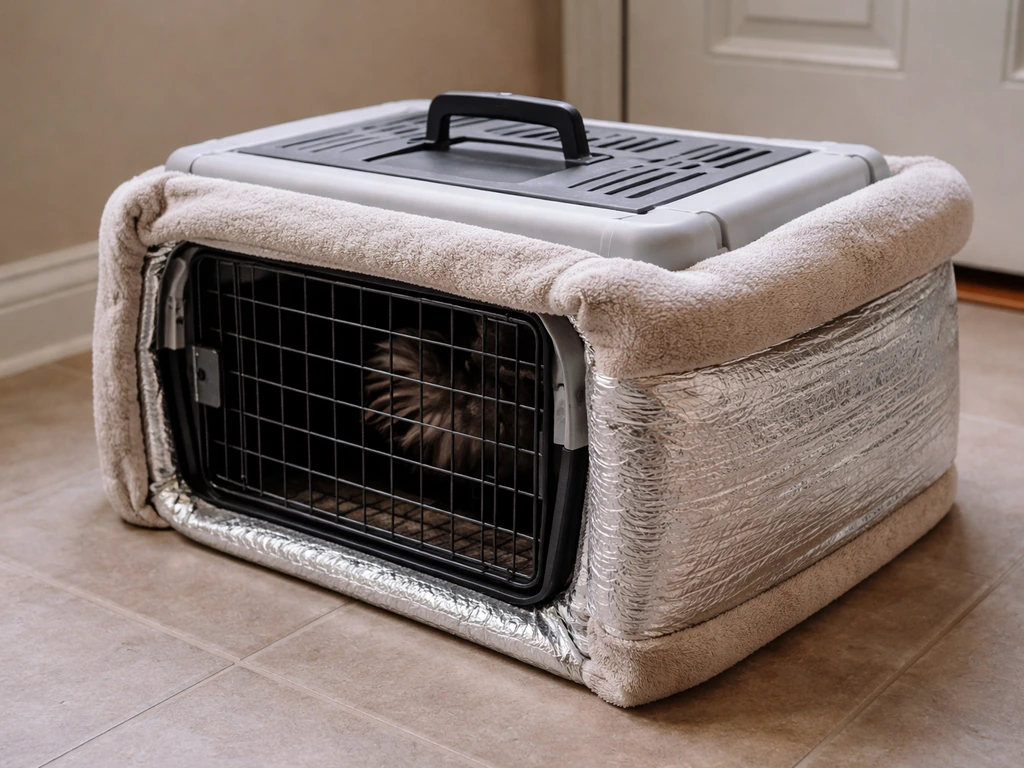
For transport, keep the bird in the closed cardboard box. Audubon also advises placing a window-collision bird in a paper bag or shoebox in a dark, quiet room away from pets and people keep the bird in the closed cardboard box.
Place the box in the footwell of your car rather than on the seat, so it won't slide. Keep the car quiet (no music or loud conversation), and drive at a steady pace. Do not open the box during transport to check on the bird. Birds have a body temperature around 105 degrees Fahrenheit, so temperature drops during transport are a real risk.
On a cold day, run the car heater. On a hot day, keep the bird out of direct sun and keep the car at a comfortable temperature.
It's worth knowing that in most U.S. states, keeping a wild bird without a permit is illegal, even temporarily with release intentions. Your role as the finder is to provide safe short-term holding and transport to a licensed rehabber, not long-term care at home.
Monitoring, recovery expectations, and what comes next
While you're waiting to reach a rehabber or during transport, your monitoring role is minimal and deliberate. Check the bird once every 30 to 60 minutes at most. A quick glance to confirm it's still upright and breathing is enough. You're not looking for dramatic improvement. You're watching for deterioration, like a bird that was sitting upright now lying on its side, or breathing that becomes more labored.
For window-struck adult birds, the timeline is useful to know. Many recover within 30 to 60 minutes. If the bird appears alert after an hour, you can take the box outside, open it in a safe outdoor area away from windows and predators, and allow it to fly out on its own. Do not throw it or toss it into the air. If it doesn't attempt to fly after three hours or tries and can't, it needs professional evaluation.
For injured birds or babies, do not attempt release yourself. Release decisions need to be made by the rehabilitator after assessing the bird's health, flight ability, foraging behavior, and ability to survive. Releasing a bird that looks recovered but isn't fully ready is often a death sentence. The rehabber will tell you what the expected timeline looks like for recovery and whether release is the right outcome or a longer-term placement is needed.
Preventing future bird emergencies around your home
If you found this bird because of a window collision, apply window collision deterrents to the outside of your glass. Tape, decals, or UV-reflective film placed on the exterior surface every 2 to 4 inches across the window is the most effective approach. Keeping bird feeders either very close (within 3 feet) or far away (more than 30 feet) from windows reduces strike risk. If you have outdoor cats, bringing them inside is one of the single most impactful things you can do for local bird populations.
Finding a bird in distress is stressful, and it's easy to feel like you need to do more than you're doing. But the most useful thing you can do after containing the bird safely is to make that call to a rehabber quickly. After that, focus on safe short-term holding at home and get the bird to the right care as soon as possible make that call to a rehabber quickly. The sooner they're in expert hands, the better the outcome.
FAQ
What if the stray bird starts chirping or seems calm, do I still avoid feeding and water?
Yes. Even if it looks alert, treat it as unknown-stress until a wildlife rehabilitator advises otherwise. The only exception is if a rehabber explicitly tells you to provide a specific item or method while you wait.
How can I tell if it is truly injured versus just stunned?
Stunned birds often regain coordination within 30 to 60 minutes, especially after a window collision. If it is breathing with open mouth, repeatedly tilts its head, is non-responsive, or stays down without improvement beyond an hour (or three hours after a suspected strike), contact a rehabber.
Should I put the bird back outside if it looks better after a short time?
Not automatically. Window-struck adults may be allowed out after about an hour if they are alert, and only in a safe outdoor area away from windows. For anything injured, for babies, or if you are unsure, keep it contained and get professional guidance first.
Can I warm the bird using a lamp, hair dryer, or hot water bottle?
Avoid lamps, direct heat, and hot water bottles. Use only gentle, controlled warmth (heating pad on the lowest setting under part of the box, or a warm water bag sealed in a cloth beside the bird) so the bird can move away if it gets too warm.
Is it okay to keep the bird in my hands for comfort while I call a rehabber?
Generally no. It is better to stabilize it in the ventilated box promptly. Holding increases handling time and stress, and it also raises the chance of falls or overheating or chilling.
What should I do if the bird has visible blood, but I cannot reach a rehabber right away?
Keep it contained and warm and contact the rehabber immediately for instructions. Do not attempt bandaging, give fluids, or apply ointments unless the rehabber specifically directs it, since improper treatments can worsen injury or cause infection.
Do I need gloves every time, even if I only touched the box or feathers briefly?
Gloves are recommended if you have them, and you should still wash your hands thoroughly after any contact. If you touched feathers, droppings, or contaminated surfaces, soap and water is the priority before you handle food or other animals.
What if I accidentally put water in the box?
Remove the water source and keep the bird dry and comfortably warm. Prevent further chilling, since soaked feathers and cold can trigger hypothermia, which is especially risky for injured birds and nestlings.
Where exactly should I place the box in my home?
Choose a warm, dark, and quiet spot away from foot traffic and windows. A bathroom can work if it is calm, but avoid drafts, ceiling fans, and areas where other pets can reach the bird or where people will keep checking.
How often should I check on the bird while waiting for help?
Check minimally, once every 30 to 60 minutes. Look for basic signs like whether it is still upright and breathing normally enough, and watch for deterioration rather than trying to evaluate recovery.
If I find a nestling, should I always put it back in the nest?
Only if the nest is accessible and you can place it safely. If the nest is destroyed or unreachable, create a substitute nest nearby and monitor for up to two hours, then call a rehabilitator if parents do not return or the bird is cold or injured.
What if the nestling feels cold to the touch before I can warm it?
Warm it gently first using the low heating pad method under part of the box or the warm-water bag technique wrapped in cloth. Do not place it directly on heat, and only return it to the nest after it is comfortably warmed to reduce the risk of parents pushing it out.
Should I keep the fledgling outside so the parents can find it, even if it seems weak?
If it has full feathers and is not obviously injured, it is usually a fledgling and the best help is to keep cats and dogs away and let parents continue care. Move it only if it is in immediate unavoidable danger, like active traffic.
What if I am not sure whether it is a nestling or a fledgling?
Take a clear photo and contact a wildlife rehabilitator with your best description of size, feather coverage, tail length, and what the bird was doing. Avoid feeding while you wait, because the correct response depends on developmental stage and injury status.
Can I keep the bird overnight in case the rehabber is closed?
You can keep it in the ventilated box in a safe warm, dark, quiet place, but the goal is still to reach a licensed rehabber as soon as they are available. Avoid long-term care at home, and follow any specific instructions they give for nighttime monitoring.
How do I reduce the chance of another window strike after release?
Apply deterrents to the outside of the glass and place feeders either very close (within about 3 feet) or far away (more than about 30 feet). Exterior decals or UV-reflective film work best when installed on the outside surface, spaced across the window.
Next Article
How to Take Care of a Robin Bird: First Aid Steps
Humane first aid for injured robin birds: rescue, warmth, handling, feeding, housing, transport, and when to call rehab.