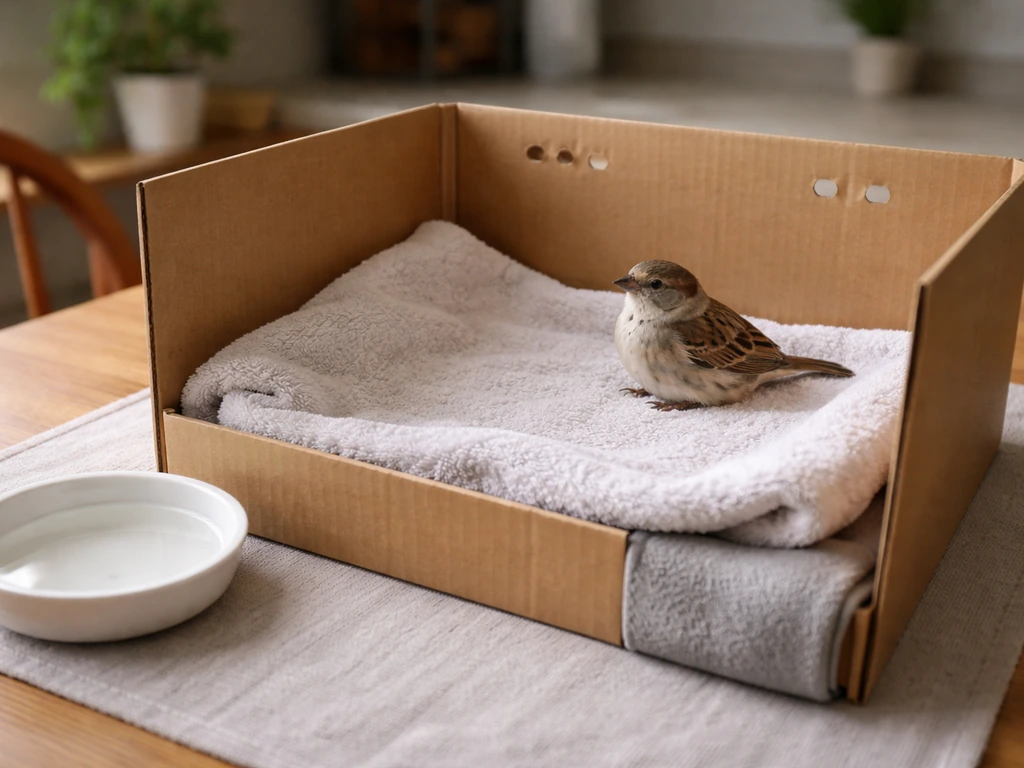
If you've found an injured cardinal, the most important things you can do right now are: pick it up gently using a towel, place it in a small cardboard box lined with paper towels, keep it in a dark, quiet, warm spot indoors, and contact a licensed wildlife rehabilitator as soon as possible. Do not try to feed it or give it water. That's the core of it. Everything below will walk you through each of those steps in detail, help you figure out what's actually wrong, and tell you when the situation is urgent.
How to Care for an Injured Cardinal Bird: First Aid Steps
Marcus Holloway
11 May 2026
What to do in the first 5–15 minutes
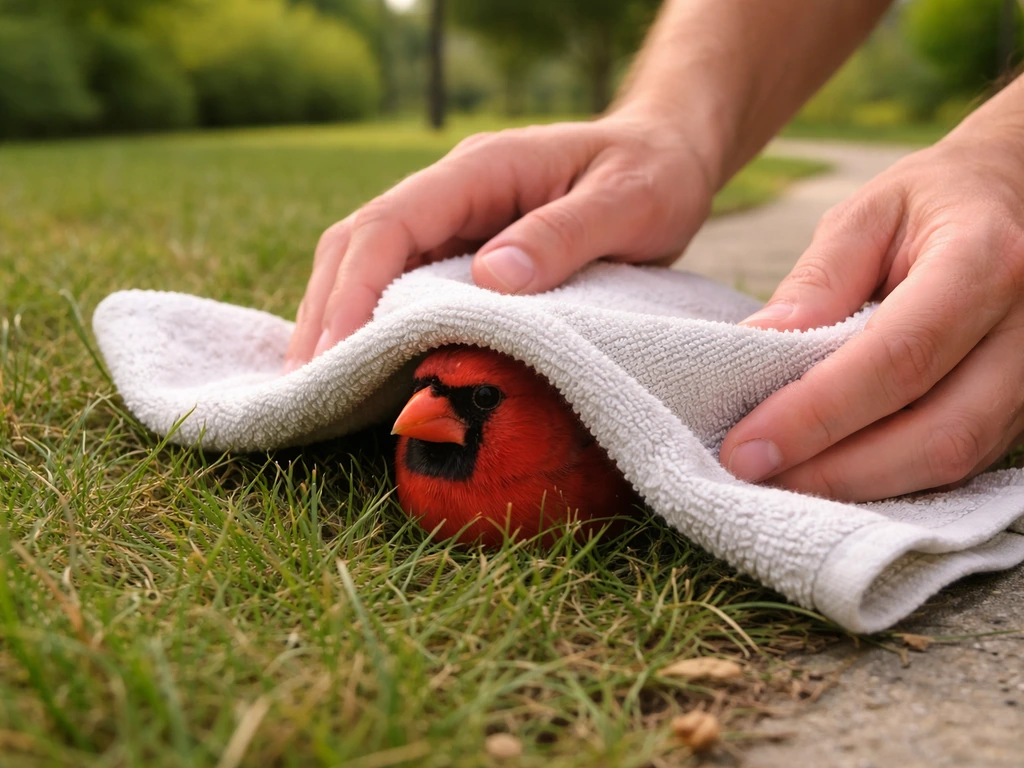
Your first job is to get the bird out of danger. If it's on the ground near a road, in an area with cats or dogs, or somewhere kids might disturb it, move it to safety. Cardinals are fast and can startle easily, so approach slowly and calmly from behind or the side.
Grab a small towel or a cloth and drape it gently over the bird before picking it up. This keeps the bird calmer, protects your hands from scratching, and prevents the bird from thrashing and injuring itself further. Cup your hands around it firmly but gently once the towel is over it. Don't squeeze.
Place the bird directly into a prepared box (more on that below). Limit how long you're handling it. Stress alone can kill a wild bird, and every extra minute of human contact adds to that stress. Get it contained quickly, then step back.
Is it actually injured? Telling an injured cardinal from a fledgling
Before you do anything else, take a quick look at what you're dealing with. Not every cardinal on the ground needs rescuing, and picking up a bird that doesn't need help can do more harm than good.
A fledgling cardinal has most of its feathers but has a short tail and may look a bit scruffy. These birds are supposed to be on the ground. They've left the nest recently and their parents are still feeding them nearby. If it's hopping around, looks alert, and doesn't appear hurt, the best thing you can do is leave it alone (or move it a few feet to safety if it's in immediate danger). The parents will usually return.
A nestling is a different story. If the bird has bare patches of skin, closed or partially-opened eyes, and cannot stand or walk, it has fallen from a nest before it was ready. That bird needs help. If you can find the nest and safely reach it, you can place the nestling back in it. The parents won't reject it because of your scent, that's a myth.
An adult cardinal that needs rescue will show clear signs. Watch for a drooping wing, inability to stand or hold itself upright, a visible wound, labored or open-mouth breathing, bleeding, swollen eyes, or a bird that's been sitting in the same spot for more than an hour without moving. These are your signals to act.
| What you see | What it probably means | What to do |
|---|---|---|
| Hopping on ground, alert, short tail, fluffy look | Fledgling — normal stage | Leave it alone; watch from a distance |
| Bare skin, can't stand, eyes closed | Nestling — fallen from nest | Return to nest if possible; call rehabber if not |
| Drooping wing, can't fly, just sitting | Injured adult | Contain and call rehabber |
| Stunned, upright but still, hit a window | Window strike — wait up to 1–2 hours | Contain and monitor; call rehabber if no improvement |
| Bleeding, can't stand, open-mouth breathing | Serious injury or shock | Contain immediately and call rehabber now |
How to handle, contain, and keep the bird warm and calm

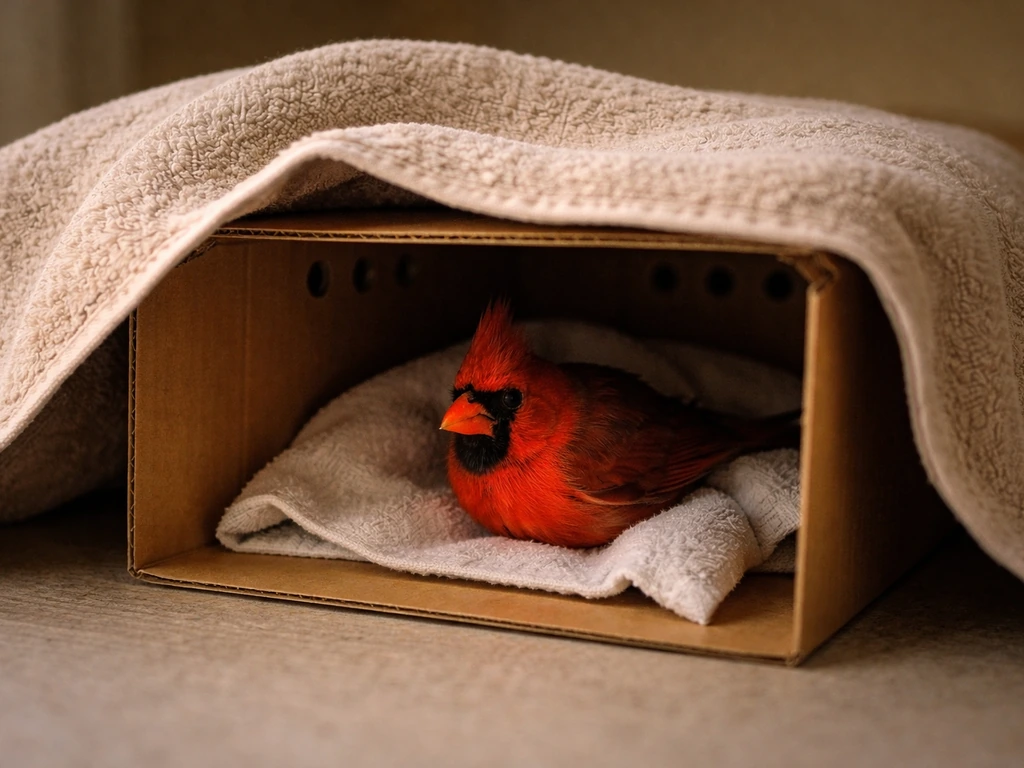
The right container matters. A small cardboard box with ventilation holes punched in the sides is ideal. An appropriately sized unwaxed paper bag also works well for a cardinal-sized bird. Whatever you use, line the bottom with paper towels or a thin cloth so the bird has something to grip and won't slip around.
Make sure the box is secure but has airflow. Don't use an airtight container. Punch a few small holes in the sides, not the top, to keep it dark. A dark environment keeps the bird calmer than a transparent or brightly lit one.
Warmth matters too. Cardinals are small birds that lose body heat quickly when they're in shock or injured. You can fill a water bottle with warm (not hot) water, wrap it in a towel, and place it along one side of the box so the bird can move toward or away from the heat as needed. Never put the heat source directly under the bird and don't put it near a heating vent, stove, or in direct sunlight. Too much heat is just as dangerous as too little.
Once the bird is boxed up, place it in a quiet room away from pets, children, and noise. Resist the urge to check on it every few minutes. Opening the box repeatedly adds stress. Leave it alone in a calm environment while you focus on reaching a wildlife rehabilitator.
Basic triage: what to check and what not to do
A quick visual check before you box the bird is useful, but keep it brief. You're looking for the most urgent problems, not trying to treat anything yourself.
- Bleeding: If you see active bleeding, you can gently apply light pressure using a clean cloth or paper towel for 30–60 seconds, but don't dig into a wound or try to remove embedded objects.
- Drooping or twisted wing: This likely means a fracture. Don't try to splint it. Just contain the bird so it can't flap and worsen the injury.
- Open-mouth breathing or clicking sounds: This is a sign of respiratory distress or internal injury. It's urgent — call for help immediately.
- Unable to stand or keeps tipping over: Could be a head injury, spinal issue, or severe shock. Handle with extra care and minimize movement.
- Cat strike: Any bird that has been in a cat's mouth needs a rehabber even if it looks fine. Cat saliva carries bacteria that cause fatal infections within 24–48 hours.
- Window strike: If it flew into glass and is stunned but otherwise intact, give it 1–2 hours in a dark quiet box. If it hasn't recovered by then, it needs professional help.
Do not apply antiseptic sprays, ointments, or any topical treatment to the bird. Do not try to straighten a broken wing. Do not administer any medication. These actions can cause serious harm. Your role right now is safe containment and keeping the bird calm, not treatment.
Feeding and hydration: what's safe and what isn't
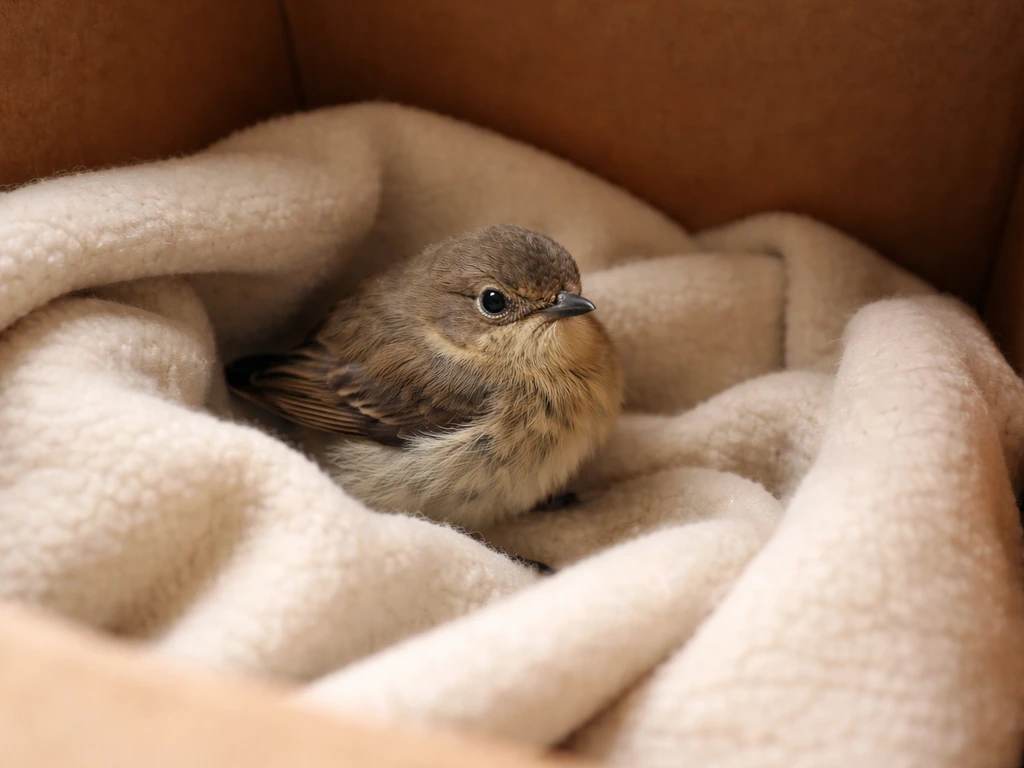
This is the part where well-meaning people most often cause accidental harm: do not feed the bird and do not give it water. This applies to both adults and juveniles, and it's not just a general caution, feeding or watering an injured bird the wrong way can kill it.
Birds can easily aspirate (inhale) liquid into their lungs if you try to drip water into their mouths or use a dropper or syringe. Even if the water goes down correctly, a bird in shock has a digestive system that isn't functioning normally, and forcing food or fluids through it can cause serious injury. The same applies to Pedialyte or any other oral rehydration solution, don't try it.
Never give a bird milk of any kind. Birds cannot digest it. Don't offer earthworms, bread, or seeds to an injured bird either. Even if a cardinal normally eats seeds, an injured bird's system is too compromised to safely process food without guidance from someone trained in wild bird care.
If you're holding the bird for several hours while waiting to reach a rehabber, it's still better to withhold food and water than to risk the harm that comes from incorrect feeding. The rehabber will handle hydration and nutrition safely when you get there.
When to call a wildlife rehabber or avian vet, and how urgent is it
In most cases, the answer is: call as soon as you've got the bird safely contained. A licensed wildlife rehabilitator has the training, permits, and equipment to actually treat and release a wild bird. Most injured cardinals will need medical attention that goes well beyond what any of us can provide at home.
Some situations are more urgent than others. Call immediately if you see any of these:
- Active bleeding that won't stop
- Open-mouth breathing, clicking, or gasping
- The bird was in a cat's mouth (even briefly)
- The bird cannot stand and keeps falling over
- Visible wound, exposed tissue, or broken bone
- Swollen or closed eyes
- The bird appears limp or completely unresponsive
Less urgent but still needs professional help within a few hours: a window strike where the bird is stunned but not visibly wounded, a fledgling that's clearly not being cared for by parents after several hours, or a bird that's grounded but not in obvious pain.
To find a licensed wildlife rehabilitator near you, the easiest tool is Animal Help Now (ahnow.org), which uses your location to show the closest certified wildlife facilities. You can also search the National Wildlife Rehabilitators Association (NWRA) or Wildlife Rehabilitators Association databases. Your local animal control or a nearby nature center can also point you in the right direction. An avian vet is another option if you can't reach a rehabber quickly, but make sure it's a vet experienced with birds, not all veterinary clinics treat wild birds.
How to transport the bird and prepare for handoff
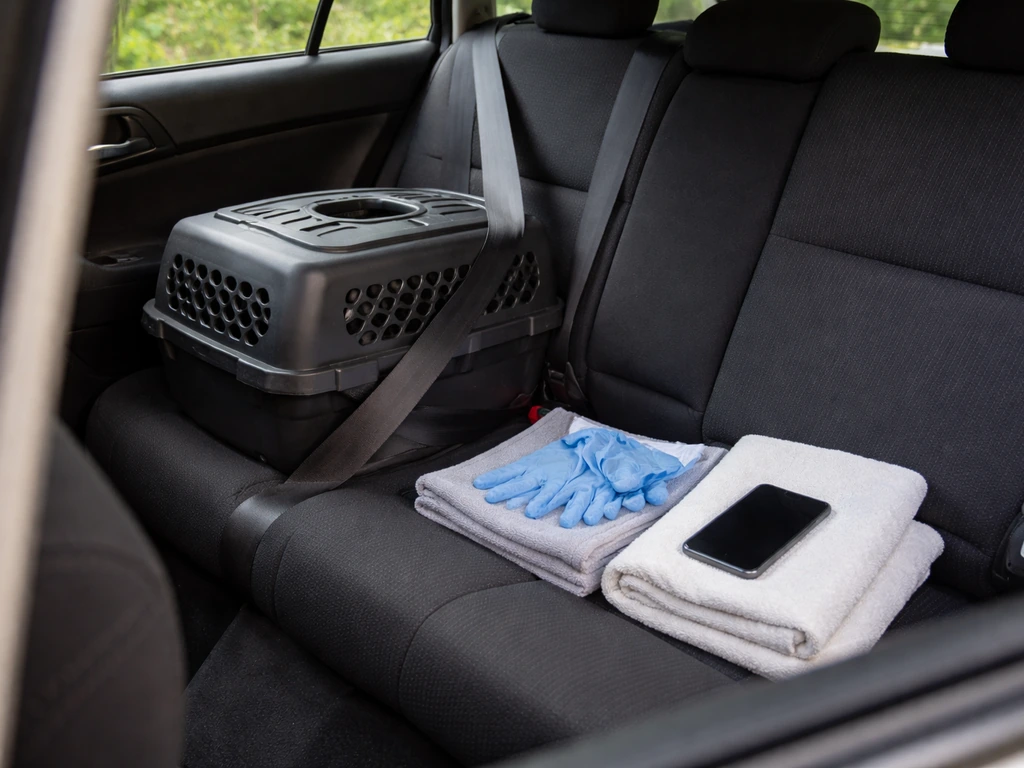
Keep the bird in the same dark, ventilated box during transport. Don't open the box during the drive. Don't play music or have the heat on full blast near the box. Keep the car as quiet and calm as possible.
Call ahead to the rehabber or avian vet before you leave so they can prepare and confirm they can take the bird. When you arrive, be ready to tell them: where you found the bird, when, what you observed (window strike, cat attack, found on road, etc.), whether you noticed any bleeding or specific injuries, and whether you gave it any food or water. That information helps them prioritize and treat the bird faster.
One important thing: cardinals are protected under the Migratory Bird Treaty Act. It's illegal to keep one as a pet or to hold it longer than necessary without a rehabilitation permit. This isn't something to stress about if you're acting in good faith to help the bird, but it is a reason to hand it off to a licensed facility promptly rather than trying to nurse it back to health at home yourself.
Preventing future injuries to cardinals in your yard
Window strikes are one of the most common ways cardinals get injured. Cardinals in particular are territorial and will sometimes fly at their own reflection in glass. You can reduce collisions significantly by applying patterned window film, vertical tape strips, or cord solutions on the outside of windows. The American Bird Conservancy recommends spacing any pattern no more than 2 inches apart vertically and 4 inches apart horizontally so birds recognize the barrier. Exterior insect screens are also effective at reducing reflections. Materials range from about $2.50 per square foot for tape to $8–12 per square foot for dot patterns.
Outdoor cats are another major cause of bird injuries and deaths. If you have outdoor cats, keeping them inside or using a cat enclosure (catio) will dramatically reduce the number of birds they can reach. If neighborhood cats are the issue, motion-activated deterrents near bird feeders can help.
Feeder placement also matters. Placing feeders either within 3 feet of a window (so birds can't build up enough speed to cause serious injury if they strike glass) or more than 30 feet away (far enough that birds don't reflexively flush toward the house) reduces collision risk. Cardinals prefer low-to-the-ground platform feeders with sunflower seeds and safflower, so you have some flexibility in placement.
A note on ongoing care
If you're interested in what longer-term cardinal care looks like beyond the emergency phase, that's a topic covered more fully in guides focused on general cardinal care and caring for wild birds at home. For more specifics on how to take care of a robin bird, follow the robin-focused care guidance rather than using cardinal instructions caring for wild birds at home.
Those resources are helpful once the immediate crisis is resolved and you're thinking about prevention or supporting birds in your yard. But for right now, in the first hours after finding an injured cardinal, the steps above are what matter most: contain, keep calm and warm, don't feed, call a rehabber, and transport safely. After the immediate crisis, you can focus on the long-term basics of how to take care of a cardinal bird by creating a safe, bird-friendly environment and following guidance from a wildlife professional.
For ongoing care after you’ve contacted a rehabilitator, it helps to know how to take care of a cardinal bird properly so the bird stays safe until it can be released. For more details on how to take care of a stray bird after you have it safe and calm, follow the steps in this guide.
FAQ
What if the cardinal looks alive but I am not sure it is actually injured?
If the bird has no obvious injury and it can stand, hop, and respond normally, it may be a fledgling that should be left alone. Watch from a distance for a short period, and only intervene if it is in immediate danger (roadway, pets, or people nearby).
What should I do if I cannot get a wildlife rehabilitator right away?
A stopgap is to keep it in the same dark, ventilated box and provide gentle warmth, but do not add any food or water. If you cannot reach a rehabilitator within a few hours, call anyway so they can advise on next steps and urgency for your specific situation.
How long is it safe to hold an injured cardinal before I put it in the box?
Use a small towel or cloth to drape and gently restrain during transfer, but avoid ongoing handling. Limit how long your hands stay on the bird, and never squeeze its body or wings. Every extra minute increases stress, which can worsen shock.
Can I offer water to an injured cardinal to prevent dehydration?
Do not give oral fluids or try to force water with a dropper or syringe. Even small amounts can be aspirated, especially when the bird is stunned or breathing abnormally. Focus on warmth, darkness, and professional care.
What should I do if the cardinal is bleeding?
If the bird is bleeding, do not apply sprays, ointments, or homemade antiseptics. Instead, keep the bird warm and calm, place it in the ventilated box, and tell the rehabilitator there was bleeding when you call.
How can I tell if my bird needs emergency help versus “wait and see”?
If it appears unable to breathe normally (open-mouth or labored breathing) or has an obvious wound or swollen eyes, treat it as urgent. Keep it contained and contact a rehabber immediately rather than waiting to see if symptoms improve.
What kind of container is safest, and can I use a plastic tub?
Do not use a plastic container or anything airtight, because poor airflow increases stress and can be dangerous in shock. Punch small holes in the sides of a cardboard box, and line the bottom so the bird can grip and not slide.
How do I provide warmth without accidentally overheating the bird?
Warmth should be indirect and adjustable. Use a warm water bottle wrapped in a towel placed beside the box, not under the bird, and avoid vents, stoves, direct sunlight, or overheating the enclosure.
Should I keep opening the box to see how the bird is doing?
Do not remove it from the box to “check” repeatedly. If you must look, do a quick visual check through the opening with minimal handling, then close it and leave it undisturbed until transport.
My cardinal had a window strike and seems stunned, what should I do next?
If a cardinal hit a window, it can have internal injuries even when it looks mostly unhurt. Contact a rehabber promptly, keep it dark and warm, and do not try to revive it with water or food.
I found a baby cardinal on the ground, should I feed it or can I put it back in the nest?
If it is a true nestling (bare skin, closed or partially-open eyes, cannot stand), returning it to the nest can be appropriate if the nest is reachable safely. If you cannot locate or access the nest, contact a rehabilitator rather than attempting feeding or care at home.
How do I know if a fledgling cardinal should be left alone?
If a fledgling is fully feathered, appears alert, and is still being cared for nearby by parents, it often needs no rescue. Only move it a few feet if it is in immediate danger, such as near traffic, pets, or where someone might pick it up.
Why can’t I give the bird bread, seeds, or Pedialyte?
Milk, bread, seeds, worms, and oral rehydration products are not appropriate for an injured wild bird. The safest approach is containment, warmth, and contacting a rehabber, since improper feeding can cause aspiration or digestive complications.
What are the transport rules once I have the box ready?
During transport, keep the bird in the same dark, ventilated box and do not open it in the car. Keep the environment calm, avoid loud music, and avoid letting the box overheat in a hot vehicle.
Is it legal to hold an injured cardinal until it recovers?
Cardinals are protected and should not be kept longer than necessary without proper authorization. The practical takeaway is to minimize time at home, hand off quickly to a licensed facility, and follow their instructions exactly.
How can I prevent outdoor cats from injuring cardinals in my yard?
Yes. If you have outdoor cats, keeping them indoors or using a catio greatly reduces risk. If neighborhood cats are the problem, motion-activated deterrents around feeders can help, but you should still contact a rehabber if you find an injured bird afterward.
What is the best way to prevent cardinal window strikes?
For window collisions, apply deterrents on the outside of windows, not inside. Pattern spacing matters, and exterior insect screens can reduce reflections. If the pattern is too wide apart, birds may still try to fly through the glass.
Next Article
How to Take Care of a Bird at Home Safely
Step-by-step home care for injured or orphaned birds: warmth, safe handling, first aid, feeding do’s, and when to get he