If you've found a young bird on the ground and you're wondering how to release it, here's the short answer: most fledglings don't need you to 'release' them at all. They're already where they're supposed to be. Your job is to confirm it's healthy, keep it safe from cats and dogs, and let the parents do the rest. This guide walks you through every step of that process, including what to do when things don't go smoothly.
How to Release a Fledgling Bird Safely and Humanely
Marcus Holloway
22 Apr 2026
Fledgling or nestling? Get this right first
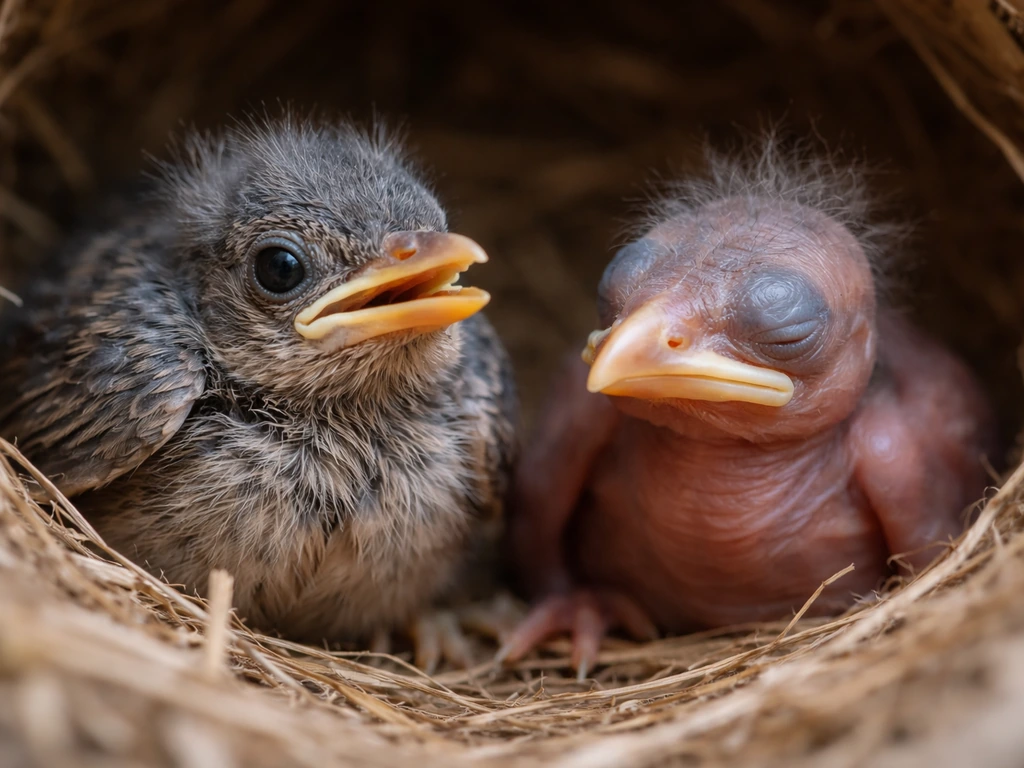
Before you do anything else, figure out what kind of baby bird you're dealing with. The answer changes everything about how you respond.
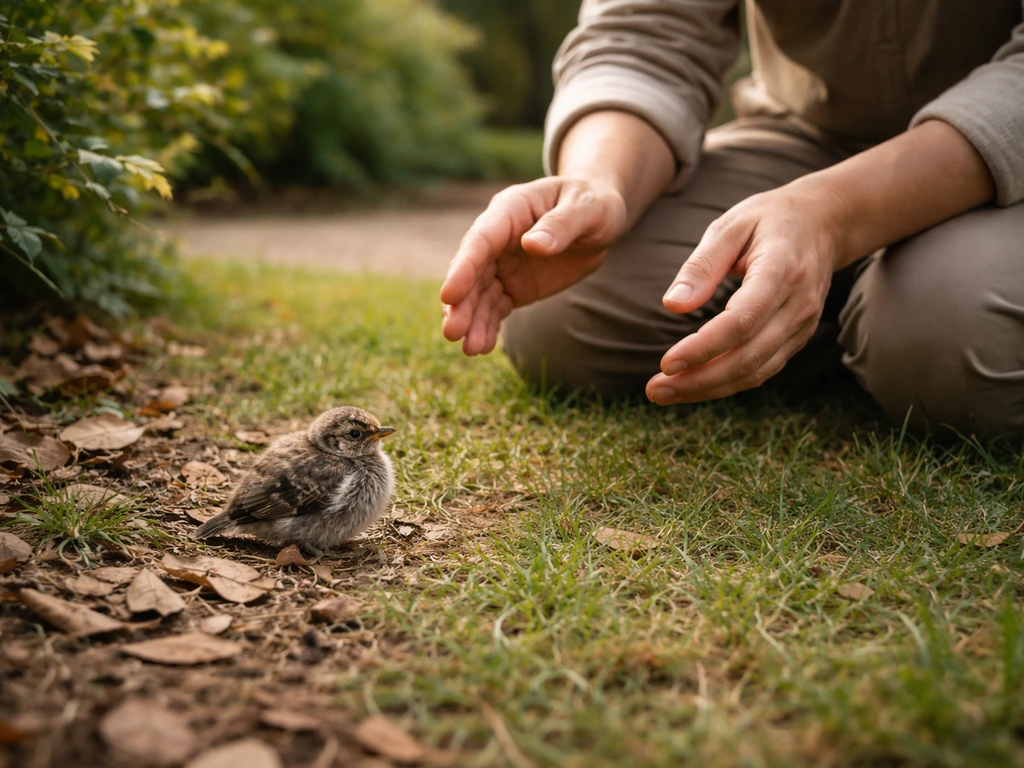
A fledgling is a fully or mostly feathered bird that has left the nest on its own. It can hop, it may flutter its wings, and its eyes are open. It probably looks a bit scruffy and awkward, and it almost certainly can't fly well yet. That's completely normal. Most songbirds spend two to three days on the ground learning to fly after they leave the nest, and their parents are still actively feeding them during this time, usually for another two to three weeks after fledging.
A nestling is much younger. It's tiny, mostly or completely featherless, has closed or barely open eyes, and cannot hold itself upright. If you find one of these on the ground, it has fallen or been pushed from a nest, and it does need direct help.
| Feature | Fledgling | Nestling |
|---|---|---|
| Feathers | Mostly or fully feathered | Featherless or just pin feathers |
| Eyes | Open | Closed or barely open |
| Movement | Hops, may flutter wings | Cannot stand or hop |
| On the ground | Normal and expected | Has fallen from nest |
| What to do | Observe and protect; don't intervene unless injured | Attempt to return to nest; contact rehabber if needed |
One important thing to know: human scent does not stop bird parents from returning. That's a myth. You can pick up a fledgling to move it out of immediate danger without worrying that the parents will abandon it.
Check the bird before you do anything else
A healthy fledgling on the ground is not an emergency. But before you walk away, spend a minute doing a quick visual check. You're looking for signs that the bird is injured or sick, not just young and clumsy.
Signs the bird is probably fine and just needs to be left alone:
- Fully or mostly feathered, eyes open and alert
- Hopping or moving around on its own
- Reacts to your approach (tries to move away)
- Wings held symmetrically against the body
- No visible wounds, blood, or swelling
Signs the bird needs help and should not simply be left or released:
- Bleeding, open wounds, or a visibly broken wing or leg
- One wing drooping lower than the other
- Extreme lethargy, inability to hold its head up, or unresponsiveness
- Shivering or cold to the touch
- Signs of cat or dog contact, even without obvious wounds (puncture injuries from claws or teeth cause internal damage that isn't always visible)
- Oily or wet feathers suggesting chemical or oil exposure
- Bird found near a window with signs of a collision (stunned or unconscious)
If the bird passes the visual check and you see no injuries, your next step is observation, not intervention. If you see any of the warning signs above, skip ahead to the section on when not to release.
If it does need temporary care: keep it calm and warm
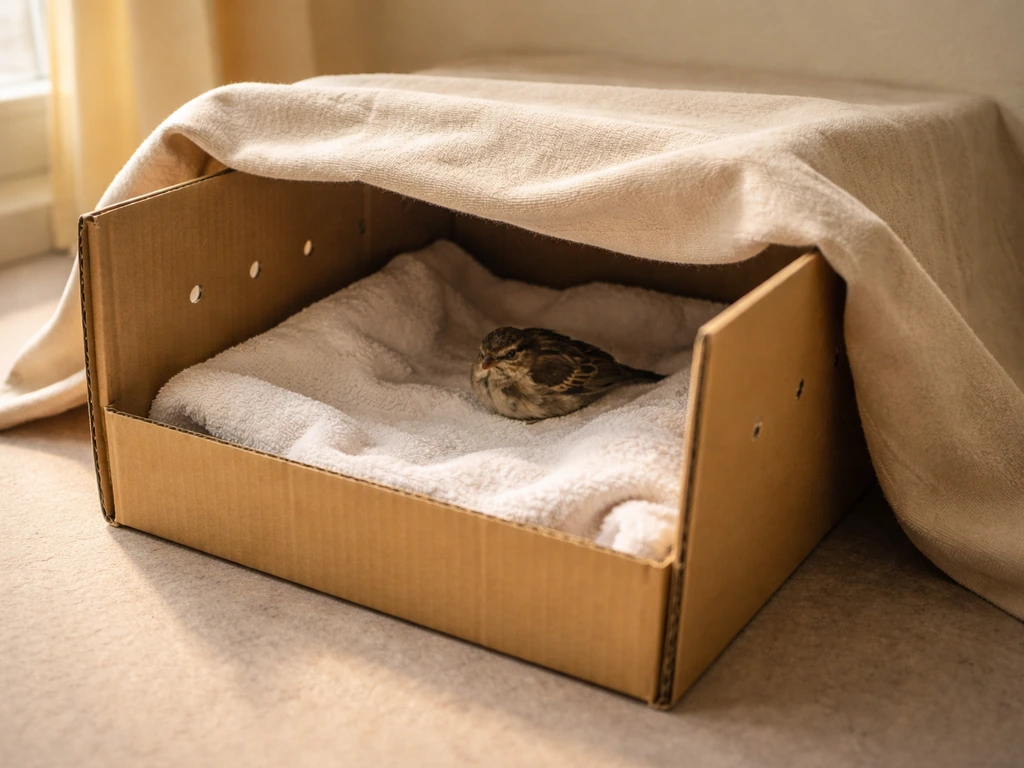
Sometimes you'll need to contain a fledgling briefly, either because it's in immediate danger (a busy road, a cat in the yard) or because you're waiting to hear back from a rehabilitator. The goal here is to minimize stress and keep the bird stable, nothing more.
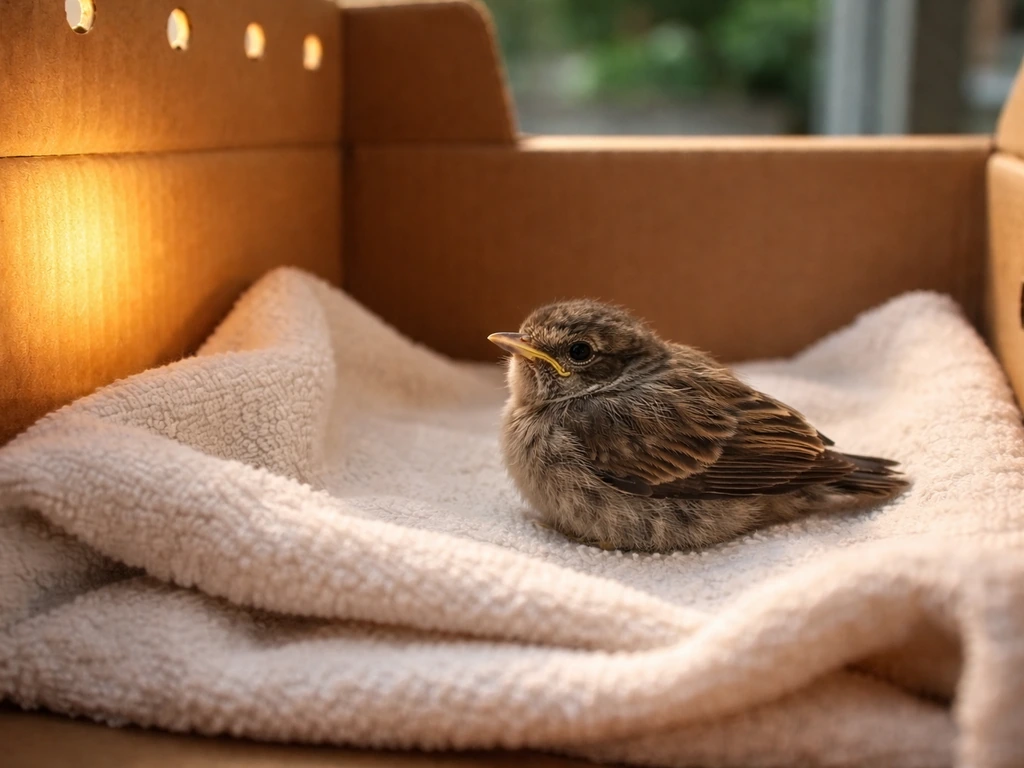
Use a cardboard box or similar container with air holes punched in the sides. Line the bottom with a clean, dry towel or paper towels shaped loosely into a shallow bowl so the bird has something to grip. Keep the box in a dark, quiet room away from pets, children, and loud noise. Darkness helps calm the bird and reduces the urge to thrash around and injure itself.
If the bird feels cold to the touch, warmth matters. Place a hot water bottle wrapped in a towel under one half of the box, so the bird can move toward or away from the heat as needed. A heating pad on the lowest setting works too, again placed under just one side of the container. The goal is warm but not hot. Overheating is just as dangerous as cold.
Once the bird is in the box, leave it alone. Resist the urge to check on it every few minutes. Every time you open the box, you're causing stress. Set it up properly and then give it space.
Do not feed or give water
This is one of the most important things to know, and it surprises a lot of people. Do not feed a fledgling, and do not put water in its mouth or beak. Birds can inhale liquids very easily, and even a small amount of water dripped into the beak can get into the airway and lungs. This can kill a bird quickly. Baby birds also do not drink water the way mammals do; they get their hydration from the food their parents bring them.
Even if the bird looks hungry and is gaping (opening its beak), don't offer food unless a licensed wildlife rehabilitator has specifically told you what to give and how. Well-meaning people often cause serious harm by offering the wrong food, the wrong size pieces, or liquids the bird can't safely handle. If the bird is stable and you're waiting for a rehabber to call back, keeping it warm and quiet is genuinely enough.
How to attempt reunification or release
For a healthy fledgling with no injuries, the best thing you can do is get it back to where it belongs. Here's how to approach that.
Returning a nestling to its nest
If the bird is a nestling (featherless, eyes closed), look for the nest nearby. Check trees, shrubs, and gutters above where you found the bird. If you find the nest and it's intact, gently place the nestling back in it and move well away from the area. The parents will return. If the nest is destroyed but the babies are unharmed, you can create a substitute by lining a small container (a berry basket, a plastic bowl with drainage holes) with dry grass or the original nesting material and securing it to a branch as close as possible to where the original nest was. Leave the area and check from a distance after an hour or two.
Helping a fledgling back to safety
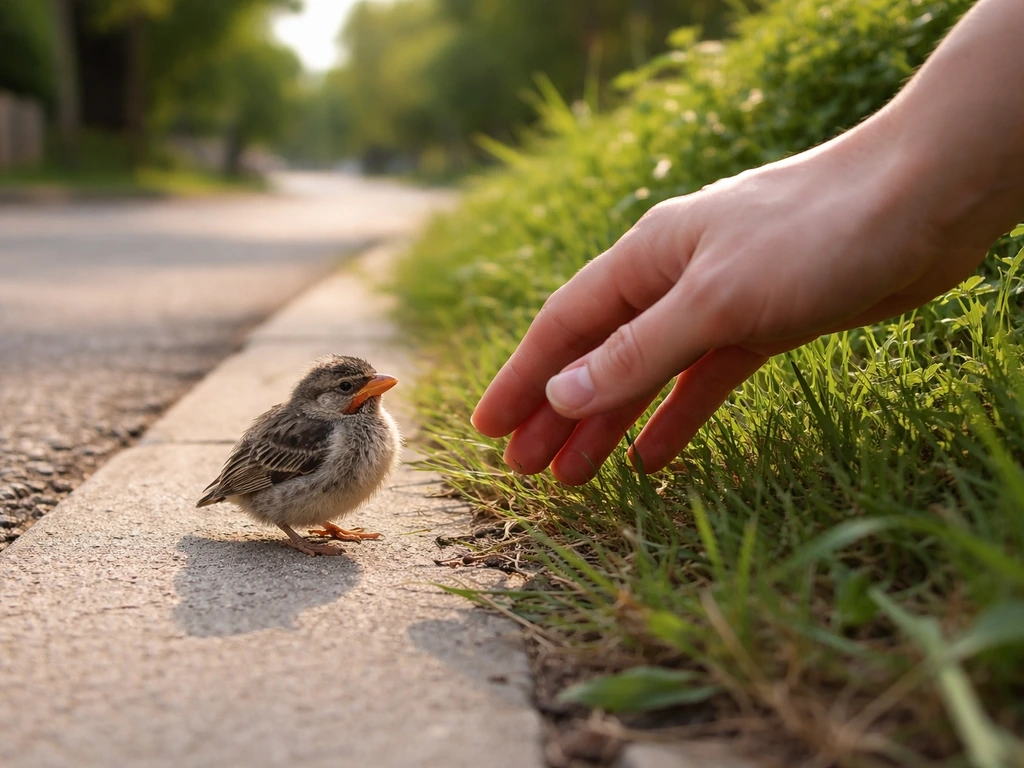
For a fledgling, the situation is different. These birds have deliberately left the nest. You don't need to find a nest or put them back in one. What you do need to do is make sure they're in a reasonably safe spot where their parents can continue feeding them.
If the bird is on a sidewalk, road, or open ground with no cover, you can gently guide or carry it to the nearest shrub, low branch, or sheltered area within the same general location. Placing it a short distance off the ground in a bush gives it some protection from ground predators while staying accessible to its parents. The Washington Department of Fish and Wildlife puts it simply: leave or return the fledgling to the location where you found it.
Once the bird is in a safer spot, back off completely. Go inside or at least move far enough away that you're not visible. Keep your pets indoors. Ask anyone else watching to step back too. The parents are almost certainly nearby, but they won't approach while people or animals are hovering close.
Confirming the parents are coming back
After you've placed the bird and moved away, give it two to three hours before checking whether the parents have returned. Watch from a window or from a distance where you won't disturb the area. Parent birds often make quick, quiet visits to feed fledglings, so you may not see them at first glance. Listen for the fledgling's begging calls and watch for adult birds moving in and out of the area.
What to do if the parents don't come back
If you've waited two to three hours, kept people and pets away, and you're genuinely not seeing any parental activity, don't panic, but do take it seriously. A fledgling alone for that long in an area without parental care needs to be assessed more carefully.
First, rule out whether something may be preventing the parents from returning. Is there a cat sitting nearby? Is there heavy foot traffic? Try eliminating those obstacles and waiting another hour or two. Sometimes a single disruption is enough to keep parents away temporarily.
If after a full monitoring period (at minimum two to three hours of genuine undisturbed observation) you still see no signs of parental care, and the bird appears to be weakening, this is the point to contact a licensed wildlife rehabilitator. Don't wait until the next day. A fledgling without food or parental warmth can decline quickly.
Similarly, if the bird was active and alert when you first found it but has become lethargic or is no longer able to hold itself upright, that's a signal to escalate immediately rather than continue waiting.
When you must not release the bird
There are situations where attempting to reunite or release a bird would cause harm. If any of the following apply, skip the monitoring phase and go straight to a wildlife rehabilitator or veterinarian.
- Visible injuries: broken bones, open wounds, bleeding, a wing that droops or drags
- Cat or dog contact, even if there are no visible marks (internal puncture injuries are common and serious)
- The bird is completely limp, unresponsive, or unable to hold its head up
- Suspected poisoning: seizures, tremors, abnormal eye movement, or you found the bird near bait traps or recently treated lawn/garden
- Oil or chemical contamination on the feathers
- The bird struck a window and is not recovering within 30 to 60 minutes
- The bird is a nestling and you cannot find or reconstruct a nest
It's also worth knowing that in most countries, including the United States, it is illegal to keep a wild bird without a permit, even with the best intentions. If a bird needs more than a few hours of temporary containment, it needs a licensed rehabilitator, not a home setup.
How to find a rehabber and get the bird there safely
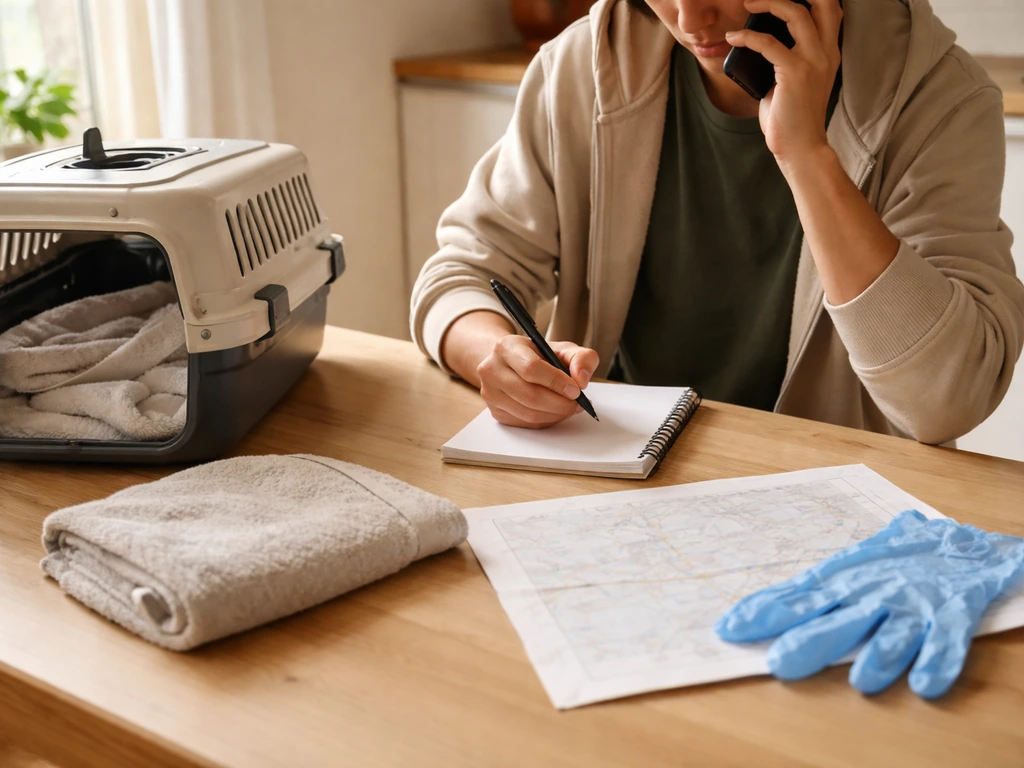
Finding a licensed wildlife rehabilitator in the US is usually straightforward. The U.S. Fish and Wildlife Service directs people to their state wildlife agency, which maintains lists of licensed rehabilitators by region. You can also search the National Wildlife Rehabilitators Association (NWRA) or the International Wildlife Rehabilitation Council (IWRC) directories online. Many areas also have local wildlife hotlines you can call for guidance even before you transport.
When you call, describe what you found, where you found it, what it looks like (feathered or not, eyes open or closed, any visible injuries), and how long you've had it. They'll tell you whether to bring it in and how to keep it stable in the meantime. Follow their specific instructions, especially regarding food and water.
For transport, use the same ventilated box setup described earlier. Keep the box in the car away from air conditioning vents and direct sun. Don't play loud music. Don't open the box during transit to check on the bird. The less stimulation it gets, the better it will hold up during the journey.
One critical note: do not put a water dish inside the transport container. If the bird falls or tips it, it can get wet and chilled, or worse, inhale the water. A stable, quiet, dark, warm box is all you need for transport.
If you're dealing with a more complicated situation, like a bird that was raised by hand before being found or one that has been in your care for more than a day or two, the process of returning it to the wild involves additional steps that a rehabilitator will walk you through. Hand-reared birds need special steps and a rehabber-guided plan before you try to release them back to the wild hand reared birds. Hand-reared birds in particular need a structured acclimatization process before any kind of release, which is a different situation from reuniting a newly found fledgling with its parents.
The most important thing you can do for a fledgling is resist the urge to over-intervene. Most of the time, the best outcome happens when you take a breath, assess carefully, reduce disturbances, and let the bird's parents do the job they're already doing. When something is genuinely wrong, acting quickly to get the bird to a professional is what saves its life. How to raise a newborn bird is different from helping a found fledgling or nestling, because it often requires specialized feeding and housing guidance. If you are dealing with a true fledgling, these rescue steps also apply, but the approach is different from raising a newborn bird how to help a fledgling bird. If you want more specific guidance for a young, mostly feathered bird, see how to help a fledgling bird.
FAQ
How can I tell if a “fledgling” is actually a nestling that needs help right away?
Use posture and eye status. A fledgling has mostly developed feathers and can usually hold a normal upright stance, with eyes open or at least clearly visible. A nestling is mostly featherless, has closed or barely open eyes, and often cannot keep itself upright. If it cannot stand or looks mostly bare, treat it as a nestling and get professional help rather than assuming it is “learning to fly.”
What should I do if the parents do not come back immediately after I move the bird?
Give the area an undisturbed window of two to three hours, but also remove likely blockers first (bring pets inside, clear the immediate ground area, and avoid hovering). Parent birds may feed quickly and briefly, so watch from a distance and listen for begging calls rather than repeatedly checking up close.
Should I place the fledgling back exactly where I found it, or can I move it to a nearby safer spot?
If it is a fledgling on the ground and the original spot is exposed (sidewalk, road, open ground), you can gently relocate it within the same general area to nearby cover like a shrub or low branch so parents can still reach it. If the original location is already relatively safe, returning it there is the safest choice.
Is it okay to put the fledgling on a branch or in a nest-like cup?
For fledglings, focus on placing them in a sheltered spot at an accessible height, not building a nest or trying to “cubby” it like a nestling. Choose a low branch or dense shrub where it can grip and where parents can find it. Avoid placing it too high if it cannot fly or hop well yet.
What if the bird is chirping or begging, but looks healthy, can I still leave it alone?
Yes. Begging calls are often normal during fledgling dependency. If there is no bleeding, unusual limping, gaping that seems to be accompanied by discharge or repeated labored breathing, then observation and keeping pets away is usually the right approach.
Can I offer food like mealworms, bread, or birdseed?
Do not feed a wild fledgling unless a licensed rehabilitator tells you exactly what to use. Common “rescues” like bread, milk, or generic seed can cause choking, digestive problems, or aspiration. If you must wait for guidance, keep it warm and quiet instead.
Should I give water to prevent dehydration?
Do not put water in its mouth or provide a water dish. Birds can aspirate liquids easily, and a dish increases the chance the bird gets chilled if it tips over. Hydration typically comes from the food parents provide.
The fledgling is on a busy road, what is the fastest safe action I can take?
Move it out of immediate danger using minimal handling, then place it in the nearest nearby cover within the same general area. If you cannot relocate it safely or you suspect injury, contact a wildlife rehabilitator promptly rather than trying to “nurse” it on your own.
What should I do if I find a fledgling at night?
Keep it warm and sheltered in a dark, quiet ventilated container until you can contact a rehabilitator or local wildlife hotline. Avoid bright lights, do not check repeatedly, and do not attempt feeding or watering. Then follow the rehabilitator’s instructions for reunification timing.
How long is too long to wait before contacting a rehabilitator?
If you have done a genuine undisturbed observation period of at least two to three hours with no signs of parental care, escalate. Also contact immediately if the bird becomes lethargic, cannot hold itself upright, appears to be worsening, or there are threats like cats nearby or ongoing traffic in the area.
What are the most common mistakes people make when trying to help a fledgling?
Feeding or watering it, giving the wrong food type or consistency, placing water dishes inside containers, handling repeatedly to “check,” keeping it in an unsafe outdoor spot while pets roam, and trying to force reunification without observing from a distance. Another frequent error is confusing a nestling for a fledgling based only on size.
What if the bird was already in my yard for more than a day?
If it has been in your care or at the location for more than a day or two, treat it as a higher-risk situation. This often means it is not being properly cared for, or it may have been injured. Contact a licensed rehabilitator for a tailored plan rather than continuing to wait.
Are there any legal or permit considerations I should know about?
In many places, keeping wild birds longer than temporary stabilization time can require permits. If the bird needs care beyond a few hours, you should plan to contact a licensed rehabilitator and follow their transport and containment instructions instead of trying to keep it at home.
Next Article
How to Help a Fledgling Bird: Immediate Steps and Do Not
Humane steps to help a fledgling: keep safe, assess injury, warm and shelter, avoid common mistakes, know when to call