If you've found a bird sitting on the ground outside and you're not sure what to do, here's the short answer: observe first, act second. Most of the time, a bird that looks distressed actually doesn't need your help. But when it does, the steps you take in the next few minutes can make a real difference. If you decide the bird is sick, focus on stabilizing it and getting it to a licensed wildlife rehabilitator as soon as you can helping a sick bird. This guide walks you through everything, from figuring out whether the bird is actually sick, to safely picking it up, keeping it stable, and getting it to someone who can properly care for it.
How to Help a Sick Bird Outside: Emergency First Aid
Marcus Holloway
20 Apr 2026
First, watch from a distance before you do anything
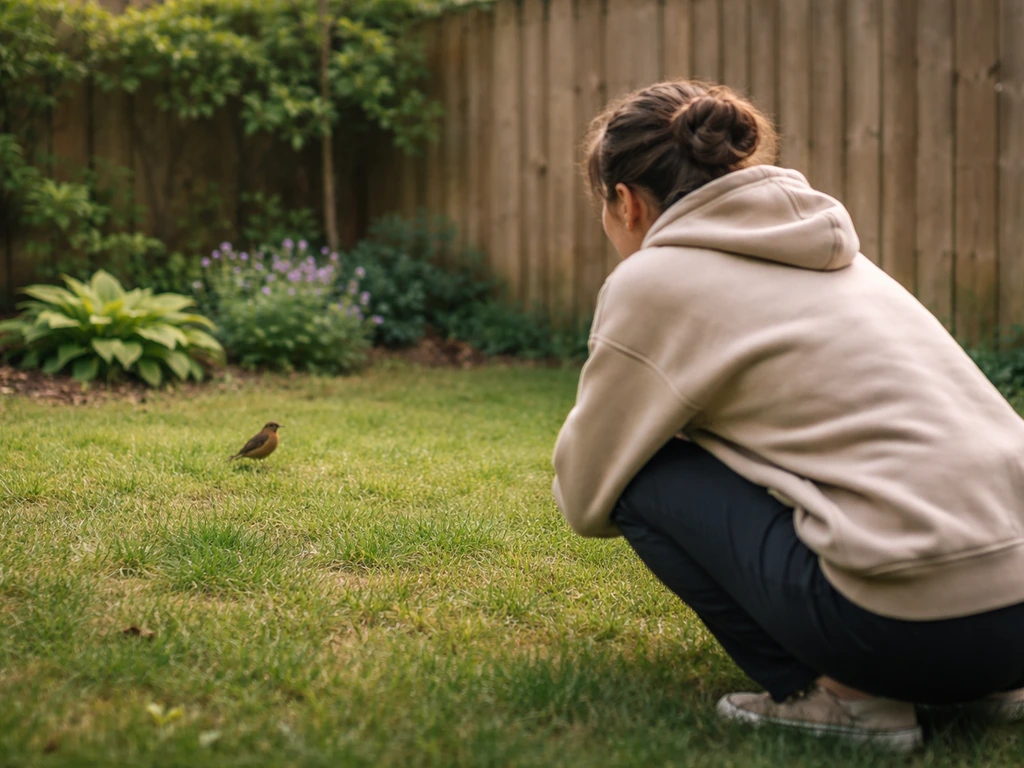
Before you approach, stop and watch the bird for a minute or two from at least 10 to 15 feet away. A bird that hops away, flies off, or looks alert when you get near almost certainly doesn't need help. That's your cue to leave it alone. The U.S. Fish & Wildlife Service is clear on this: if a bird flies off when you try to approach, it doesn't need you.
What you're looking for are signs the bird genuinely can't help itself. Here are the ones that tell you something is wrong:
- Visible bleeding or an open wound
- A wing or leg dangling at an odd angle
- Labored or open-mouth breathing, or a tail bobbing with every breath
- Shivering or unresponsive to your presence
- Unable to stand, or flopped onto its side
- A dead parent bird nearby
- Evidence of a cat or dog attack (puncture wounds, missing feathers)
If the bird is just sitting quietly with its eyes open and feathers smooth, it may simply be resting. Songbirds sometimes pause on the ground after a long flight or after a minor collision. Give it 15 to 20 minutes and check again. If it's still there and showing any of the warning signs above, it's time to step in.
How to approach and pick up a sick or injured bird
Move slowly and quietly, ideally approaching from behind the bird. Sudden movement and noise spike stress, which can make shock worse. For most small songbirds, the simplest method is to toss a light towel, t-shirt, or cloth over the bird first, then gently scoop it up from underneath. The cloth covers the bird's eyes, which immediately reduces panic, and it helps keep the wings and legs from flailing and causing more damage.
Once the cloth is over the bird, place both hands gently around its body, keeping the wings folded against its sides. You're not squeezing, just holding it firmly enough that it can't thrash. Avoid grabbing by a single wing or leg.
One important note on towels: avoid any fabric with loops, holes, or loose strings. A bird's tiny toenails catch on those instantly, and getting tangled adds injury to an already bad situation.
For large raptors (hawks, owls, eagles), do not attempt capture yourself. Talons can cause serious injury to an untrained person. Call a licensed wildlife rehabilitator or animal control and let them handle it. The same applies to any large waterbird like a heron or pelican.
Setting up a safe temporary space
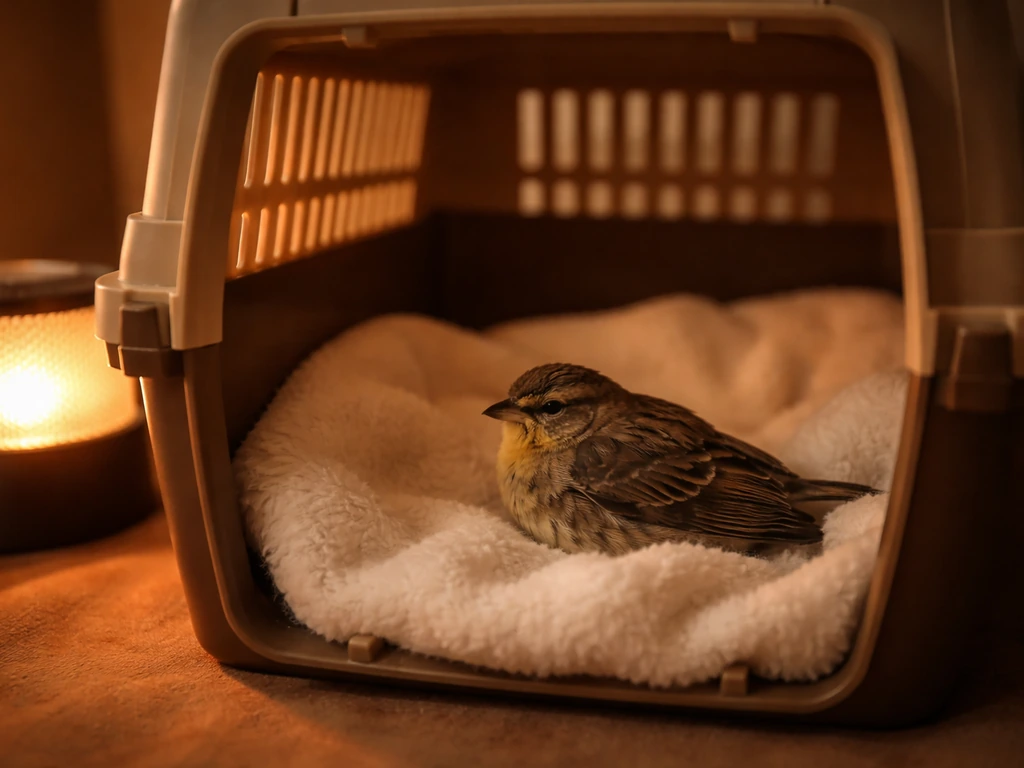
Your goal here is warmth, darkness, quiet, and ventilation. Those four things together do more for a sick bird in the short term than anything else you can provide.
The container
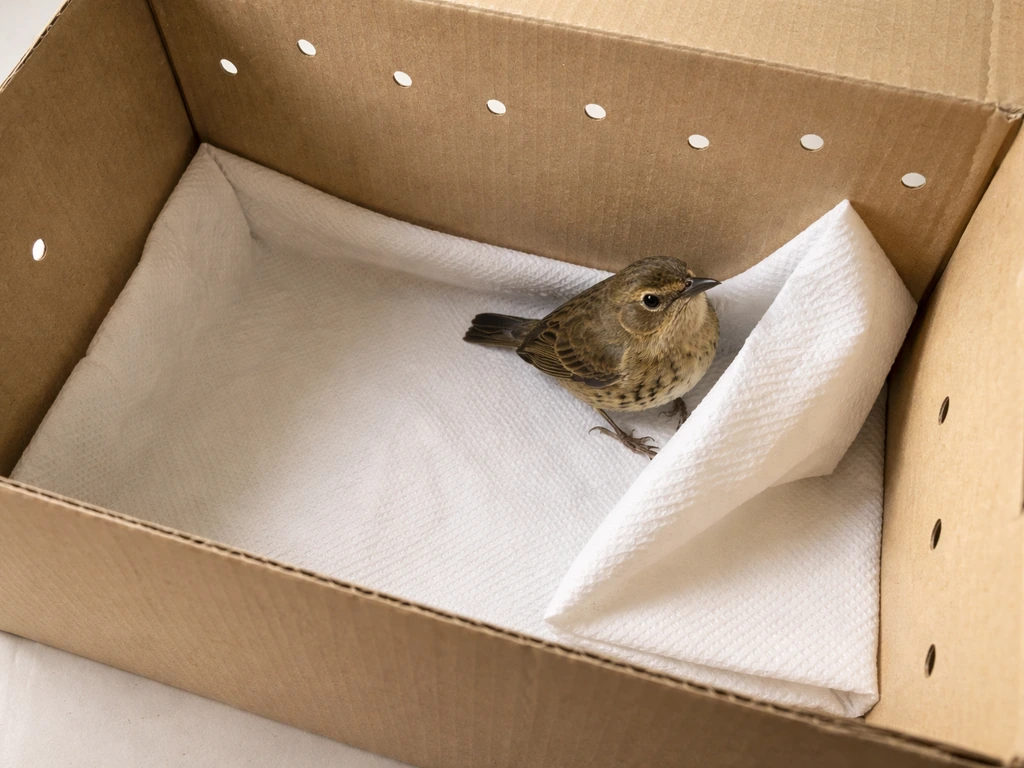
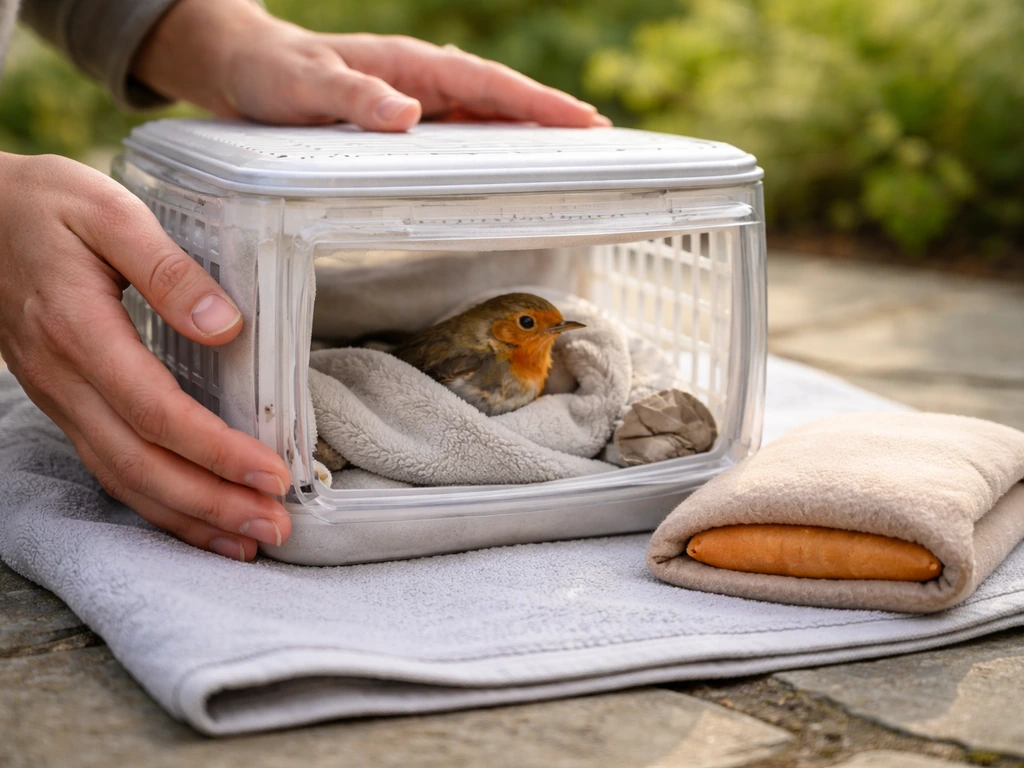
A cardboard shoebox with a lid works well for most birds. Use a pen or pencil to poke several small air holes in the lid and upper sides. Line the bottom with a plain paper towel or a smooth cloth (no loops or strings). Place the bird inside and close the lid. The box doesn't need to be large, a snug fit actually feels more secure to the bird.
If the bird can't stand up on its own, prop it upright using a folded corner of the towel so it's not lying on its side. Birds that rest flat on their sides for extended periods can develop additional complications. If the bird is wet, focus on drying it gently and keeping it warm and calm until you can get help wet bird.
Warmth
Birds run a naturally high body temperature, around 103 to 106°F, and a sick or injured bird loses heat fast. A stable warm environment, ideally around 85°F, helps the bird's body conserve energy for healing rather than temperature regulation. You can achieve this by placing a heating pad on its lowest setting under one half of the box only, not under the whole bottom. This gives the bird a cooler side to move to if it gets too warm. Always wrap the heat source in a soft cloth so the bird isn't in direct contact with it.
A warm hot water bottle wrapped in a towel works just as well as a heating pad. Replace it as it cools.
Location and handling
Once the bird is in the box, put it somewhere warm, dark, and genuinely quiet. Not the kitchen, not near the TV, not where kids or pets can get at it. A bathroom or closet works well. Handle the box as little as possible. Every time you open the lid to check on the bird, you're adding stress. Resist the urge to peek repeatedly.
Quickly assess the bird's condition
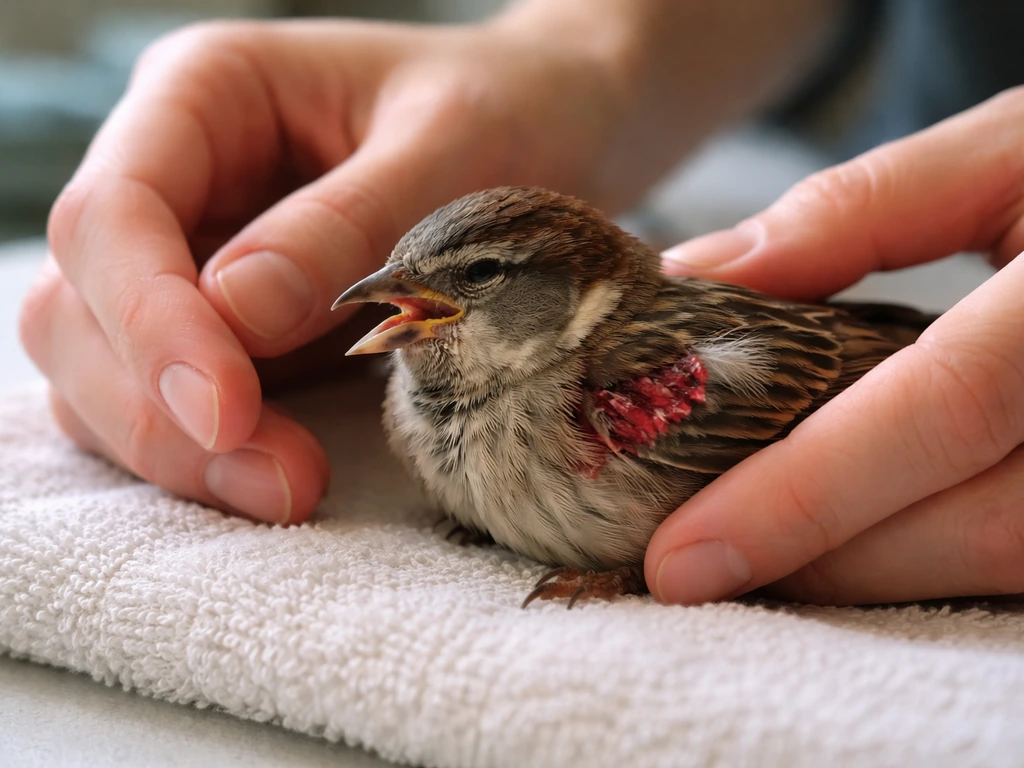
While you're handling the bird to put it in the box, do a fast visual check. You don't need to be a vet, just look for the obvious things that tell you how urgent the situation is.
| What you see | What it likely means | What to do |
|---|---|---|
| Active bleeding | Open wound or predator attack | Apply light, gentle pressure with a clean cloth; get to a rehabber immediately |
| Dangling or twisted wing or leg | Possible fracture | Minimize handling; don't try to splint it yourself |
| Open-mouth breathing or tail bobbing | Respiratory distress | Keep calm and cool (not cold); get professional help fast |
| Limp, unresponsive, eyes half-closed | Shock | Warmth, darkness, quiet; no food or water; transport urgently |
| Fluffed feathers, shivering | Hypothermia or early illness | Warmth and quiet; monitor and contact a rehabber |
Breathing issues in particular need fast attention. Open-mouth breathing, tail pumping with every breath, or wheezing are all signs something is seriously wrong with the respiratory system. Keep the bird calm and get it to a professional as quickly as you can. For more on how to help a bird with respiratory problems, follow the dedicated respiratory-care steps in this guide. If you want more detail on recognizing and responding to respiratory symptoms, that topic is covered in depth in a dedicated guide on helping a bird with respiratory problems.
For bleeding, apply gentle pressure with a clean cloth for a minute or two. Don't use a tourniquet unless you have formal training. The goal is just to slow bleeding until you can get the bird to a rehabilitator.
What not to do (this matters more than you think)
Most well-intentioned mistakes happen here. A bird that's handled too much, given food or water, or treated with home remedies can end up in worse shape than if it had been left alone.
- Do not give the bird food or water. A bird in shock can inhale liquid directly into its lungs, which can be fatal. Even a bird that looks alert enough may aspirate if you try to squirt water into its mouth. The only safe feeding is done by trained rehabilitators.
- Do not force its beak open. Forcing food or liquid into a bird's mouth can cause aspiration pneumonia and death.
- Do not try to straighten a broken wing or leg yourself. You will cause more damage. Leave it.
- Do not place the bird in a wire cage. Wire is hard on feathers and feet, and a bird that panics in a wire cage can badly injure itself.
- Do not give any human medications, vitamins, or supplements. These can be toxic to birds even in tiny amounts.
- Do not try to clean an oiled bird yourself. Oil destroys the feather structure that keeps birds warm and dry, and improper cleaning makes things worse. Call a wildlife rehabilitator.
- Do not let pets or children near the container. Stress alone can kill a bird in shock.
- Do not keep the bird longer than necessary. The sooner it gets to a licensed rehabilitator, the better its chances.
Baby bird on the ground: figure out what you're dealing with first
Before you do anything with a baby bird, determine whether it's a nestling or a fledgling. This single question changes everything about what you should do next.
Nestlings
A nestling is a very young bird, mostly bare skin or fine down, with eyes possibly still closed, and clearly not capable of flight or hopping around. If you find one on the ground, look for the nest nearby. If you can safely reach it, place the bird gently back in the nest. You will not cause the parents to reject it. The idea that parent birds abandon babies touched by humans is a myth, it's not how bird behavior actually works. Parents recognize their chicks by sight and sound, not smell.
If the nest has fallen or you can't reach it, Tufts Veterinary recommends making a substitute nest using a small container lined with the original nesting material (or dry grass), placing it as close to the original nest location as you can, and monitoring from a distance to see if the parents return. If they don't return within about 45 minutes, or if the bird is visibly injured or was attacked by a cat or dog, it needs to go to a rehabilitator.
Fledglings
A fledgling is older, fully or mostly feathered, and capable of hopping and short flutters even if it can't fly well yet. Finding a fledgling on the ground is completely normal. This is a natural stage of development where the bird is supposed to be on the ground, learning to fly under the supervision of its parents. The parents are almost certainly nearby, even if you can't see them.
The right move for an uninjured fledgling is to leave it alone and keep cats, dogs, and people away from it. If it's in immediate danger (a busy road, an exposed sidewalk with no cover), you can gently move it a short distance to a nearby shrub or low branch, but no farther. Watch from a distance for the parents to return.
When rescue is the right call for young birds
Attempt reunion first. If reunion isn't possible or the parents don't return within 45 minutes, if the bird was caught by a cat or dog (even without visible wounds, cat saliva carries bacteria that can be fatal without antibiotics), or if the bird is clearly injured, contact a wildlife rehabilitator immediately.
When to call a wildlife rehabilitator or vet, and how to do it right
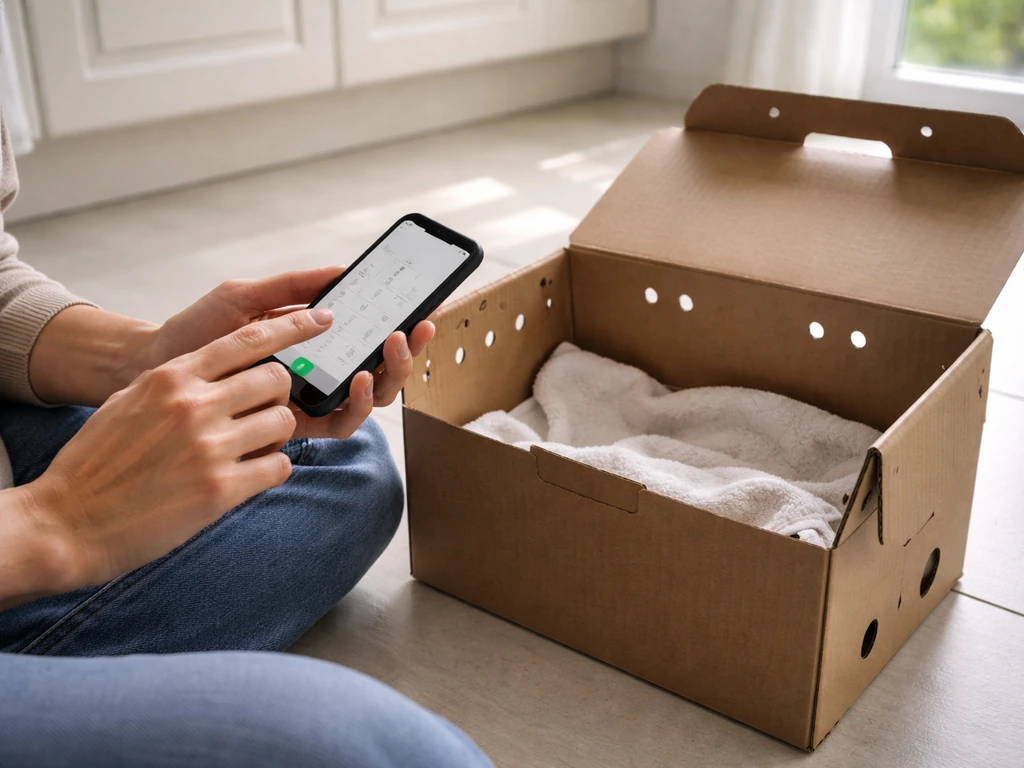
Call as soon as you've confirmed the bird needs help. Don't wait until you've tried everything else. Rehabilitators can often give you guidance over the phone to stabilize the bird while you make arrangements to transport it, and many can advise on whether what you're seeing warrants an emergency visit or can wait until morning.
To find a licensed wildlife rehabilitator in the U.S., you can search the National Wildlife Rehabilitators Association (NWRA) or Wildlife Rehabilitators directory, contact your state's department of fish and wildlife, or call a local veterinary office, animal control, or wildlife center for a referral. Many areas have 24-hour wildlife hotlines.
When you call, be ready to share the following:
- What type of bird it is, or your best guess (small brown songbird, large black bird, duck, hawk, etc.)
- Where exactly you found it (city, neighborhood, near a road, in a yard)
- What you observed when you found it (on the ground, after a window strike, attacked by a cat, etc.)
- Visible injuries or symptoms (bleeding, drooping wing, open-mouth breathing)
- How long you've had it and what you've done so far
- Whether it's a nestling, fledgling, or adult
This information helps the rehabilitator plan appropriate care before the bird even arrives.
Transporting the bird safely
Keep the box in a quiet spot in your car, not the trunk. Avoid loud music, AC blasting directly at the box, or sudden stops. Keep the environment as still and dark as possible during the trip. Don't open the box to check on the bird while you're driving.
Try to transport during daylight hours if possible, but if the injury is severe (heavy bleeding, inability to breathe properly, serious trauma) don't wait for morning. Call ahead so the rehabilitator or emergency vet clinic is ready for you.
Speed matters. As the Wisconsin Humane Society puts it plainly: the sooner an injured bird reaches a licensed wildlife rehabilitator, the better its chances of survival.
A quick note on window strikes and stunned birds
A bird that has flown into a window and is stunned but otherwise uninjured may simply need a quiet recovery period of 15 to 30 minutes. Place it in a ventilated box in a dark, quiet spot. After 30 minutes, take the box outside, open it, and see if the bird flies away on its own. If it can't fly, if it's been more than an hour with no improvement, or if you see blood or a visibly damaged wing, treat it as an injury case and call a rehabilitator.
The short version, if you need it fast
- Observe from a distance first. If the bird flies or hops away, leave it alone.
- If it shows signs of injury (bleeding, broken limb, labored breathing, unresponsive), prepare to help.
- Drape a towel or cloth over the bird and gently scoop it up, keeping wings folded against the body.
- Place it in a ventilated cardboard box lined with a smooth cloth or paper towel.
- Keep it warm (heating pad on low under half the box), dark, and quiet.
- Do not give food or water under any circumstances.
- Call a licensed wildlife rehabilitator immediately for guidance and arrange transport.
- Transport in a quiet, stable car and get it there as fast as safely possible.
Wild birds are surprisingly resilient when they get proper care quickly. Your job isn't to treat the bird, it's to keep it stable, minimize stress, and get it to someone who can. If you keep birds, preventing lung problems starts with clean cages, good ventilation, and avoiding dusty bedding and strong fumes. If you do those three things, you've done everything right.
FAQ
Can I feed or give water to a sick bird while I’m waiting for help?
Don’t give food, water, or “bird-safe” home remedies. Many sick birds aspirate (breathe in) liquids or struggle with handling, which can worsen breathing and hydration. If you must hold the bird until help arrives, focus on warmth, darkness, quiet, and ventilation, and contact a licensed wildlife rehabilitator for guidance.
How often should I open the box to check on the bird?
Use a ventilated, escape-resistant container and keep handling to the absolute minimum. If the bird is in distress, avoid trying to “check” repeatedly, and do not remove the towel/cloth covering the eyes unless the rehabilitator instructs you. Repeated lid openings increase stress and can trigger thrashing.
What should I do if the bird is wet, especially after rain or a puddle?
If the bird is wet, dry it using gentle, brief blotting with a clean towel and keep it warm and calm immediately. Avoid rubbing, and don’t use a hair dryer or direct heat that can overheat one area. Continue stabilizing it (dark, quiet, partially heated box) until you can get it to a rehabilitator.
The bird looks okay after a cat or dog encounter, do I still need a rehabilitator?
If you suspect a cat or dog was involved, treat it as urgent even when there are no obvious wounds. Bite punctures can be tiny but dangerous, and bacteria from saliva can cause rapid illness. Contact a wildlife rehabilitator right away rather than waiting to see if it improves.
Should I prop a sick bird up, and how much handling is too much?
For small birds, there is one easy rule: prop it upright only if it cannot sit up on its own, and keep it from rolling onto its side for long periods. Don’t force limbs into place. If the bird is able to hold posture, let it rest naturally rather than adjusting it repeatedly.
What’s the best substitute container if I don’t have a shoebox with holes?
If there is no lid-secured shoebox option, use a similar rigid container with proper ventilation holes, secure enough that the bird cannot escape. Avoid loose bags, open buckets, or anything the bird can climb out of. The goal is safety and low stress during transport.
What if the bleeding won’t stop or soaks through the cloth?
If the bird is bleeding, apply gentle pressure with a clean cloth for a short period, just enough to slow it. Do not wrap tightly around the body and do not apply a tourniquet without training. If bleeding soaks through, add more clean layers and contact a rehabilitator urgently.
How do I tell the difference between a stunned bird and one that’s actually sick?
If the bird is alert enough to move away, it usually does not need help. If it is stunned from a window strike, give it a quiet recovery window first, then reassess. If it cannot fly after a reasonable period, shows any injury, or continues breathing oddly, treat it as an injury case and call for help.
Can I disinfect the bird’s wounds or apply ointment I have at home?
Avoid using chemical disinfectants, ointments, or human medications. Skin contact and toxic ingredients can worsen injury, especially around the beak, eyes, and any open wounds. Stick to gentle stabilization and transport, then let the rehabilitator decide on medical treatment.
What should I do if I find a hawk, owl, heron, or pelican that seems injured?
If the bird is an adult raptor or a large waterbird, do not attempt to capture it. Talons and beaks can cause serious injury. Instead, call animal control or a licensed wildlife rehabilitator and keep your distance until they arrive.
Next Article
How to Help a Sick Bird: Immediate Care and Triage Steps
Learn how to help a sick bird with safe triage, warmth and quiet care, and know when to call an avian vet.