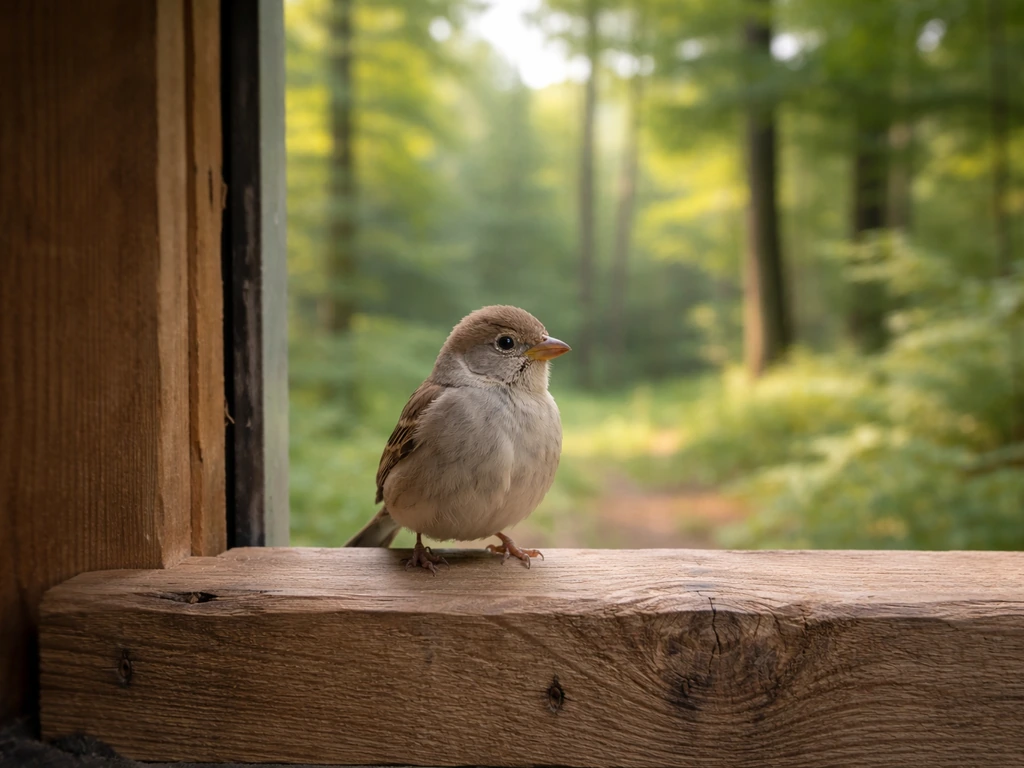
If you have a sick bird in front of you right now, here is what to do: stop, slow down, and resist the urge to do too much. The single most important thing you can do in the next five minutes is reduce the bird's stress, get it somewhere warm and quiet, and then figure out your next move. Everything else flows from that.
How to Help a Sick Bird: Immediate Care and Triage Steps
Marcus Holloway
12 Apr 2026
First steps: keep the bird safe and stable
Before you assess what is wrong, you need to make the situation safe for both you and the bird. Sick birds are already under enormous physiological stress. Being chased, handled repeatedly, or placed in a bright, noisy environment can push a fragile bird into shock. The priority is containment and calm.
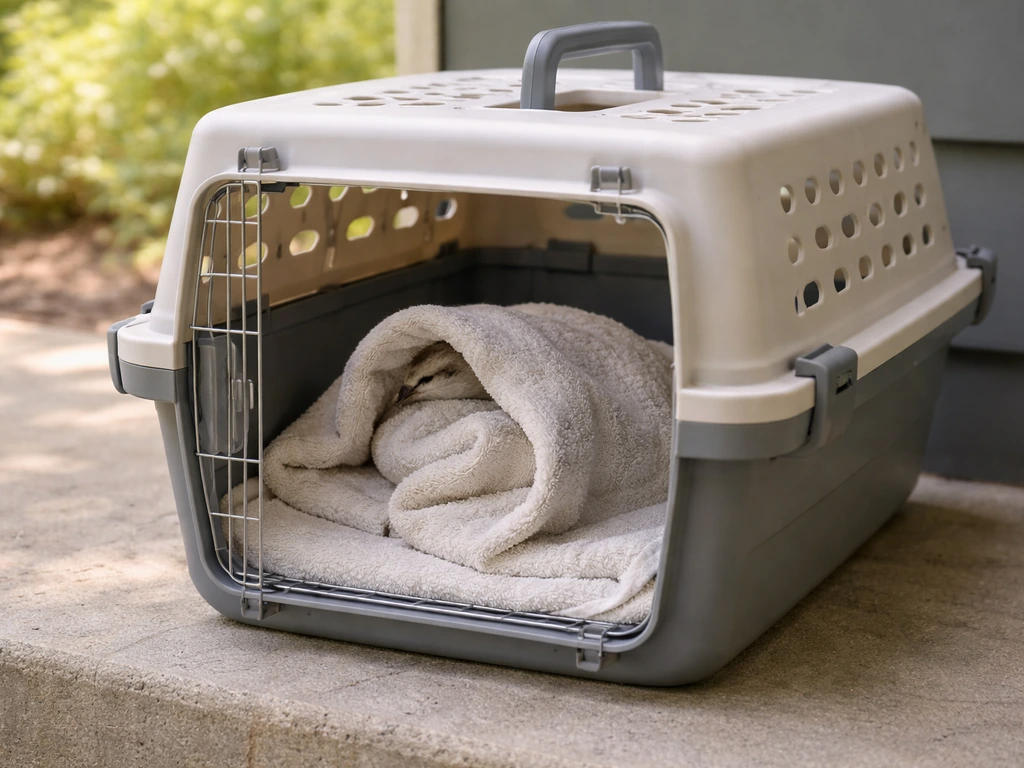
If the bird is outdoors and approachable, drape a light towel or shirt over it gently and scoop it up with minimal fuss. Avoid gripping tightly. Place it into a cardboard box or a ventilated plastic container lined with a non-fluffy towel (loops on terry cloth can snag toes). Poke air holes in the lid if there are none. Close the box. That is it for now.
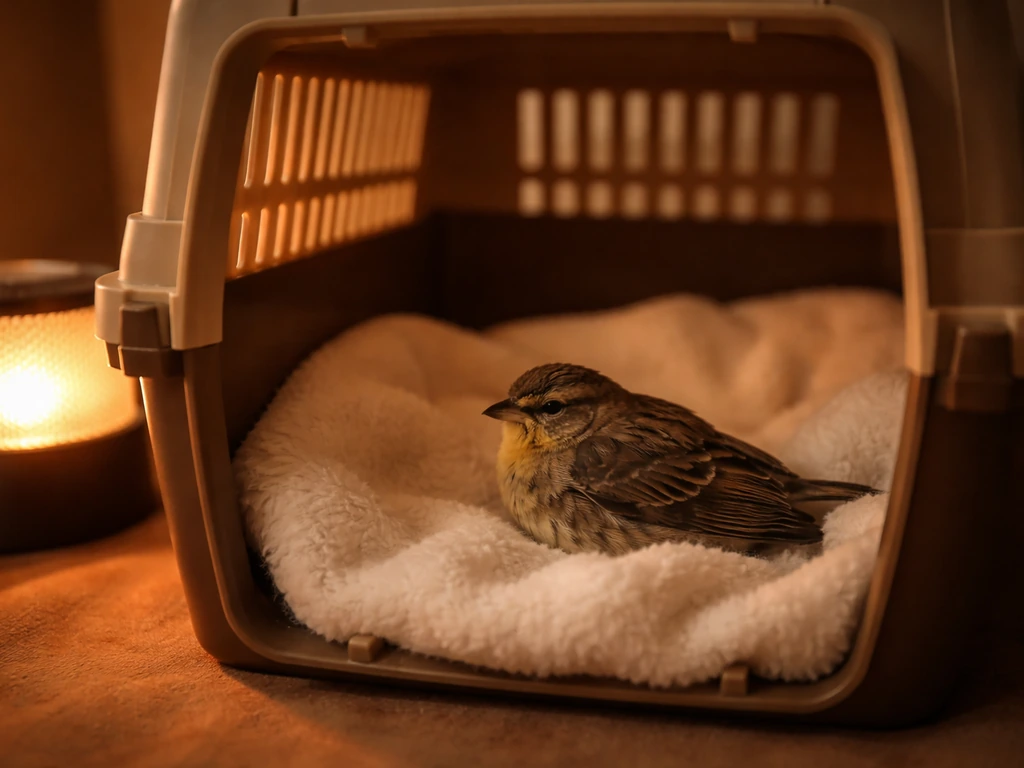
Put the box somewhere warm, dark, and quiet. A bathroom with the door closed, a laundry room, or a corner away from pets and children all work. Darkness reduces visual stimulation and lowers the bird's heart rate. Operation Wildlife describes this combination, warm, dark, and quiet, as the single most important first treatment for shock or injury, and they are right. Do not keep peeking in. Resist it.
One more thing before you go any further: wash your hands. Wild birds can carry bacteria, fungi, and occasionally transmissible diseases. OSHA provides official guidance on workplace precautions and hygiene considerations for people handling potentially infected birds and specimens blank" rel="noopener noreferrer">Wild birds can carry bacteria, fungi, and occasionally transmissible diseases.. If you are dealing with a wild bird showing unusual neurological signs during a known disease outbreak period, note that agencies like OSHA recommend blank" rel="noopener noreferrer">notifying state or federal animal health officials when avian influenza symptoms are suspected. Basic hygiene protects you and allows you to help more effectively.
How to assess what's wrong (quick triage at home)
Once the bird is safely contained and you have washed your hands, take a few quiet minutes to observe it through the air holes or by briefly opening the lid. You are looking for a handful of specific signs that help you judge urgency. You are not diagnosing. You are triaging.
Tufts Wildlife Clinic describes a truly sick or injured bird as one that appears quiet and dull, with eyes closed and feathers puffed up, possibly with breathing problems or an inability to stand. Those are your baseline markers. If the bird looks like that, it is not just resting. Something is genuinely wrong.
Run through this quick checklist mentally when you observe the bird:
- Breathing: Is it breathing with its mouth open? Is the tail bobbing up and down with each breath? Are there clicking, rattling, or wheezing sounds? Any of these is a red-flag sign.
- Posture: Can the bird stand? Is it listing to one side or unable to hold its head up?
- Eyes: Are they open and alert, or closed and sunken?
- Feathers: Are they puffed out even in a warm environment?
- Visible injury: Is there blood, a visibly broken wing or leg, or a wound exposing bone or tissue?
- Discharge: Any mucus or crustiness around the eyes, nostrils, or beak?
- Droppings: Any diarrhea, or no droppings at all?
- Movement: Trembling, seizure-like twitching, or complete inability to move?
Based on what you see, you can loosely sort the situation into one of three urgency levels. Signs like open-mouth breathing, tail bobbing, visible bone, seizures, bleeding that will not stop, or complete unresponsiveness mean you need professional help today, within the hour if possible. Signs like puffed feathers, closed eyes, weakness, and inability to fly but no trauma visible mean the bird needs stabilization and a vet or rehabber call within a few hours. A bird that is alert, reactive, and mostly upright but clearly not flying well may have more time, but still needs assessment.
Immediate supportive care based on symptoms
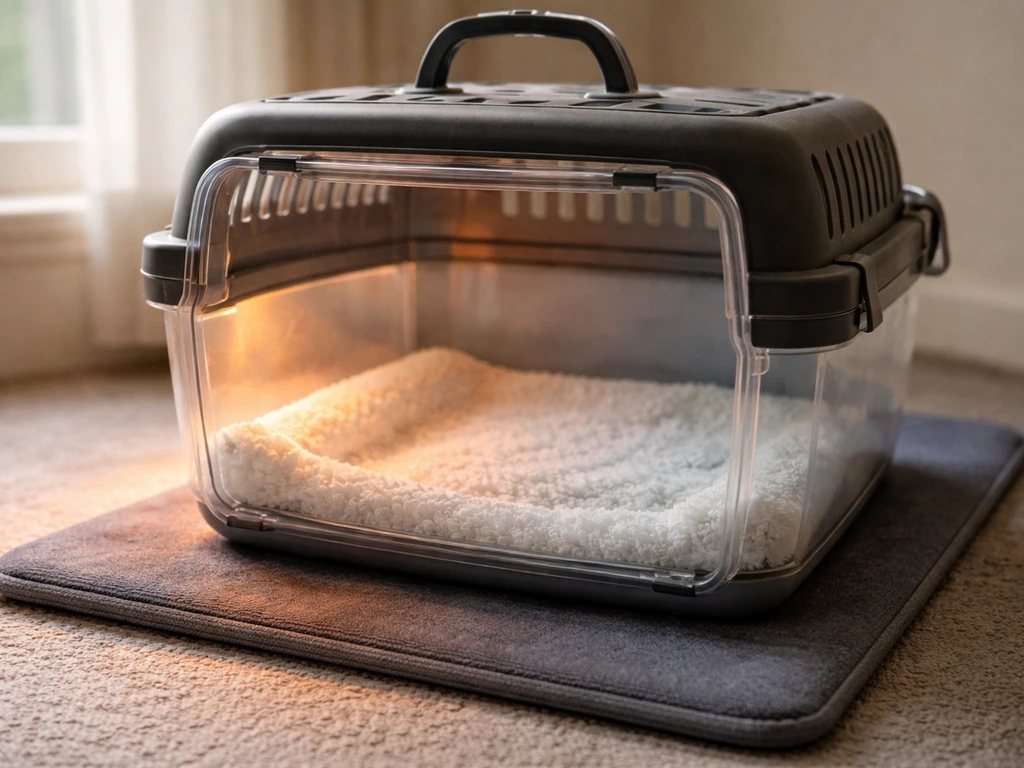
Warmth comes first
Most sick birds are hypothermic. Their body temperature drops, organ function slows, and the situation spirals fast. Gentle supplemental warmth is one of the most effective and safe things you can do. Cascadia Pigeon Rescue explains it well: stabilizing temperature early can prevent a downward spiral, because as body temperature drops, organs stop functioning. Warm first, then troubleshoot.
The safest way to provide warmth without a heat lamp is to place a heating pad set to low under one half of the box only, so the bird can move away from the heat if it gets too warm. Alternatively, fill a zip-lock bag or water bottle with warm (not hot) water, wrap it in a cloth, and place it against one wall of the box. The air inside should feel warmer than your hand but never hot.
If you use a heat lamp, be very careful. Cascadia warns that heat lamps can cause burns or severe dehydration if misjudged, especially with small birds. Keep it at a distance and watch for signs of overheating. Stop applying heat immediately if the bird is panting with an open beak, holding its wings out from the body, or if you have reason to think it already has a fever. Birds with respiratory distress do better with mild warmth and fresh ventilation rather than intense, concentrated heat.
Food and water: less is more (usually none)
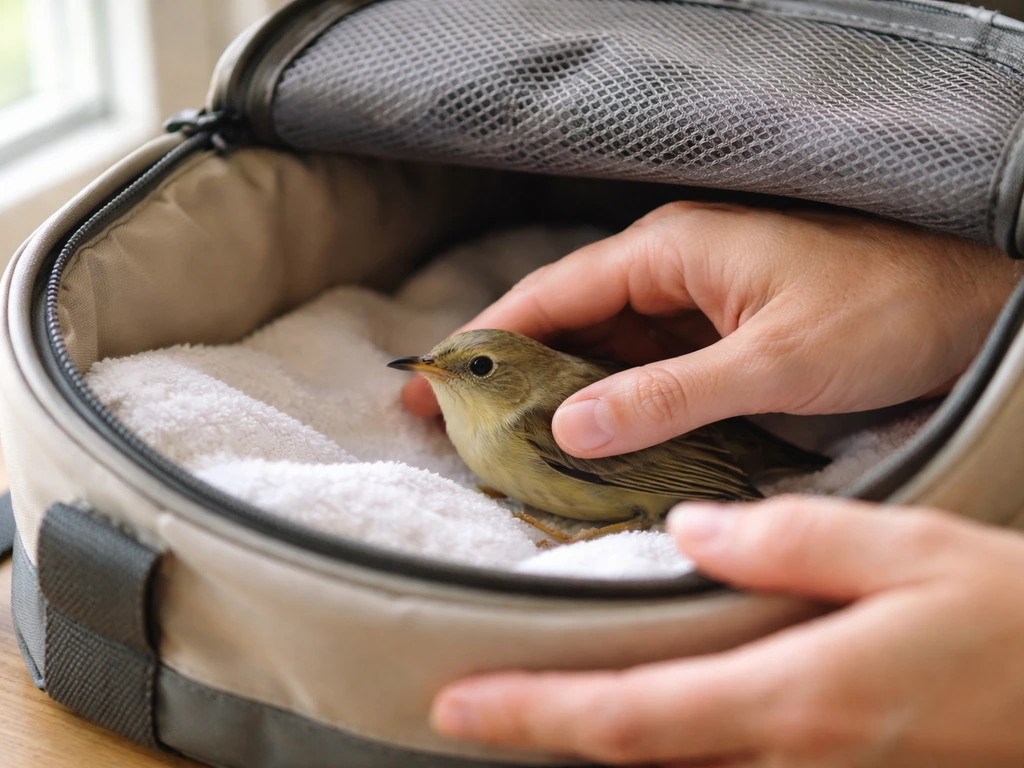
This is the part most people get wrong, and it matters. Multiple wildlife rehabilitation organizations are consistent on this point: do not give food or water unless you have been specifically instructed to by a wildlife rehabilitator or avian vet. That guidance is not overcautious. It reflects real risks.
Dripping water directly into a bird's mouth is one of the most dangerous things a well-meaning rescuer can do. Birds aspirate easily, meaning liquid goes into the lungs instead of the stomach, and that can be fatal quickly. If you find a bird that is wet or waterlogged, the priority is warmth and drying, not more water intake. The same caution applies to forcing any food. A bird in shock or with reduced body temperature cannot digest properly, and Merck notes that normal body temperature needs to be established before any crop feeding is initiated, to prevent crop stasis.
Never give milk. Never give human medications, vitamins, or supplements. Never give bread, crackers, or processed human food. Stick to nothing until you have spoken to a professional. If a rehabber or vet specifically authorizes offering water, use a shallow dish the bird can drink from on its own. Never use a dropper or syringe to force liquid in.
Breathing problems need extra care
If the bird is showing any respiratory symptoms, like open-mouth breathing, tail bobbing, audible wheezing, or mucus around the nostrils, treat this as urgent. Keep the environment calm and ventilated. Do not add strong scents, aerosols, or smoke near the bird. Do not cover the air holes. Read our guide on how to help a bird with respiratory problems for more detail, but the short version is: minimal handling, good airflow, mild warmth, and get to a vet fast.
Handling, housing, and transporting a sick bird humanely
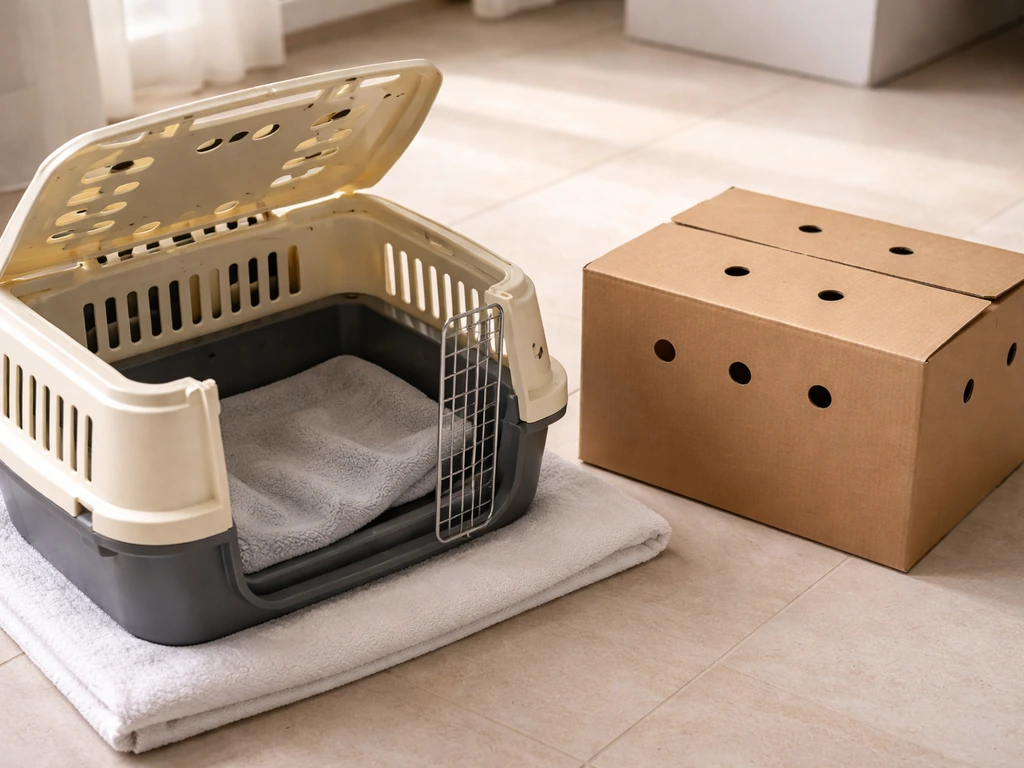
The ideal housing for a sick bird waiting for professional care is a cardboard box or a hard-sided carrier with ventilation holes, lined with a non-slip surface like a folded hand towel or paper towels. The box should be big enough for the bird to sit comfortably but not so large that it can flap around and injure itself further. Darkness inside the box keeps the bird calm.
When you need to handle the bird to move it or check on it, use a light towel as a buffer. Most birds (even small ones) can scratch or bite when frightened, and wrapping them loosely in a towel keeps both of you safer and reduces the bird's ability to injure itself thrashing. Keep your grip firm but gentle around the body, with wings held lightly against the sides. Never squeeze the chest. Birds breathe partly through chest expansion, so squeezing can suffocate them.
For transport, keep the box on the seat or floor of the car where it will not slide around. Cover it with a light cloth to maintain darkness. Drive calmly. Do not play loud music, run the heat at full blast directly at the bird, or keep opening the box to check. The goal is a stable, undisturbed environment from pickup to drop-off. Wild At Heart Rescue recommends placing the animal in a ventilated box with a towel, keeping it warm, dark, and quiet, and driving directly to your destination without detours.
If you find a sick bird that is outdoors and you are unsure whether it needs intervention, our article on how to help a sick bird outside can help you decide when to intervene and when to observe from a distance.
When to contact a wildlife rehabber or avian vet
Some signs mean you should call right now, before you do anything else. If you see any of the following, get on the phone with an avian vet or wildlife rehabilitation center immediately:
- Open-mouth breathing or labored breathing at rest
- Tail bobbing up and down with each breath
- Clicking, rattling, or wheezing sounds while breathing
- Bleeding that is not stopping
- A broken bone or a wound with bone or tissue exposed
- Seizures, tremors, or complete loss of muscle control
- Unresponsiveness or inability to hold the head up
- Blue or purplish color around the beak or skin (cyanosis)
- Signs of poisoning: sudden collapse, vomiting, extreme disorientation
Beyond these immediate emergencies, you should still contact a professional within a few hours for a bird that cannot stand or fly, has discharge from eyes or nostrils, has diarrhea or no droppings, appears severely dehydrated (sunken eyes, dry or tacky mouth lining), or has been caught by a cat or dog. Cat saliva in particular carries bacteria that cause fatal infections in birds within 24 to 48 hours even without visible wounds, so any bird that has been in a cat's mouth needs veterinary antibiotics promptly.
To find help, search for a licensed wildlife rehabilitator in your area through your state's fish and wildlife agency website, or through national directories like the National Wildlife Rehabilitators Association. For pet birds, call an avian-specialist vet rather than a general small animal clinic if at all possible. When you call, be ready to describe the bird's species (if known), size, the symptoms you observed, when you found it, and what you have done so far. Write those things down before you dial so you do not forget under pressure.
After-hours situations are stressful but manageable. The focus during those hours is stabilization only: warm, dark, quiet, no food or water, and minimal handling. Many wildlife rehab hotlines operate after hours specifically for this reason. Keep trying until you reach someone.
Common mistakes to avoid
Most mistakes happen because people want to do something. That impulse is kind, but a sick bird needs you to do less rather than more until you have professional guidance. Here are the most common errors and why they matter:
| Mistake | Why it's harmful | What to do instead |
|---|---|---|
| Dripping water into the bird's mouth | Causes aspiration into the lungs, which can be rapidly fatal | Offer a shallow dish only if a rehabber instructs you to; never use a dropper |
| Force-feeding food | Bird may be in shock or hypothermic; forcing food causes crop stasis or aspiration | Hold off on all food until a professional gives the go-ahead |
| Giving milk, bread, or human food | Birds cannot digest these; dairy is especially harmful | Nothing by mouth until instructed otherwise |
| Using human medications or supplements | Dosages and chemistry are completely different for birds; can be toxic | Never give any medication without direct veterinary guidance |
| Chasing or repeatedly handling the bird | Stress alone can kill a fragile bird; handling spikes cortisol and heart rate | Contain once, then leave it alone in the dark quiet box |
| Keeping the bird with pets or children | Even a curious cat or dog staring at the box causes life-threatening stress | Isolate in a separate, secure room |
| Assuming it will recover on its own | Birds hide illness until they cannot anymore; by the time they look sick, they are very sick | Treat it as urgent and contact a professional |
| Attempting DIY rehabilitation at home | Without proper permits, training, and equipment, home rehab usually fails and delays real help | Stabilize and transfer as soon as possible |
One thing worth noting if you keep birds at home: extended contact with birds and their droppings carries its own long-term health risks. If you are a regular bird keeper, reading about how to prevent bird keeper's lung is worthwhile, especially if you find yourself regularly handling sick birds or cleaning enclosures without respiratory protection.
What to track while you wait for help
While you are waiting to reach a rehabber or vet, or waiting for a transport appointment, keep a simple log. Note the time you found or noticed the bird, the symptoms you observed, any changes in breathing or posture, whether it has produced droppings, and the temperature of the room or box. This information is genuinely useful to the professional who takes over and helps them make faster, better decisions.
If the bird's condition worsens rapidly, do not wait for a scheduled appointment. Drive to the nearest emergency avian vet or wildlife center and call ahead on the way. First aid, including everything in this guide, is stabilization only. It is not treatment. Getting the bird to someone qualified is always the goal, and doing it sooner rather than later almost always leads to a better outcome.
FAQ
What should I do if the bird won’t stop moving, and I can’t get it into a box quietly?
Prioritize containment over perfection. Use a towel to create a “quiet barrier,” then gently guide the bird into the container as fast as you can, without chasing. Once inside, leave it closed and dark, and only check through air holes, because repeated opening increases stress and can worsen breathing problems.
How warm is “warm enough” for a sick bird, and how can I tell if I’m overheating it?
Aim for the bird to have a warmer microclimate, not a hot box. A heat pad on low under only one half of the box lets the bird self-regulate. Watch for signs of overheating, panting with an open beak, wings held away from the body, or sudden lethargy, and stop heat immediately if you see them.
Should I put the box on the floor, or is a higher surface okay?
A stable, non-slippery surface is best. Put the box on the seat or floor where it cannot slide or tip during transport. If you need additional warmth, use the heat source under one side, not directly under the entire container, so the bird can move away if needed.
Can I use a towel that’s terry cloth, or should I use something else?
Avoid terry cloth and anything with loops, because toes can snag. Use a non-fluffy, non-slip lining like paper towels or a folded hand towel, then keep the bird’s environment dark and calm.
What if I accidentally gave water or food, even a tiny amount?
Don’t try to “make up for it” by giving more. Stop any further feeding or watering immediately and focus on warmth and minimal handling. If the bird shows coughing, gurgling, open-mouth breathing, or sudden worsening, contact a vet or wildlife hotline right away for guidance.
The bird is shivering or seems cold, but it is also actively breathing hard, what’s the priority?
Stabilize temperature gently and treat respiratory distress as urgent. Use mild warmth with ventilation rather than intense heat, and do not cover the air holes. Get professional help as soon as possible, because breathing problems can deteriorate quickly even when warmth is appropriate.
If I suspect dehydration, how can I tell without forcing fluids?
Look for warning signs like sunken eyes and a dry, tacky mouth lining. Do not use a dropper or syringe to add moisture. If a professional later approves fluids, they will instruct the correct method and amount for the species and condition.
Is it ever okay to offer water in a dish if the bird is awake?
Only if a wildlife rehabilitator or avian vet specifically authorizes it, and only in a shallow dish the bird can drink from on its own. Never use droppers or syringes, because aspiration risk is high and can lead to fatal lung injury.
What should I do if the bird has contact with a cat or dog but looks uninjured?
Treat it as urgent even without visible wounds. Cat saliva can cause rapid, fatal infections. Keep the bird warm, dark, and quiet, and contact an avian vet or wildlife center promptly for possible antibiotics.
How long can I wait if I’m still trying to find the right person to call?
During delays, the goal is stabilization only. Keep the bird warm, dark, and quiet, no food or water, and minimal handling. If the bird worsens rapidly or shows urgent breathing or neurological signs, drive to the nearest emergency avian care option instead of waiting.
What information should I write down before calling for help?
Record the time you found the bird, species if known, size/color, exact symptoms you observed, whether there were droppings and any change in breathing or posture, and the temperature of the room or box. This speeds triage decisions and helps professionals decide urgency.
If the bird looks alert but can’t fly, does it still need help right away?
It may have more time than a bird that is unresponsive, but it still needs assessment. Contact a vet or wildlife rehabilitator within a few hours for evaluation, because inability to fly can reflect internal injury or serious exhaustion that first aid alone cannot fix.
Next Article
How to Release a Hand-Reared Bird Safely and Humanely
Step-by-step humane release for hand-reared wild birds: species checks, anti-imprinting care, soft vs hard release, afte