If you just found a small bird on the ground and you're not sure what to do, here's the short answer: do not feed it, do not give it water, keep it warm, dark, and quiet, and call a wildlife rehabilitator as soon as possible. That covers the next hour. Now let's walk through everything else you need to know to give this bird the best chance of making it. For more specific, step-by-step guidance on how to take care of a little bird, keep reading the sections below.
How to Care for a Fledgling Bird: Step-by-Step Rescue
Marcus Holloway
23 Mar 2026
Is it a fledgling or a nestling? This changes everything
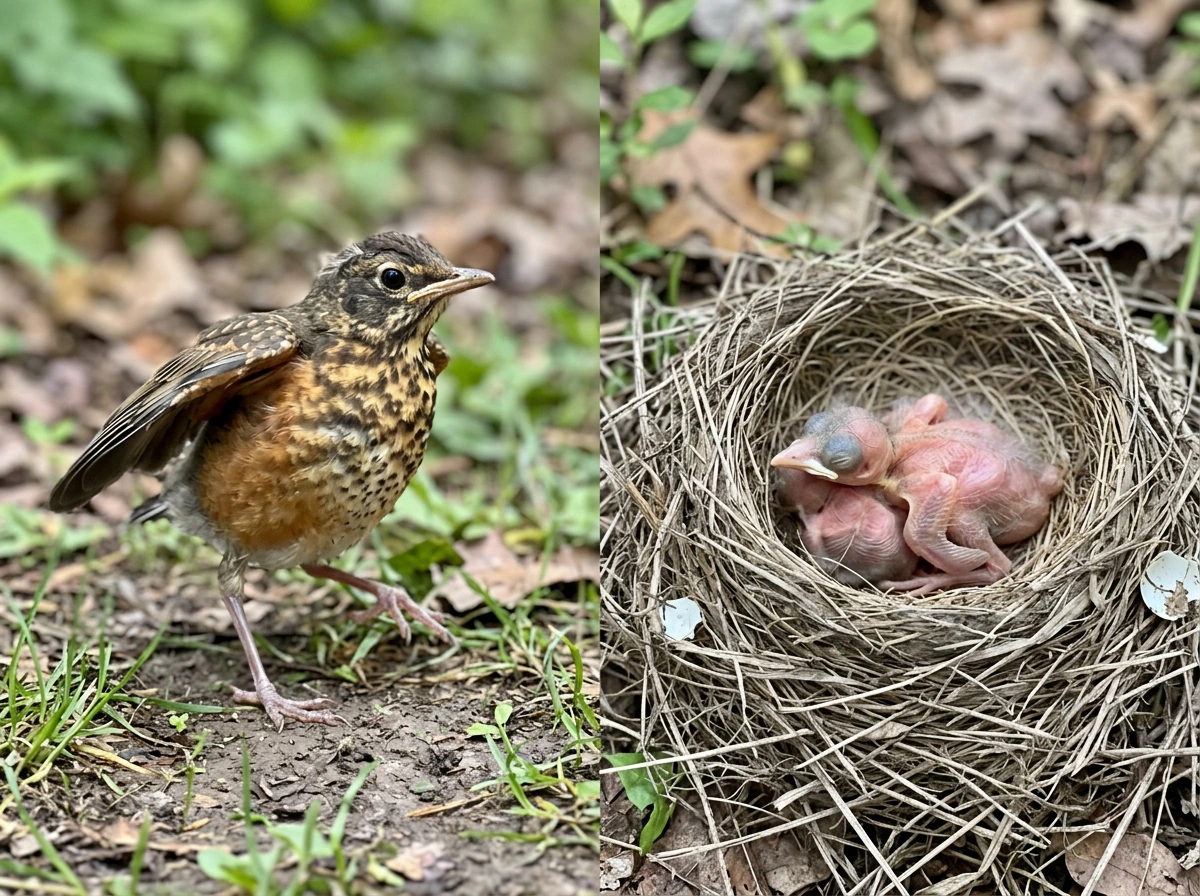
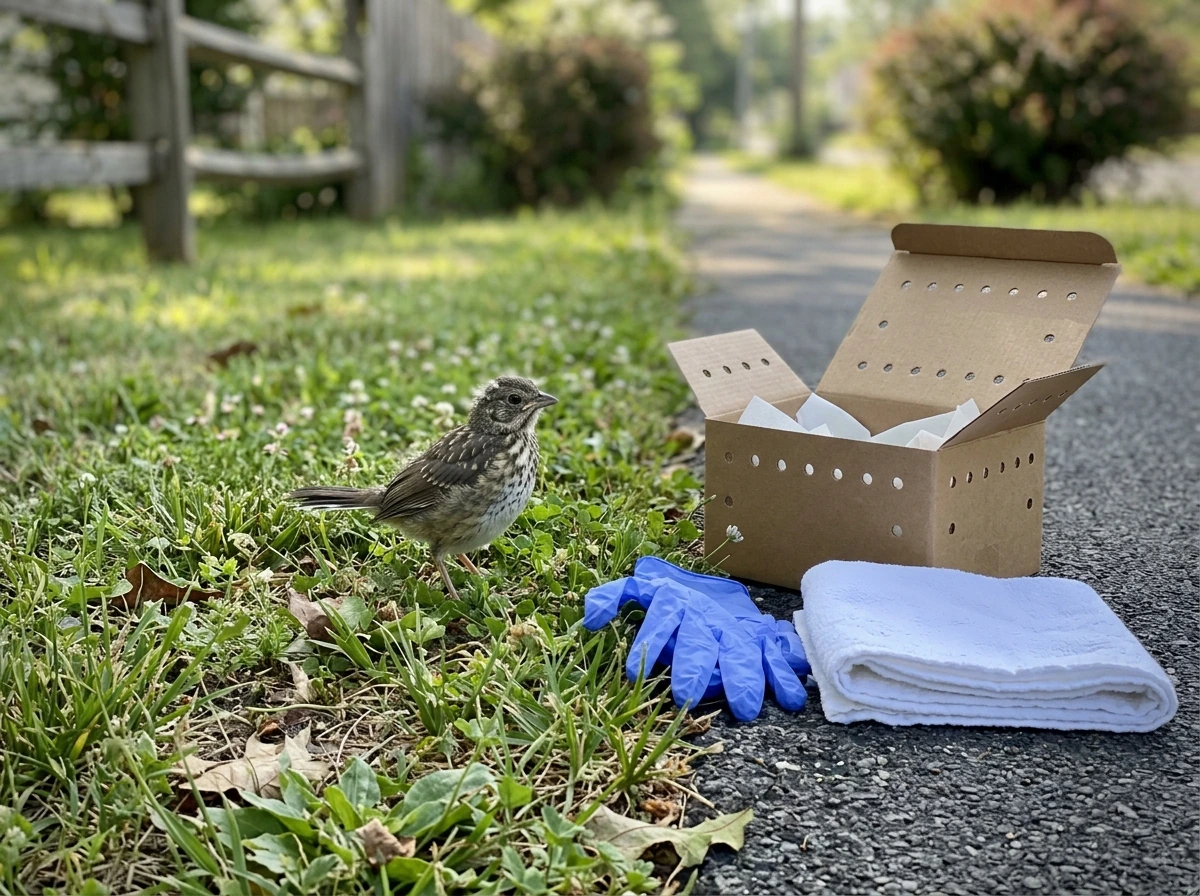
Before you do anything else, figure out what life stage you're dealing with. A nestling is a very young bird that still belongs in the nest: it has little to no feathers, may have its eyes closed, and cannot move around on its own. A fledgling is older. It has most of its feathers (even if they look a little scruffy), its eyes are open, and it can hop around. Fledglings often look helpless because they are still learning to fly, but they are not lost or abandoned. Being on the ground is completely normal for a fledgling. This is an important distinction because it determines almost every decision you make next.
| Feature | Nestling | Fledgling |
|---|---|---|
| Feathers | Few or none; may be bare or covered in fuzzy down | Mostly feathered, may still have some fluffy patches |
| Eyes | Often closed or barely open | Open and alert |
| Movement | Cannot stand or hop; very little movement | Hops, flutters, moves around on its own |
| Normal place to find it | On the ground only if it has fallen | On the ground or low branches, learning to fly |
| What to do first | Check for injury; look for nearby nest to return it to | Leave it alone unless injured or in immediate danger |
If the bird is feathered, hopping, and not visibly injured, your first instinct to "rescue" it may actually do more harm than good. Many fledglings are intercepted by well-meaning people when their parents are nearby and actively caring for them. The U.S. Fish and Wildlife Service specifically warns not to assume a bird is orphaned just because it's on the ground. If the bird looks injured, has been in a cat's mouth, is bleeding, or is clearly unable to move, that changes things. We'll cover those situations below.
What to do (and not do) right now
The first few minutes matter a lot. Stress alone can kill a small bird, so the goal is to handle it as little as possible and get it into a calm, contained environment quickly.
Do these things
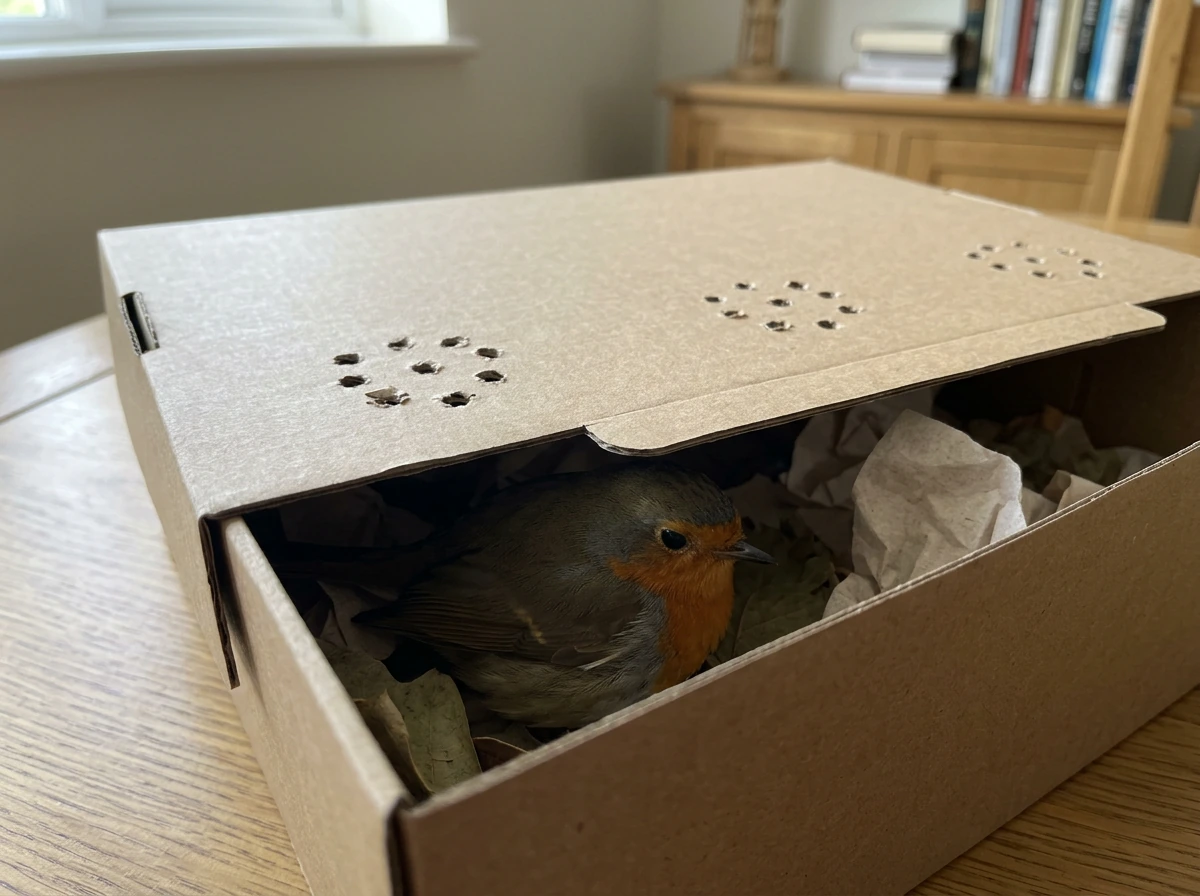
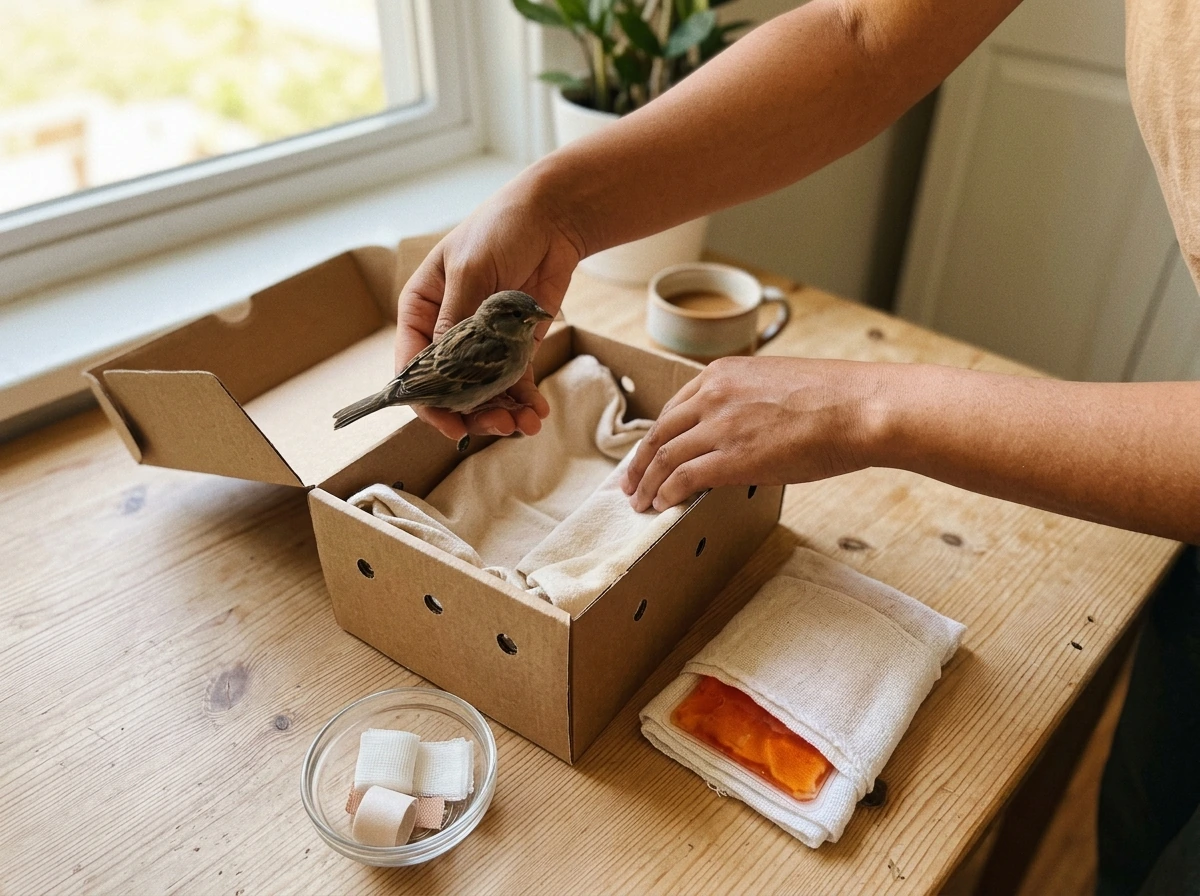
- Handle the bird gently and minimally. Cup it loosely in both hands to move it to a box, then stop touching it.
- Place it in a cardboard box with a lid. Poke a few small holes in the sides for ventilation.
- Line the bottom with a soft cloth or paper towel so it has something to grip.
- Put the box somewhere warm, dark, and quiet inside your home. Away from pets, kids, and loud noise.
- Call a local wildlife rehabilitator or avian vet right away, even if the bird seems okay.
Do not do these things
- Do not feed it anything, not bread, worms, water, or formula, unless a licensed rehabilitator specifically tells you to.
- Do not try to give it water by dropper or syringe. Liquid in the lungs (aspiration) can kill a bird within minutes.
- Do not leave it outside unattended where cats, dogs, or predators can reach it.
- Do not keep it in a glass tank or aquarium. These trap heat and have poor airflow.
- Do not put it in direct sunlight.
- Do not place it with other animals or try to create a 'friend' situation.
- Do not keep it longer than necessary before getting professional help.
The reason not to feed it is not just caution for caution's sake. Forcing food or water into a bird that is stressed, cold, or injured can send liquid directly into its airway. Multiple wildlife centers are explicit about this: aspiration is a real and immediate danger. Keeping the bird warm and still while you find help is genuinely more useful than any food you could offer.
Feeding basics: when it actually applies
Here's the honest answer: in most cases, you should not be feeding a fledgling at all. If you need a beginner-friendly walkthrough, follow the step-by-step guidance in this guide on how to take care of a bird for beginners. Feeding is the job of the parents (if the bird can be reunited) or a licensed wildlife rehabilitator who knows the exact nutritional needs of each species. That said, if you genuinely cannot reach a rehabber for many hours and you're dealing with a confirmed nestling that is alert and responsive, you need to know the basics. If you are caring for a nestling right now, follow the steps below and connect with a licensed wildlife rehabilitator as soon as you can how to care for a nestling bird.
If a rehabber tells you to feed, here's how to do it safely
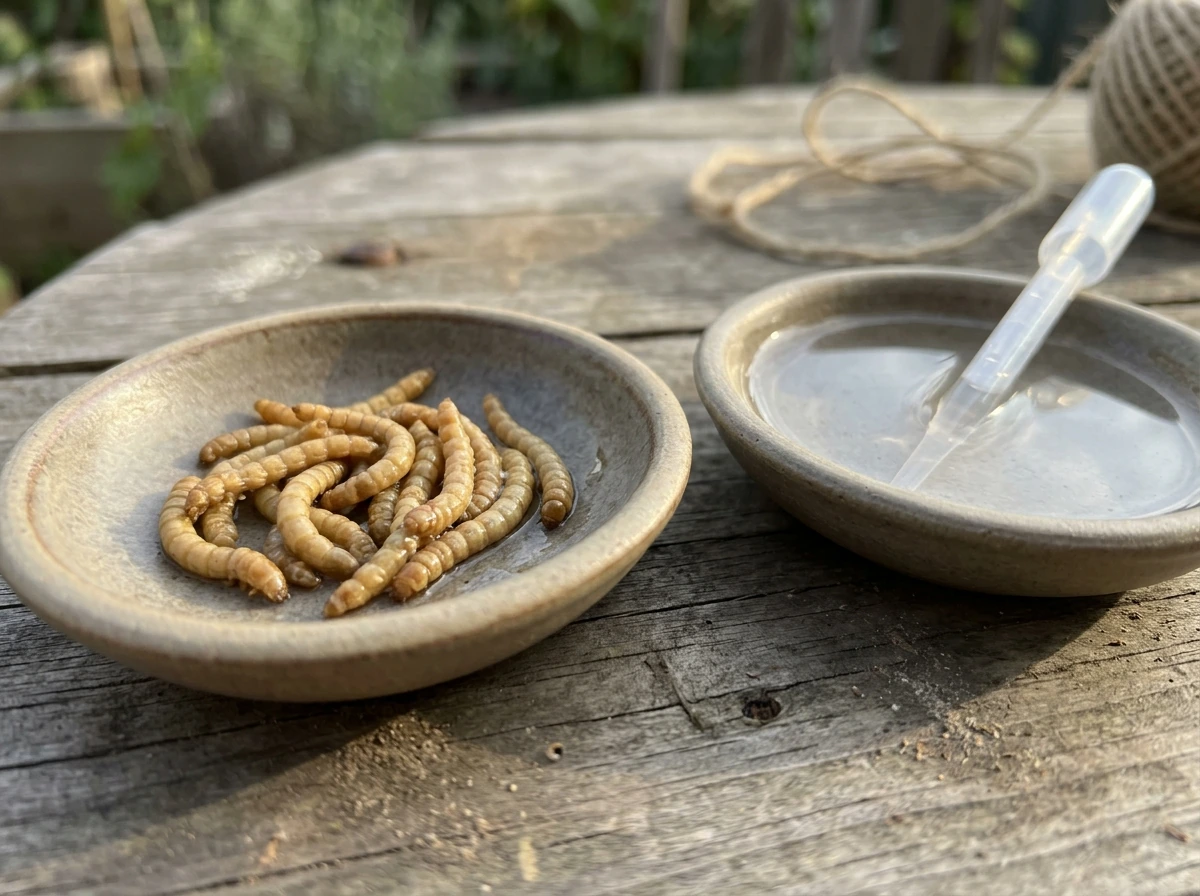
Most baby songbirds eat insects in the nest. If you are instructed to offer food, small mealworms (live or dried and soaked to soften them) are widely used as a temporary measure. Avoid bread, milk, fruit juice, or anything sugary or processed. Do not use an eyedropper or syringe to give water. If the bird is dehydrated, a rehabber may tell you to place a tiny piece of wet food near its beak, but never force anything.
Frequency depends on age. Very young nestlings need to be fed every 20 to 30 minutes during daylight hours. Fledglings that are nearly self-sufficient may only need feeding a few times an hour. These are rough benchmarks. A rehabber will give you species-specific guidance once you reach them. The key rule is this: if the bird is not gaping (opening its mouth and begging), do not try to put food in. A bird that is not begging is either not hungry, too stressed, or too cold, and forcing food into it is dangerous.
Setting up a temporary safe space
Think of this as a short-term hospital setup, not a permanent home. The goal is to keep the bird stable for a few hours while you arrange professional care.
The container
A cardboard box works well because it is breathable, dark, and easy to find. Choose a size that gives the bird a little room but is not so large that it thrashes around and injures itself. A shoebox works for a small songbird. Cut or poke several air holes in the sides, near the top. Put a soft cloth or folded paper towel on the bottom. Avoid anything with loose loops or threads that can catch small toes.
Warmth
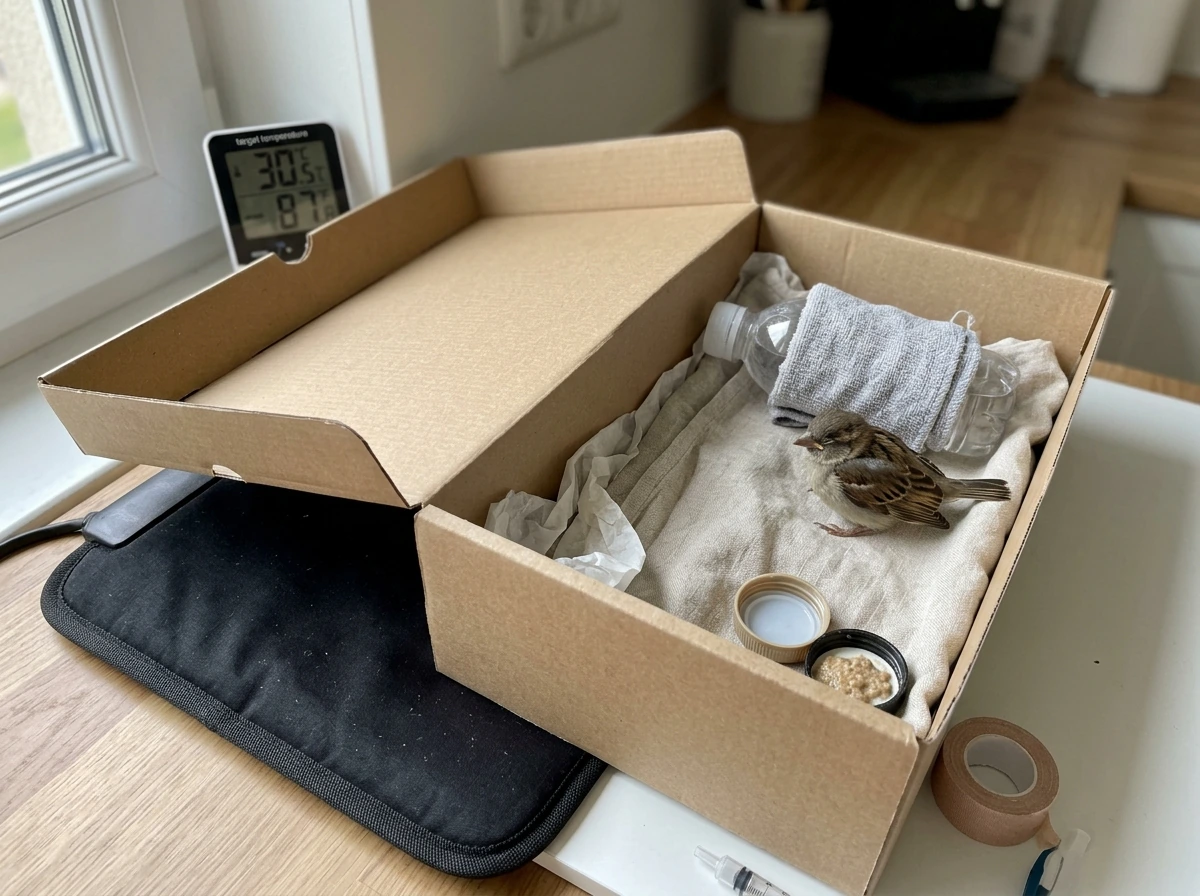
Young birds lose body heat fast, especially if they've been on the ground. The target is to keep the bird warm to the touch, not hot. If you have a heating pad, set it on the lowest setting and slide it under only half of the box. This is important: the bird needs to be able to move away from the heat source if it gets too warm. Never put the heating pad under the entire box. If you don't have a heating pad, fill a clean sock with dry rice, microwave it for about a minute, and place it next to (not under or on top of) the bird. Check that it's comfortably warm, not burning hot, before you put it in the box.
Room temperature alone (around 70 to 75 degrees Fahrenheit) is usually not warm enough for a very young nestling, which needs temperatures closer to 85 to 90 degrees Fahrenheit near the heat source. A fledgling that is mostly feathered does better at slightly lower temperatures. When in doubt, provide gentle supplemental warmth and let the bird choose where to sit.
Location
Put the box in a room away from household noise, other animals, and windows. A bathroom or laundry room with the door closed works well. Darkness helps reduce panic. Resist the urge to check on the bird every few minutes. Each time you open the box, you're adding stress. Check once every 30 to 60 minutes, briefly and quietly.
Should you put the bird back, or keep it inside?
For fledglings, the answer is almost always: leave it outside (in a safe spot) and watch for parents. For nestlings that have fallen from a nest, the answer is: try to return it to the nest if you can do so safely and quickly.
Reuniting a nestling with its parents
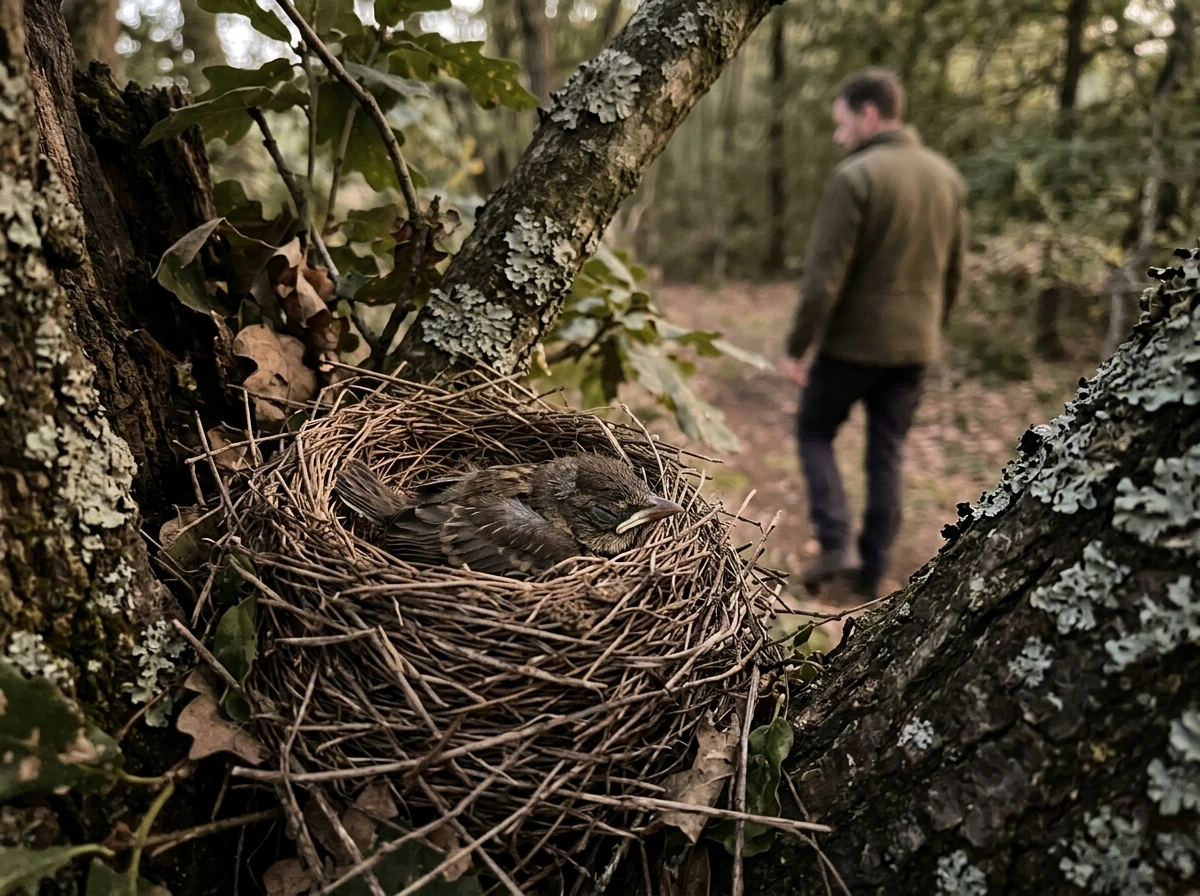
The myth that parent birds will reject a baby that humans have touched is not true. Parent birds go by sight and sound, not smell. If you can see the original nest and reach it safely, place the nestling back in it. Make sure the bird is warm before you do this. Returning a cold bird to the nest can cause the parents to push it out. If the nest is damaged or destroyed, you can make a substitute: poke holes in the bottom of a small plastic container for drainage, line it with dry grass or leaves, and attach it securely to the same tree, as close to the original nest location as possible.
Once you've placed the nestling back, step well away from the area and watch from a distance for at least one to two hours. Parent birds will not approach if you're standing nearby. If you see no parent activity at all after two hours, it's time to bring the bird inside and contact a rehabilitator. Some guidance suggests checking again at four to eight hours if there is any doubt.
Fledglings: your job is to keep them safe, not to rescue them
If the bird is a fledgling (feathered, hopping, eyes open), the best thing you can do is move it out of immediate danger. If it's in the middle of a road or a cat is nearby, gently move it to a shrub or low branch within the same general area. Do not take it far from where you found it. The parents are likely watching from nearby trees and will return to feed it. Keep pets and children away from the area for several hours.
Hand-rearing a bird yourself should only happen as an absolute last resort. It requires species-specific knowledge, the right foods, the right feeding tools, and often weeks of commitment. Even well-intentioned home care often results in birds that are malnourished, imprinted on humans, or unable to survive in the wild. Contact a rehabber before you go down that path.
Watching for warning signs and knowing when to escalate
Most fledglings you find will be fine once reunited with their parents. But some birds genuinely need professional medical care, and recognizing the signs quickly makes a real difference.
Signs that mean go to a rehabber or vet immediately
- The bird has been in a cat's or dog's mouth, even briefly. Cat saliva carries bacteria that cause fatal infection within hours, even with no visible wound.
- There is visible bleeding, an open wound, or a broken or dangling limb.
- The head is tilting to one side or the bird is circling.
- You can see maggots, fly eggs (small white clusters), or swelling under the skin.
- The bird is gasping, making sticky or rattling breathing sounds, or breathing with its mouth open.
- It is completely limp and unresponsive, or it cannot hold its head up.
- It has hit a window and is not recovering after 20 to 30 minutes.
Signs that are normal and not an emergency
- A fledgling sitting on the ground, alert, looking around, and hopping away when approached.
- A bird that is quiet and still once placed in a dark box (this is normal calming behavior).
- Occasional peeping or chirping from inside the box.
- Slightly ruffled feathers immediately after handling (smooths out with rest).
How to find a wildlife rehabilitator fast
In the U.S., keeping a wild bird without a permit is illegal even with the best intentions. Licensed wildlife rehabilitators are the right people for this job. To find one near you, search online for your state's wildlife agency, which typically maintains a list of permitted rehabilitators. You can also call a local animal shelter, humane society, or veterinary clinic and ask for a referral. The Wildlife Center of Virginia and similar regional organizations often have online tools to locate help by zip code. If you're in the U.S. and stuck, Virginia's wildlife conflict helpline (1-855-571-9003) can point you in the right direction even if you're not in Virginia.
When you call, be ready to describe the bird's size, feather coverage, behavior, and any visible injuries. Tell them where you found it and what you've done so far. They will give you specific next steps for your situation, which is always going to be more accurate than any general guide.
The short version if you need it right now
- Identify: Is it a fledgling (feathered, hopping) or a nestling (bare, helpless)? Fledglings usually don't need rescuing.
- If injured or truly orphaned: put it in a ventilated cardboard box lined with cloth, warm one side of the box with a heating pad on low, and place it somewhere dark and quiet indoors.
- Do not feed or give water until a rehabber tells you to.
- For nestlings: try to return it to the nest if safe, then watch from a distance for at least two hours.
- For fledglings: move it to a safe nearby spot out of reach of predators and watch for parent activity.
- Call a licensed wildlife rehabilitator or avian vet immediately, especially if you see any emergency warning signs.
If you're dealing with a bird that has no feathers yet, the care approach overlaps closely with what's covered in guides on how to care for a hatchling bird. how to take care of a newborn bird without feathers If you are dealing with a hatchling that needs immediate, species-appropriate basics, see also how to care for a hatchling bird for the right approach.
FAQ
What if the fledgling looks thirsty or dehydrated, can I give it water?
If the bird is already alert with most feathers present (typical fledgling), dehydration is usually addressed by the parents. For home care, focus on warmth and minimizing handling, then reunite or contact a rehabber. If it looks wet, chilled, or has visible weakness, call sooner rather than trying to offer water in the meantime, because misting or placing liquids near the beak can still lead to aspiration.
Can I keep a fledgling in a birdcage with a dish of food and water?
Do not use a standard pet bird cage. Use a small, dark, escape resistant container only long enough to stabilize the bird, then release it back outside if it is a true fledgling and safe to do so. Avoid perches, food bowls, and open water, these increase movement and stress.
If I find a fledgling indoors or far from where it likely came from, what should I do?
If you find the bird in a location like a basement, garage, or window well, move it only to the nearest safe outdoor spot (near the original area) rather than taking it far away. If it is unsafe to release immediately, keep it contained and warm while you contact a rehabilitator, because the “nearby release” strategy relies on the parents being able to locate it.
How do I know whether it’s injured enough that I should not try to reunite it with parents?
If the bird is bleeding, has a limb it cannot move, is missing chunks of feathers, or was in a cat or dog mouth, treat it as “injured” and skip reunion attempts. Keep it warm in a box, dark and quiet, and contact a rehabilitator right away.
Should I try to put a fledgling back in its nest?
If you can see a nearby nest and the bird is a nestling (bare or mostly bare, eyes closed or not clearly open), return it to the nest once it is warmed. If the bird is a fledgling (feathered, eyes open, hopping), moving it to nearby vegetation is usually safer than returning it to a nest that may not exist or may be too high to reach without risk.
The bird keeps opening its mouth, does that mean I should feed it?
A “baby bird” that is loudly gaping is a stronger signal to feed, but only for confirmed nestlings and only if you have rehabber instructions. For fledglings, mouth gaping or chirping is more often a stress or calling behavior, not a feeding cue you should act on. When in doubt, do not put food in.
What are the most common setup mistakes when using a box to care for a fledgling?
Yes. Place the box on a stable surface where it will not tip, keep it away from windows and drafts, and do not leave it where pets or kids can access it. Also, avoid heating the whole container, use gentle heat on only one side so the bird can move away if it gets too warm.
If the fledgling is in the middle of the street, can I carry it to a backyard or park?
If the bird is in immediate danger (roadway, active mowing, a cat within reach), you can move it a short distance to the nearest safe cover and keep it within the same general territory. Once safe, leave it and watch quietly from a distance rather than continuing to chase it around the yard.
How long should I wait before contacting a rehabilitator if I cannot identify the bird or its exact age?
Age and species both matter. If the bird is a fledgling, it is often ready to be returned outdoors, with supervision from a distance. If you cannot identify species or cannot confirm it is feathered, or if it is not responsive or is worsening, rely on a rehabilitator for triage rather than following generic feeding or temperature rules.
If I’m just trying to help until I can find help, am I allowed to keep a wild fledgling in my house?
In the U.S., attempt to keep and feed a wild bird at home can create legal risk, plus it can worsen outcomes if nutrition and handling are wrong. The practical next step is to call a permitted rehabilitator first, then follow their instructions for stabilization only, not long term care.
Next Article
How to Take Care of a Little Bird: First Aid Steps
Step-by-step first aid for injured or orphaned little birds: triage, safe handling, warmth, feeding dos and don’ts.