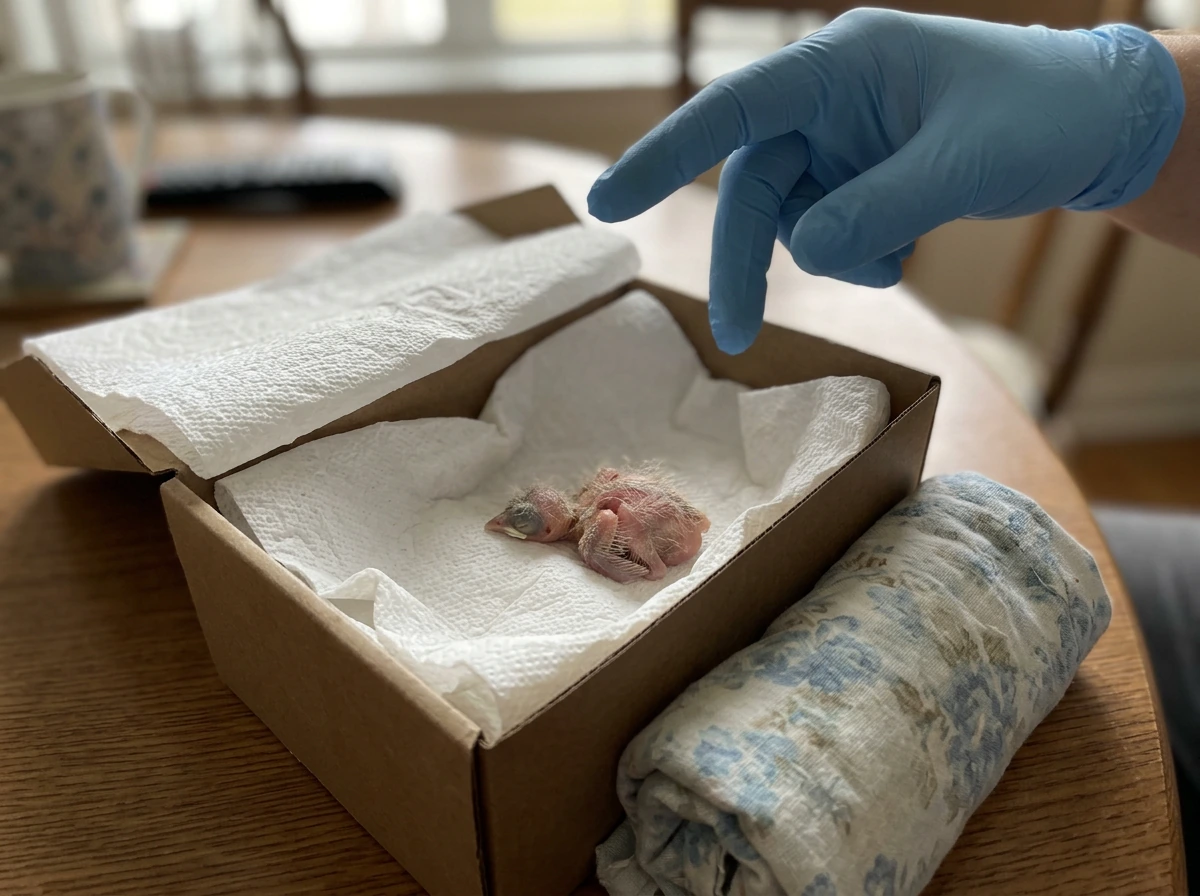
If you've just found a nestling bird on the ground, the most important thing you can do right now is slow down before you act. Nestlings are incredibly fragile, and well-meaning handling can cause serious harm. The goal for the next few hours is simple: keep the bird warm, keep it safe, and get it to a licensed wildlife rehabilitator as fast as possible. Everything in between is damage control.
How to Care for a Nestling Bird: Immediate Steps and Feeding
Marcus Holloway
23 Mar 2026
How to tell if a nestling actually needs your help
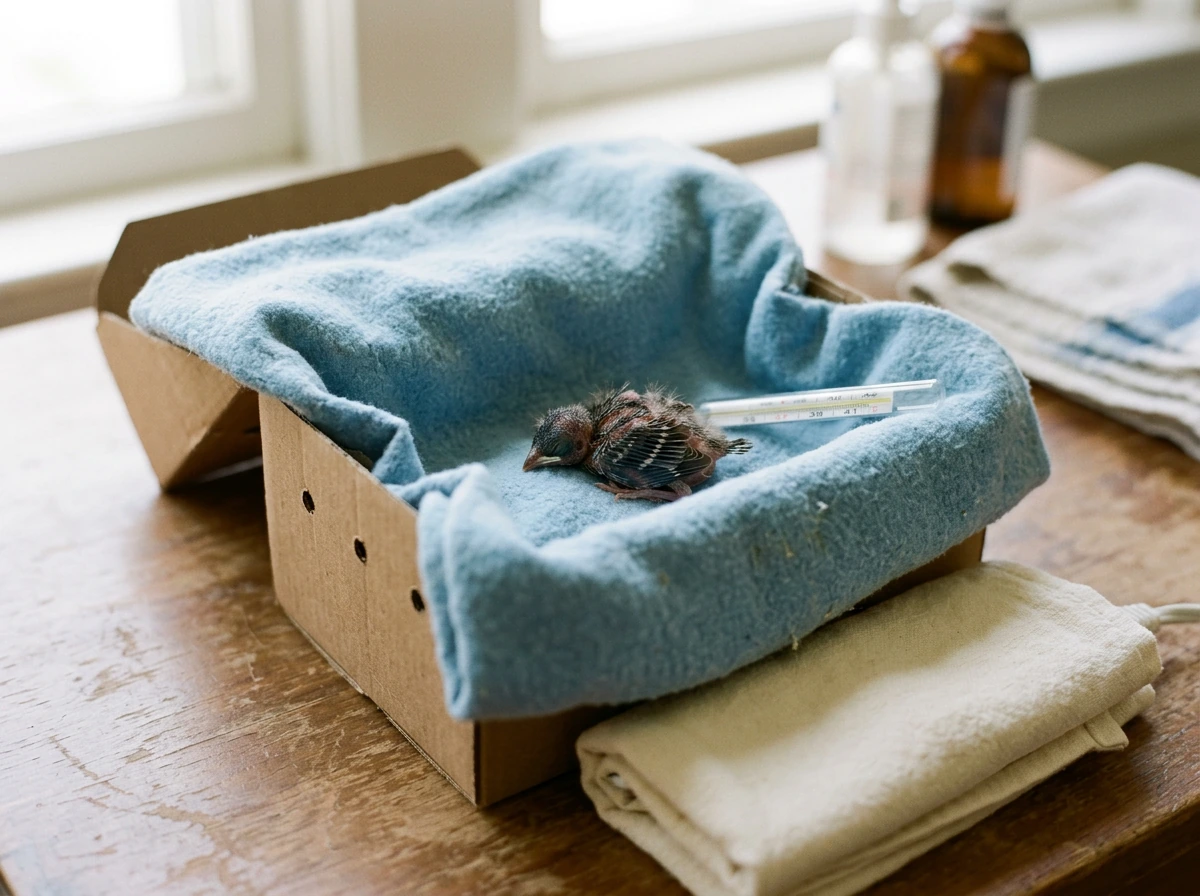
A nestling is a baby bird that hasn't fully feathered out yet. It may be naked, covered in patchy down, or have short pin feathers just starting to emerge. If it looks like that and it's on the ground, your instinct to help makes sense, but not every nestling is truly orphaned. U.S. Fish & Wildlife Service notes that a baby bird likely does not need your help unless it is featherless or has its eyes closed.
Parent birds are often just out of sight. They leave the nest to find food and return frequently. Before picking the bird up, watch from a distance for at least two hours. If a parent comes down to feed it during that time, the nestling is being cared for. Your job at that point is to keep the area clear of pets and people so the parents feel safe returning.
If the nest is visible and intact, and you can reach it safely, gently placing the nestling back is the right move. The myth that parent birds abandon chicks touched by humans is false. Birds have a very limited sense of smell and will not reject a chick because a person handled it briefly.
The bird genuinely needs intervention if any of these are true:
- It is visibly injured (bleeding, a drooping or twisted wing, obvious wound)
- It is cold, limp, or unresponsive
- You've watched for two hours and no parent has appeared
- The nest is destroyed and cannot be replaced
- A cat or dog has had it in its mouth, even briefly (puncture wounds from claws and teeth introduce bacteria that are fatal to birds without prompt antibiotic treatment)
Note that nestlings are different from fledglings. A fledgling is mostly feathered, hops around, and is in the middle of learning to fly. Fledglings on the ground are usually fine and being watched by parents nearby. If what you've found looks more like a fluffy, alert, fully-feathered bird that can hop, it likely falls into that fledgling category, which is a slightly different situation covered separately. Fledgling care is different from nestling care, so use the guidelines for fledglings before you do anything else Fledglings on the ground are usually fine.
Immediate do's and don'ts
Once you've confirmed the nestling needs help, here's how to handle the situation without making things worse.
Do these things first
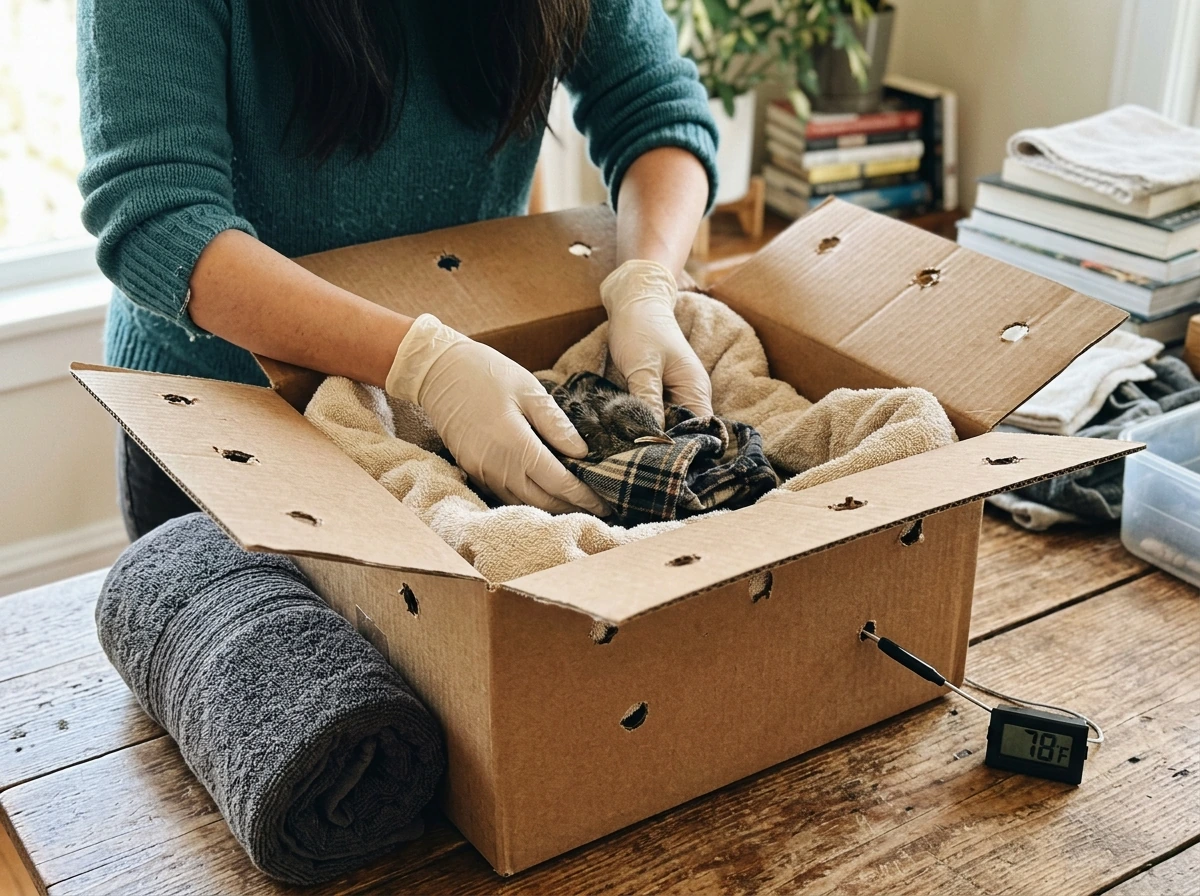
- Handle the bird as little as possible. Use gentle cupped hands or a soft cloth. Keep handling brief and calm.
- Get it into a container immediately. A small cardboard box with ventilation holes and a soft tissue lining works well.
- Keep it warm (more on exact temperatures below).
- Put it in a dark, quiet place away from pets, children, and loud noise.
- Call a wildlife rehabilitator or wildlife hotline right away, even before you have the setup sorted.
Don't do these things
- Don't give it water. Baby birds do not drink water, and the entrance to their airway sits at the base of the tongue. Any liquid you try to give it can go straight into the lungs, causing aspiration pneumonia, which is often fatal.
- Don't try to feed it until you've spoken to a rehabilitator and know what species it is.
- Don't use a light bulb as a heat source. The light disrupts rest, and bulbs can burn delicate skin.
- Don't put it in a wire cage. Nestlings can get toes, wings, or beaks caught in wire.
- Don't keep it somewhere noisy or bright. Stress burns energy the bird doesn't have to spare.
- Don't let it sit on a hard surface with no cushioning underneath.
Housing and temperature control
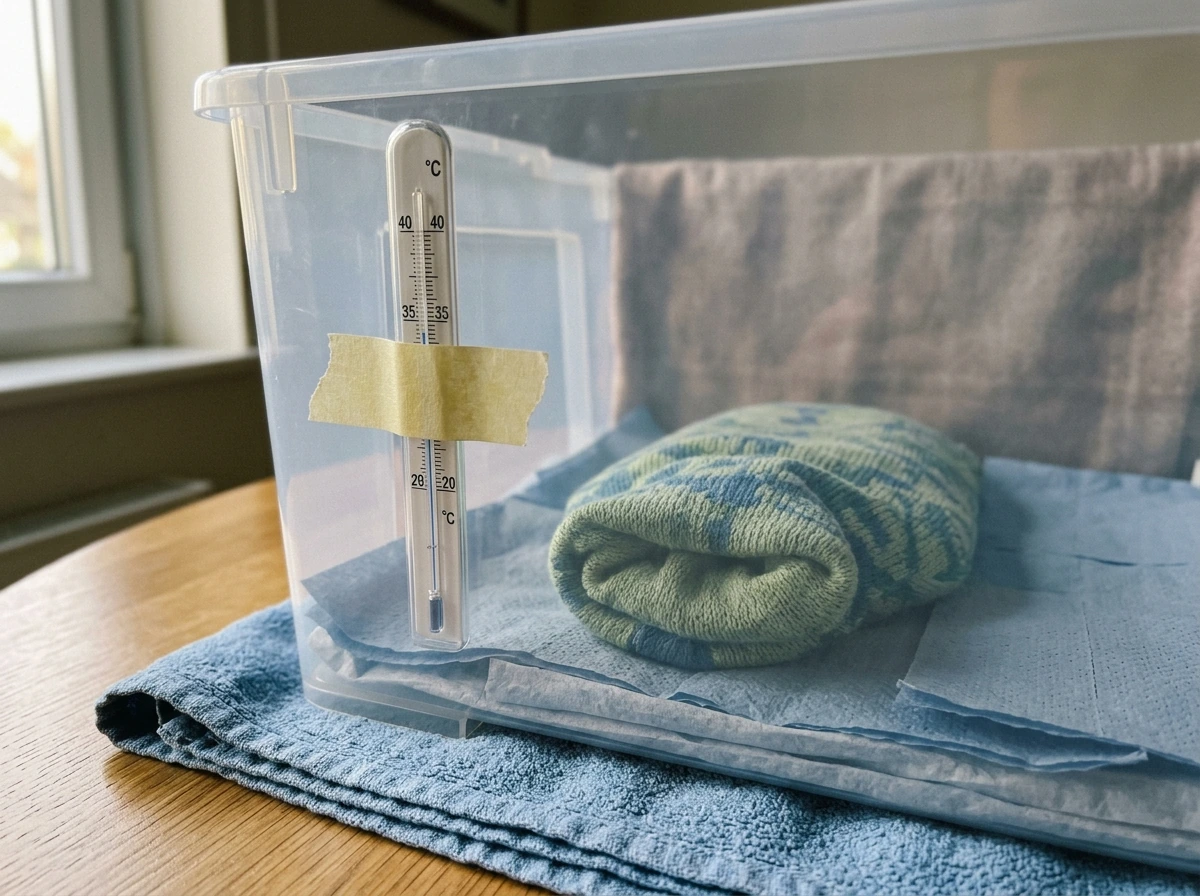
Nestlings cannot regulate their own body temperature. Birds run naturally hot, with body temperatures between 102 and 108°F (39–42°C), and room temperature alone, typically around 68–72°F (20–22°C), is not warm enough to keep a nestling alive. Getting the temperature right is one of the most important things you can do.
The ideal temporary environment targets roughly 82–90°F (28–32°C) in the area where the bird is resting. The easiest way to achieve this at home is to set the box on top of a heating pad turned to its lowest setting, with the pad covering only half of the box bottom. This lets the bird move away from the heat if it gets too warm. Place a folded towel between the heating pad and the box to soften the heat further.
Another good option is a plastic bottle or jar filled with hot tap water, then wrapped snugly in a face cloth or small towel. Tuck it against one side of the box so the nestling can lean against it but can't be trapped or rolled onto by it. This is the method recommended by the Toronto Wildlife Centre and works well when you don't have a heating pad handy.
Check the warmth level with your hand, not a thermometer. The warmth in the box should feel comfortably warm to your palm, not hot. If you wouldn't hold your hand there for 30 seconds, it's too hot for the bird. Overheating is a real risk, especially with very young, naked nestlings.
Line the bottom of the box with tissue paper or a soft cloth. You can shape it into a small cup or nest shape to cradle the bird upright. Avoid cotton balls or loose fibrous materials because the fibers wrap around tiny feet and toes and cut off circulation.
Feeding nestlings: what, how often, and how to do it safely
This is where most people cause unintentional harm. The internet is full of feeding advice that ranges from useless to genuinely dangerous. Here's the honest guidance.
The default rule: don't feed until you've talked to a rehabber
The safest position is to avoid feeding the bird until you have spoken to a licensed wildlife rehabilitator or wildlife vet and they have told you what to give and how. Wildlife Center of Virginia also advises, “Do not give the baby food or water,” when you have found a baby bird and need guidance avoid feeding the bird. Different bird species eat completely different diets. Insect-eating songbirds, seed-eating finches, and waterfowl nestlings all need different foods. Giving the wrong food doesn't just fail to help, it can injure the bird's gut or cause a fatal aspiration. When in doubt, warm and dark beats warm and fed.
If you're told to feed and can't reach a rehabber quickly
Most nestling songbirds need to be fed at least every 20 to 30 minutes during daylight hours. That is not a typo. Baby songbirds have extremely fast metabolisms, and in the wild, parent birds make constant trips. If you've confirmed the nestling is warm, alert, and you cannot reach professional help for several hours, a rehabilitator or hotline may give you interim guidance on an emergency food option.
For general insectivore nestlings, some rehabbers suggest very small pieces of moist cat food (not fish flavored), tiny bits of hard-boiled egg yolk, or mealworms as a short-term stopgap, but only if you've confirmed it's an insect-eating species and only in tiny, appropriately sized amounts. For seed-eating birds like finches, a softened commercial nestling hand-feeding formula may be suggested. Do not give bread, milk, fruit juice, or anything sweet.
How to feed safely
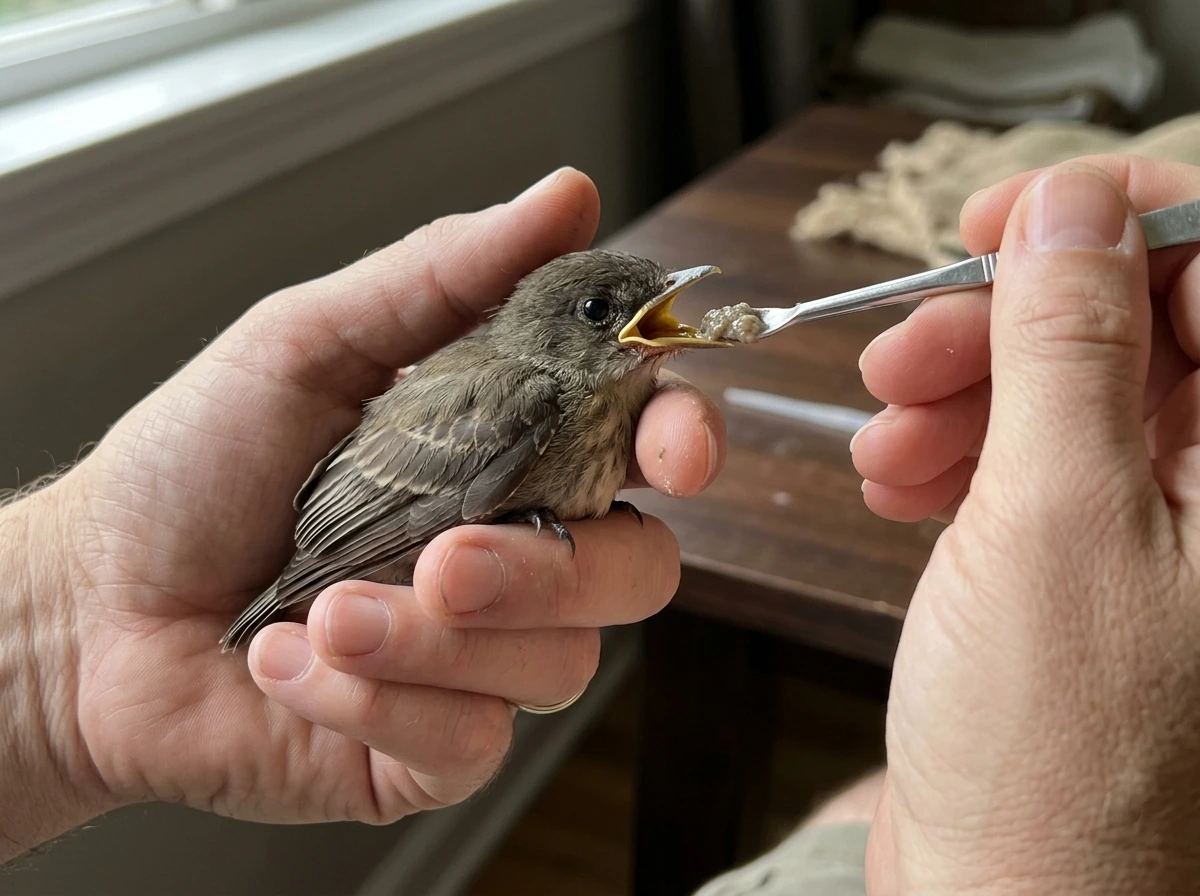
The bird must be alert and able to hold its head up before you attempt any feeding. If it's lethargic, limp, or not responsive, do not try to feed it at all. A rehabber discussion on WildlifeRehab also cautions against feeding fluids that the bird cannot safely swallow, because aspiration or asphyxiation can happen when the airway is not protected Help, I found a baby bird. A drowsy or cold bird cannot protect its airway, and food or fluid will go into the lungs.
Hold the bird upright in your hand. Use tweezers or the tip of a small spoon to offer food toward the front of the mouth, allowing the bird to gape and swallow on its own. Do not push food down the throat. Do not use a syringe to squirt liquid into the mouth. Each piece of food should be small enough that you're slightly unsure it's big enough, because it probably is. Wait for the bird to swallow before offering the next piece.
Watch the crop (the small bulge at the base of the throat on the chest). When it looks mildly full, stop feeding. Overfeeding causes the crop to become impacted or for food to be regurgitated back up and aspirated.
Quick feeding reference
| Factor | Guidance |
|---|---|
| Frequency | Every 20–30 minutes during daylight hours |
| When to stop for the night | When it gets dark (birds don't feed at night) |
| Portion size | Tiny — each piece should look almost too small |
| Water/fluids | Never — do not give any liquids directly |
| Bird must be | Alert, upright, and able to hold its head up |
| Foods to avoid always | Bread, milk, fruit juice, anything sweet or salty |
Monitoring the nestling and knowing when to step back
You don't need medical training to keep track of how a nestling is doing. There are a handful of everyday signs that tell you whether the bird is stable, improving, or in trouble.
Signs the bird is stable or improving
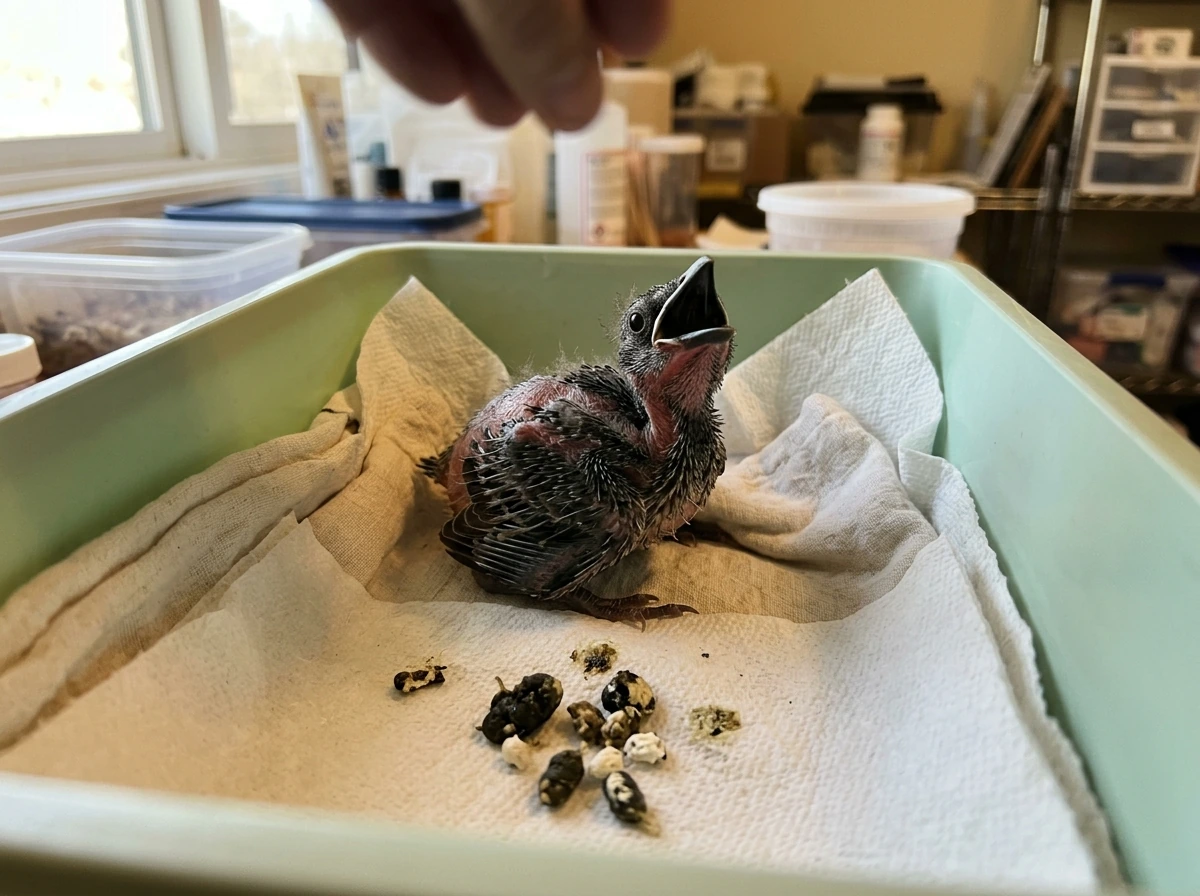
- It gapes (opens its mouth wide) when it senses movement or warmth near it — this is a healthy feeding response
- Droppings are present and look like a white sac or a mix of dark and white — absence of droppings after feeding is a warning sign
- It feels warm to the touch and is not shivering
- After feeding, it settles and rests calmly
- It is becoming more alert and responsive over time, not less
Signs something is wrong
- Cold to the touch despite your heat setup
- Limp, drooping, or unresponsive
- Labored breathing or clicking sounds when breathing
- No droppings after multiple feedings
- Tilting to one side, circling, or head pressing
- Swollen or closed eyes
- Discharge from the nostrils or mouth
Any of those warning signs means the bird needs a wildlife vet or rehabilitator immediately, not in a few hours. These are not things you can manage at home.
On the flip side, knowing when to stop your care and hand the bird off is just as important. Your temporary care is a bridge, not a solution. Nestlings raised by humans without specialized training almost never learn to behave like wild birds. They imprint on humans, lose their fear of predators, can't find food, and don't survive release. The moment a licensed rehabilitator is available, transfer the bird. Every extra day in your care is a day of lost development time.
When to contact a wildlife rehabber or vet (and what to tell them)
Contact a wildlife rehabilitator or wildlife vet the moment you decide the bird needs help, this is key to how to take care of a bird for beginners. If you are specifically dealing with how to take care of a newborn bird without feathers, the warming and feeding sections below are the most relevant, but still avoid guessing food without rehabber guidance. If you are looking for specific steps, follow the guidance on how to care for a hatchling bird while you wait for professional help take care of a bird for beginners. how to take care of a newborn bird without feathers You can set up temporary housing while on hold. Don't wait until you feel ready or until you've tried to care for it yourself for a day. how to take care of a little bird
How to find help fast
- Search for 'wildlife rehabilitator near me' or 'wildlife rescue [your city or state/province]'
- Call your local animal control, humane society, or wildlife agency and ask for a referral to a licensed bird rehabilitator
- In the US, the National Wildlife Rehabilitators Association (NWRA) and the Wildlife Center of Virginia maintain directories
- In Canada, contact your provincial wildlife office (e.g., Fish & Wildlife in Alberta) or a local wildlife rescue center
- Many areas have 24-hour wildlife hotlines — search '[your region] wildlife hotline'
What to tell them
When you reach someone, have this information ready so they can give you the best guidance:
- Where you found the bird (exact location — urban yard, forest edge, near a road, etc.)
- What it looks like — feather stage (naked, pin feathers, partial feathers), approximate size, any visible coloring
- What condition it's in — cold, alert, injured, breathing abnormally
- What you've done so far — have you fed it, given water, what heat source you used
- Whether a cat or dog was involved
- How long ago you found it
If the rehabber asks you to bring the bird in, transport it in the same warm, dark, covered box. Don't open it repeatedly to check on the bird during the drive. Keep the car quiet, avoid blasting air conditioning or heat directly at the box, and drive calmly. Stress during transport is a real cause of death in nestlings.
If you're asked to hold the bird for a day or two before pickup or transfer, follow the rehabber's specific instructions exactly. They may tell you things that differ from general advice because they know the species and the bird's condition better than any general guide can.
Finding a nestling on the ground is stressful, and the instinct to do something immediately is completely understandable. The most useful thing you can do is get the bird warm, get it quiet, and get a professional on the phone. Even for newly hatched birds, the rehabber can tell you exactly what to feed, how often, and how to handle it safely professional help from a licensed wildlife rehabilitator. That combination gives the nestling the best possible shot at surviving and eventually making it back to the wild where it belongs.
FAQ
How do I know whether the nestling is truly orphaned and not just unattended?
Do not assume the bird needs feeding just because it is hungry looking. First confirm it is warm and responsive, then re-check whether a parent is actively returning. If a parent feeds it during your 2-hour watch, your role is only to keep people and pets away, and the bird should be left alone (or returned to the nest if accessible).
What should I use as nesting material in the temporary box, and what should I avoid?
A homemade “nest” should support the bird upright and prevent slipping, but it must not trap toes. Line the box with smooth tissue or a soft cloth, shape it into a shallow cup, and avoid loose fibers, fluffed bedding, or cotton. If you see the feet caught or the bird unable to keep its head steady, stop and re-set the lining for better support.
Can I keep feeding the nestling if I cannot reach a wildlife rehabber right away?
Yes, but with strict limits. You can offer interim warming and keep it quiet while waiting, but do not provide food unless a wildlife rehabilitator or wildlife vet tells you specifically what to feed for that species. If the rehabber is unreachable and the bird is cold, keep focusing on temperature and safety rather than trying to “figure out” a diet.
My nestling seems weak. Can I still give it water or food to help it perk up?
If the bird is lethargic, limp, not responsive, or cannot hold its head up, do not attempt feeding or fluids. In that situation, the priority is correcting temperature and getting professional help immediately, because an unready airway increases the risk of aspiration.
What should I do if I miss a scheduled feeding time?
Because nestlings have very fast metabolisms, delays can be critical, but you should not switch to longer feeding gaps without guidance. If you cannot reach a professional, prioritize keeping it properly warm and on-call with a hotline or rehabber for the correct emergency plan, then follow their timing instructions for that species.
How often can I check on the nestling while it is in my care?
Handling can worsen stress, but brief, gentle handling is not the main danger if the bird stays warm and supported. The bigger mistake is frequent checking, repeated opening of the container, or rough repositioning. When you must handle it, keep it upright, minimize time out of the warm box, and avoid jostling the head and body.
If I cannot reach the nest, where should I put the nestling temporarily?
If the nest is reachable safely, returning the bird to its nest is often preferred. If the nest is not accessible, unstable, or inaccessible due to risk (heights, aggressive adult animals, unsafe terrain), place the nestling in a secure warm container near where you found it so parents can locate it. Do not leave it uncovered and exposed to sun, wind, or predators.
What is the safest way to set up the nestling’s “rest area” at home?
Do not put the nestling in a cage with other animals, and avoid letting children or pets hover. Keep the area quiet, dim if possible, and maintain a stable warm environment. Stress and vibrations (loud noise, frequent walking by, or repeated staring) can contribute to deterioration, so treat the bird’s space like a recovery incubator.
How do I avoid overfeeding if I am using interim instructions?
A good rule is to stop when the crop looks only mildly full and the bird has swallowed normally. If you need a consistency check, use the “wait for swallow” approach and offer smaller pieces more frequently rather than larger amounts at once. If the crop seems overly full, you should stop and immediately contact a professional.
Can I give fluids if the nestling looks dehydrated?
If you suspect the bird is dehydrated, warm first and contact a wildlife professional before giving any fluid. Do not use syringes, squirting liquids, or any attempt to “help” with fluids, because aspiration risk is high in unready or cold nestlings.
What are the safest transport steps from my home to a wildlife vet or rehabber?
Use a lined warm container and keep it covered to reduce stress during transport. Keep it dark and warm, drive calmly, and avoid direct blasts of heat or air conditioning onto the box. Repeatedly opening the container to check can increase stress and cooling, which can be fatal for very young birds.
Which symptoms mean I should treat this as an emergency right now?
If a nestling is injured or bleeding, or if you see seizures, severe weakness, gaping breathing, or an inability to swallow, treat it as an emergency. Temperature support and quiet are fine, but those signs mean immediate vet or rehabilitator care, not “wait and see.”
What if I later realize I may have misidentified a fledgling as a nestling?
If the bird was on the ground and you later learn it was actually a fledgling, you still should avoid feeding attempts because the diet and care differ. For fledglings, parents often remain nearby and the main goal is keeping the area safe while you observe. When in doubt, describe exactly what the bird looks like (feather coverage, hopping, alertness) to the rehabber.
Next Article
How to Take Care of a Newly Hatched Bird Right Now
Step by step rescue care for a newly hatched bird: warming, safe housing, feeding basics, monitoring, and getting help f